Child's Play press kit
1988 · studio press kit
- Photographs
- 3
- Repository
- University of Illinois Rare Book & Manuscript Library — Leskosky film press-kit collection

Child’s Play & Chucky
1988
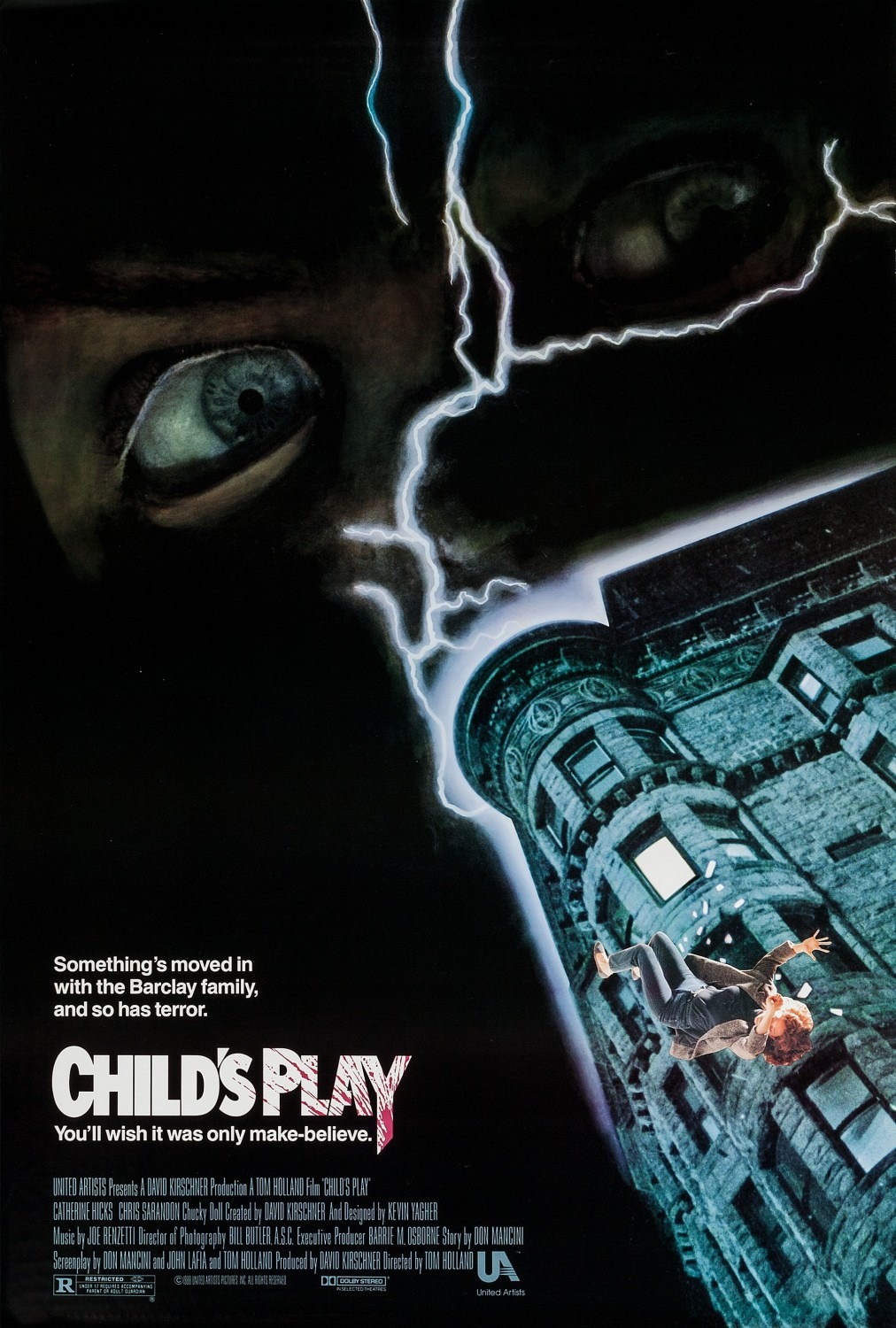
You'll wish it was only make-believe.
Chicago police detective Mike Norris chases the serial killer Charles Lee Ray, known as the Lakeshore Strangler, through the city streets and into a toy store. Ray's getaway partner Eddie Caputo drives off and leaves him behind. Norris shoots Ray. As he lies dying among the shelves, Ray calls on the voodoo god Damballa and chants a spell that moves his soul into a nearby Good Guy talking doll. Lightning strikes and the store blows up.
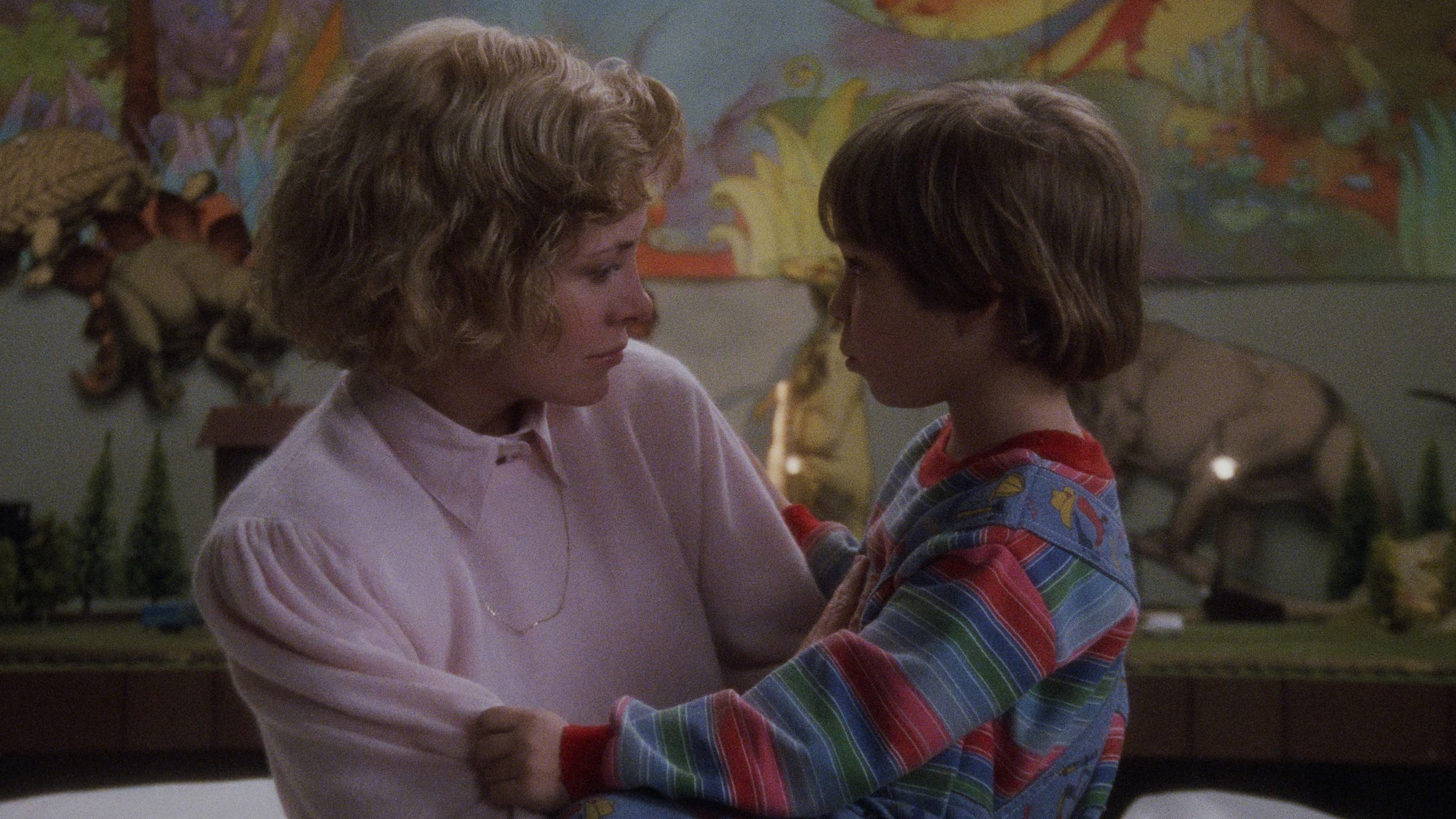
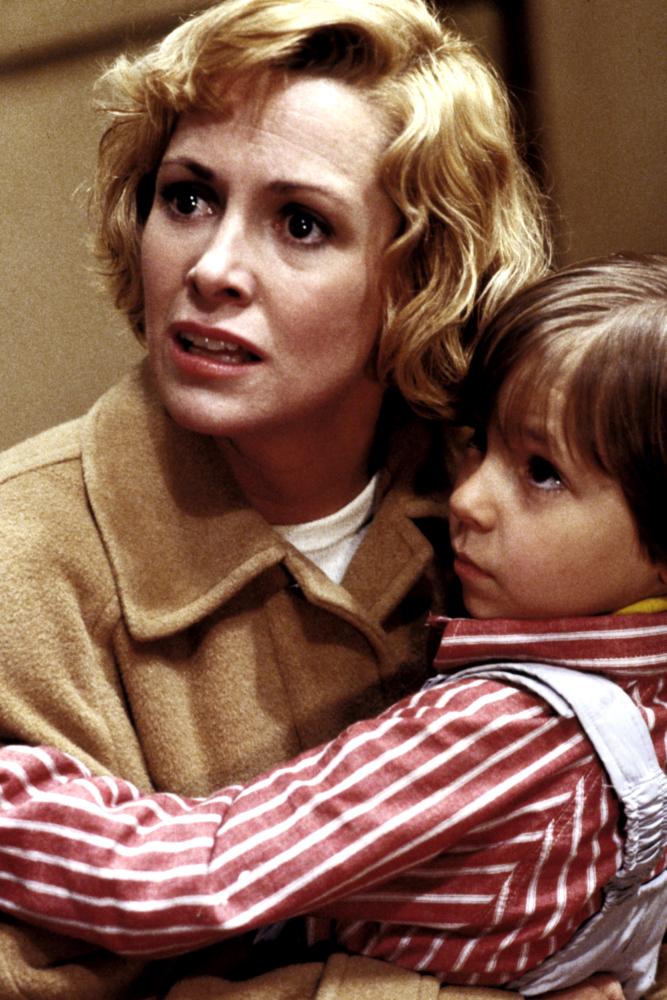
Karen Barclay is a widow who works at a department store and raises her six-year-old son Andy alone. Andy wants a Good Guy doll for his birthday, but Karen can't afford one. Her friend and coworker Maggie Peterson hears that a street peddler has one, and Karen buys it from him. Andy loves the doll, which tells him its name is Chucky.
That night Karen works late and Maggie babysits. Chucky comes to life, hits Maggie in the head with a hammer, and she falls out of the window to her death. Norris is on the case and has his doubts about Andy, who says Chucky did it. Andy also says Chucky told him his real name is Charles Lee Ray.
The next day Chucky talks Andy into skipping school and riding the train into a rough part of town. Chucky tracks down Eddie Caputo at his hideout, a condemned house, and kills him in a gas explosion as revenge for leaving him behind. The police find Andy near the scene, and Andy is sent to a psychiatric hospital for observation.
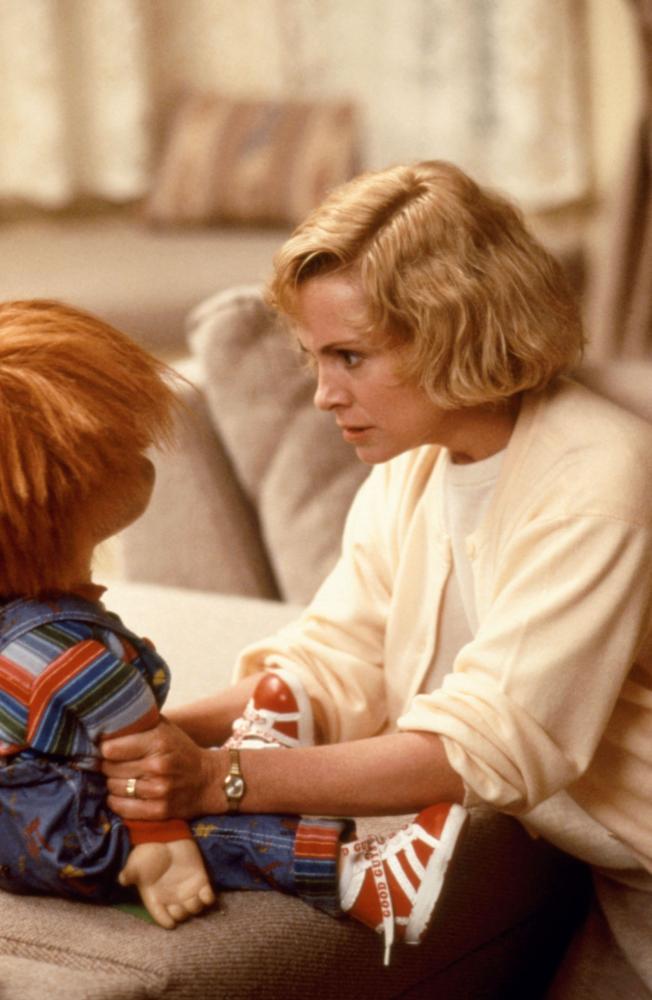
Back at the apartment, Karen finds out the batteries were still in the box. The doll has been talking and moving with no power at all. When she threatens to throw it into the fireplace, Chucky attacks her and gets away. Karen goes to Norris, who doesn't believe her. She tracks down the peddler, who tells her he found the doll in the burned-out toy store. Chucky then attacks Norris, and Norris shoots the doll. It bleeds and cries out, and now Norris believes her.
Chucky goes to John Bishop, the voodoo teacher who taught Ray the spell. John tells him that the longer he stays in the doll, the more human the body becomes. When John won't help, Chucky tortures him with a voodoo doll until he gives up the answer. To get out of the doll, Chucky has to put his soul into the first person he told his secret to, and that is Andy. When Karen and Norris find John, he is bleeding to death. Before he dies, John tells them the way to destroy Chucky is to destroy his heart.
Chucky gets into the psychiatric hospital and kills Andy's doctor, Dr. Ardmore, with an electroshock machine. Andy escapes and runs home, where Chucky knocks him out and starts the chant. Karen and Norris get there in time. They throw Chucky into the fireplace and burn him, and Karen shoots off his head and limbs. The burned, broken doll keeps coming out of the heating vent until Norris shoots him through the heart and kills him.
MGM/UA skipped Halloween to stay out of the way of Halloween 4 and opened the film on Wednesday, November 9, 1988, the week of Veterans Day. The TV campaign ran three weeks, aimed at viewers 12 to 20, with 15-second spots built around audience reactions and Chucky pitched as a new horror icon.
It opened at number one with $6,583,963 for the weekend and $8,002,841 over five days. Wikipedia puts it in 1,377 theaters. The Hollywood Reporter reported a first day of $600,689 from 1,320 theaters. It finished with $33,244,684 in the US and Canada and $10,952,000 overseas, for $44,196,684 worldwide. That made it United Artists' second-biggest release of 1988 after Rain Man.
Reviews were better than slasher films usually got. Roger Ebert gave it three stars out of four, and Leonard Maltin also gave it three. Caryn James of The New York Times called it clever and playful. Kevin Thomas of the Los Angeles Times praised its speed and style. Variety called it a near-miss, with fine technique but a thin story. Dave Kehr of the Chicago Tribune gave it one star. Richard Harrington of The Washington Post thought the finale was a rehash and objected to how realistically a six-year-old was terrorized.
Rotten Tomatoes lists 64 percent positive from 95 reviews with an average of 6.3 out of 10. Metacritic gives it 58 from 18 critics. Audiences polled by CinemaScore gave it a B.
At the Saturn Awards Catherine Hicks won Best Actress. The film was nominated for Best Horror Film, Alex Vincent for Best Performance by a Younger Actor, and Holland, Lafia and Mancini for Best Writing.
Protesters gathered at MGM's main gate calling for the film to be banned, and local news covered it live. Jeffrey Hilton from Kirschner's office went out, talked with the group's leader and shook his hand, and the crowd broke up. Holland later said he got boxes of letters from British schoolchildren after the film came out there.
In March 1989 a 30-second commercial for the video release showed Chucky coming to life and chasing someone. ABC and CBS pulled it from prime time after complaints from parents and ran it only late at night. NBC kept airing it.
1988 · studio press kit
Karen Barclay
Detective Mike Norris
Andy Barclay
Charles Lee Ray / Chucky
on screen as Ray and voice of Chucky
Maggie Peterson
Jack Santos
Dr. Ardmore
Eddie Caputo
Peddler
Walter Criswell
News reporter at toy store
John 'Dr. Death' Bishop
Orderly
Mona
George
Lucy
Male TV newscaster
listed as Bo Kane on some databases
Female TV newscaster
Bellevue patient
Bellevue patient
Bellevue patient
Bellevue patient
Bellevue patient
Bellevue patient
Bellevue patient
Friendly Chucky / kid in animated commercial
voice
Walkabout Chucky
voice; also appears as the human Good Guy TV host
Kid in animated commercial
voice
Chucky
uncredited in-suit performer; credited in crew as Chucky stunt double
Director
Second unit director and stunt coordinator
Screenplay and story
Screenplay
Screenplay
Producer; Chucky doll created
Executive producer
Co-executive producer
Associate producer
Unit production manager
Unit production manager
First assistant director
Director of photography
Camera operator
Steadicam operator, Chicago crew
Director of photography, second unit
Still photographer
Editor
Editor
Additional film editor
Production designer
Assistant art director
Good Guy illustrations
Set decorator
Property master
Property master, Chicago crew
Costume designer
Costume supervisor
Composer
Synclavier programming
Orchestration
Music supervisor
Music editor
Supervising sound editor
Sound mixer
Effects re-recording mixer
Dialogue re-recording mixer
Chucky doll designed and executed
Shop supervisor, Chucky construction unit
Mechanical crew, Chucky construction unit (lead puppeteer)
Mechanical crew, Chucky construction unit
Mechanical crew, Chucky construction unit
Mechanical crew, Chucky construction unit
Mechanical crew, Chucky construction unit
Mechanical crew, Chucky construction unit
Hair, Chucky construction unit
Hair, Chucky construction unit
Production assistant, Chucky construction unit
Visual effects supervisor
Special effects supervisor
Special effects
Visual effects
Opticals
Title design
Animation sequence
Makeup artist
Hairstylist
Casting
Casting
Chicago casting
Chicago casting
Script supervisor
Location manager
Location manager
Mike's car stunts
Unit publicist
Don Mancini came up with the idea while studying literature at UCLA in 1985 and wrote the first draft at Columbia University's film school in 1986. He was reacting to 1980s toy marketing, his father's work in advertising, and the Cabbage Patch Kids riots of 1983. Other touchstones were Trilogy of Terror, Magic, Poltergeist, the Twilight Zone episode Living Doll, and Freddy Krueger's wisecracks.
Mancini's script was first called Batteries Not Included. He renamed it Blood Buddy when another film took his title. In that version there was no killer's soul. The doll was a blood-filled toy that acted out Andy's buried anger over his parents' divorce, and the story kept the audience guessing whether Andy or the doll was the killer. Charles Band of Empire Pictures was interested but passed because of the cost.
Producer David Kirschner, fresh off An American Tail, picked up the script. He worried a bleeding doll and a boy's subconscious rage would put people off. He also drew detailed sketches of the doll, and his rewrite and drawings started a bidding war. United Artists won after UA president Tony Thomopoulos and MGM/UA chairman Lee Rich saw a possible franchise. Kirschner told The Hollywood Reporter he thought of the film as the dark side of Pinocchio.
Tom Holland was brought in on Steven Spielberg's recommendation and came up with the idea of a killer possessing the doll. Kirschner named the killer Charles Lee Ray after Charles Manson, Lee Harvey Oswald and James Earl Ray. Holland couldn't crack how the possession worked and left to direct Fatal Beauty. John Lafia took over the script, wrote the name Chucky, and at one point had Ray's soul moving into the doll during an electric chair execution. The doll had been called Buddy, but that was changed to avoid trouble with Hasbro, which sold the My Buddy doll.
While Holland was away the studio talked to other directors, including William Friedkin, Irvin Kershner, Robert Wise, Joseph Ruben and Howard Franklin. Rocky Morton and Annabel Jankel were attached as co-directors for a while. Holland came back after Fatal Beauty and did a heavy final rewrite. He moved the story from the suburbs to the city, made Karen a department store clerk instead of an advertising executive, and brought in voodoo as the way Ray gets into the doll. Holland asked for sole writing credit. Writers Guild arbitration gave screenplay credit to Mancini, Lafia and Holland, with story credit to Mancini.
Auditions started in November 1987 at Hollywood United Methodist Church. Holland cast Chris Sarandon right away after working with him on Fright Night. Catherine Hicks came recommended by Leonard Nimoy, who had directed her in Star Trek IV. Holland saw hundreds of boys for Andy. Alex Vincent had less experience than the other finalists but won the part on his second audition. John Lithgow was considered for Charles Lee Ray before Holland cast Brad Dourif, whom he had just worked with on Fatal Beauty.
Chucky's voice took three tries. The first plan was an electronic voice. John Franklin recorded the lines while Dourif was busy on Mississippi Burning. Test audiences found Franklin too funny, and Dourif was still tied up, this time on Spontaneous Combustion, so Jessica Walter was hired, following the example of Mercedes McCambridge voicing the demon in The Exorcist. In the end Dourif came back and redubbed every line. Franklin can still be seen on screen as the human host of the Good Guy TV show, which was shot after he lost the voice role.
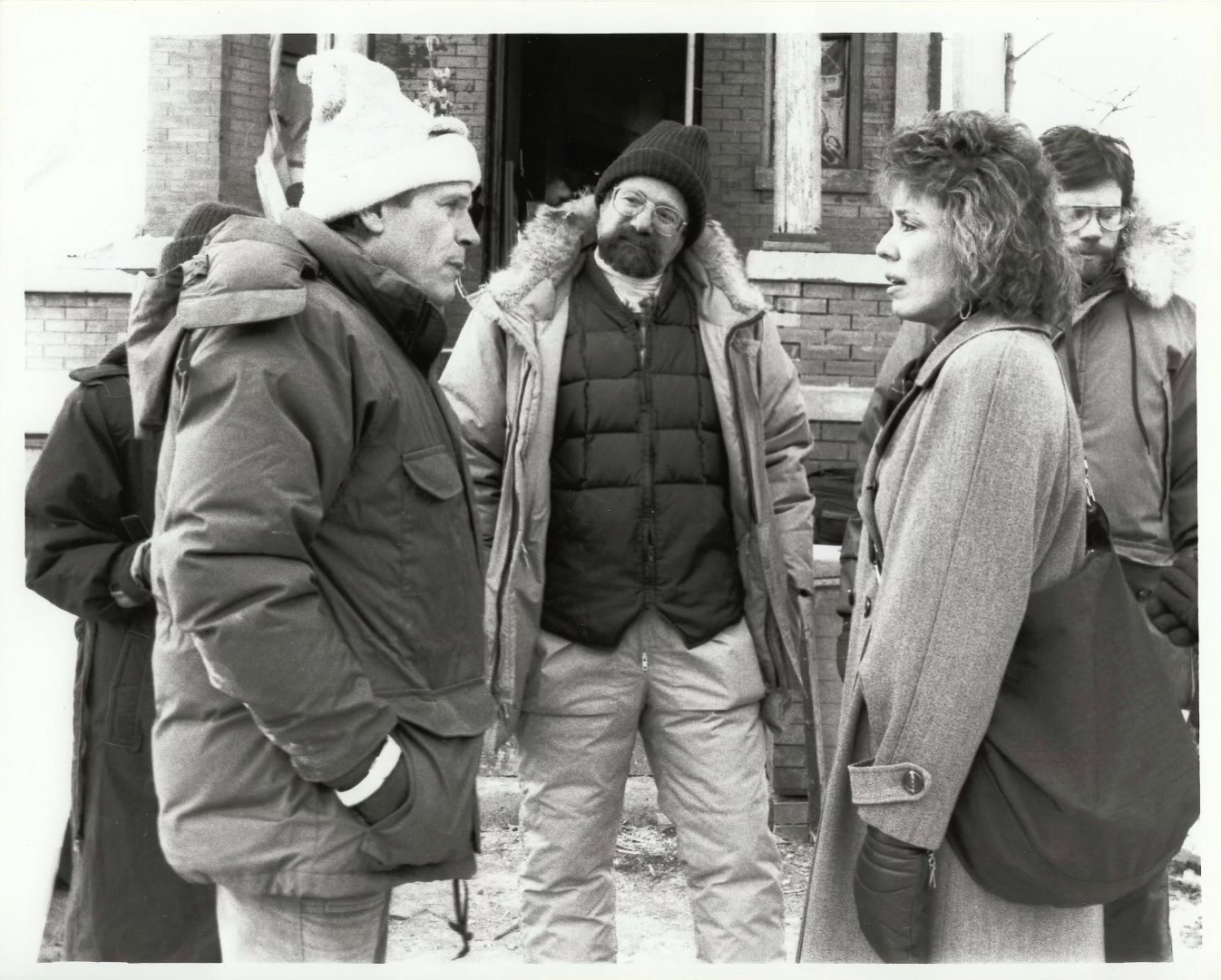
AFI's catalog dates principal photography from January 7, 1988, in Chicago. Wikipedia gives December 31, 1987, to March 5, 1988. MGM/UA wanted the film shot in California to save money, but Kirschner didn't like what he saw on scouting trips to Oakland and San Francisco. The winter shoot was brutal, with wind chills down to 50 below zero. The crew rented rooms and kept station wagons running near the sets as warming spots. After about four weeks in Chicago the production moved to Los Angeles. The end credits thank Chicago Studio City and Culver Studios.
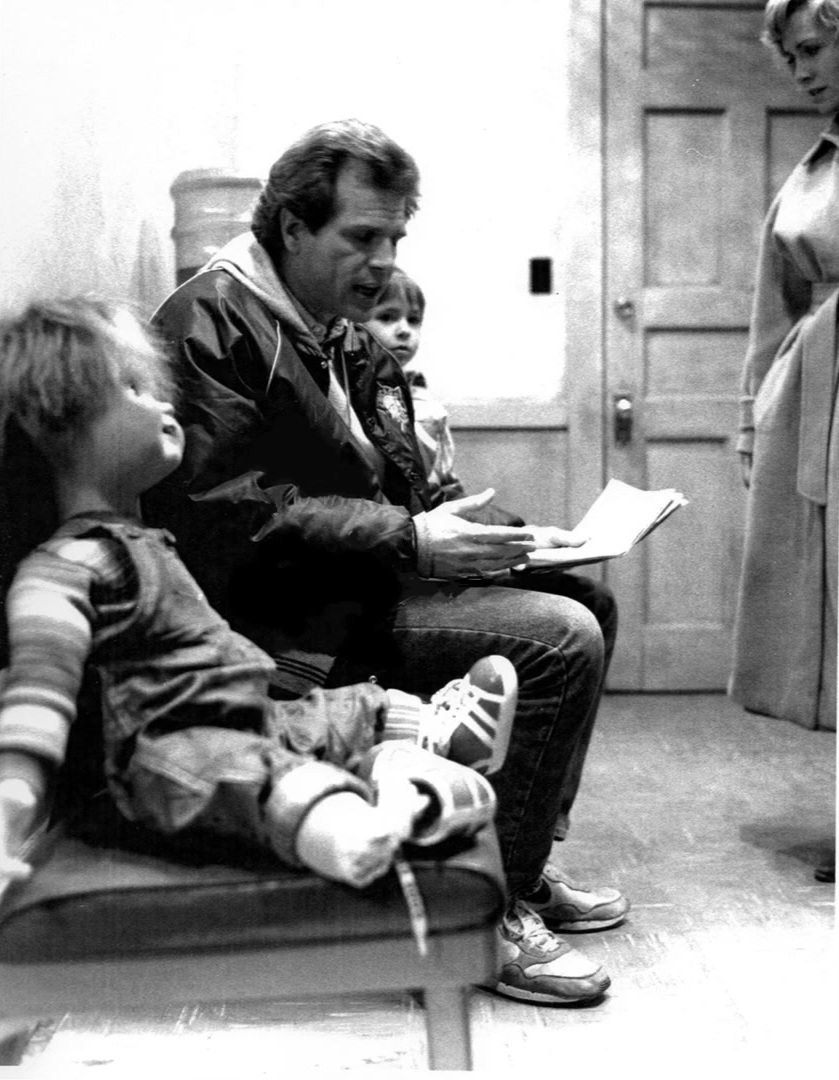
Holland and Kirschner didn't agree on how much of the doll to show. Holland wanted Chucky on screen as much as possible. Kirschner wanted to hold back the way Jaws did. For Andy's crying scene in the hospital, Holland told Vincent his parents were divorcing because of him.
The first rough cut ran close to two hours and tested badly. Kirschner and Mancini cut about 25 minutes, mostly Chucky's screen time. Mental Floss's oral history puts the trim at about 30 minutes. Holland objected and left, and Mancini and Lafia were brought back to help re-edit. MGM/UA nearly shelved the picture during Kirk Kerkorian's reshuffling of the studio, but the new cut tested well in Southern California and the release went ahead.
Don Mancini first circulated the screenplay as Batteries Not Included, then changed its title to Blood Buddy after learning of another film using the original title.
Mancini’s early version made the doll an expression of Andy’s suppressed anger. A blood-sharing ritual animated a toy designed to bleed when damaged.
David Kirschner wanted a more sympathetic child protagonist. John Lafia’s revisions introduced Charles Lee Ray and the name Chucky, before Tom Holland’s further rewriting.
Mancini identified Freddy Krueger’s verbal taunting as an influence on Chucky’s abrasive personality.
Principal photography began in Chicago on January 7, 1988. After four weeks, filming moved to Los Angeles.
During the winter location shoot, nearby rented rooms and heated station wagons provided warm spaces for the cast and crew.
Kirschner first hired Chris Walas of Gremlins to build the doll, but Walas left to direct The Fly II. Rick Baker turned the job down. Kevin Yagher took over and designed and built Chucky from Kirschner's graphite drawings. Howard Berger ran the Chucky construction shop.
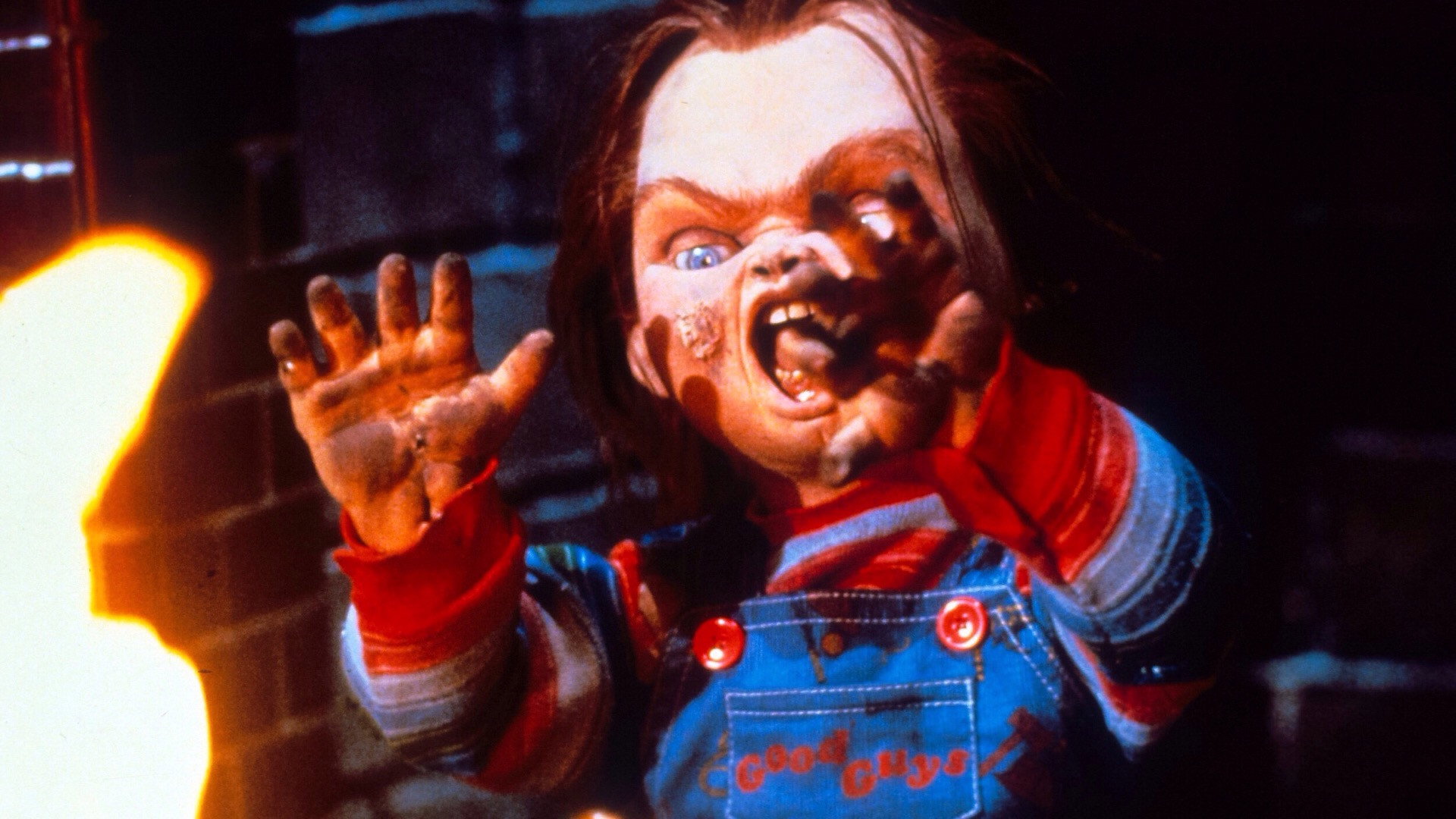
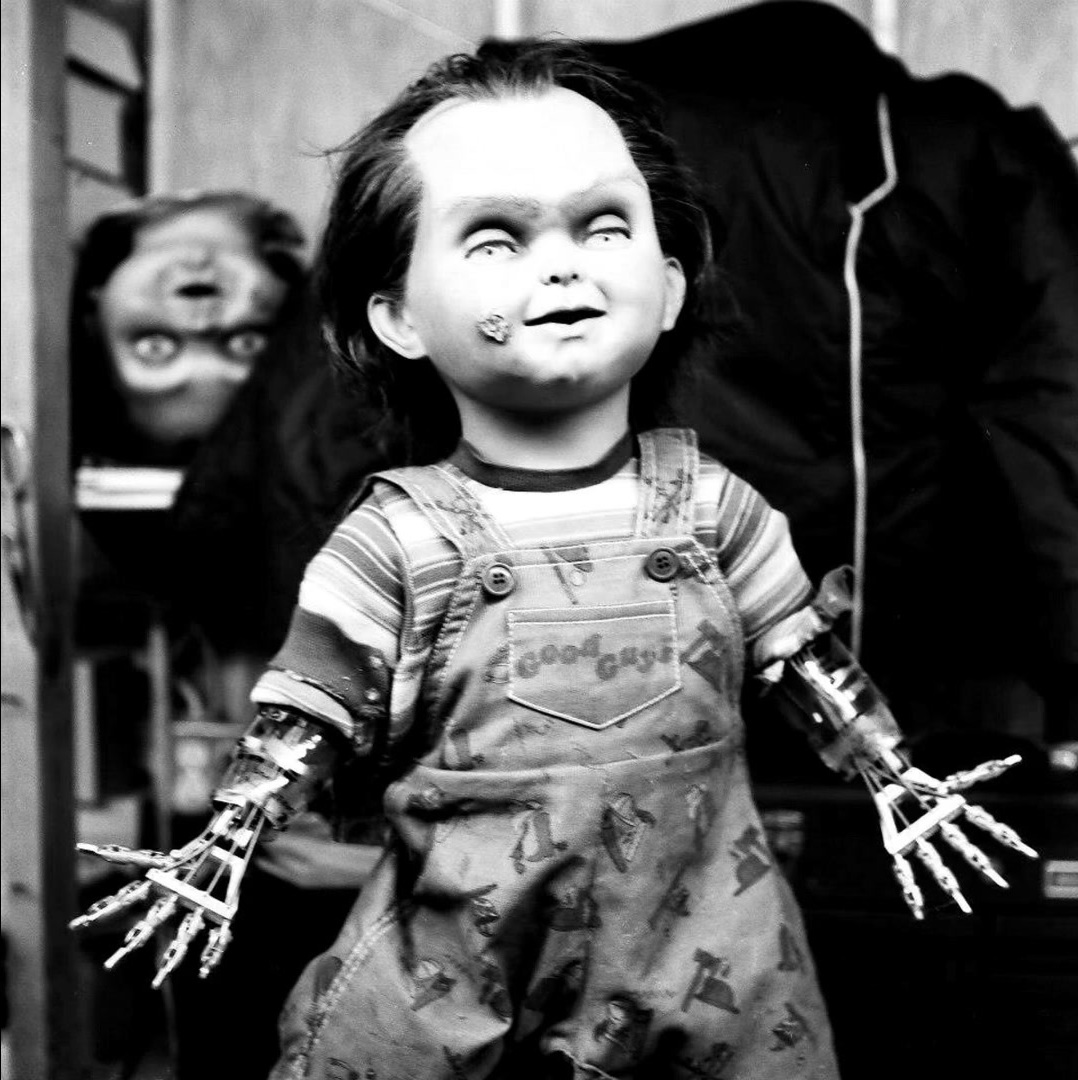
The team built several animatronic Chuckys, each for a different job. There was one for walking, one for flailing tantrums, and one for sitting still in close-ups. The doll changes over the film. His hairline slowly recedes so he looks more like Brad Dourif as Charles Lee Ray.
Running the doll took a whole crew. Wikipedia counts nine puppeteers. In the Mental Floss oral history, crew members recall around 11 people on some shots. The mechanism made a loud squeaking noise, simply pressing a button took 27 takes, and the doll's fingers had to be replaced three times a day.
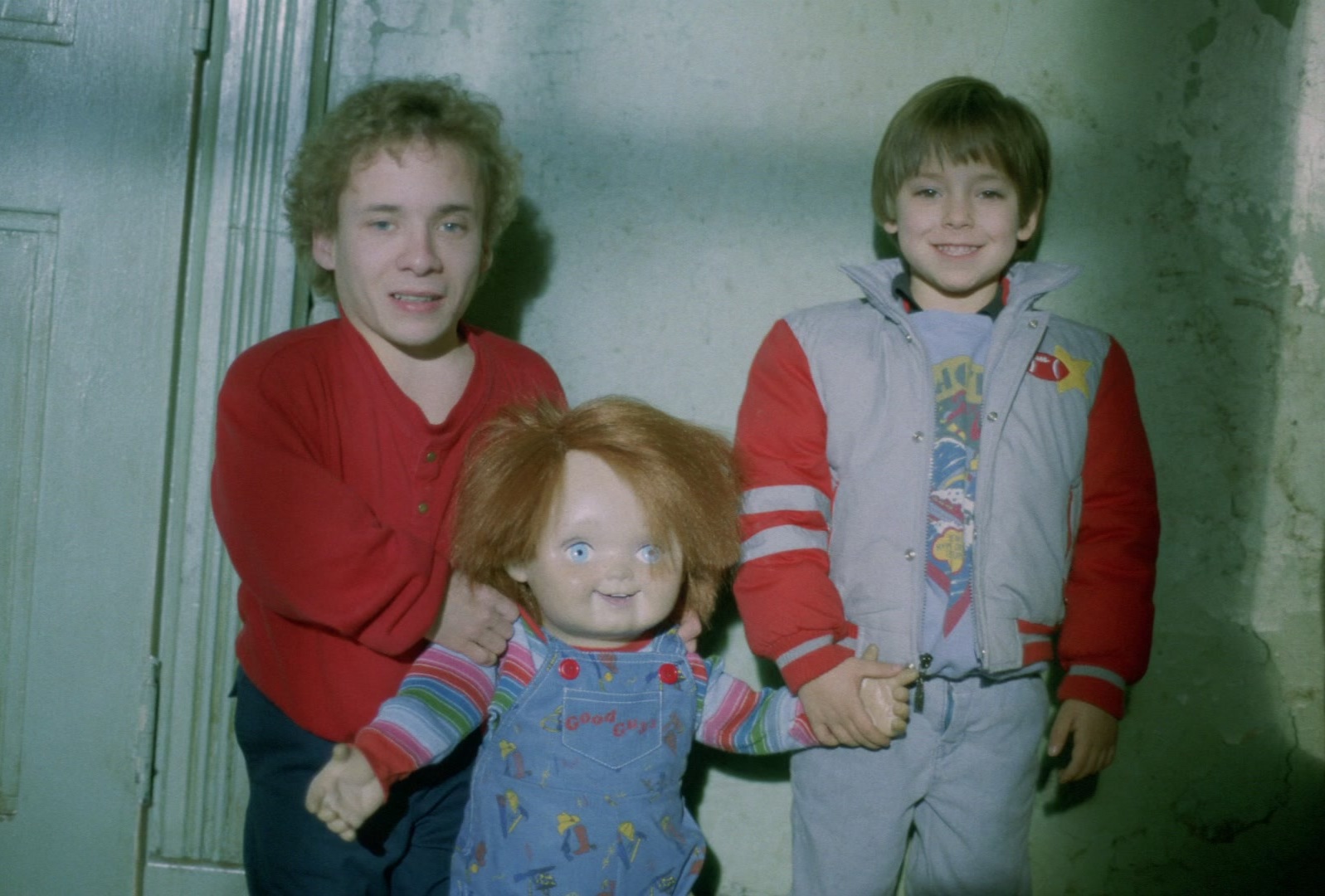
For wide shots of Chucky running and fighting, Ed Gale, who is 3 foot 6, wore a Chucky suit. Holland also used forced-perspective sets with short actors and children as doubles, including Alex Vincent's sister Ashley.
For the fireplace scene Gale was set on fire a piece at a time: one arm, then his chest, then both arms, each burn lasting about 45 seconds. On one take the crew dropped him six to eight feet into the fireplace. He hurt his back and burned his wrists.
Richard Helmer supervised the physical effects, Peter Donen the visual effects, and Apogee did visual effects work. The Good Guy TV cartoon was animated by Ruby-Spears Enterprises. Michael A. Hancock was the makeup artist.
Production used radio-controlled animatronics, puppets and human performers to portray Chucky.
Kevin Yagher led the Chucky effects work after earlier effects-team changes.
Multiple purpose-built Chucky rigs were created for walking, tantrum/flailing and stationary performance, with the doll's appearance gradually becoming more human.
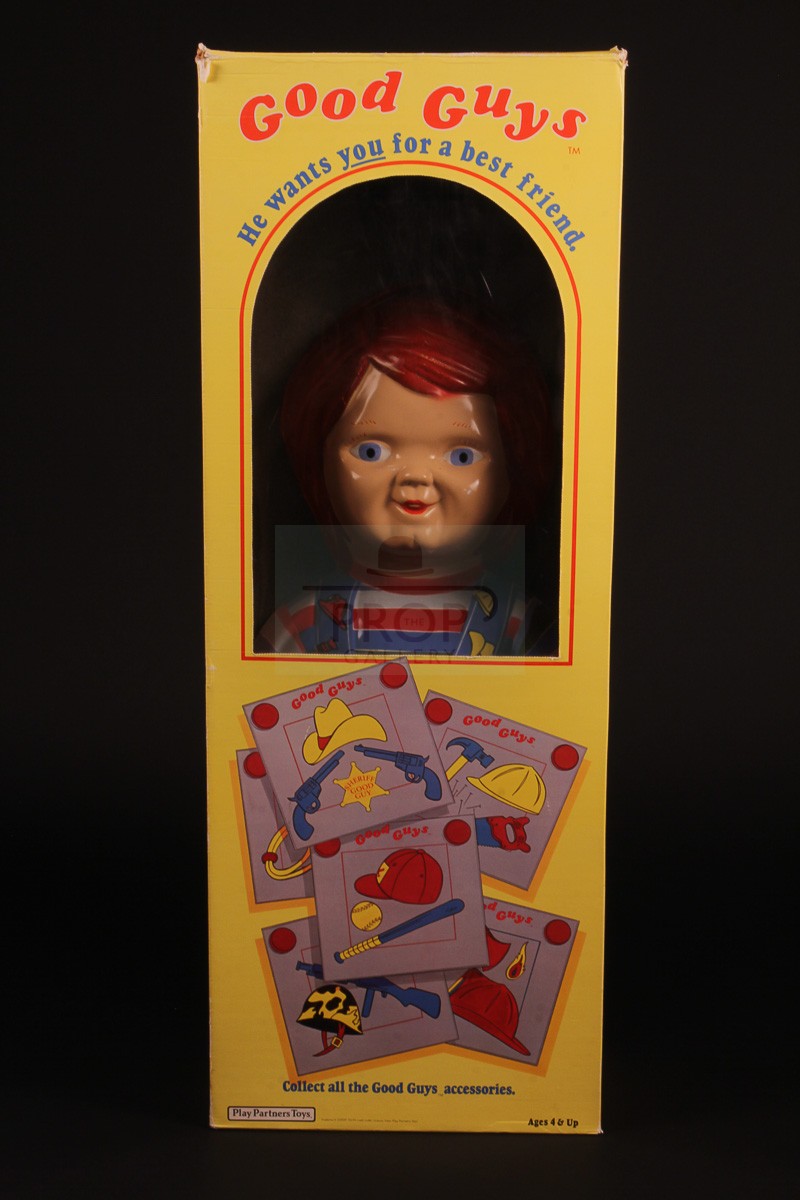
AFI credits David Kirschner with creating the Chucky doll, Kevin Yagher with designing and executing it, and Beverly Lazor-Bahr with the Good Guy illustrations used on the packaging and props.
April Ferry designed the costumes, with Mort Schwartz as costume supervisor. The Chucky construction unit had its own hair people (Zandra Platzek and Ron Pipes II) and lab technicians (Jim Kagel, Rick La Londe, Carl Sorensen and Chris Swift).
Arthur B. Shippee Jr. was property master in Los Angeles and William Dambra ran props for the Chicago crew.
A production-used A-camera clapperboard from the shoot, later signed by Tom Holland, was sold through Propstore with a Propstore certificate of authenticity.
AFI credits Beverly Lazor-Bahr with the Good Guy illustrations, April Ferry as costume designer, and Kevin Yagher with designing and executing the Chucky doll; the production maintained separate prop/costume and Chucky-construction crews for the toy-world material.
The Chucky construction unit included dedicated hair, lab and mechanical technicians, underscoring that the Good Guy doll was treated as a purpose-built effects character rather than a single static prop.
1988 · animatronic doll design
1988 · film-production camera slate


Joe Renzetti wrote the score. United Artists and Holland had planned a full orchestral score, but Renzetti pushed for electronic music. He and Craig Harris composed most of it on a Synclavier and turned the MIDI data into sheet music so an orchestra could play parts of it. Arlon Ober did orchestration. Music supervisor David Chackler said Renzetti wrote the score in three weeks.
Part of the score came out on vinyl in 1989.
Waxwork Records later put out the complete score on a 2xLP set from the original 1988 master tapes, remastered for vinyl. The 180-gram records came in fire orange with blood splatter and red, white and blue with a blood swirl, in a tip-on gatefold jacket with art by Phantom City Creative.
2xLP Vinyl
2022-08-16 · 4K Ultra HD + Blu-ray
2023 · 2023-12-18 · Blu-ray
Funko · vinyl/plush
Mezco Toyz · large-scale talking figure
Mezco Toyz · large-scale talking figure
Fright-Rags · apparel
Amazon MGM Studios