StabMovies.com

Halloween

Halloween III: Season of the Witch

1982

Halloween III: Season of the Witch (1982) poster
Status
Released
Released
October 22, 1982
Runtime
98 minutes
Rated
R
Budget
$2,500,000
Opening
$6,333,259
Domestic
$14,400,000
Worldwide
$14,402,425
Distributor
Universal Pictures
Studio
Dino De Laurentiis Corporation
Continuity
Standalone anthology

The night no one comes home.

Directed by
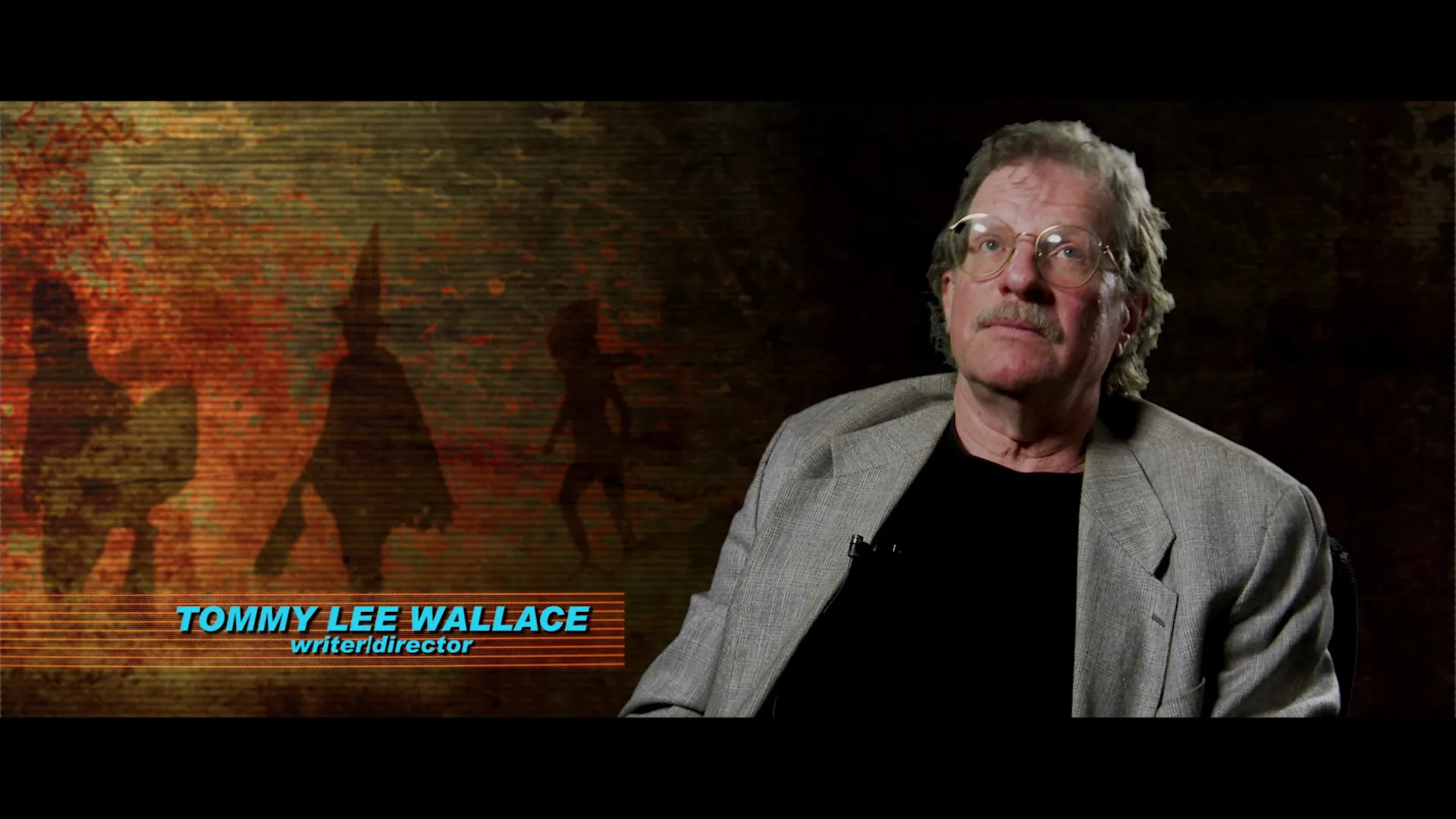
Tommy Lee Wallace
Written by
Tommy Lee Wallace
Produced by
Debra Hill, John Carpenter

The Film

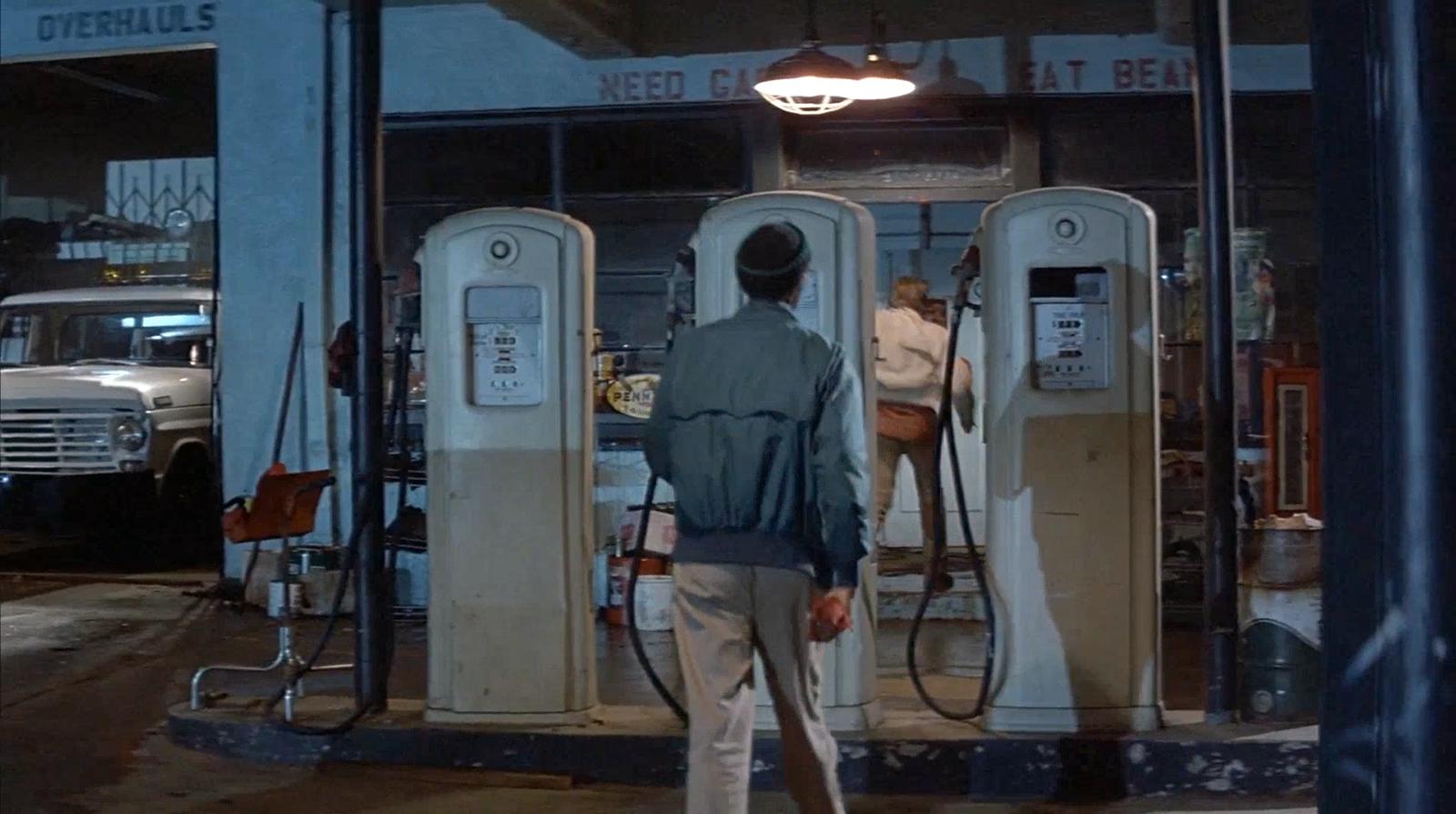
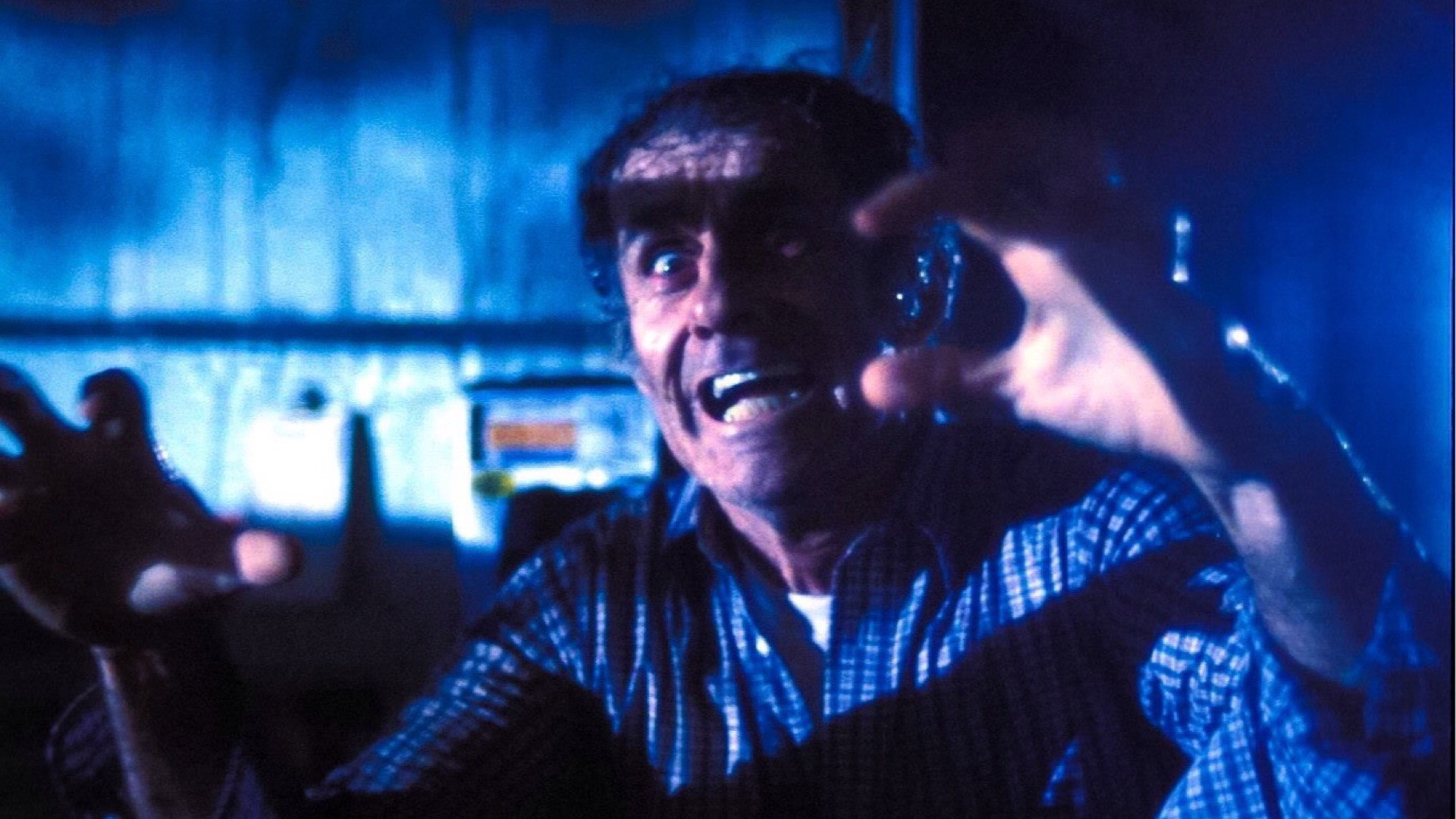
On Saturday, October 23, in Northern California, a man named Harry Grimbridge runs through a junkyard, chased by men in business suits. He staggers into Walter Jones's gas station holding a jack-o'-lantern mask from Silver Shamrock Novelties and warns that they are coming. At the hospital, Dr. Daniel Challis examines him. Harry panics when a Silver Shamrock commercial comes on TV. That night one of the suited men walks into his room and crushes his skull. Challis chases the killer into the parking lot, where the man pours gasoline on himself in his car and sets it on fire.

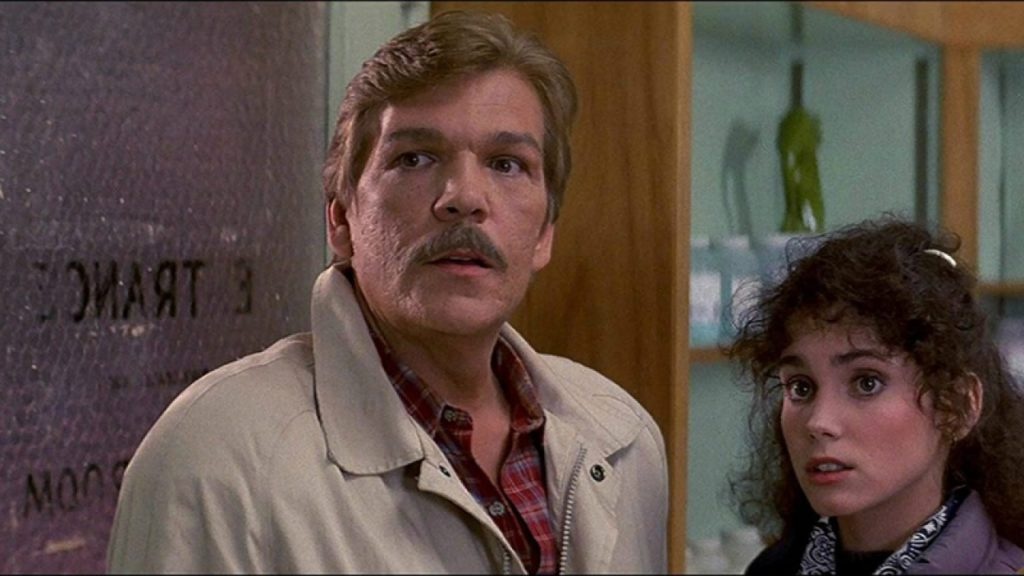
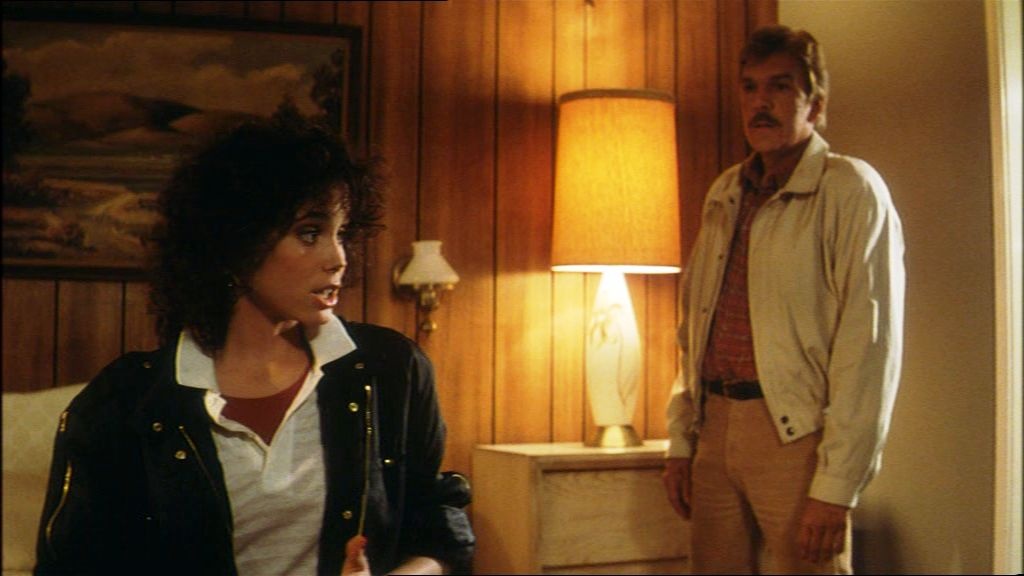
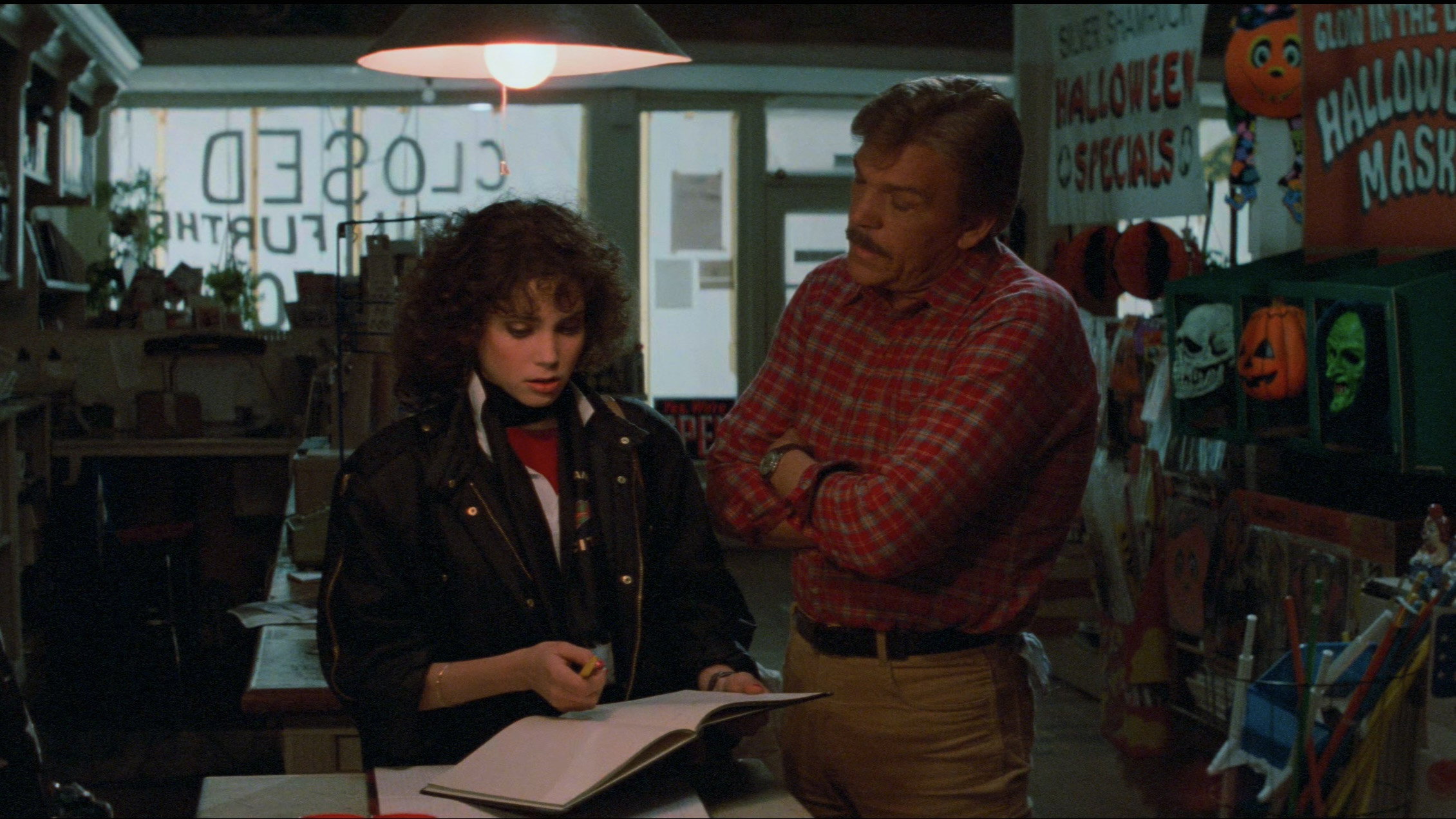
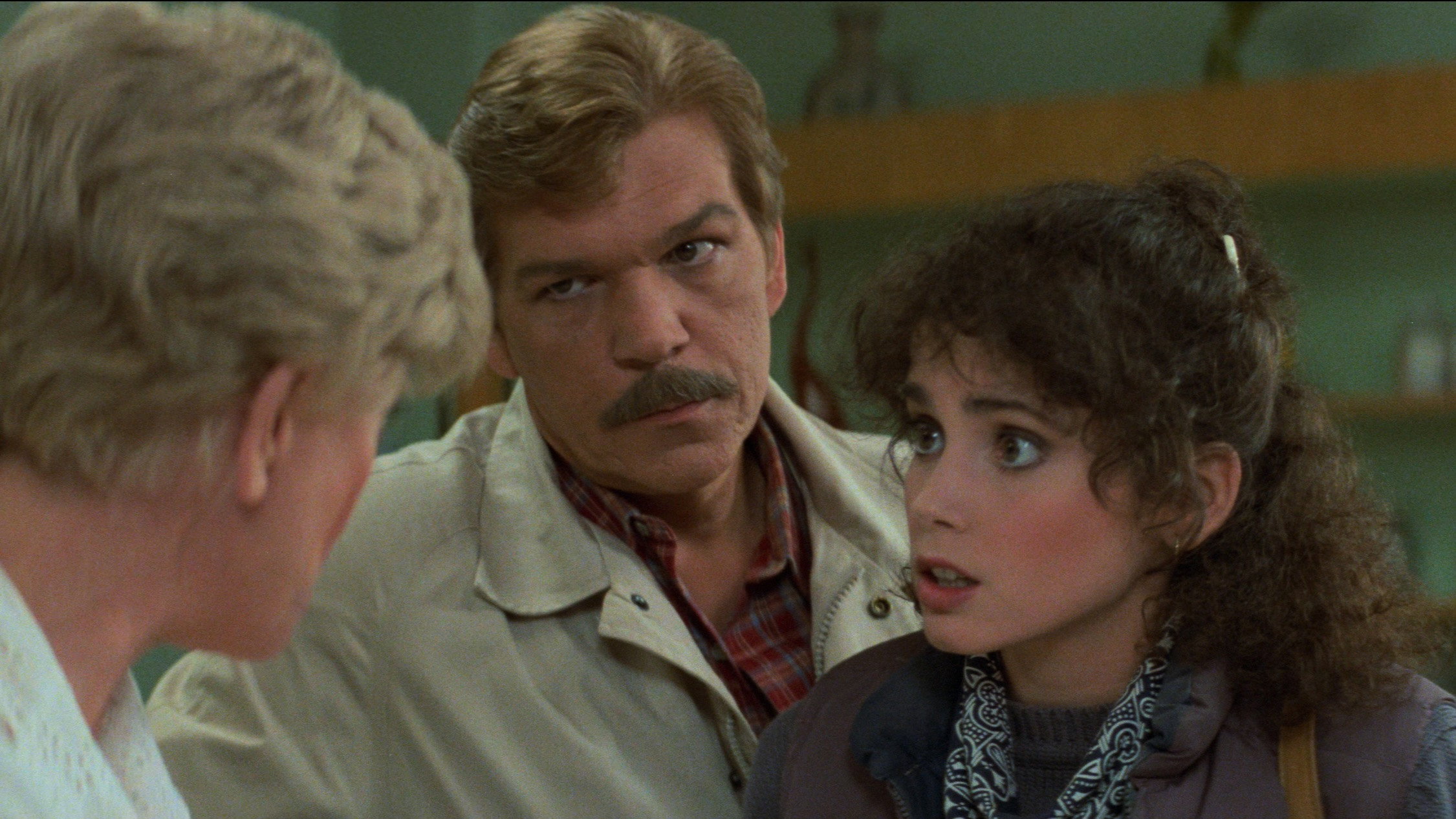
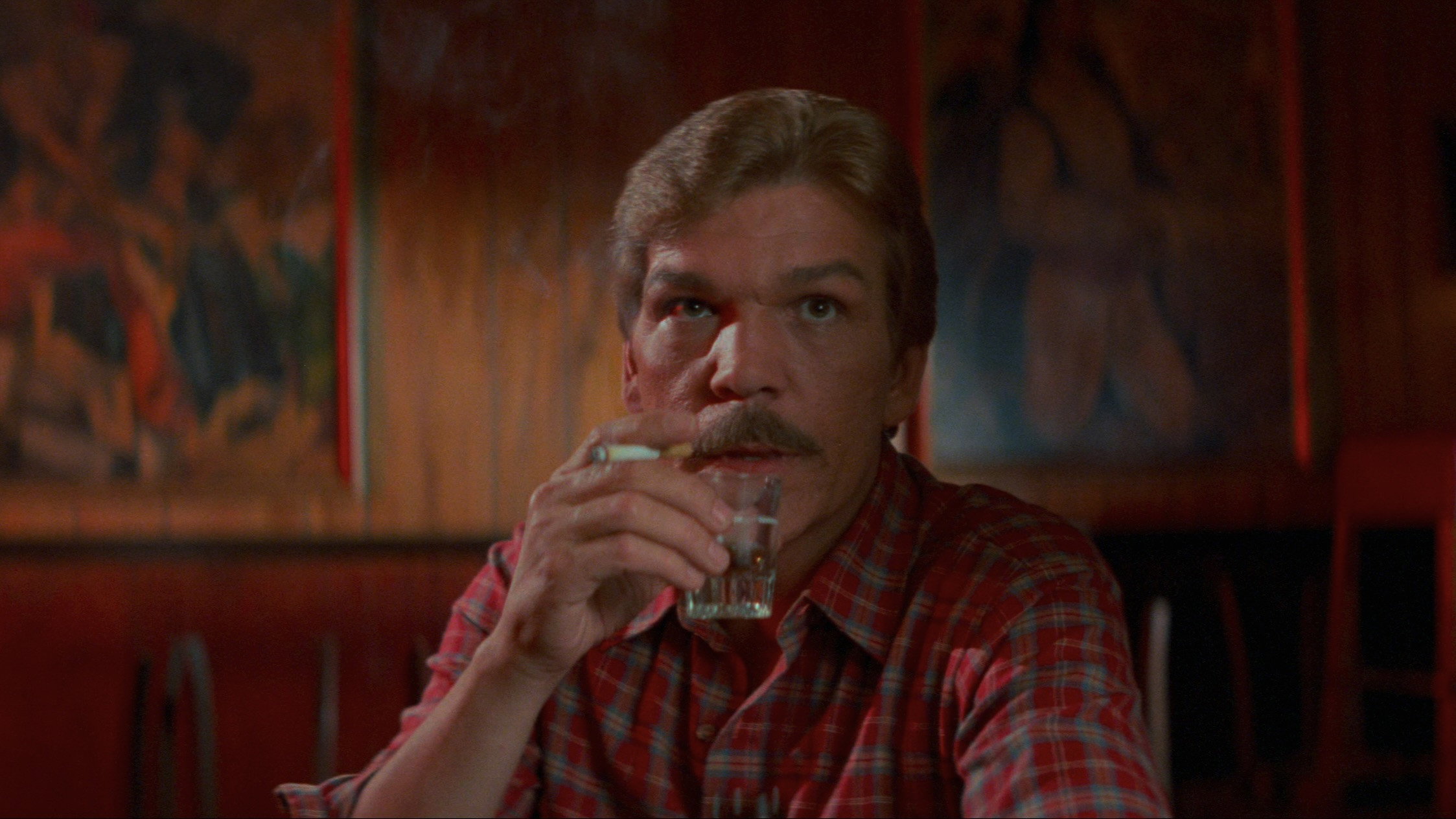
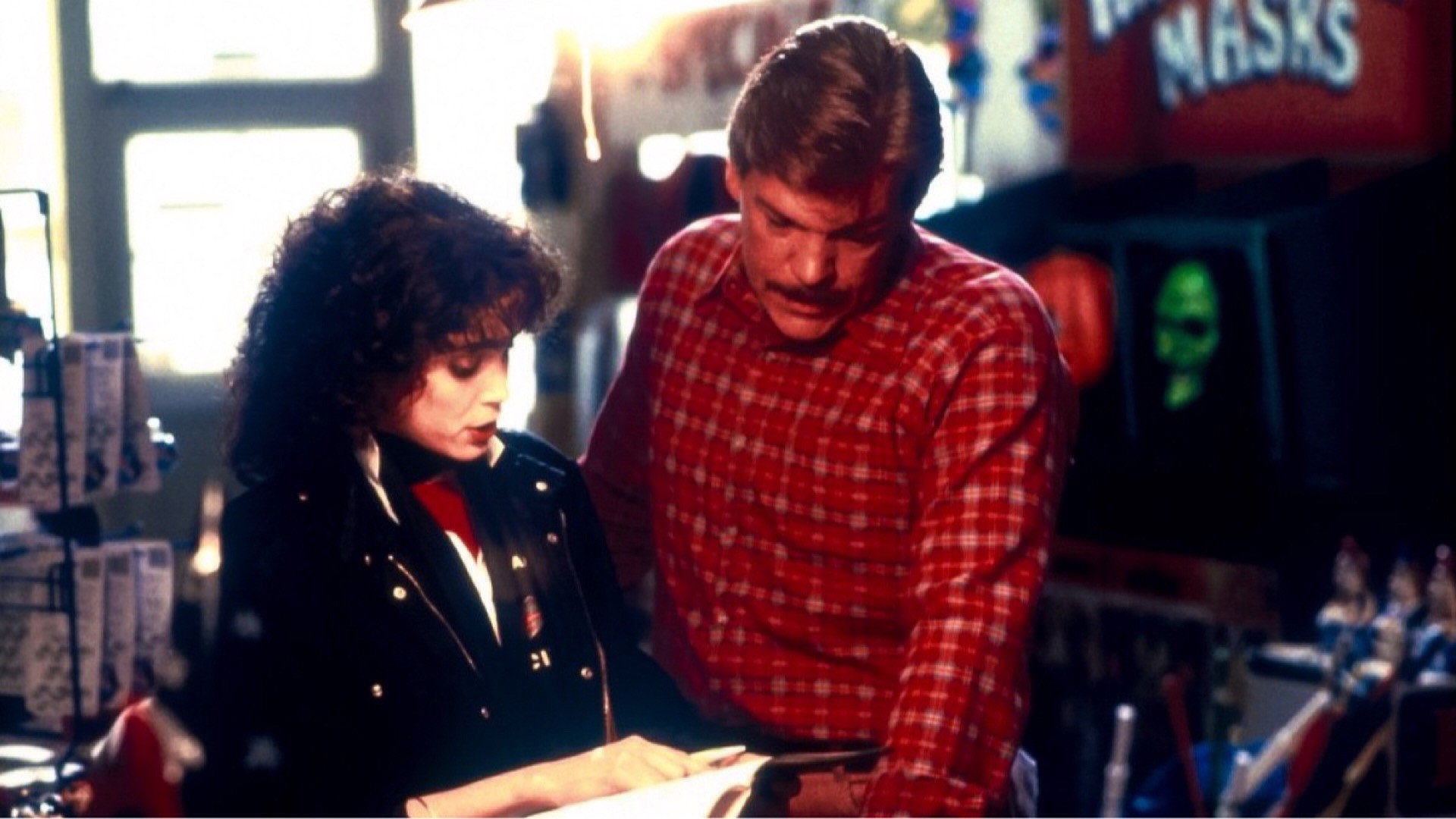
Challis is a divorced doctor with a drinking problem who keeps letting down his ex-wife Linda. He brings their two kids Halloween masks and keeps missing his time with them. The next morning Harry's daughter Ellie Grimbridge identifies her father's body. On Friday, October 29, she runs into Challis at a bar. At her father's shop, his appointment book shows he last went to the Silver Shamrock factory in Santa Mira to pick up an order of masks. Hospital pathologist Teddy looks into the burned car for Challis. She finds no human remains in the ashes and car parts.

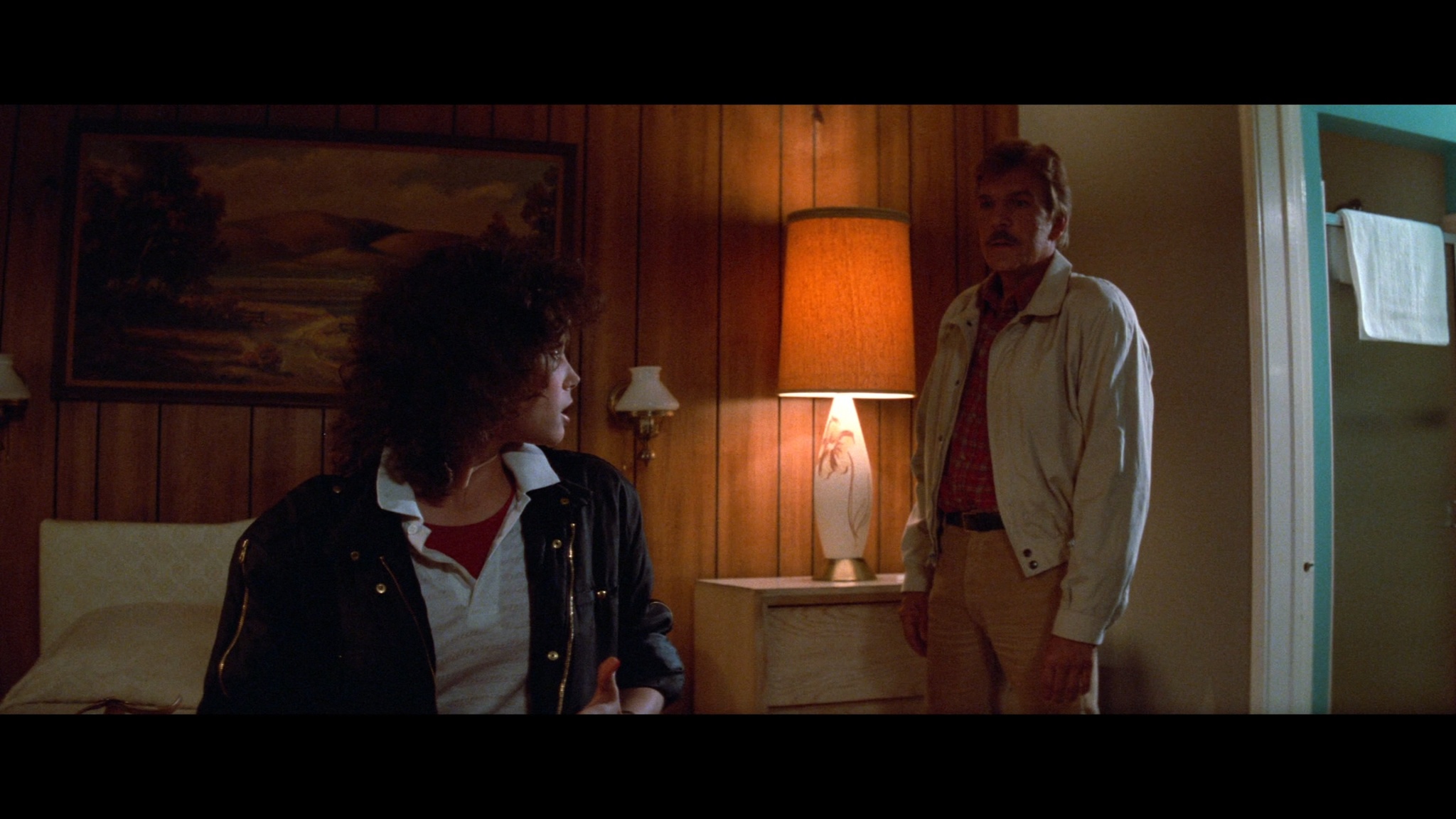
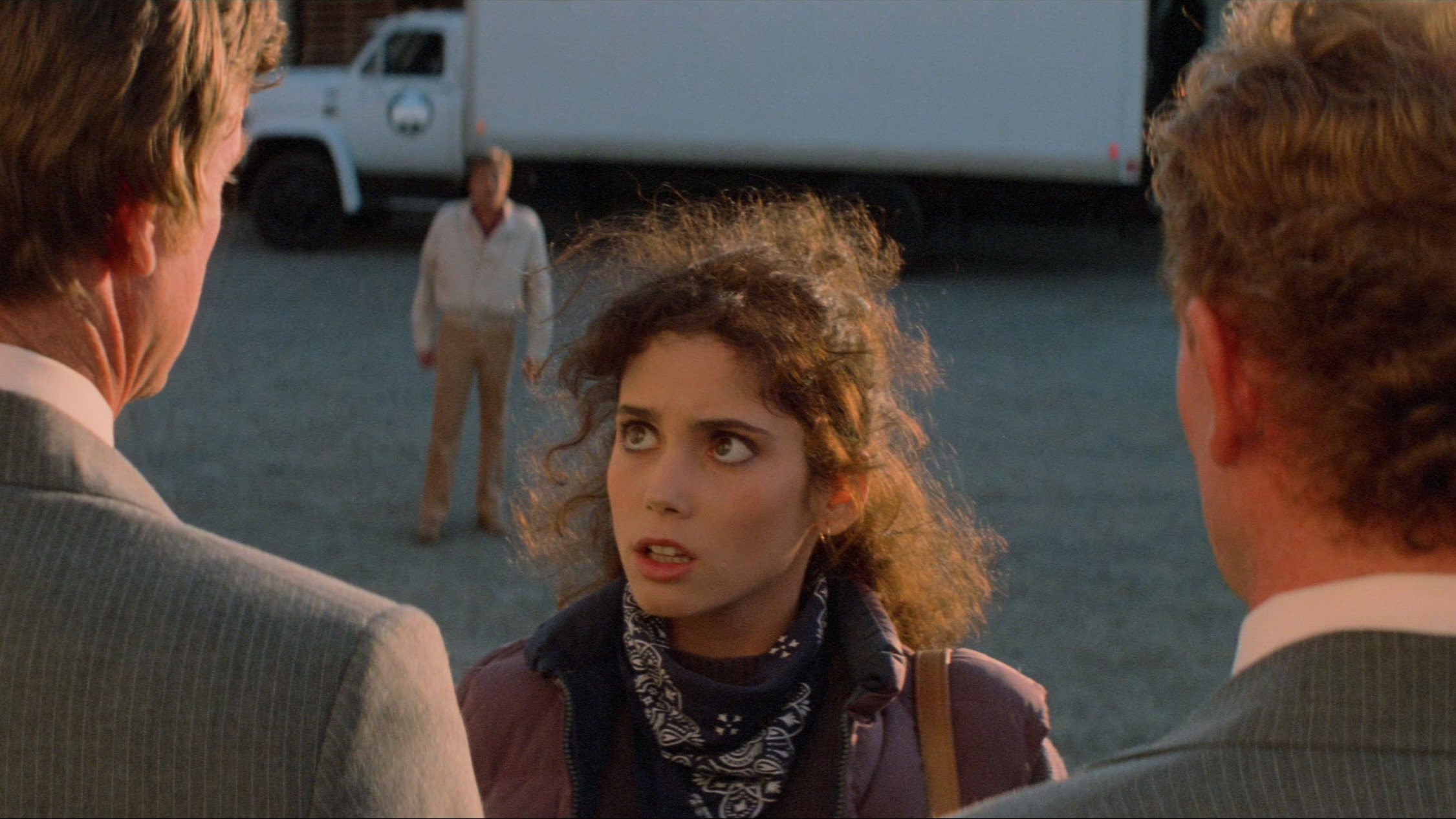
Challis and Ellie drive to Santa Mira, a small Irish-American factory town, and check into a motel as a married couple. The register shows Harry stayed there. Security cameras watch the streets, and a loudspeaker announces a 6 p.m. curfew. A drifter named Starker warns Challis about the cameras and says he wants to blow up the factory because Cochran would not give him a job. Later that night, two of Cochran's suited men tear his head off. At the motel, a novelty shop owner named Marge Guttman pokes at the metal Silver Shamrock badge on the back of a mask. A laser beam burns away her face, and an insect crawls out of her mouth. Men in white coats take her away, and factory owner Conal Cochran calmly promises she will be cared for.

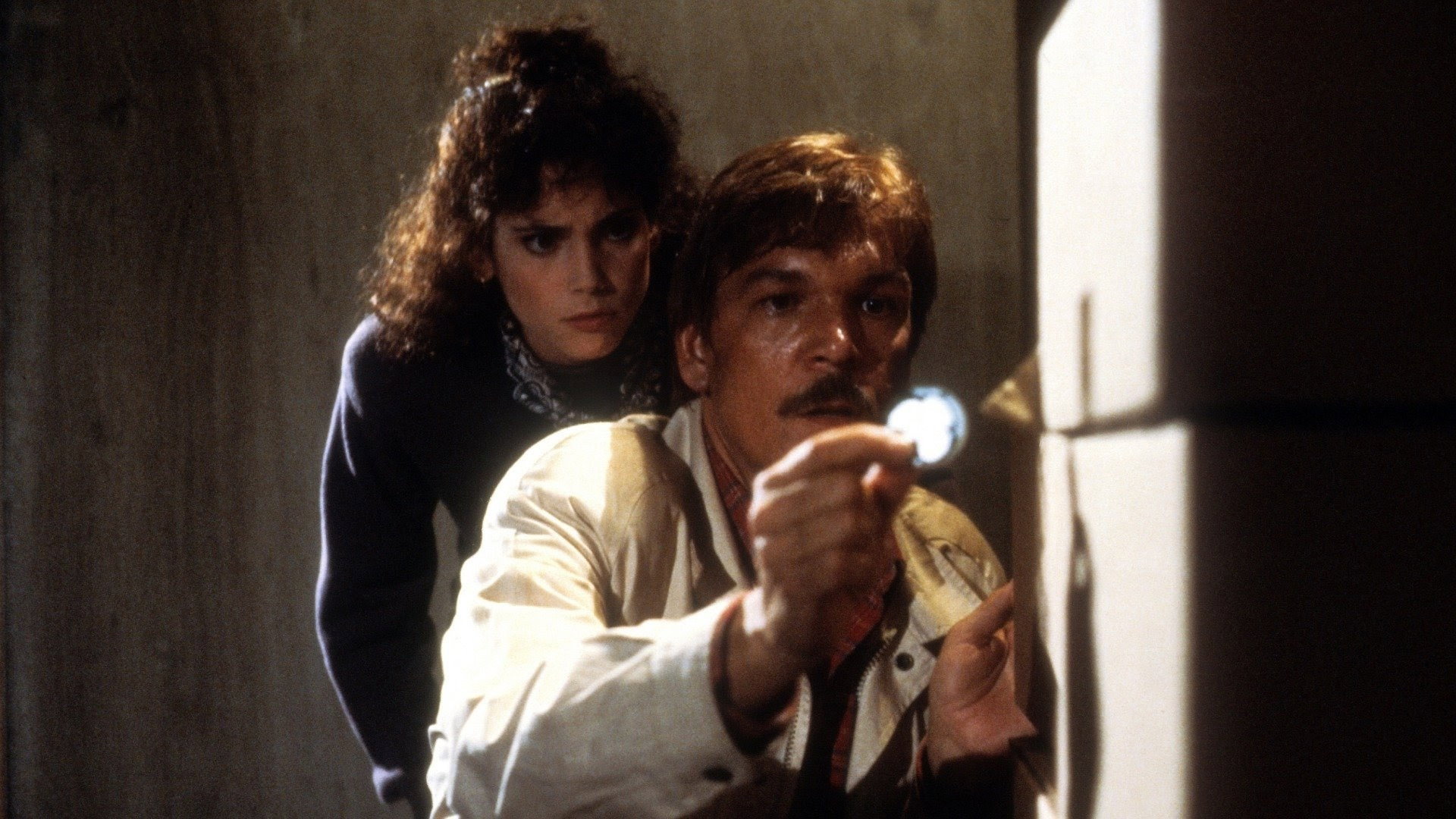
The next day workers claim they know nothing about Harry. Cochran gives Challis and Ellie a friendly tour along with mask salesman Buddy Kupfer, his wife Betty and their son Little Buddy. Challis notices factory men who look just like Harry's killer, and Ellie spots her father's car in a garage. That night Ellie is kidnapped. Challis runs to the factory, where an old woman in a chair turns out to be a robot. A suited man attacks him, and Challis punches him in the stomach and pulls out a wire covered in orange slime. The workers are androids. Back at the hospital, Teddy finds a pile of tiny gears and springs. As she calls the sheriff's office, an android kills her with an electric drill.

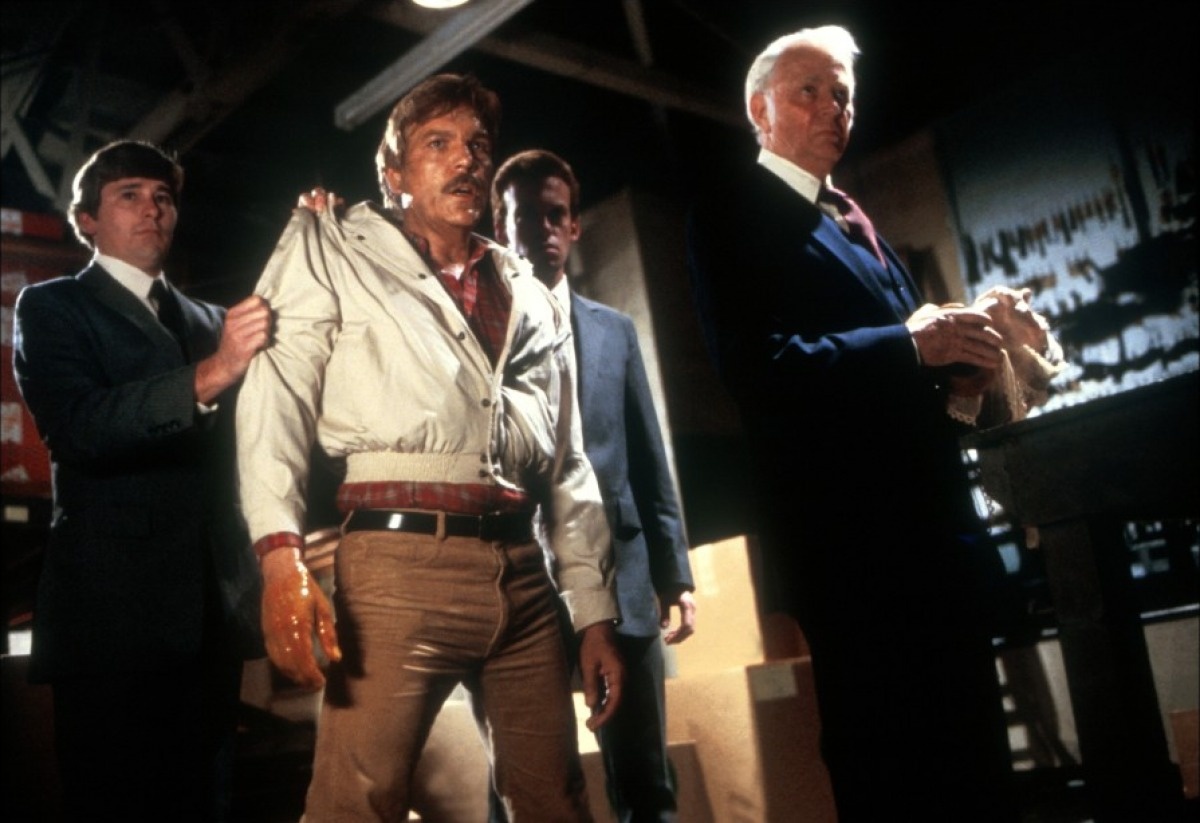
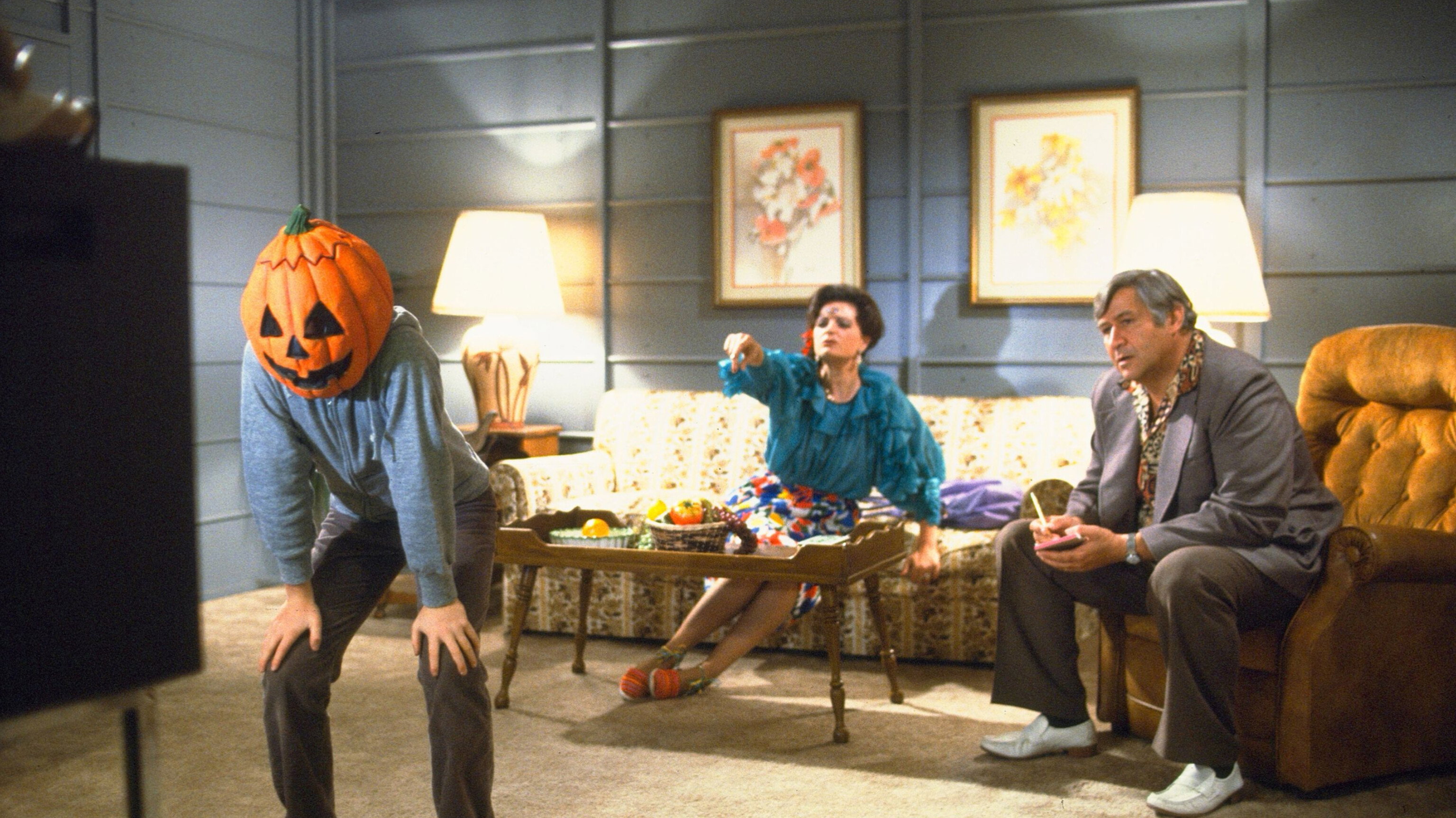
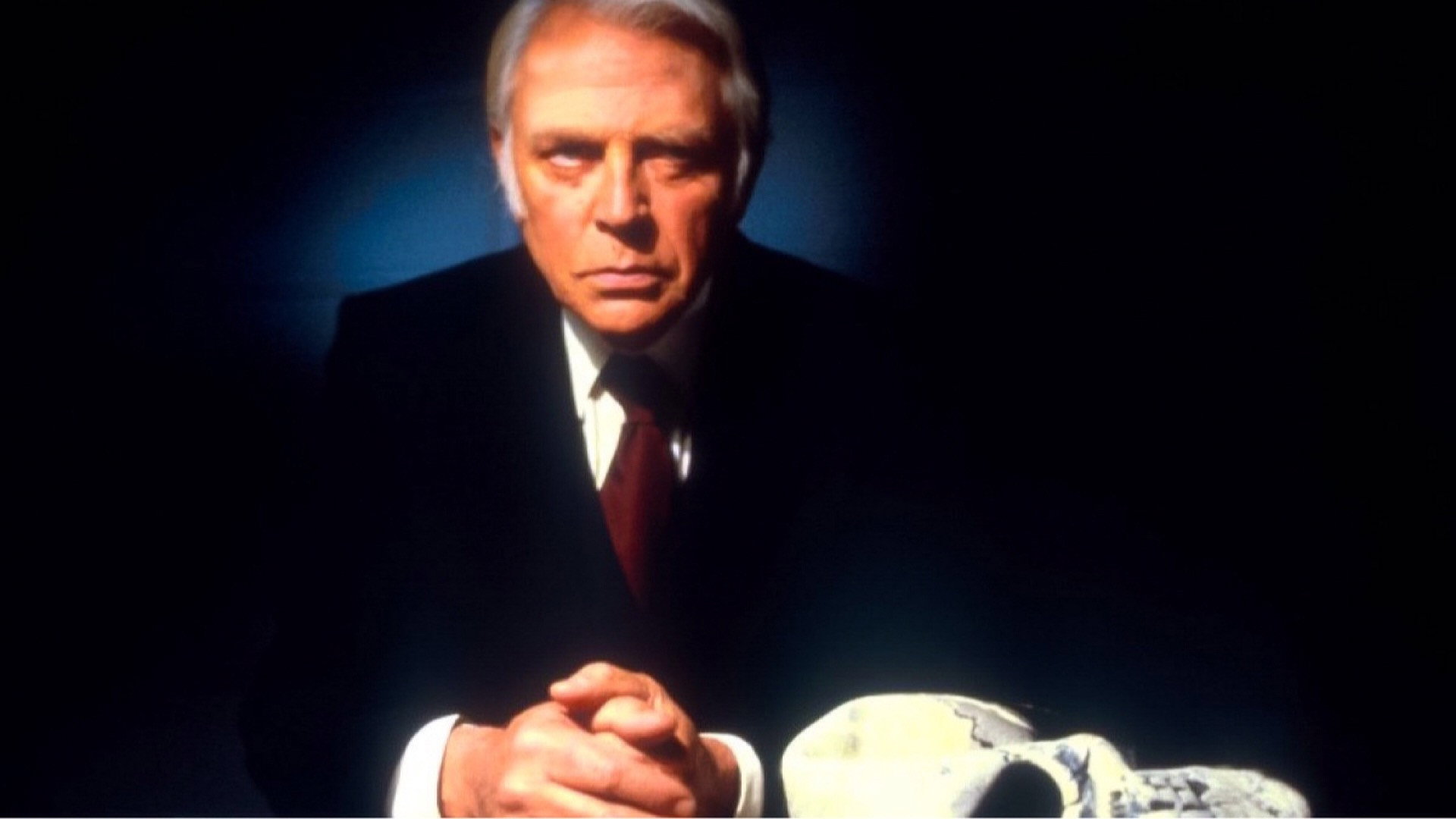
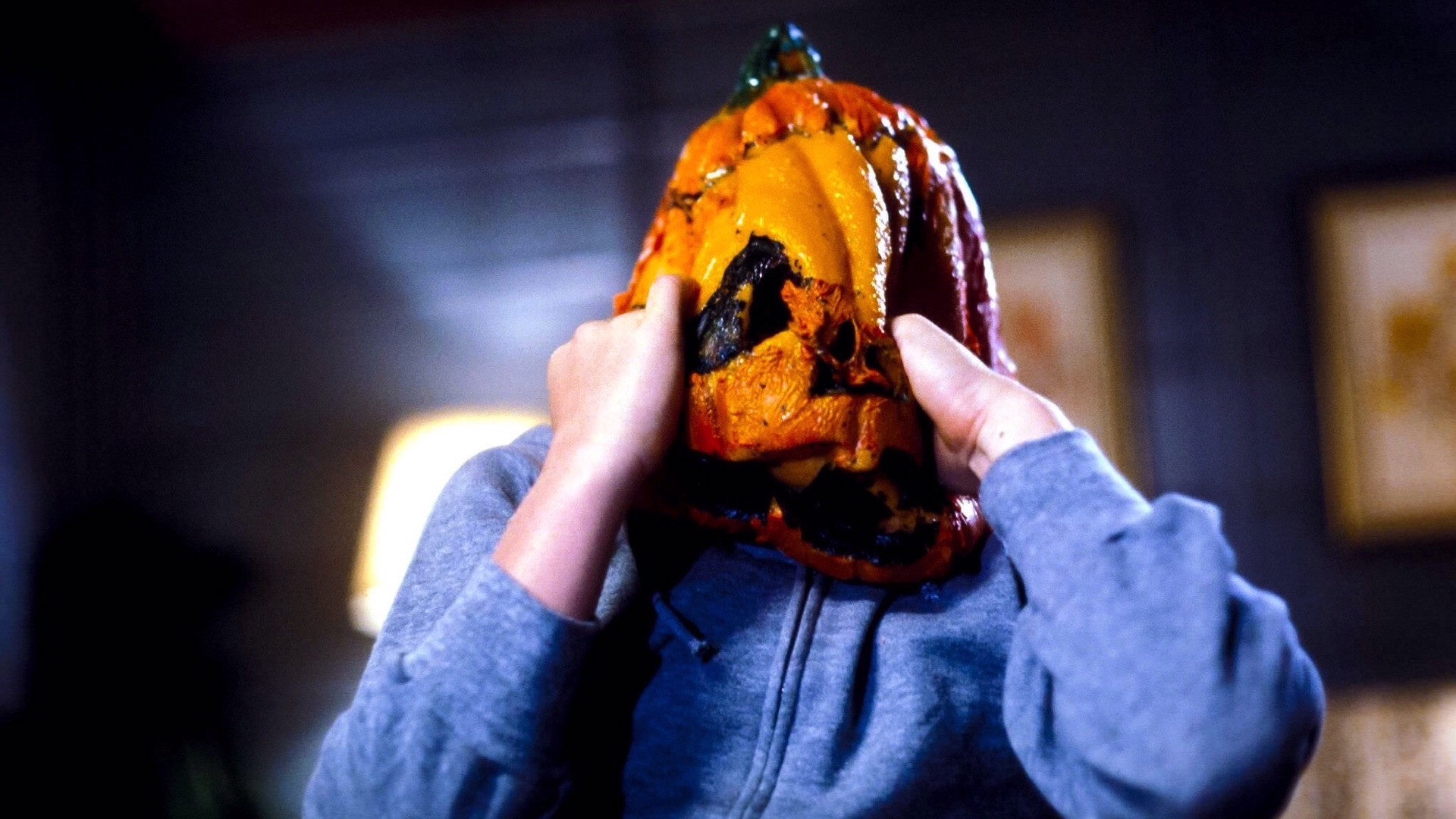
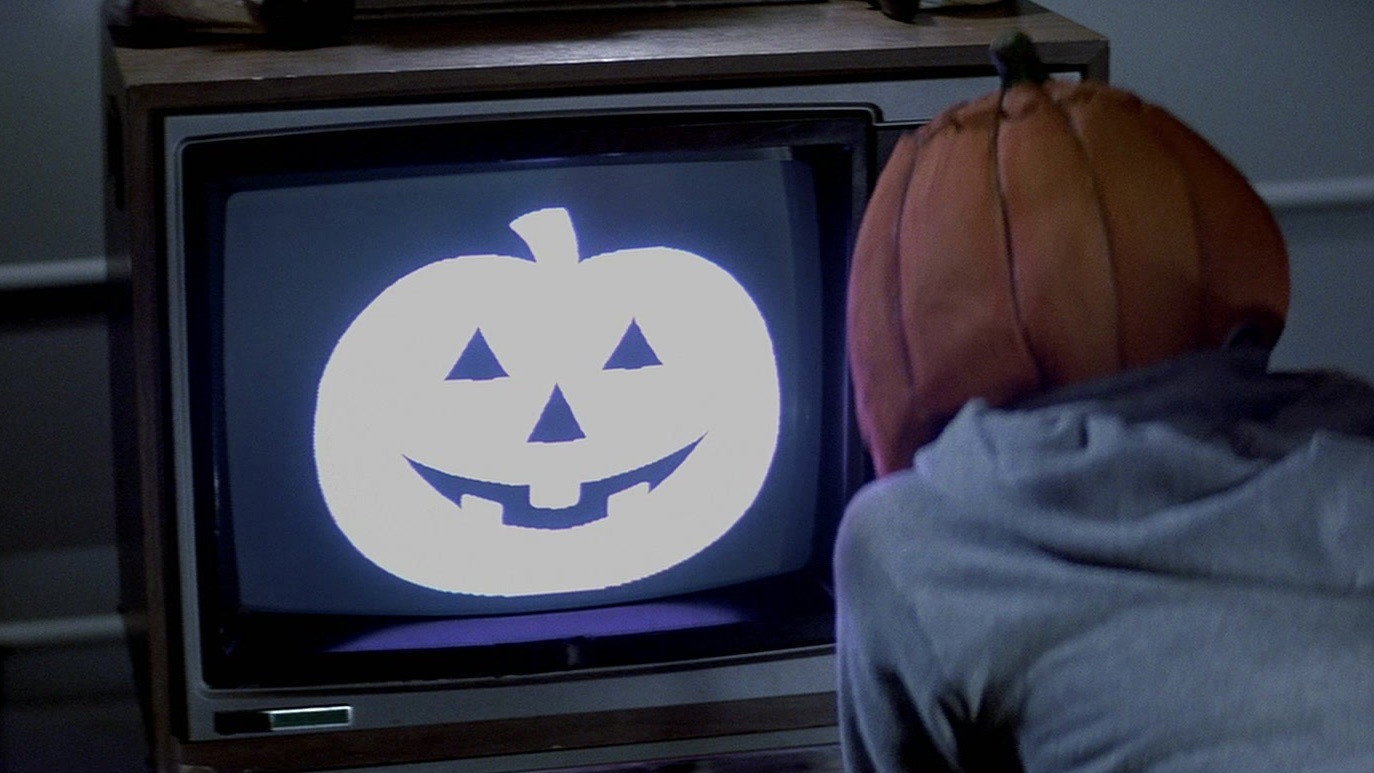
Challis is caught. Before dawn on October 31, Cochran shows him a stolen piece of Stonehenge and says it holds great magic power. Chips carrying fragments of it are built into every mask. On a monitor, the Kupfers sit in a test room made to look like a living room. Little Buddy wears his mask while the commercial flashes a pumpkin image with the Silver Shamrock jingle. His mask melts onto his face, he collapses, and crickets and snakes pour out of his body. The snakes kill his parents. Cochran explains that the last true Halloween was 3,000 years ago, when his ancestors held sacrifices under a certain alignment of the planets. The planets are aligned again, and when the commercial airs on Halloween night, the masks will kill children all over the country.

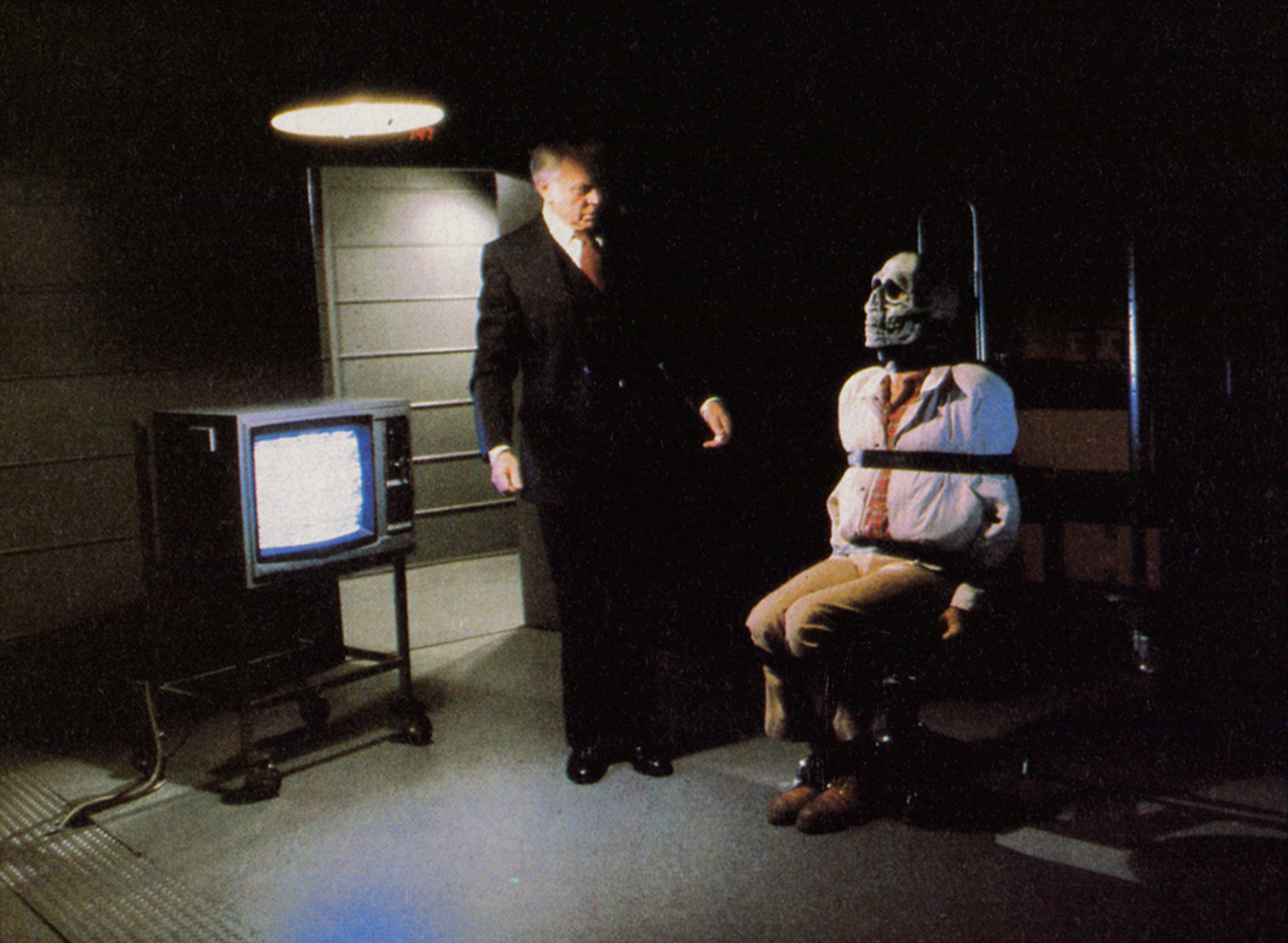
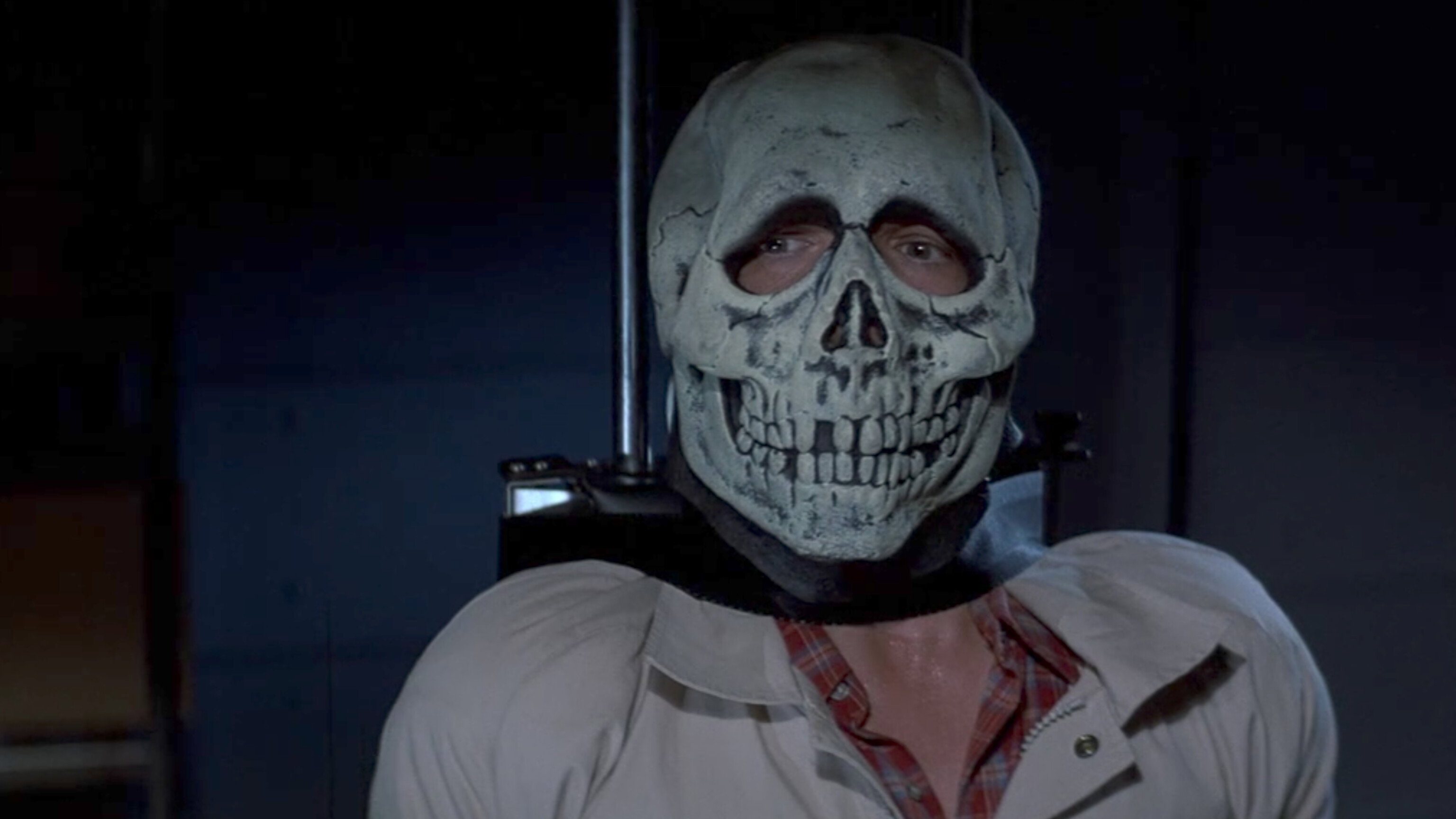
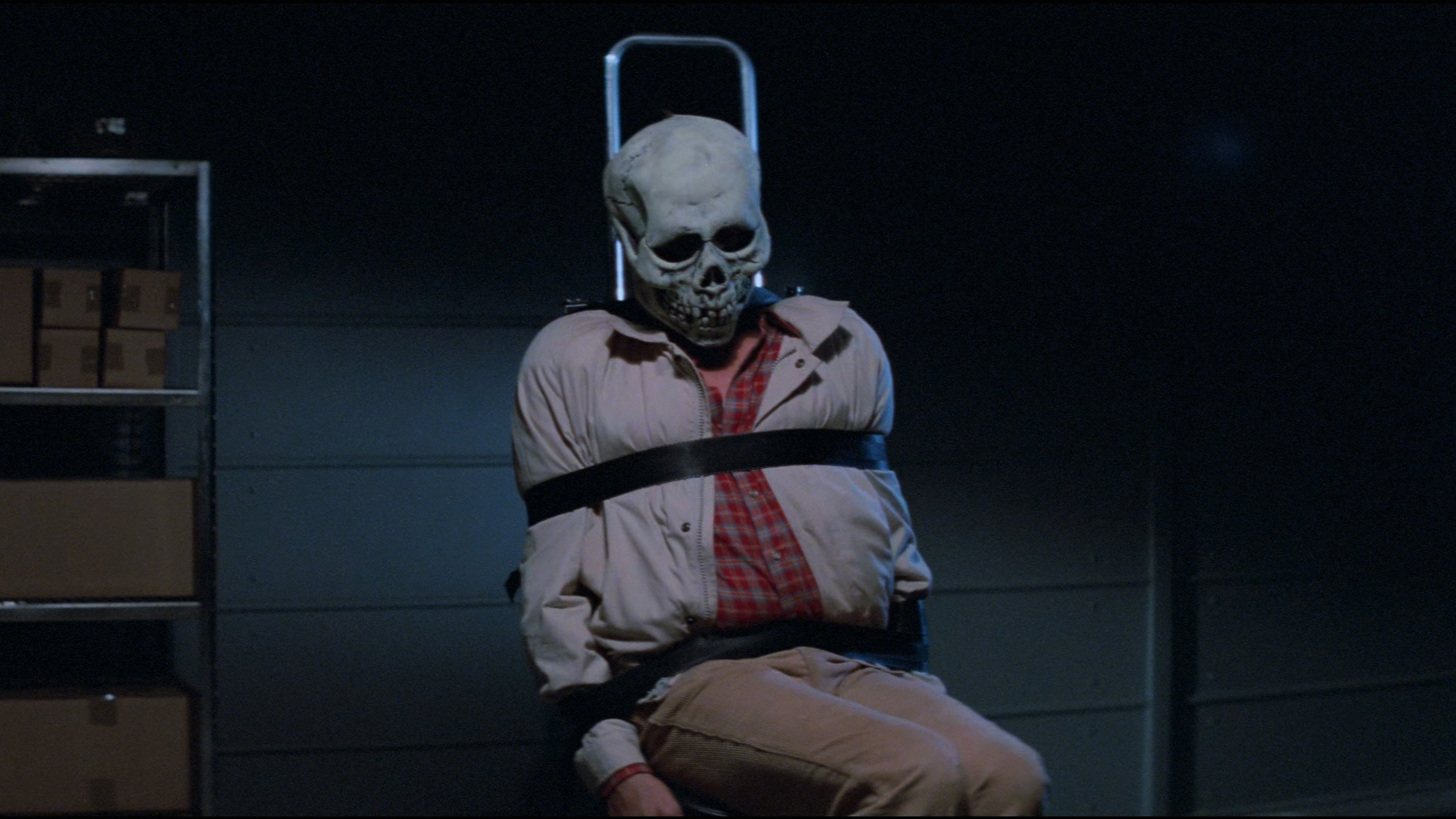
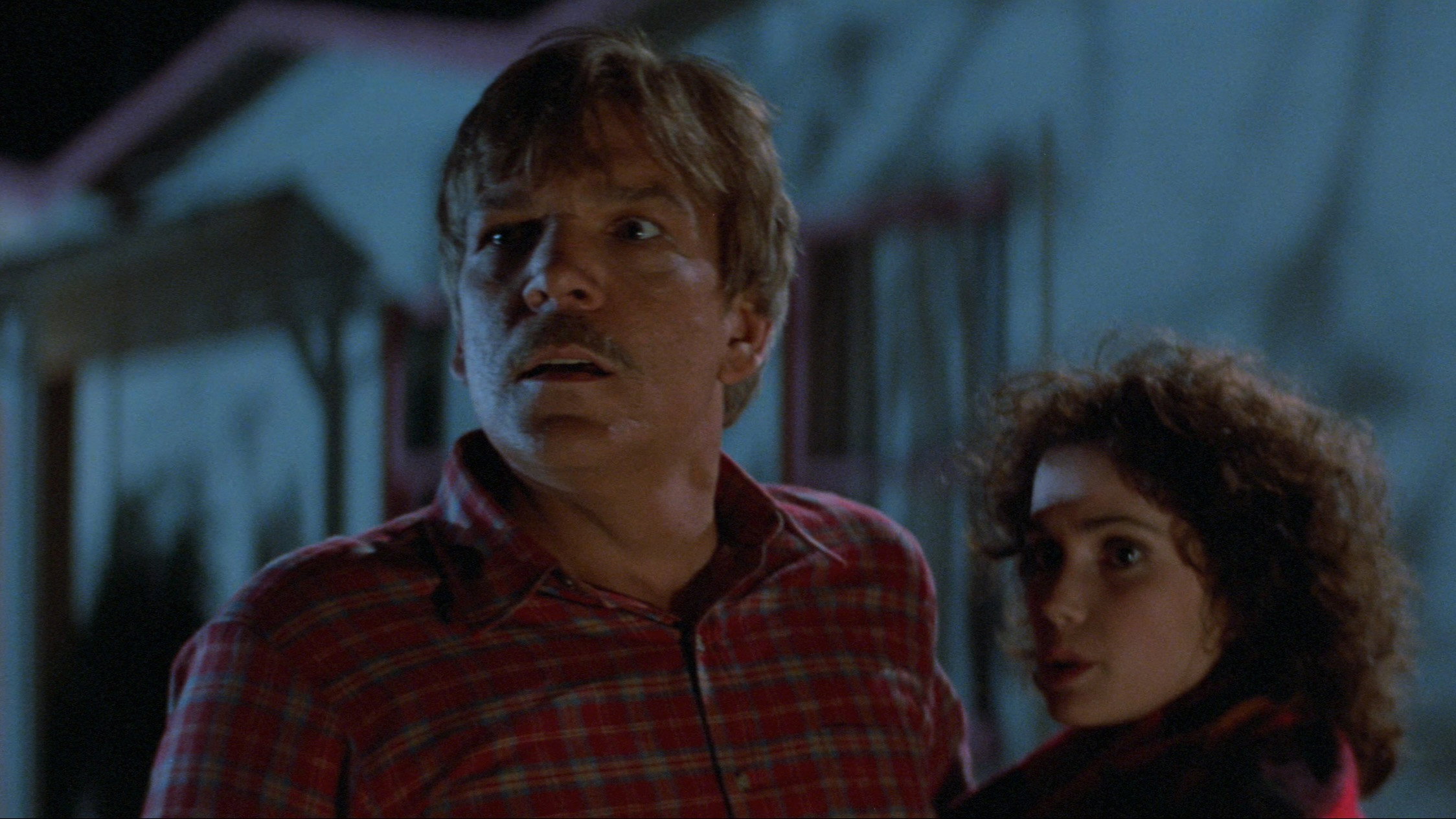
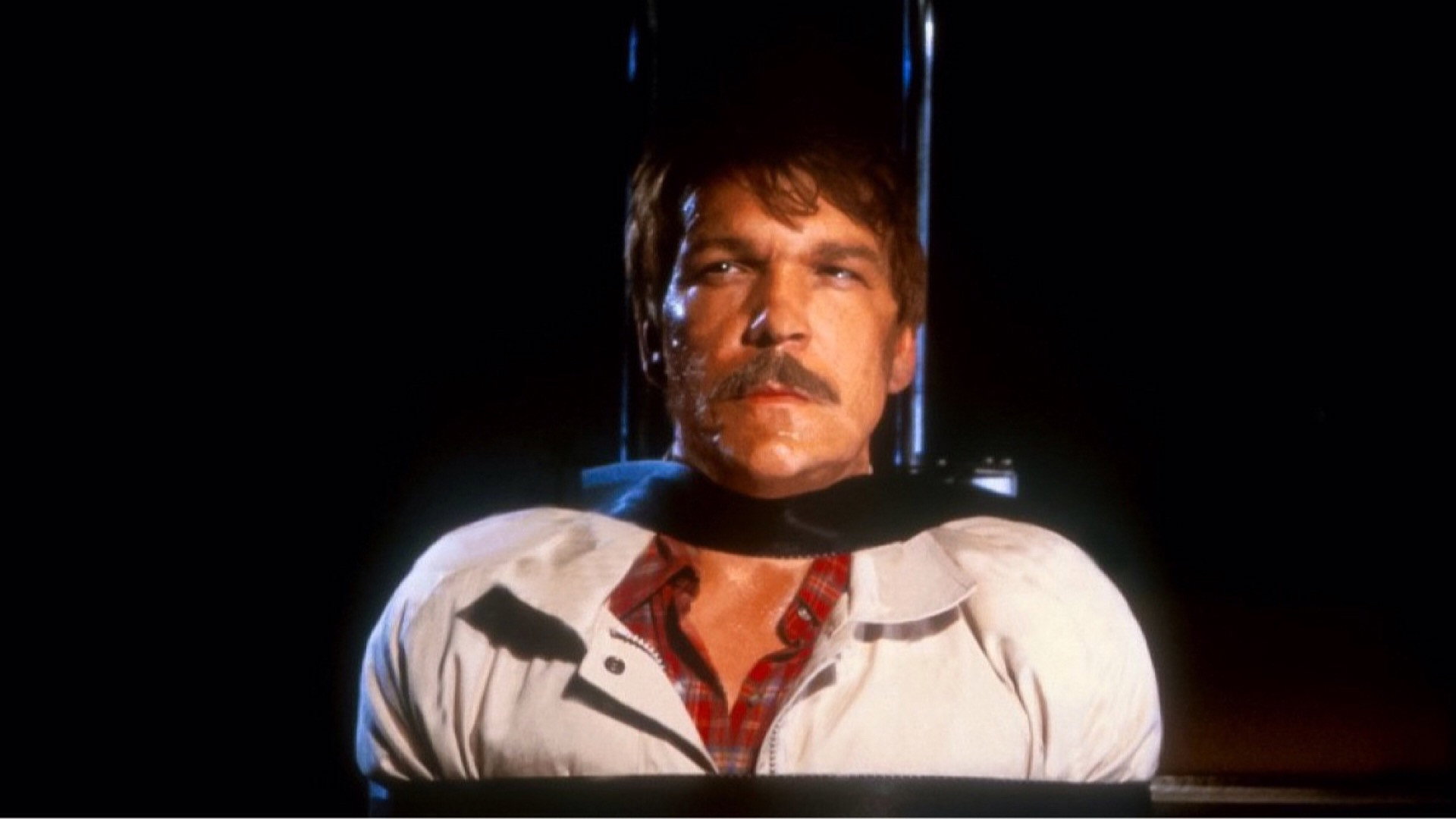
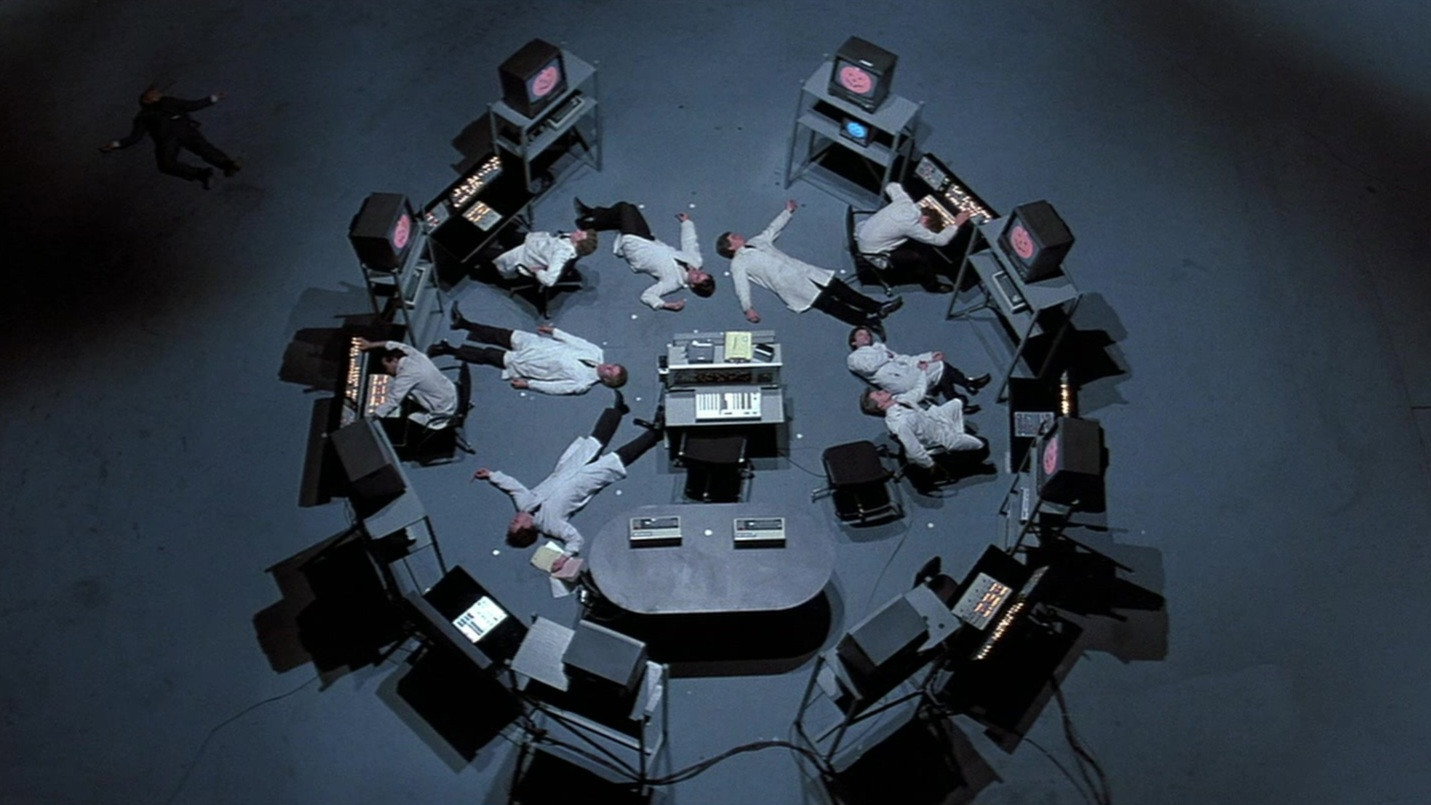
Cochran straps Challis to a chair, puts a mask on him and leaves him facing a TV. Challis kicks in the screen, cuts himself loose with the glass and escapes through a vent. He calls Linda to warn her about the kids' masks, but she will not listen. He frees Ellie, sneaks into the control room, turns on the monitors and dumps a box of chips over the workers. The chips go off, shorting out the androids. The Stonehenge rock sends out a blue beam that makes Cochran's body disappear, and then it explodes.

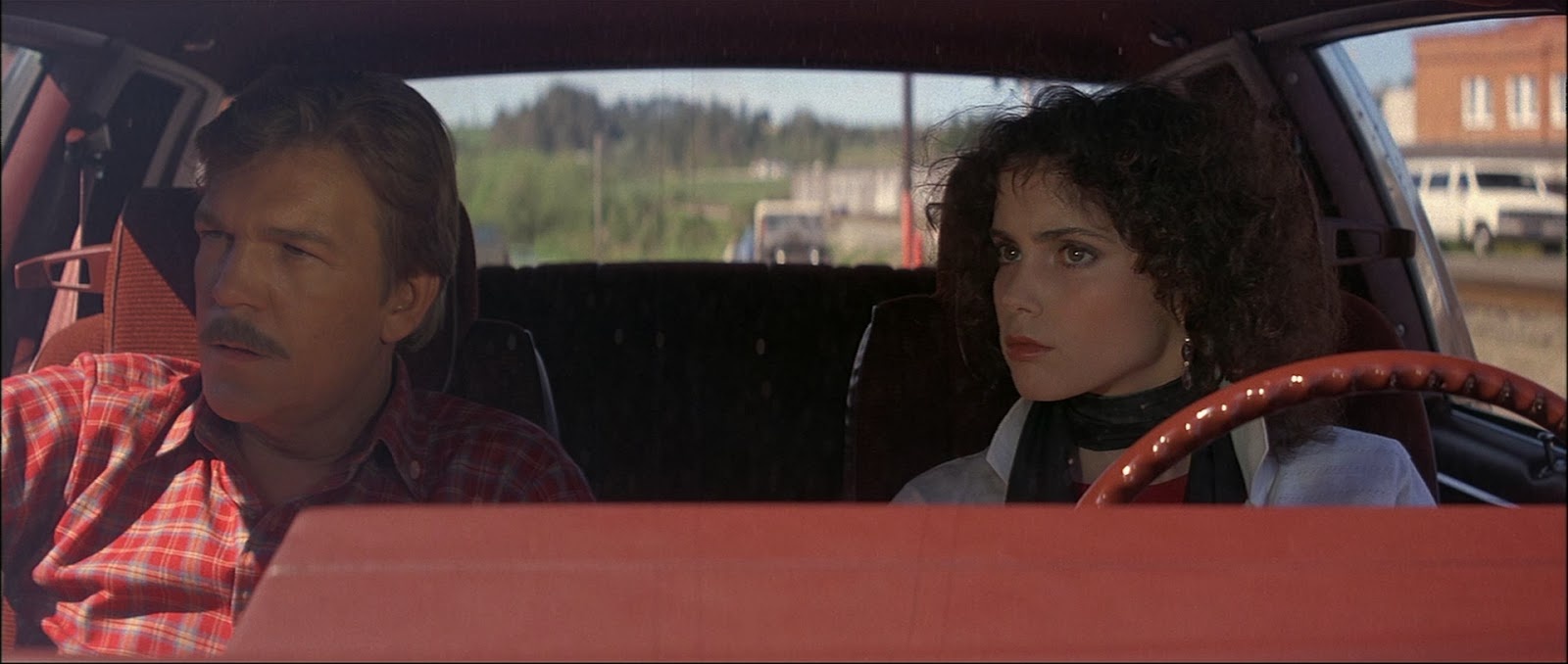
As Challis and Ellie drive away, Ellie tries to break his neck and forces him off the road. She has been turned into a robot. He knocks her head off and makes it to the gas station from the opening, where he calls the TV networks and begs them to pull the Silver Shamrock commercial. He gets two networks to take it off the air, but not the third. As the pumpkin commercial starts playing again, Challis screams into the phone for them to stop it, and the film ends with no answer.

Story notes

  • Doctor Daniel Challis and Ellie Grimbridge investigate Silver Shamrock Novelties and uncover a mass-killing plot tied to the company's Halloween masks and a ritual scheme engineered by Conal Cochran.

Release facts

  • Budget: $2,500,000 (Daily Variety, April 1982); The New York Times reported $4.6 million, including $2 million in Universal overhead
  • Worldwide: $14,402,425 (includes a 2025 Australian re-release)
  • Studio: Dino De Laurentiis Corporation; Moustapha Akkad presents a John Carpenter and Debra Hill production

Universal released the film on October 22, 1982, in 1,297 theaters per Wikipedia, or 1,250 per the AFI Catalog. It opened to $6,333,259 and finished with $14.4 million domestic, about 4.9 million tickets. At the time it was the lowest earner in the series. It came nowhere near Poltergeist ($76.6 million), Friday the 13th Part III ($34.6 million) or Creepshow ($21 million) that year.

Audiences did not take to a Halloween film without Michael Myers, and CinemaScore gave it a D, the lowest grade in the franchise.

Reviews were mostly negative. Roger Ebert called it a low-rent thriller and picked apart the plot, though he liked Stacey Nelkin. Cinefantastique called it a hopelessly jumbled mess. Ernest Leogrande gave it one star. Vincent Canby of The New York Times joked that it managed to be against children, capitalism, television and the Irish all at once, but said it was probably as good as any cheerful ghoul could ask for. Tom Milne of Time Out praised the ingenious idea even though he felt the script was a mess. Rotten Tomatoes lists 50 percent from 48 reviews, and Metacritic scores it 50.

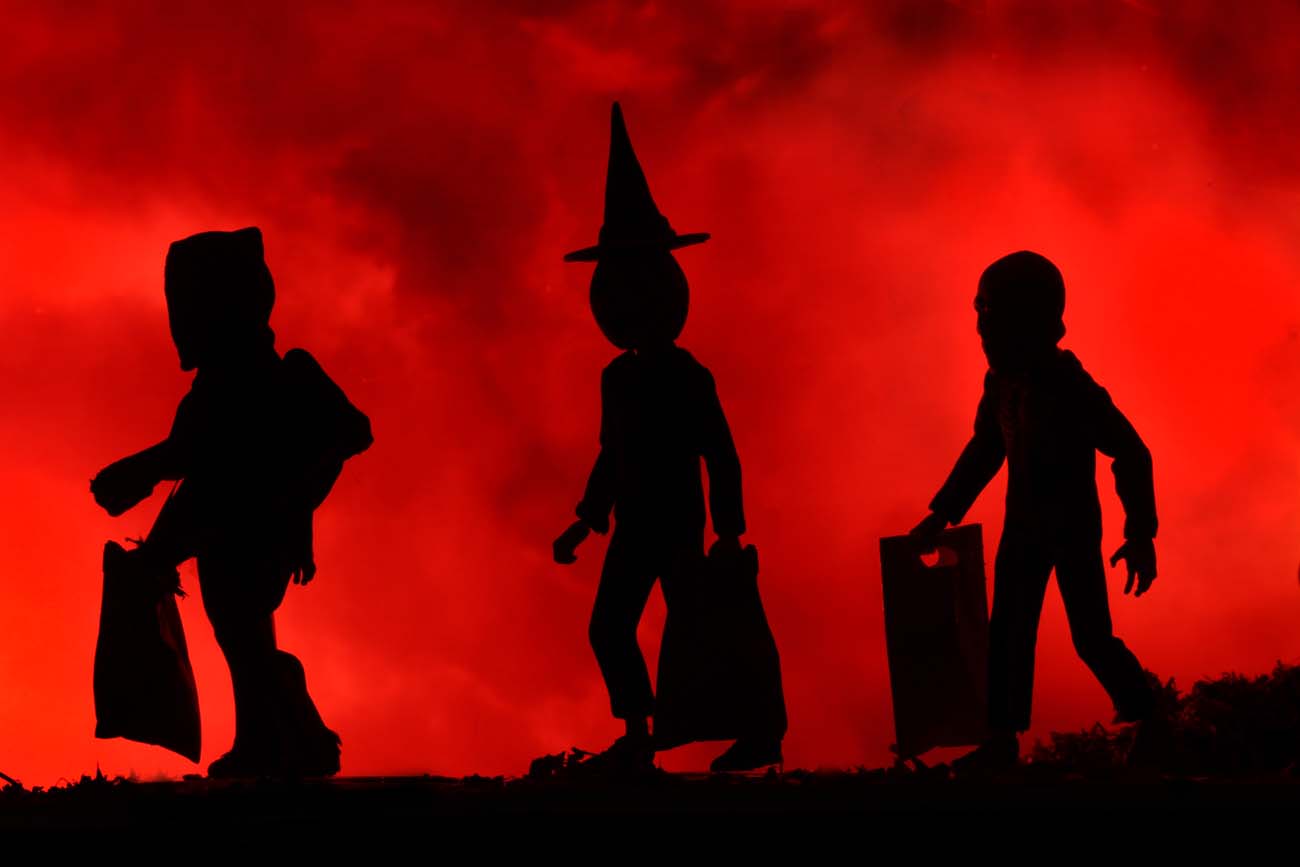
Edd Riviera's theatrical poster, with a demon face over three trick-or-treaters, was nominated for the Saturn Award for Best Poster Art. The face is a warped image of the witch mask, and the art also ran on the October 1982 cover of Fangoria. It lost to John Alvin's poster for E.T.

Over the years the film built a strong cult following. Scholars have written about its jabs at corporations, television and the selling of Halloween. It was the last Halloween film Universal released until Halloween (2018).

In 2015 the Halloween: The Complete Collection Blu-ray box set, which includes this film, won the Saturn Award for Best DVD or Blu-ray Collection. Dan O'Herlihy told Starlog he enjoyed the role but did not think much of the picture.

Press and marketing

  • Theatrical key-art / poster campaign reference: IMP Awards — Halloween III: Season of the Witch poster archive.

New York Public Library David Morgan collection: Halloween III press-kit stills

1982 · institutional press-kit still archive

Contents
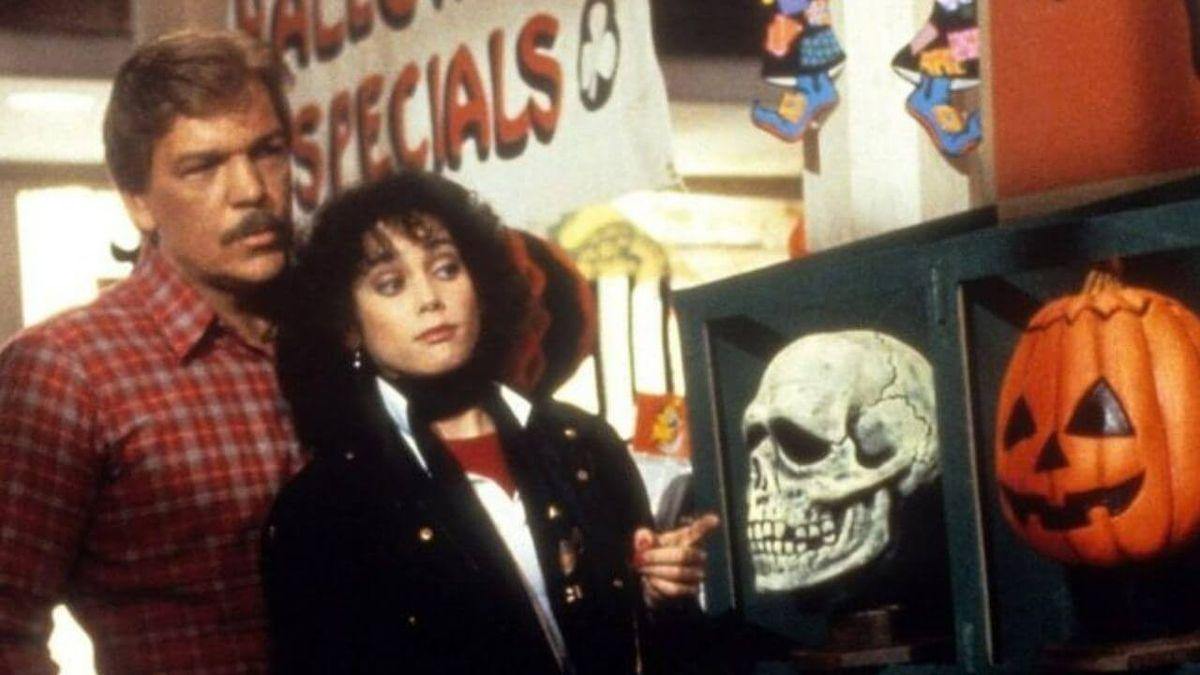
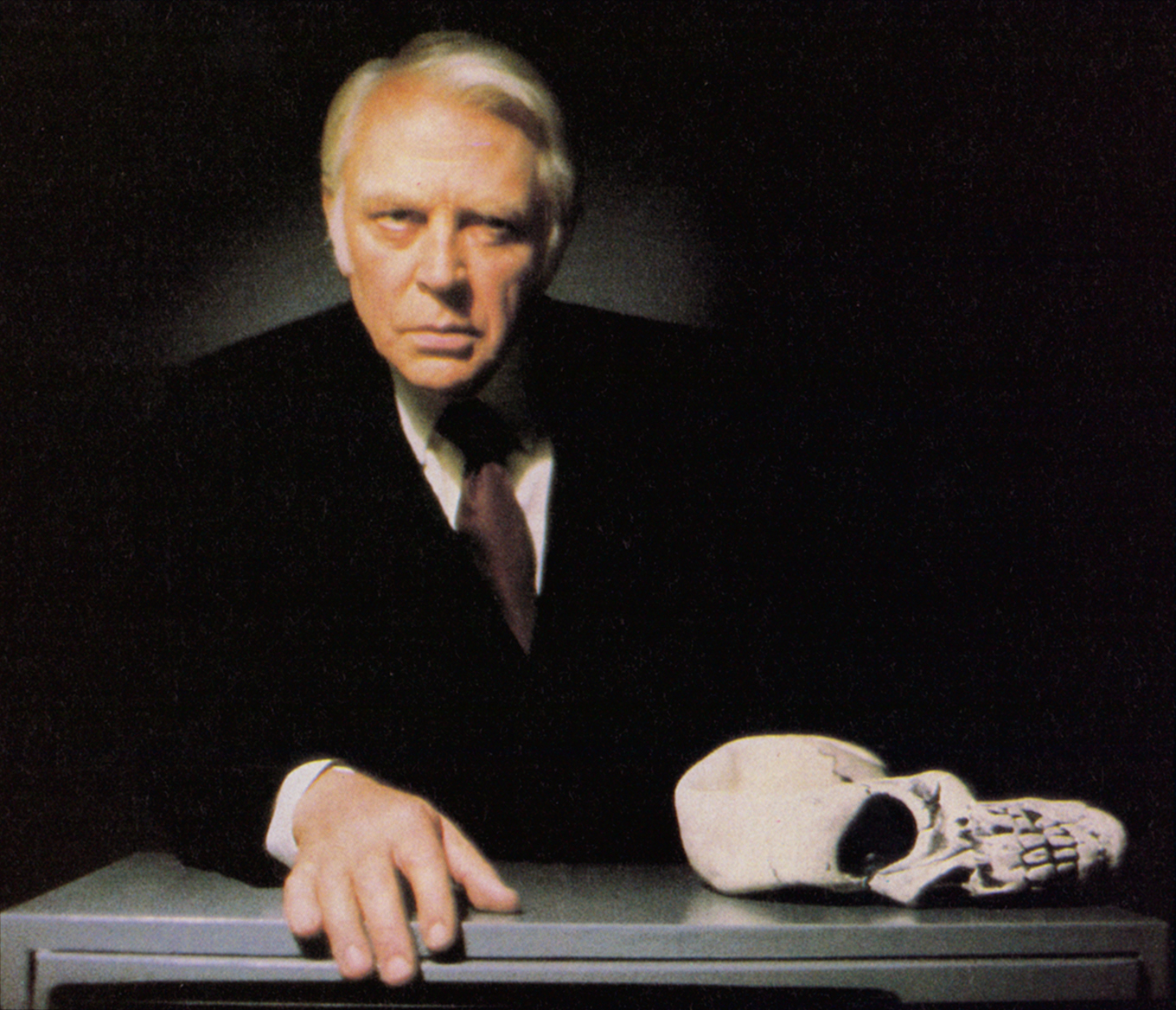
Three black-and-white press-kit photographs depicting Tom Atkins, Stacey Nelkin, Dan O'Herlihy and Debra Hill, cataloged as Universal film material.
Archive
Billy Rose Theatre Division, New York Public Library for the Performing Arts
Collection
David Morgan collection of film stills

Deleted Scenes & Trivia

Television version

The television edit is a censorship recut rather than an expanded director's cut. It trims violence from the deaths of Harry Grimbridge, Starker and Marge Guttman, removes the snakes emerging from Little Buddy, substitutes several lines and omits Dan's October 30 phone call to Teddy. Some broadcasts also use the shorter HALLOWEEN III title instead of the full subtitle. The uncut theatrical version restores the removed material.

Trivia

  • Sources disagree on the budget: $2.5 million per Daily Variety and the official site, $4.6 million per The New York Times counting Universal's overhead.
  • The runtime is 98 minutes in the AFI Catalog and 99 minutes on Wikipedia.
  • Jamie Lee Curtis provides uncredited voices as the telephone operator and the Santa Mira curfew announcer.
  • The official site says Tom Atkins and Garn Stephens, who plays Marge, were husband and wife at the time of filming.
  • Dick Warlock, who played Michael Myers in Halloween II, plays the lead android and was stunt coordinator.
  • The official site says Tommy Lee Wallace also voices the TV announcer for the horror-thon of Halloween and Halloween II inside the film.
  • AMPAS production files give Teddy's last name as Bryant.
  • The film is copyrighted to the Dino De Laurentiis Corporation, registered December 3, 1982.
  • In 2009 Daily Variety reported that Bob Weinstein planned a 3-D film called Halloween III unrelated to this one. It was never made.
  • In March 1982 Variety said the film would have no gore, no knives and no blood. The finished film still has plenty of gore.
  • Cochran was a 3,000-year-old demon in Nigel Kneale's original script.
  • Critic Jim Harper pointed out that the United States has four time zones, so the West Coast would have hours to pull the deadly commercial.

Continuity

  • Standalone anthology story with no Michael Myers narrative continuity. The original Halloween exists as a film within this story world.

Connections

  • It is the only film in the series without Michael Myers. A TV ad for the first Halloween plays inside the story, and Challis catches a scene from it on a factory TV, so in this world it is just a movie.
  • Nancy Kyes, Annie in Halloween (1978) with a cameo in Halloween II, plays Linda Challis.
  • Dick Warlock, Michael in Halloween II, plays the lead assassin.
  • The official site says a plaza in this film also appears in a Michael Myers scene in Halloween II (1981).
  • The film flopped, so Michael Myers came back six years later in Halloween 4: The Return of Michael Myers (1988), and the anthology idea was dropped.
  • Silver Shamrock masks appear as easter eggs in Halloween (2018) and Halloween Kills (2021).
  • The masks and a bit of the jingle show up in the French horror film Livide, and the masks appear in The Guest (2014).
  • Santa Mira is borrowed from Invasion of the Body Snatchers, and the subtitle from George A. Romero's Season of the Witch.

Anthology branch

Films
Halloween III: Season of the Witch

Sources

Cast & Production

Cast

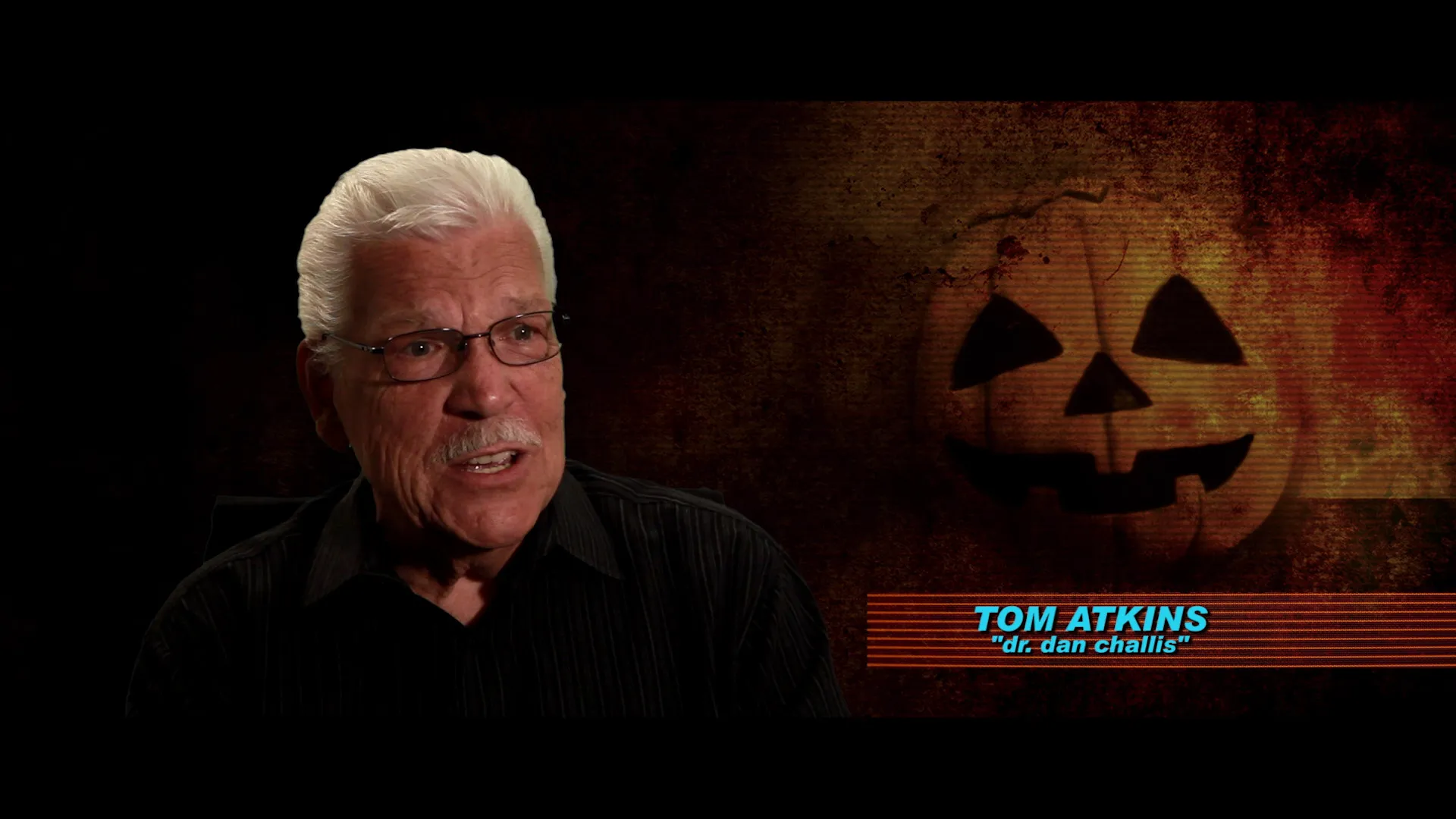
Tom Atkins

Dr. Daniel Challis

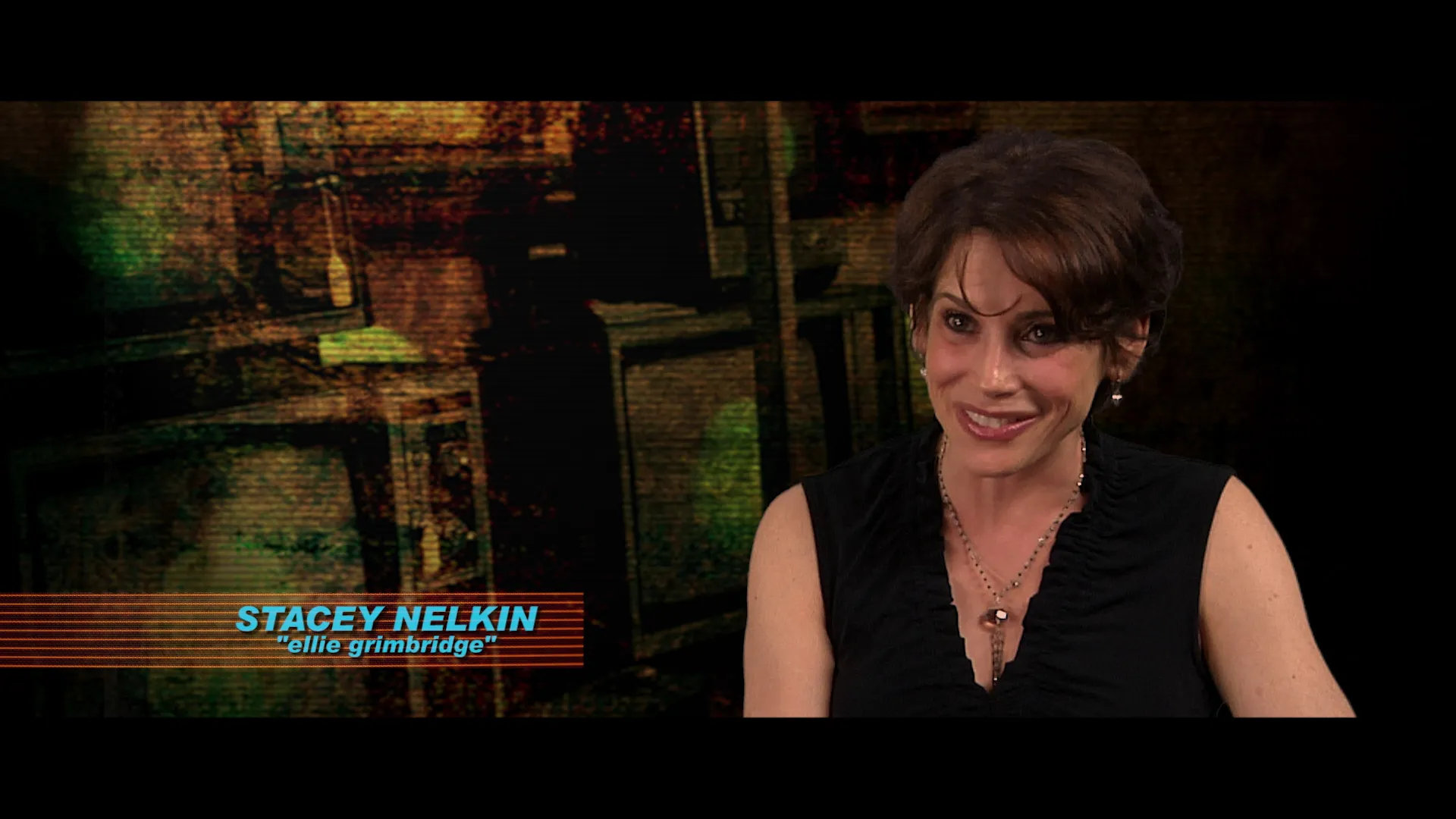
Stacey Nelkin

Ellie Grimbridge

Dan O'Herlihy

Conal Cochran

Michael Currie

Rafferty

Ralph Strait

Buddy Kupfer

Jadeen Barbor

Betty Kupfer

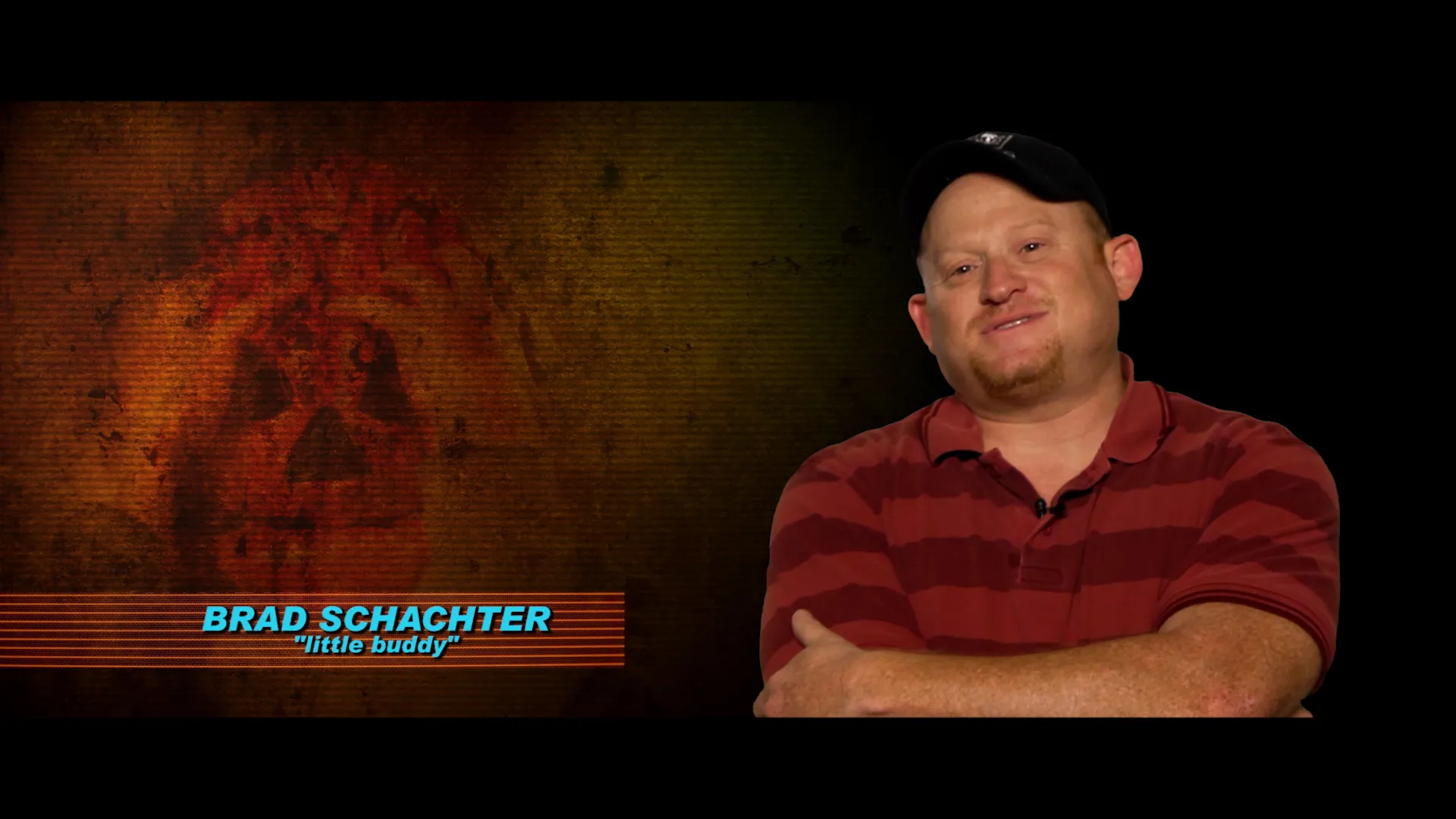
Brad Schacter

Little Buddy Kupfer

credited as Bradley Schachter in the AFI listing

Garn Stephens

Marge Guttman

spelled Gutman in the AFI listing; the official site says she and Tom Atkins were married at the time

Nancy Kyes

Linda Challis

Jonathan Terry

Starker

credited as Jon Terry

Al Berry

Harry Grimbridge

Wendy Wessberg

Teddy

the hospital pathologist; AMPAS production files call her Teddy Bryant

Essex Smith

Walter Jones

Maidie Norman

Nurse Agnes

John MacBride

Sheriff

Loyd Catlett

Charlie

Paddi Edwards

Secretary

Norman Merrill

Red

Patrick Pankhurst

Technician

spelled Pankurst in the AFI listing

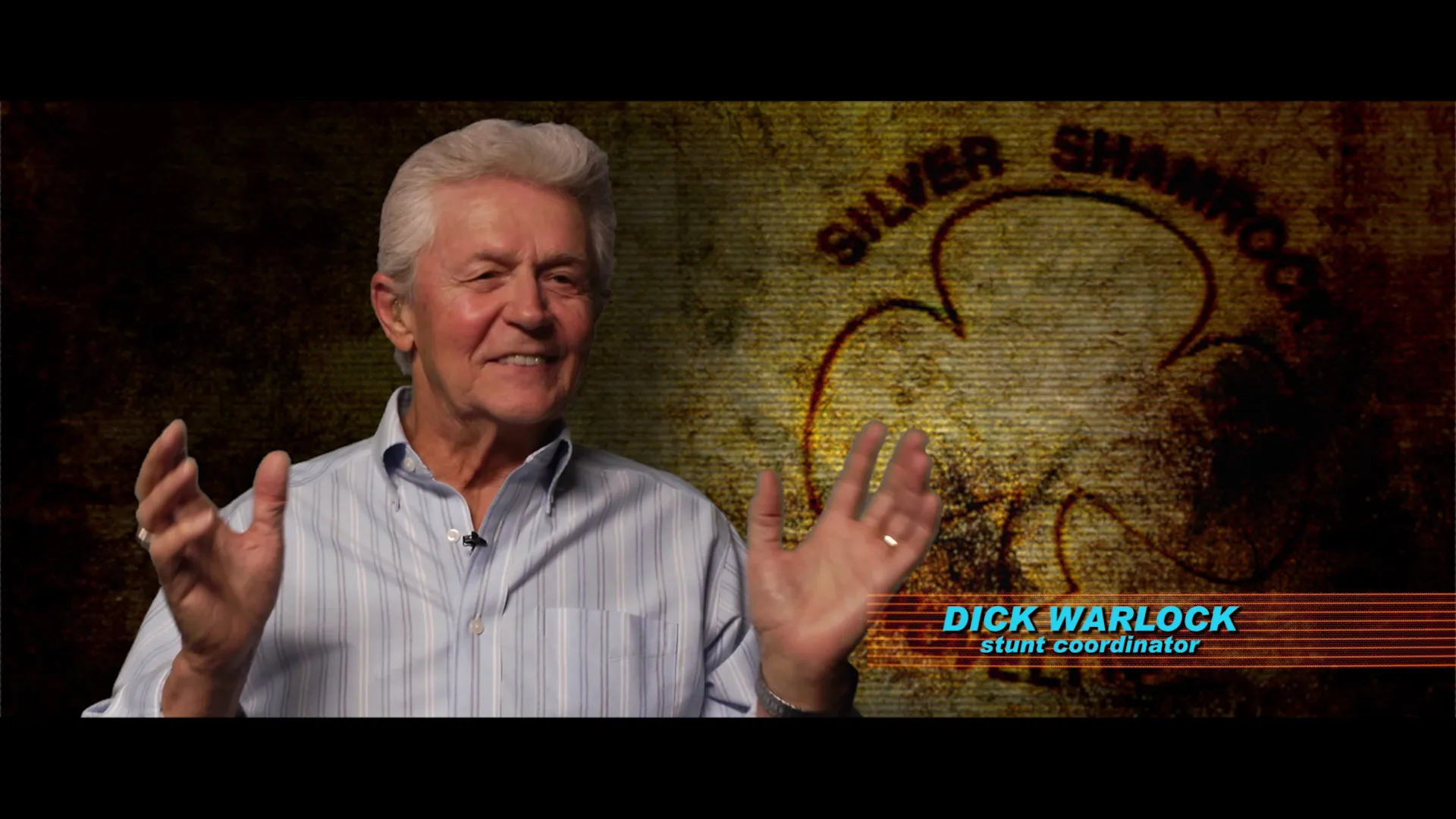
Dick Warlock

Assassin

also stunt coordinator

Martin Cassidy

Watcher

Michelle Walker

Bella Challis

Joshua John Miller

Willie Challis

credited as Joshua Miller

Jeffrey D. Henry

Motel technician

Michael W. Green

Technician #2

Jamie Lee Curtis

Santa Mira curfew announcer and telephone operator

uncredited voice

Tommy Lee Wallace

Silver Shamrock commercial announcer

uncredited voice; also the announcer for the Halloween horror-thon inside the film

Crew

Tommy Lee Wallace

Director

Tommy Lee Wallace

Writer

Nigel Kneale

Original screenplay (uncredited at his request)

John Carpenter

Producer

Debra Hill

Producer

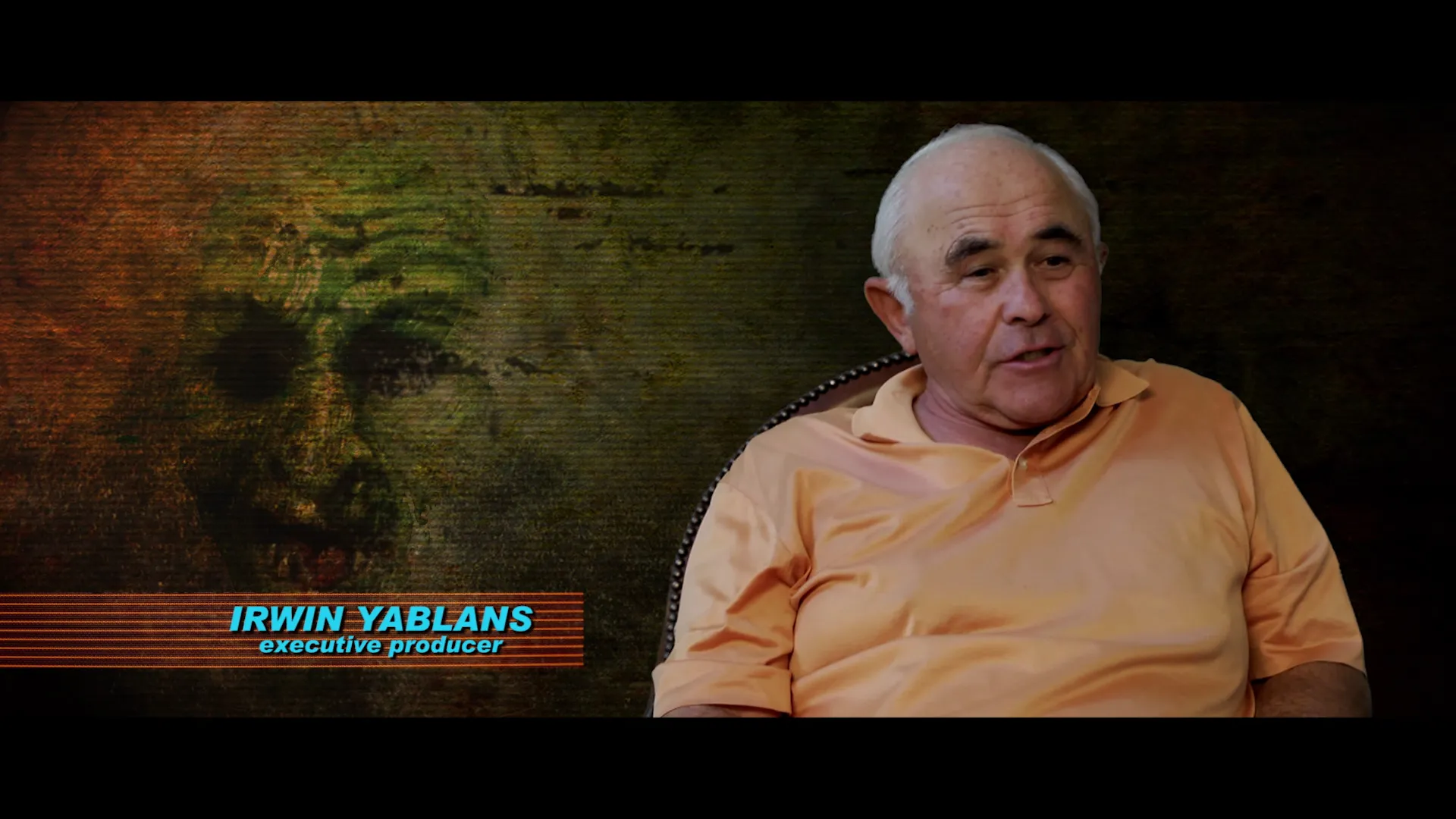
Irwin Yablans

Executive producer

Joseph Wolf

Executive producer

Moustapha Akkad

Presenter

Barry Bernardi

Associate producer

Jeffrey Chernov

Executive in charge of production and unit production manager

Ron L. Wright

First assistant director

Scott Ira Thaler

Second assistant director

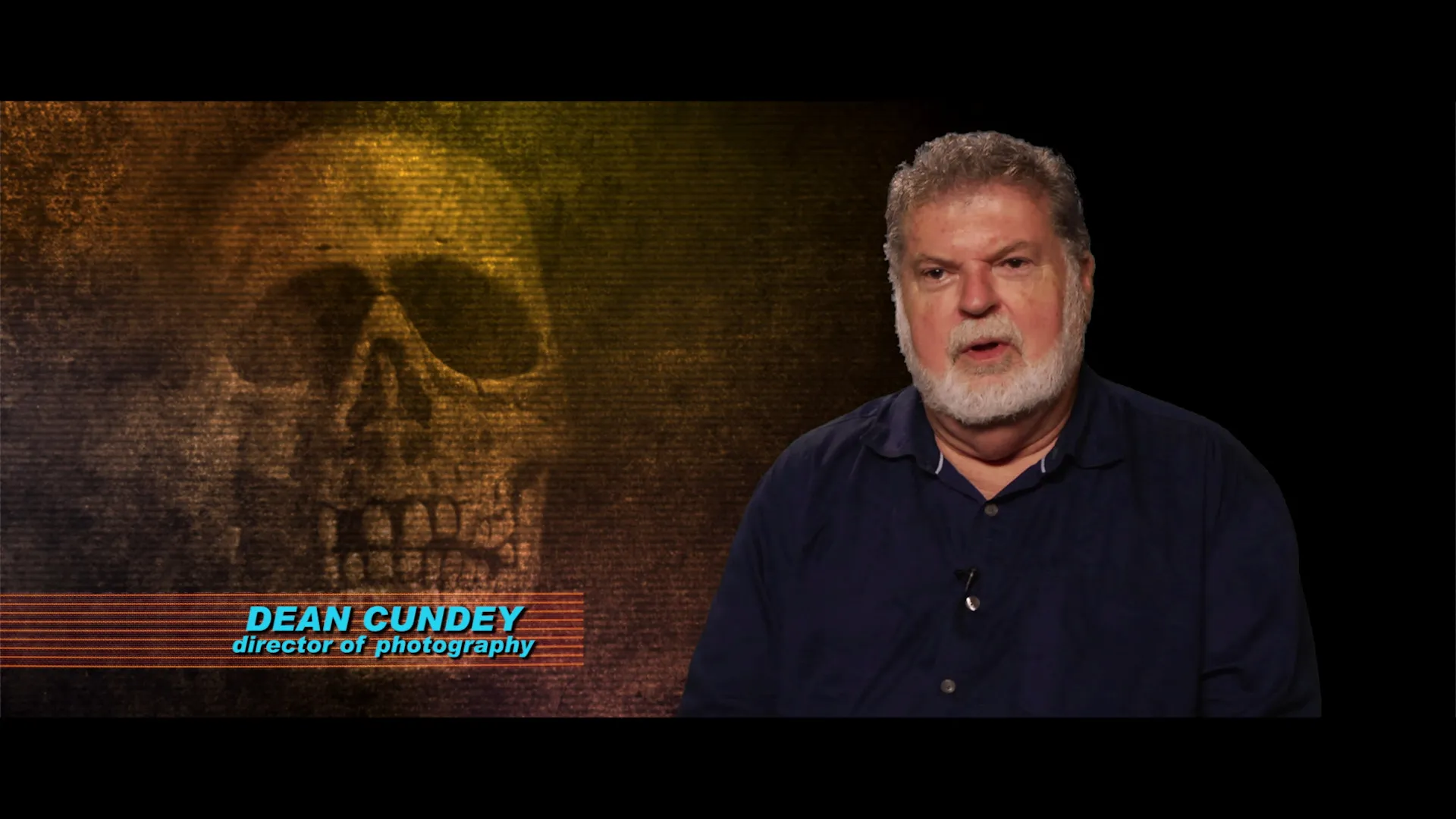
Dean Cundey

Director of photography

Raymond Stella

Camera operator

Steve St. John

Second unit camera

Clyde E. Bryan

First assistant camera

Ronald Batzdorff

Still photographer

Mark Walthour

Gaffer

Ronald T. Woodward

Key grip

Peter Jamison

Production designer

Carl Aldana

Illustrator

Linda Spheeris

Set decorator

William Wright

Leadman

James A. Rathbun

Property master

Daniel Stoltenberg

Property master

Walton Hadfield

Construction coordinator

Don Post

Halloween masks created

Charles R. Moore

Visual consultant

Millie Moore

Editor

Maurie Beck

First assistant editor

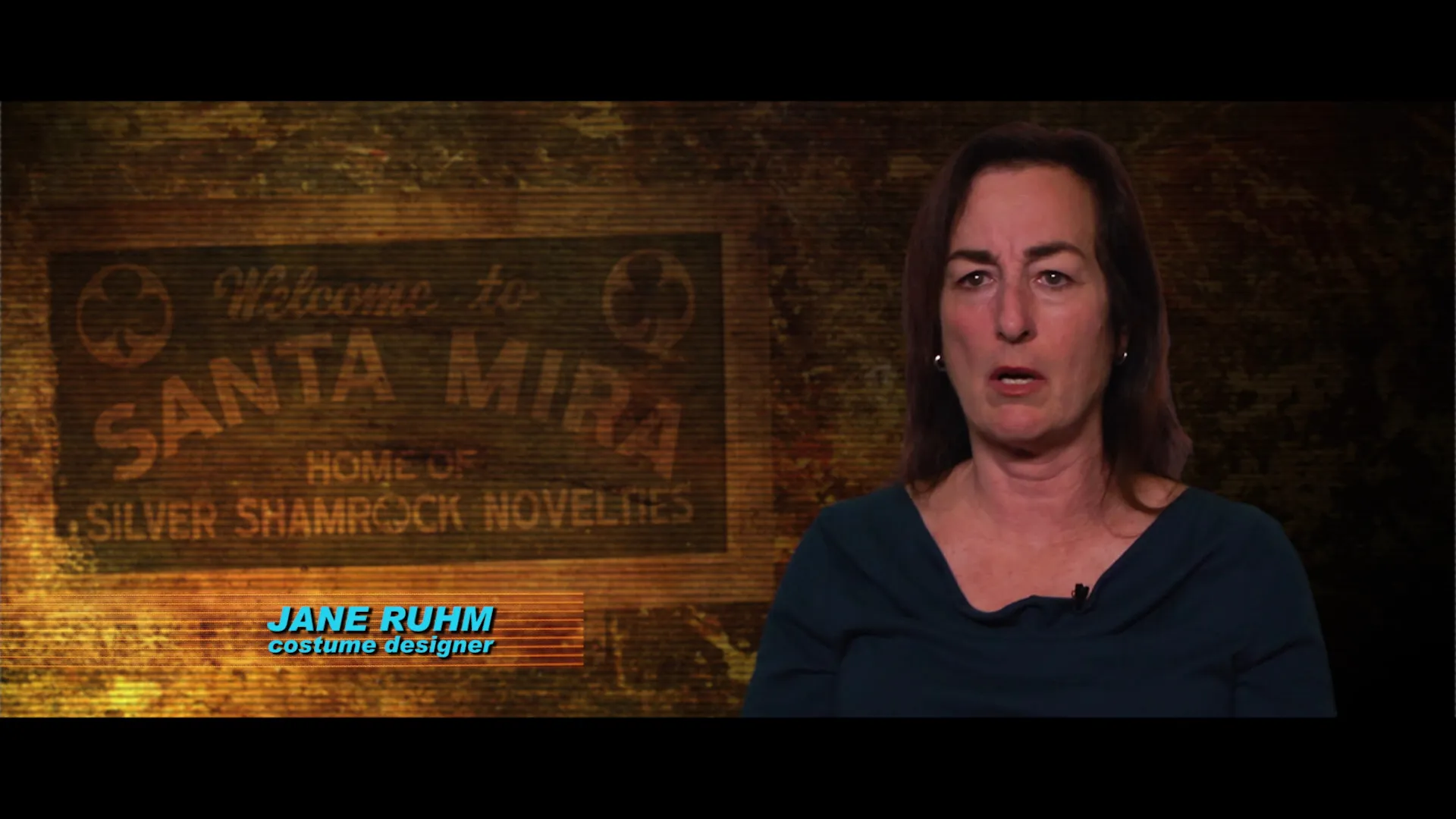
Jane Ruhm

Costume supervisor

Frances Vega Aubrey

Costumer

Tom Burman

Special makeup

Ron Walters

Makeup artist

Frankie Bergman

Hairstylist

Jon G. Belyeu

Special effects

William Aldridge

Special effects assistant

John Wash

Title sequence

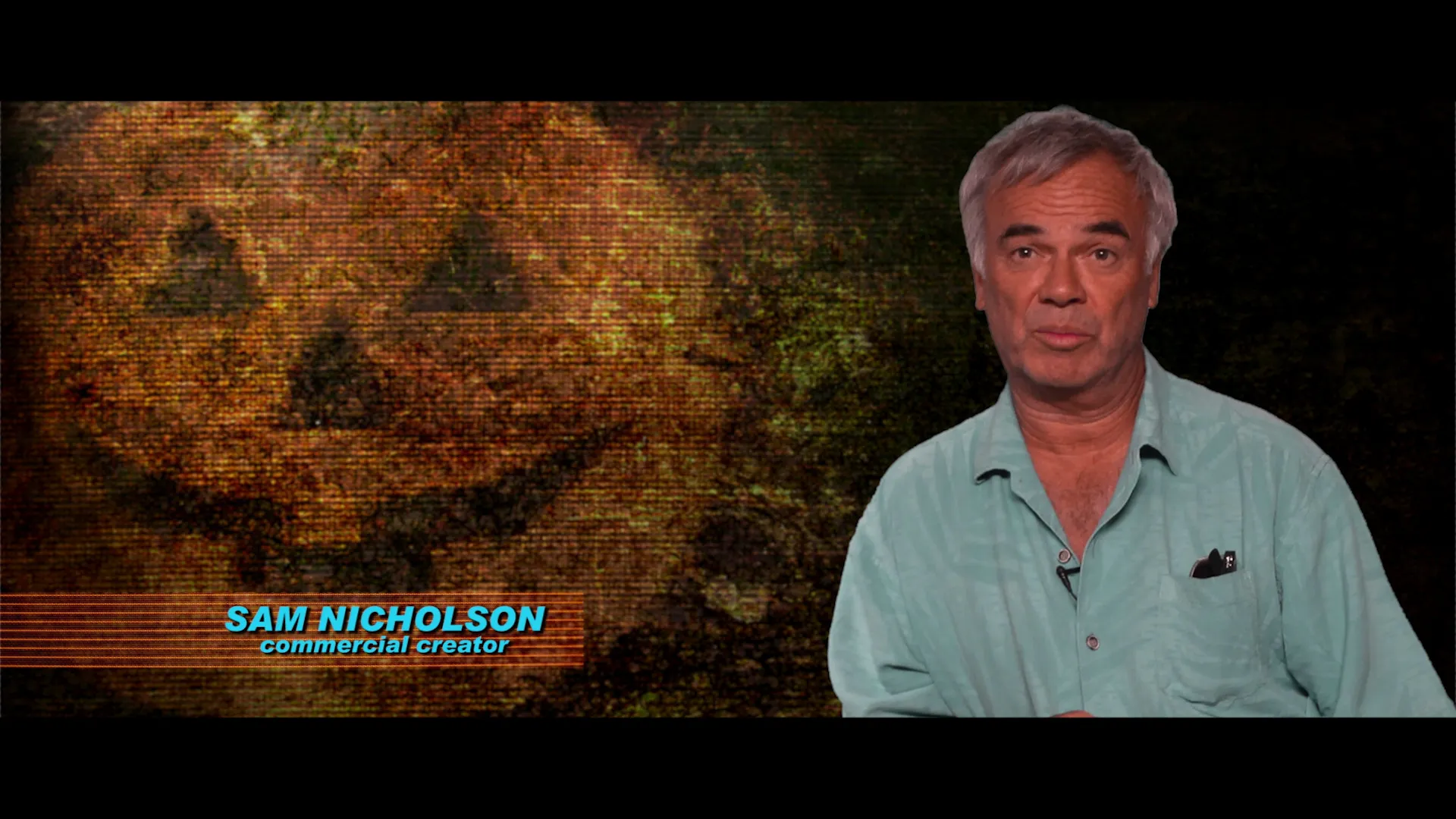
Sam Nicholson

Silver Shamrock commercial

Bakshi Productions

Animation for the Silver Shamrock commercial

John Carpenter

Music

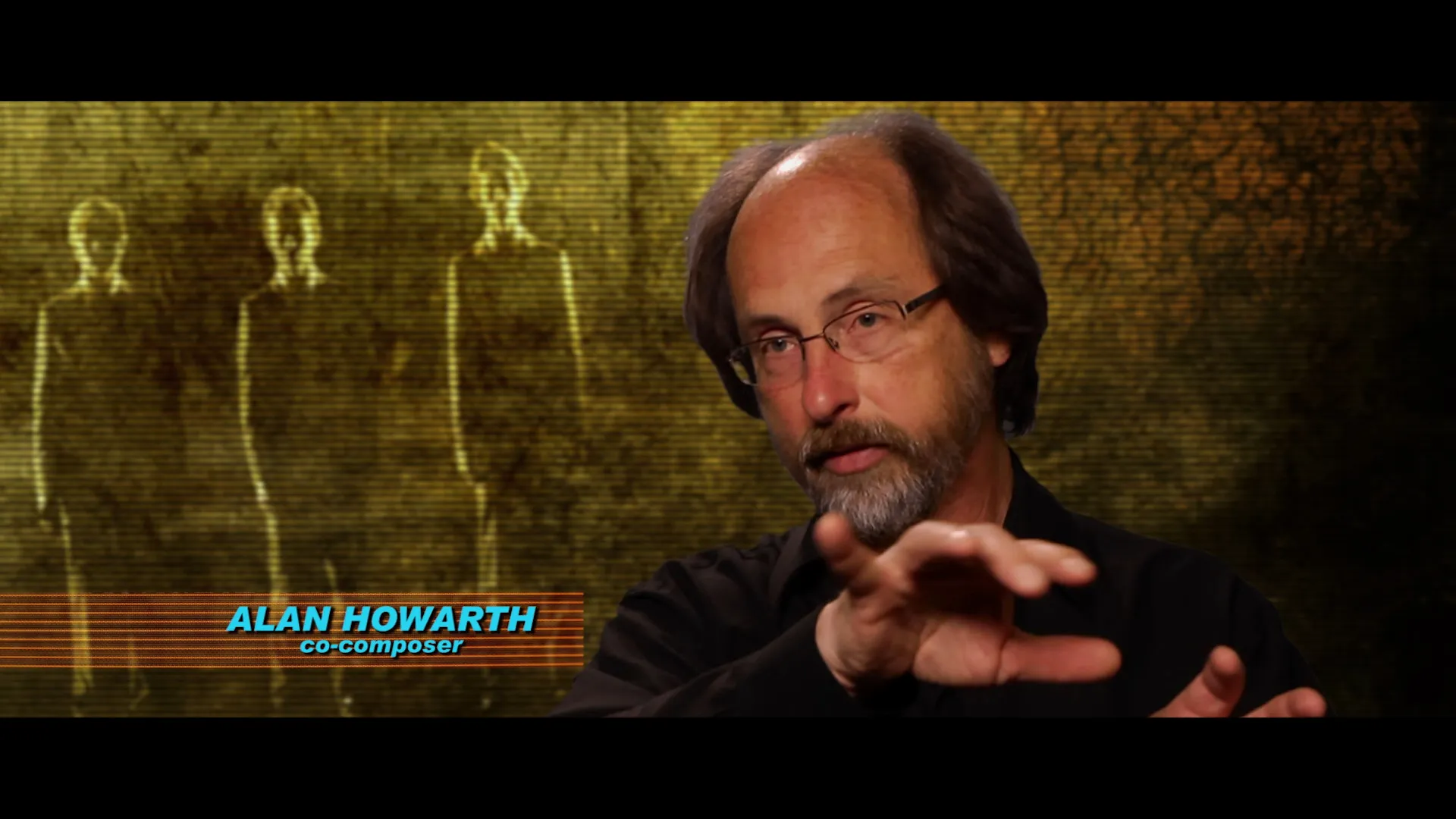
Alan Howarth

Music

Tommy Causey

Production sound mixer

David Lewis Yewdall

Supervising sound editor

Bill Varney

Re-recording mixer

Steve Maslow

Re-recording mixer

James Cavarretta Jr.

Re-recording mixer

Susan Shaw

Casting

Susie Johnson

Extras casting

Louise Jaffe

Script supervisor

Ben-Ami Agmon

Location manager

Chip Fowler

Production coordinator

Clint Rowe

Animal coordinator

Ann Thompson

Publicity

Dick Warlock

Stunt coordinator

Loren Janes

Stunts (listed as Loren James in the AFI Catalog)

Kerrie Cullen

Stunts

Production

Carpenter and Hill wanted to turn Halloween into a yearly anthology, like a Twilight Zone for Halloween night, with a new story and characters each time. A Universal press release said they decided on the third film days after Halloween II opened in October 1981. They agreed to take part only if it was not a direct sequel, which meant leaving Michael Myers out. Hill described it as a pod movie, not a knife movie. In November 1981 the Hollywood Reporter said Yablans hoped to air Halloween II on TV the night the new film opened, repeating what NBC did with the first film.

In March 1982 Variety announced that British writer Nigel Kneale was writing the script and promised no gore, no knives and no blood. Joe Dante was attached to direct. He and Carpenter were fans of Kneale's Quatermass stories. Kneale's draft relied on deception and psychological shocks. Dino De Laurentiis pushed for more graphic violence, and Kneale asked to have his name removed. Dante left weeks before filming to direct a segment of Twilight Zone: The Movie. Wallace considered Fred MacMurray for Cochran before casting Dan O'Herlihy, who added touches of Irish lore to Cochran's speeches.

Carpenter gave the job to his childhood friend Tommy Lee Wallace. Wallace had been production designer and co-editor on the first film and had turned down Halloween II. Wallace rewrote the script and got sole writing credit. The subtitle comes from George A. Romero's 1972 film Season of the Witch, though the stories have nothing in common. The town of Santa Mira nods to Invasion of the Body Snatchers (1956), which Wallace drew on for the android replacements.

Tom Atkins, who had worked with Carpenter on The Fog and Escape from New York, played Challis. He told Fangoria he liked getting to be the hero. Stacey Nelkin heard about the audition from a makeup artist and described Ellie as spunky and strong-minded. Nancy Kyes, Annie in the first film, played Challis's ex-wife.

Daily Variety said filming on the $2.5 million picture would start April 19, 1982, in Eureka, California. The New York Times later reported a total of $4.6 million, including $2 million in overhead paid to Universal. Most of Santa Mira was filmed in the tiny Humboldt County town of Loleta. The end credits thank the people of Loleta and Eureka, Republic Airlines and Ruxton, Ltd.

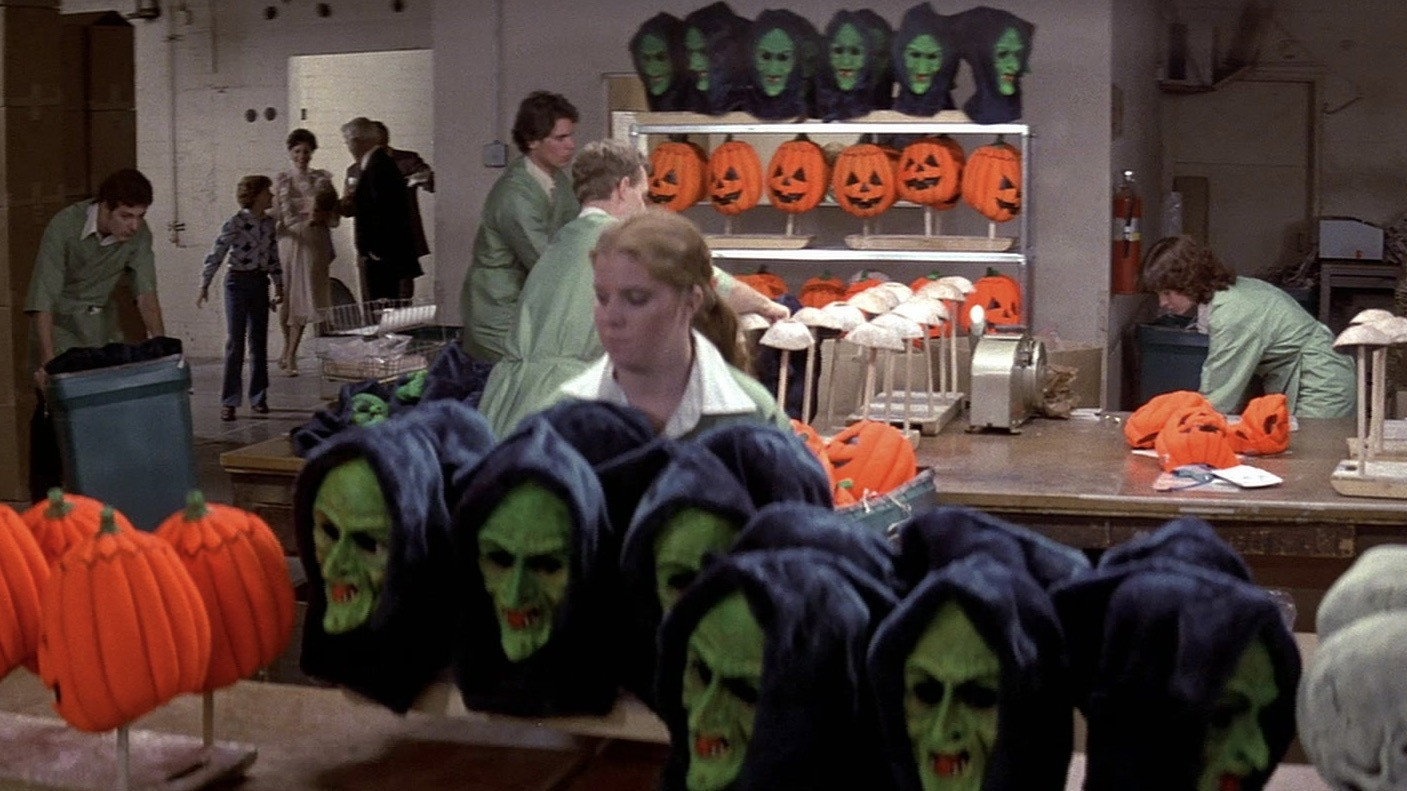
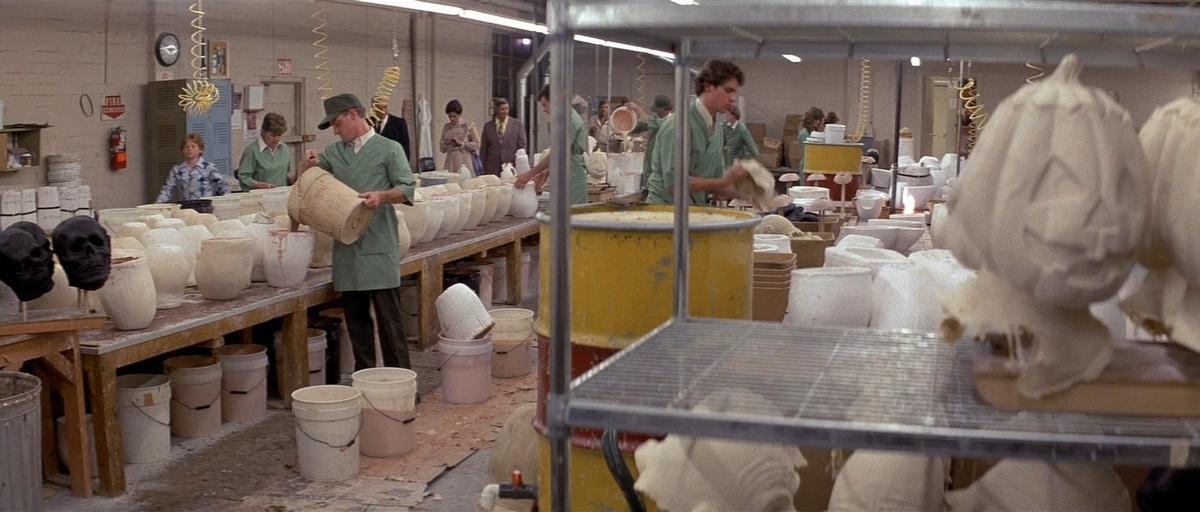
Hill made a deal with mask maker Don Post. Post got the rights to make and sell the three Silver Shamrock masks and a share of the merchandising profits. In return the production got all the masks and shooting at his factory for free. Wallace called it a production coup for Hill.

Burman reported a $25,000 makeup-effects budget and four weeks of preparation, three before filming and one during it.

About 2,000 crickets escaped during the test-room sequence; intrusive chirping was addressed in the final sound mix.

Wallace recalled that Debra Hill negotiated free masks and use of Don Post’s factory for filming in exchange for Post’s right to manufacture and market the masks.

AFI records principal photography beginning April 19, 1982 in Eureka, California.

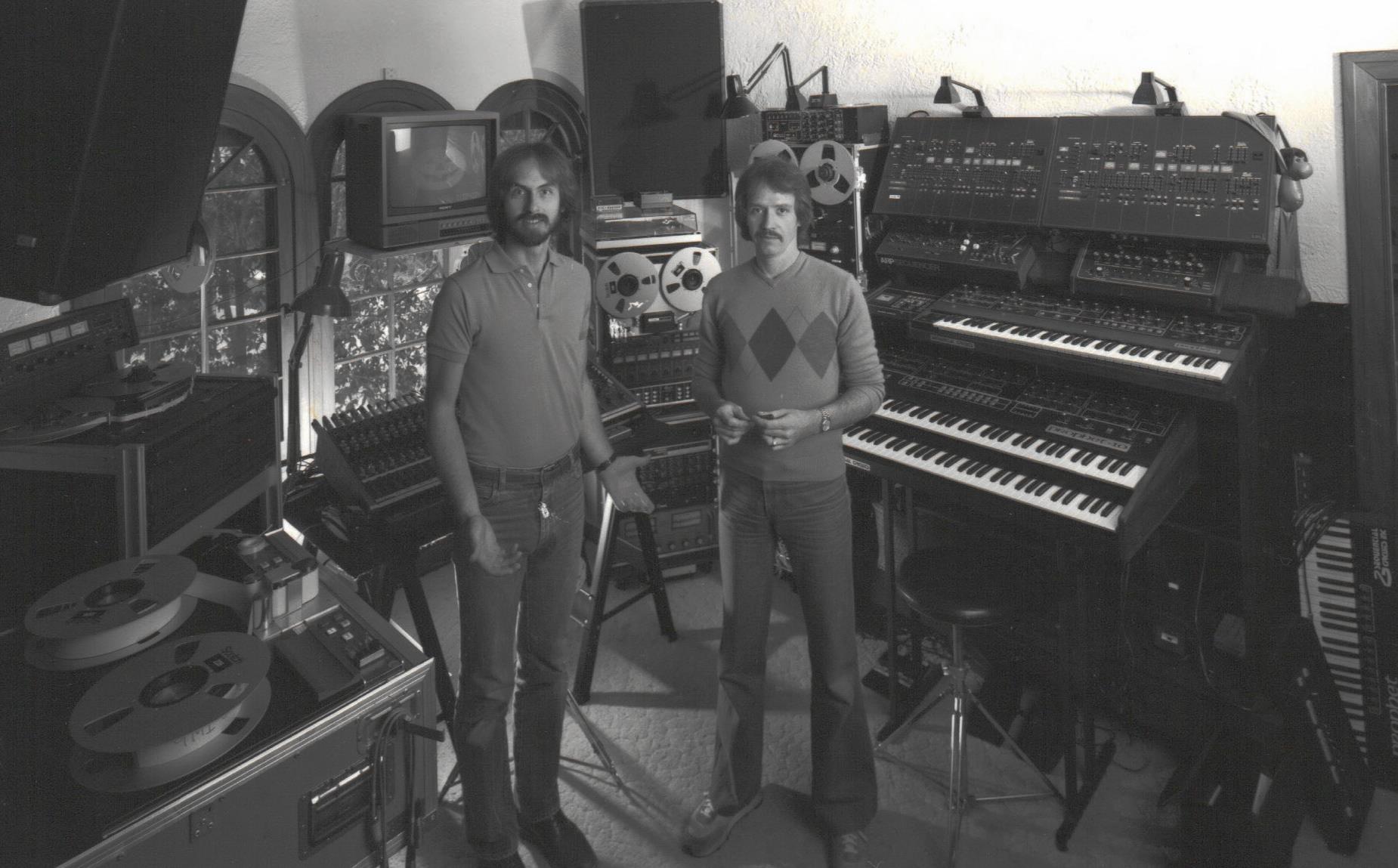
Alan Howarth produced the score and handled recording, mixing, sequencing and synthesizer programming; he and John Carpenter composed and performed the music.

Howarth’s original notes describe synchronizing time-coded videotape with a 24-track recorder so the score could be composed directly to picture.

The soundtrack’s equipment list includes Prophet-5 and Prophet-10 synthesizers, ARP instruments and a Linn LM-1 drum computer.

The main-title cue was assembled in two stages: sustained tones and rhythm came first, followed by electronic patterns synchronized to the pumpkin animation.

Two versions of “Chariots of Pumpkins” appear in the film: the melodic end-title version and a variation without that melody during Harry Grimbridge’s opening pursuit.

Filming locations

  • Loleta, California (Humboldt County): The town of Santa Mira
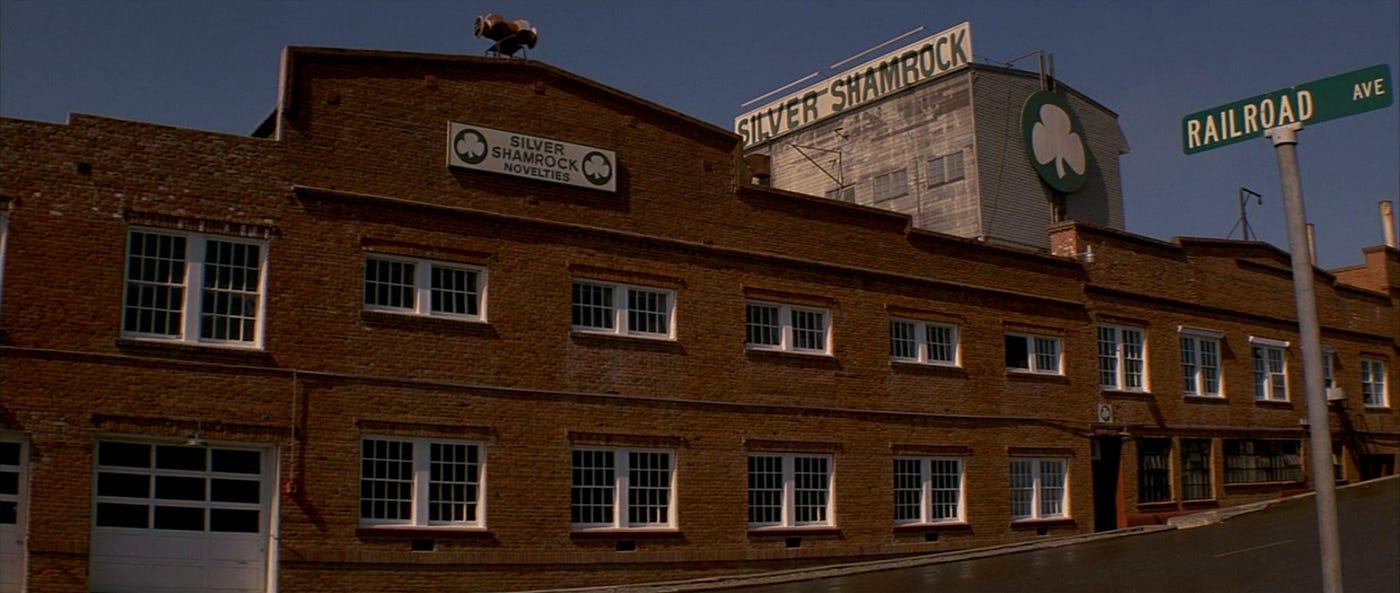
  • Familiar Foods milk bottling plant, Loleta, California: Silver Shamrock factory. The official site says health rules kept smoke and explosions out of the plant.
  • Eureka, California: Where the AFI Catalog says principal photography began on April 19, 1982
  • Don Post Studios, Los Angeles: Factory scenes that needed fire, smoke and explosions
  • A hospital in Lake View Terrace, Los Angeles: The opening hospital scenes
  • Sierra Madre, California: Harry Grimbridge's shop. The official site says the shop's Sierra Madre address in the film is where it was really shot.
  • Pi West Electronic Music Studio, Glendale, California: Recording the score
  • The production selected the remote coastal California town of Loleta for Santa Mira-area filming.
  • The Silver Shamrock mask factory was represented by a real milk bottling plant; Don Post Studios was used for effects work the plant could not accommodate.
  • The score was recorded at Pi West Electronic Music Studio in Glendale, California.

Effects and makeup

Tom Burman handled the special makeup. Tom Atkins said the effects were more bizarre than gross, and Burman said the film was not out to disgust people. Many of the effects play on the idea of a deadly practical joke.

Jon G. Belyeu handled special effects, and Clint Rowe coordinated the animals. Makeup artist Shannon Shea recalled visiting Burman's shop while it worked on the film. Burman showed him a decapitation effect for a character who turns out to be a robot, and a Smooth-On elastomer head for the drifter whose head is ripped off, with beard stubble punched into it.

The opening titles use a computer-drawn jack-o'-lantern that builds on screen, a nod to the pumpkin titles of the first two films. John Wash did the title sequence. Sam Nicholson did the Silver Shamrock commercial, with animation courtesy of Bakshi Productions. When Challis throws a mask over a security camera, the monitor view through the eyeholes nods to the first film's opening.

Tom Burman supervised the film's special makeup effects, while Don Post Studios designed/provided the central Silver Shamrock masks.

For the Buddy Kupfer Jr. test-room effect, the production used a urethane dummy, a gelatin mask melted with targeted heat, and a tube through the dummy to deliver insects and snakes.

The Silver Shamrock factory exterior/interior location was a working milk bottling plant. Health rules prevented smoke/explosion work there, so effects requiring those elements were shifted to Don Post Studios.

Jon Belyeu handled fire and explosions and helped mechanically operate Burman’s robots.

Harry Grimbridge’s death used a fiberglass skull with urethane skin, perforated around the eyes and nose to break apart.

The elderly-woman robot reused a Burman creation that also appeared in One Dark Night.

The snake-bite effect was filmed in reverse as a snake released its grip on a handler’s padded trouser leg.

The Stonehenge prop was coated in highly reflective Scotchlight paint for its climactic glow.

Shannon Shea recalls a 1982 Burman Studio visit during H3 work: Burman demonstrated a robot decapitation, and a separate vagrant head used Smooth-On elastomer with individually inserted beard stubble.

Props and costumes

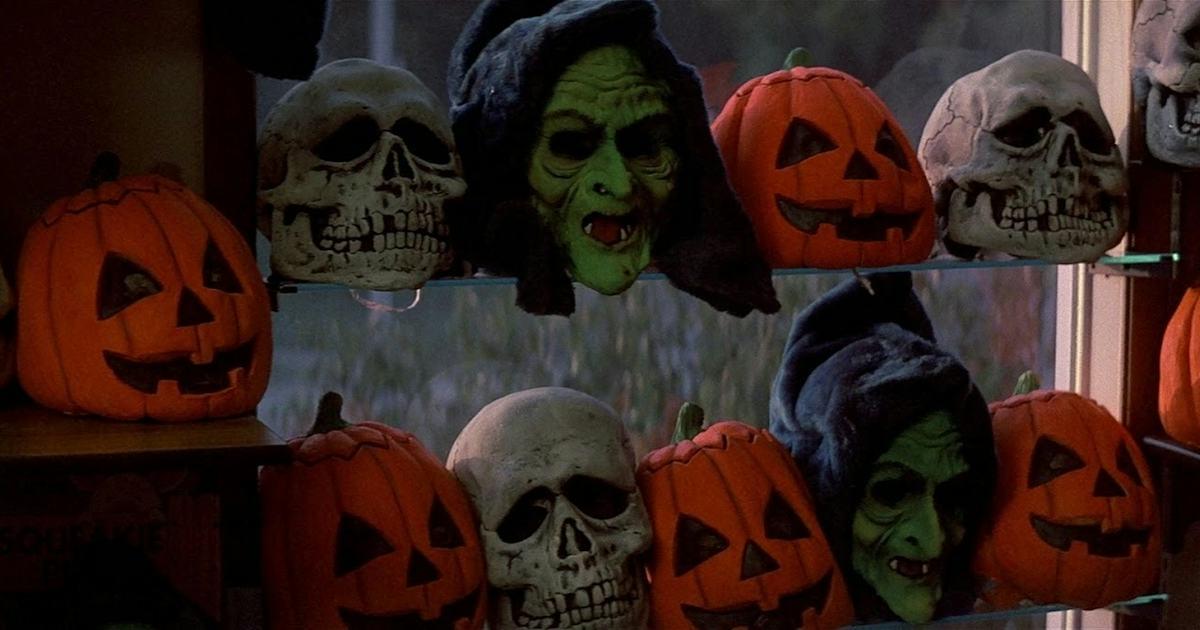
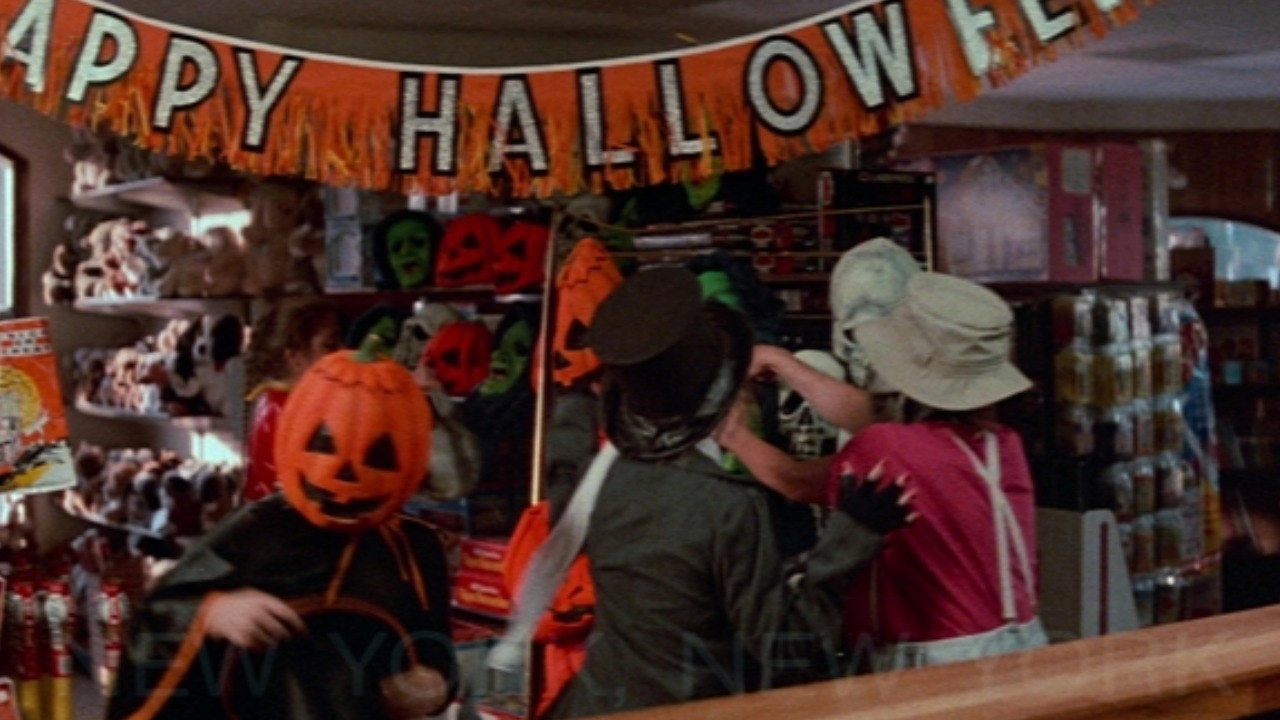
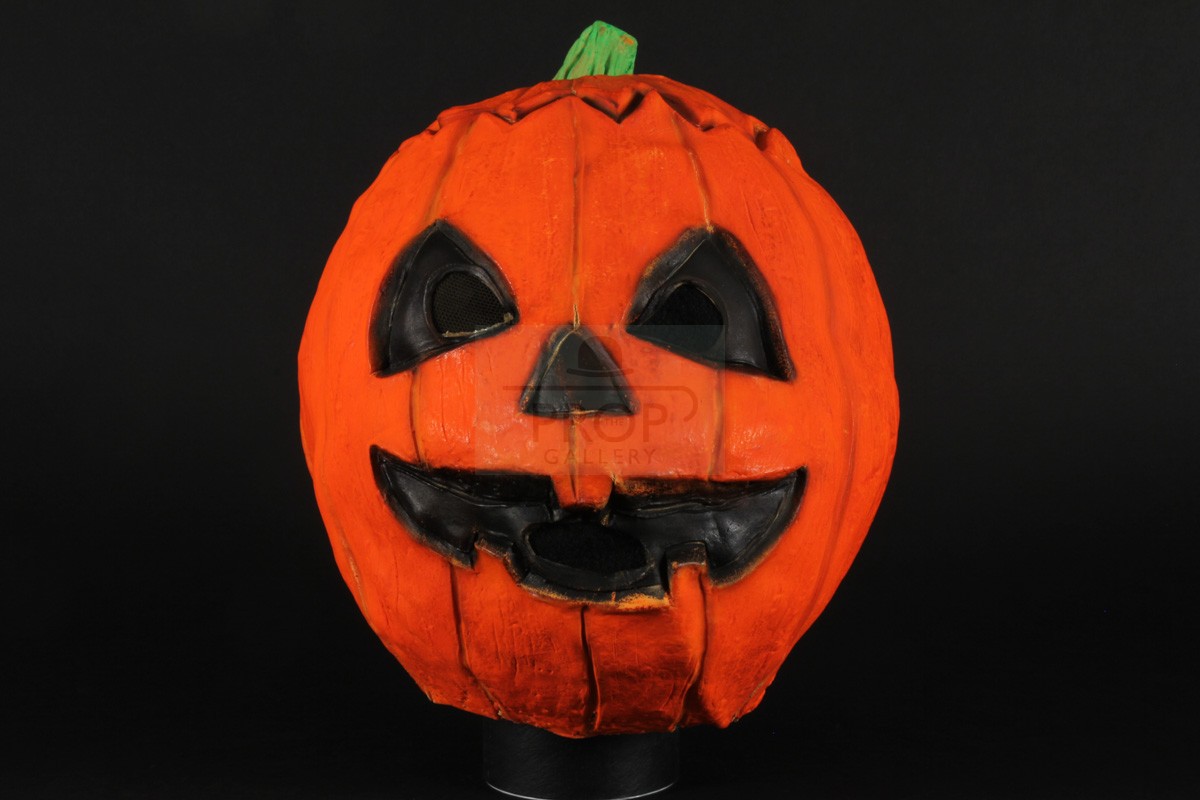
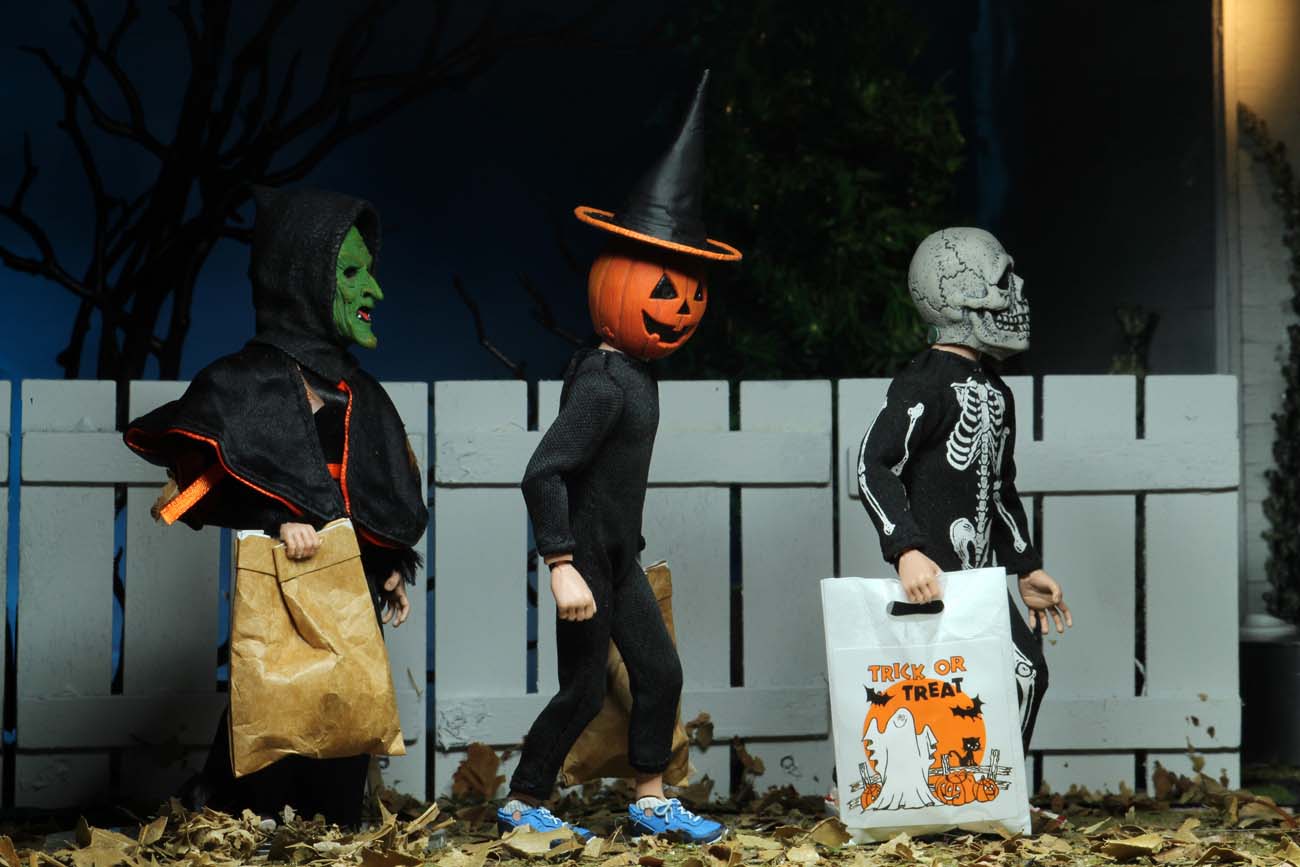
Don Post Studios made the three Silver Shamrock masks: a glow-in-the-dark skull, a green witch and an orange jack-o'-lantern. Wallace said the skull was already on the shelf at Post's factory and the witch was already on the drawing board. The pumpkin was the only one designed from scratch, with triangle eyes and a big smile.

Before release, the masks were mass-produced from the original molds and sold to buyers aged 13 to 25 for about $25. Universal sponsored radio promotions and had Don Post give mask-making demonstrations at Universal Studios.

Each mask has a metal Silver Shamrock badge on the back hiding the deadly chip.

Heritage Auctions sold an original Don Post pumpkin mask from the Planet Hollywood collection in 2024. It was on a later foam display head and was missing the Silver Shamrock chip. The listing does not prove it was screen-used.

Trick or Treat Studios makes an officially licensed replica of the witch mask with a Silver Shamrock Power Chip, under license from Universal.

The motel register lists Harry Grimbridge. The official site says the other names on the list belong to crew members.

Don Post Studios supplied the skull, witch and jack-o'-lantern Silver Shamrock masks. The skull and witch were adapted from existing Don Post designs; the jack-o'-lantern was created for the film.

The production/merchandising arrangement allowed the same mask designs featured in the movie to be sold commercially, making the props part of the film's real-world promotional history.

Heritage’s 2024 Planet Hollywood auction catalog documents an original Don Post pumpkin mask with a later polyfoam display form; the Silver Shamrock chip was absent. This is auction provenance, not an independent screen match.

Production artifacts

Scripts and documents

Screenplay

Draft date
1982-04-04
Draft
Revised Draft
Writers
Tommy Lee Wallace
Availability
Indexed by 45 Lampkin Lane.
Killers & Deaths

The killers

Conal Cochran

Played by
Dan O'Herlihy
Motive
Cochran owns Silver Shamrock Novelties and practices ancient Celtic witchcraft. He wants to bring back Samhain as a night of child sacrifice. The planets are aligned as they were 3,000 years ago, so he puts chips carrying pieces of a stolen Stonehenge block into his masks. A TV commercial on Halloween night will set them off.
Death
Challis dumps chips on the control room, and the Stonehenge block sends out a beam that makes Cochran disappear. The block then explodes and fire destroys the factory. The Jack Martin novelization hints he survives.

Silver Shamrock androids (the men in suits)

Played by
Dick Warlock as the lead assassin, with stunt performers
Motive
They carry out Cochran's orders, killing anyone who gets close to the plan.
Death
One sets himself on fire in the hospital lot after killing Harry Grimbridge. The rest short out when Challis turns the chips on the control room.

Android Ellie Grimbridge

Played by
Stacey Nelkin
Motive
Cochran swaps her for a robot copy after she is captured.
Death
Challis knocks her head off after she attacks him in the car.

Deaths

Harry Grimbridge

Played by
Al Berry
How
The bones in his face are crushed by an android's hands
Where
Hospital room
By
Silver Shamrock android

Android assassin

How
Pours gasoline over himself and sets himself on fire in his car
Where
Hospital parking lot
By
Himself

Starker

Played by
Jonathan Terry
How
Head torn off
Where
Santa Mira, after curfew
By
Two Silver Shamrock androids

Marge Guttman

Played by
Garn Stephens
How
A blue laser beam from the mask chip blasts away her mouth and nose, and an insect crawls from her mouth
Where
Motel room in Santa Mira
By
Silver Shamrock microchip

Little Buddy Kupfer

Played by
Brad Schacter
How
The commercial sets off his mask. It melts onto his face, and crickets and rattlesnakes pour out of his body.
Where
Factory test room
By
Conal Cochran's mask and commercial

Buddy Kupfer

Played by
Ralph Strait
How
Bitten by the snakes that come out of Little Buddy
Where
Factory test room
By
Conal Cochran's test

Betty Kupfer

Played by
Jadeen Barbor
How
Bitten by the snakes that come out of Little Buddy
Where
Factory test room
By
Conal Cochran's test

Teddy

Played by
Wendy Wessberg
How
Electric drill into her ear
Where
Hospital, while calling the sheriff's office
By
Silver Shamrock android

Silver Shamrock factory androids

How
Short out and fall apart when the chips go off; the factory then explodes
Where
Silver Shamrock factory
By
Dr. Daniel Challis

Buddy and Betty Kupfer

Method
Killed during the Silver Shamrock test-room demonstration
Killer
Silver Shamrock experiment
Production note
The family test-room sequence combines the child-mask creature effect with reaction/body effects and the film's mechanical/ritual-horror staging.

Music & Home Media

John Carpenter and Alan Howarth composed and performed the score using only synthesizers. Howarth produced it and did the recording, mixing, sequencing and synthesizer programming at Pi West Electronic Music Studio in Glendale. The film was transferred to time-coded videotape and synced to a 24-track recorder so they could score directly to picture. The gear included Prophet-5 and Prophet-10 synthesizers, ARP instruments and a Linn LM-1 drum machine.
The new main theme plays a 9/16 electronic pulse against a steady 4/4, instead of the original 5/4 piano theme. The main title cue was built in two passes: sustained tones and rhythm first, then patterns synced to the pumpkin animation.

Chariots of Pumpkins plays twice in the film. The end title version has the melody, and a version without it plays during Harry Grimbridge's chase at the start.

The Silver Shamrock jingle counts down the days to Halloween. It uses the tune of 'London Bridge Is Falling Down', which the official site says was picked because it was in the public domain. The countdown starts at eight more days. Tommy Lee Wallace is the announcer's voice.

Soundtrack: MCA Records, October 1982, 12 tracks including Main Title, Chariots of Pumpkins, Drive to Santa Mira, Hello Grandma and Goodbye Ellie. An expanded 25-track score edition followed in 2009.

German speed metal band Helloween adapted the Silver Shamrock jingle as the intro to Starlight on its 1985 album Walls of Jericho.

Home Media

  • 1983, VHS, LaserDisc and CED, MCA/Universal.
  • 1998, DVD, GoodTimes.
  • 2002, DVD, Universal. A double-feature DVD with Halloween II followed in 2007.
  • September 18, 2012, Blu-ray, Scream Factory Collector's Edition. First Blu-ray, with a commentary by Tommy Lee Wallace joined by Rob Galluzzo and Sean Clark, a commentary by Tom Atkins with Michael Felsher, and the documentary Stand Alone.
  • September 23, 2014, Blu-ray, Scream Factory and Anchor Bay 15-disc Halloween: The Complete Collection box set.
  • August 11, 2015, Blu-ray, Universal standard edition.
  • 2021, 4K Ultra HD plus Blu-ray, Scream Factory Collector's Edition. The official site gives a September 28 street date, and High-Def Digest and Wikipedia list October 5. It has a new 4K scan of the original camera negative approved by Dean Cundey, in Dolby Vision and HDR10, with a new Dolby Atmos track and DTS-HD mono. The 4K disc has commentaries with Tommy Lee Wallace and Tom Atkins. The Blu-ray adds Tricks, Treats and Terror: The Masks of Halloween III (7:29), Stand Alone: The Making of Halloween III (33:09), Make-Up from Scratch with Tom Burman (6:00), Horror's Hallowed Grounds: The Locations of Halloween III (19:44), a teaser trailer, TV and radio spots, and still, newspaper ad, poster and lobby card galleries.
  • October 28, 2025, SteelBook reissue of the Scream Factory 4K release, Amazon exclusive.

2021 Scream Factory 4K Ultra HD / Blu-ray

2021-09-28 · 4K UHD + Blu-ray

Features
Tommy Lee Wallace commentary; Tom Atkins commentary; Stand Alone: The Making of Halloween III; Horror's Hallowed Grounds; Tom Burman interview; still gallery; theatrical trailers; TV spots; radio spots
Discs
2
Technical
2021 4K scan: original camera negative; Dean Cundey approval; Dolby Atmos

Merchandise

  • Silver Shamrock skull, witch and jack-o'-lantern masks by Don Post Studios, 1982, sold for about $25 each under Post's exclusive merchandising deal.
  • Halloween III: Season of the Witch novelization by Jack Martin, a pen name of Dennis Etchison. Jove Books, 1982, reissued 1984. The official site says it became a bestseller. The book hints Cochran survives through Stonehenge magic and confirms Challis fails to stop the third broadcast, so children die.
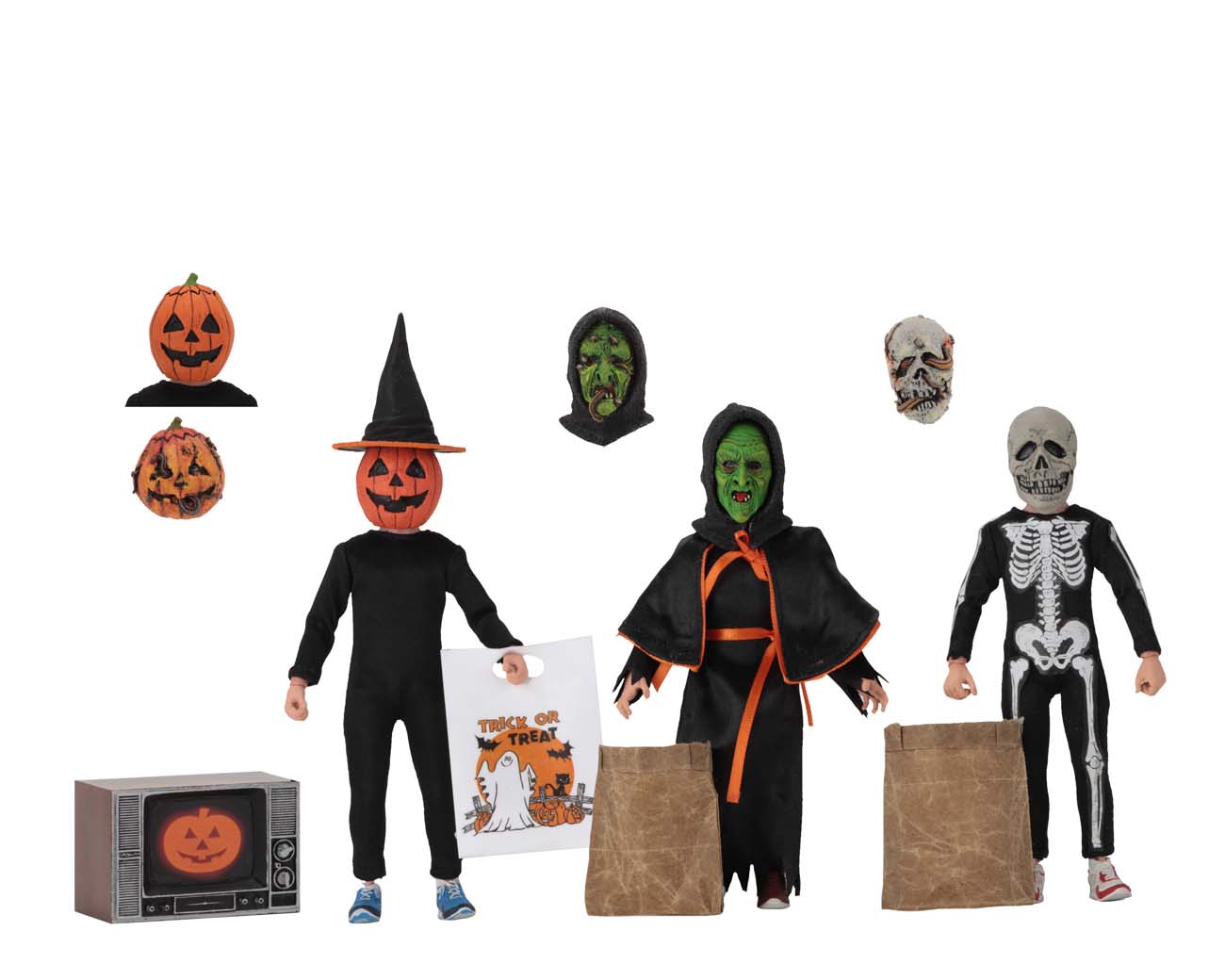
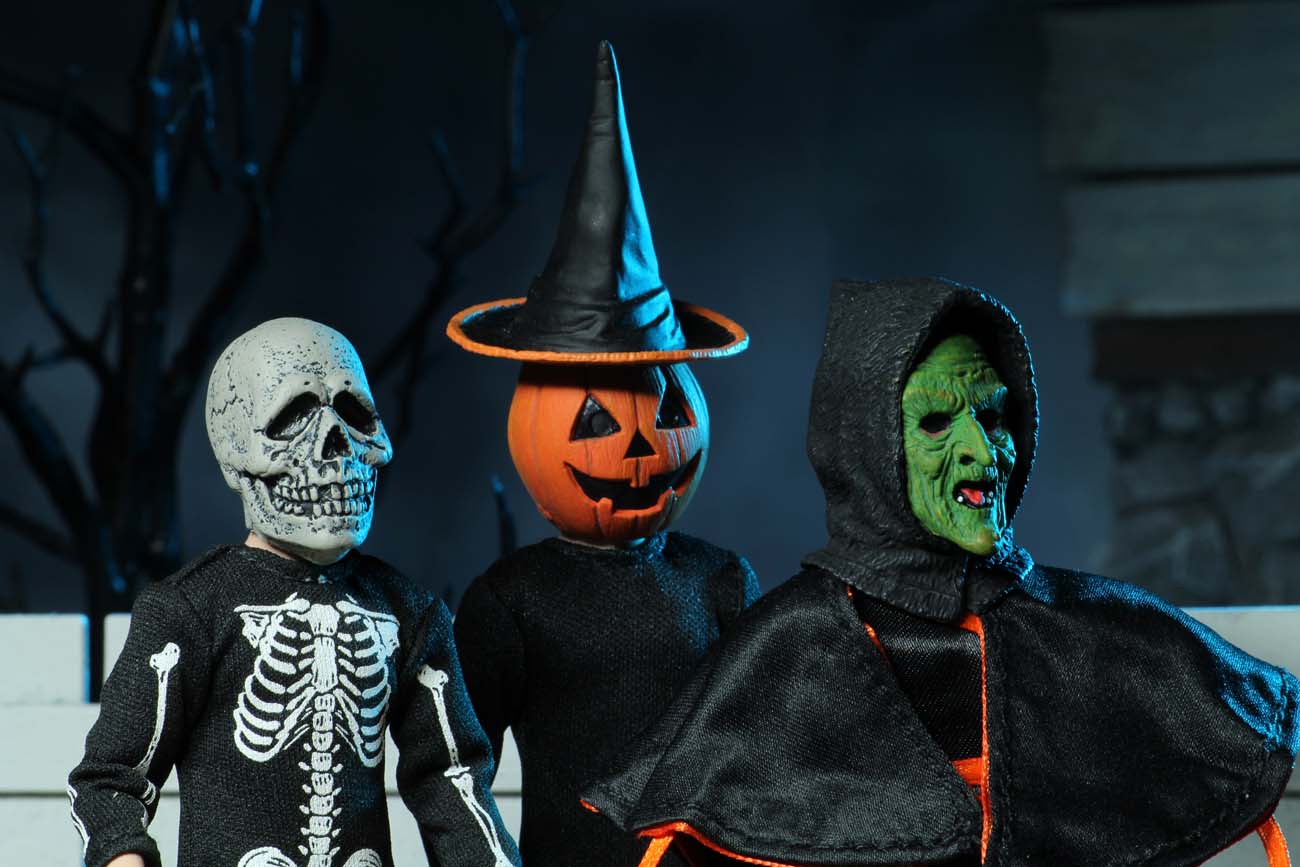
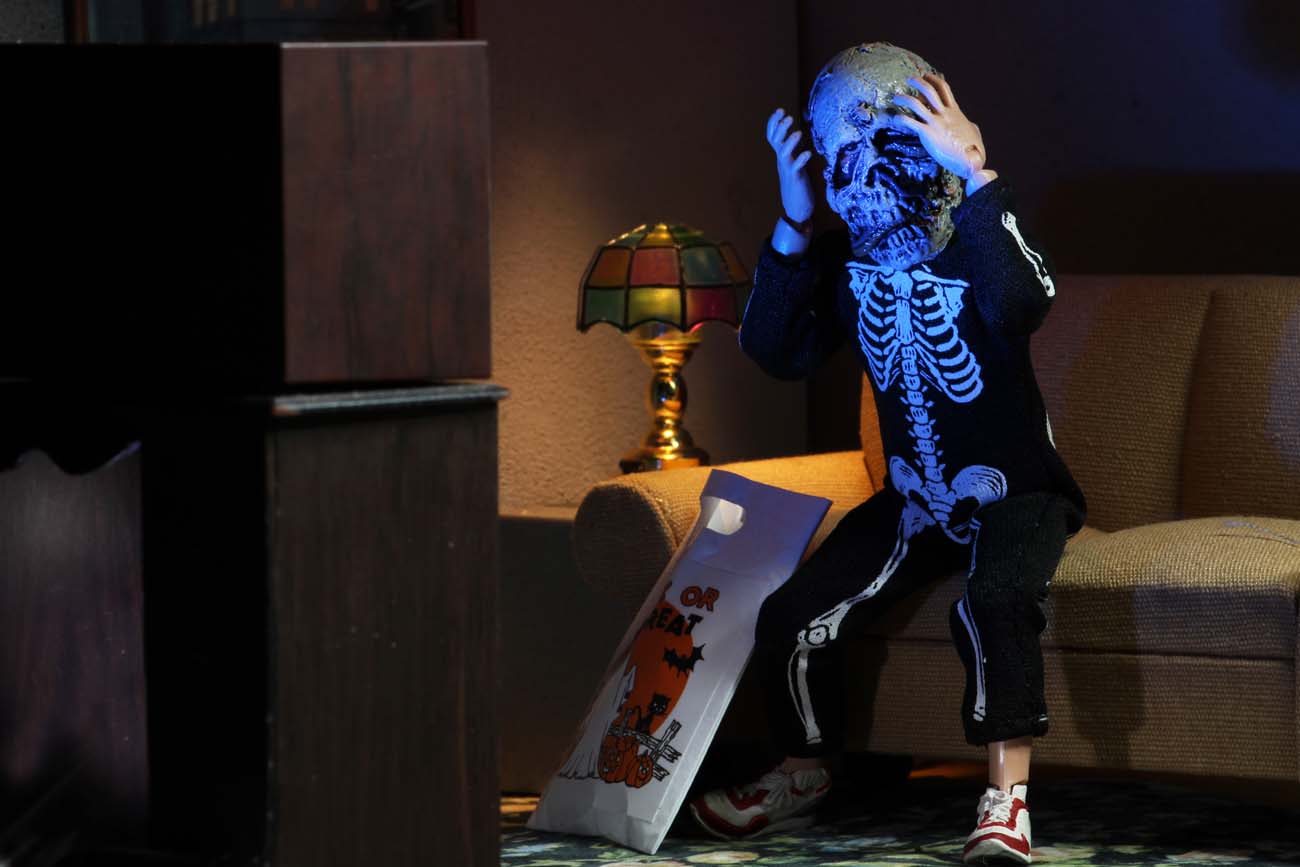
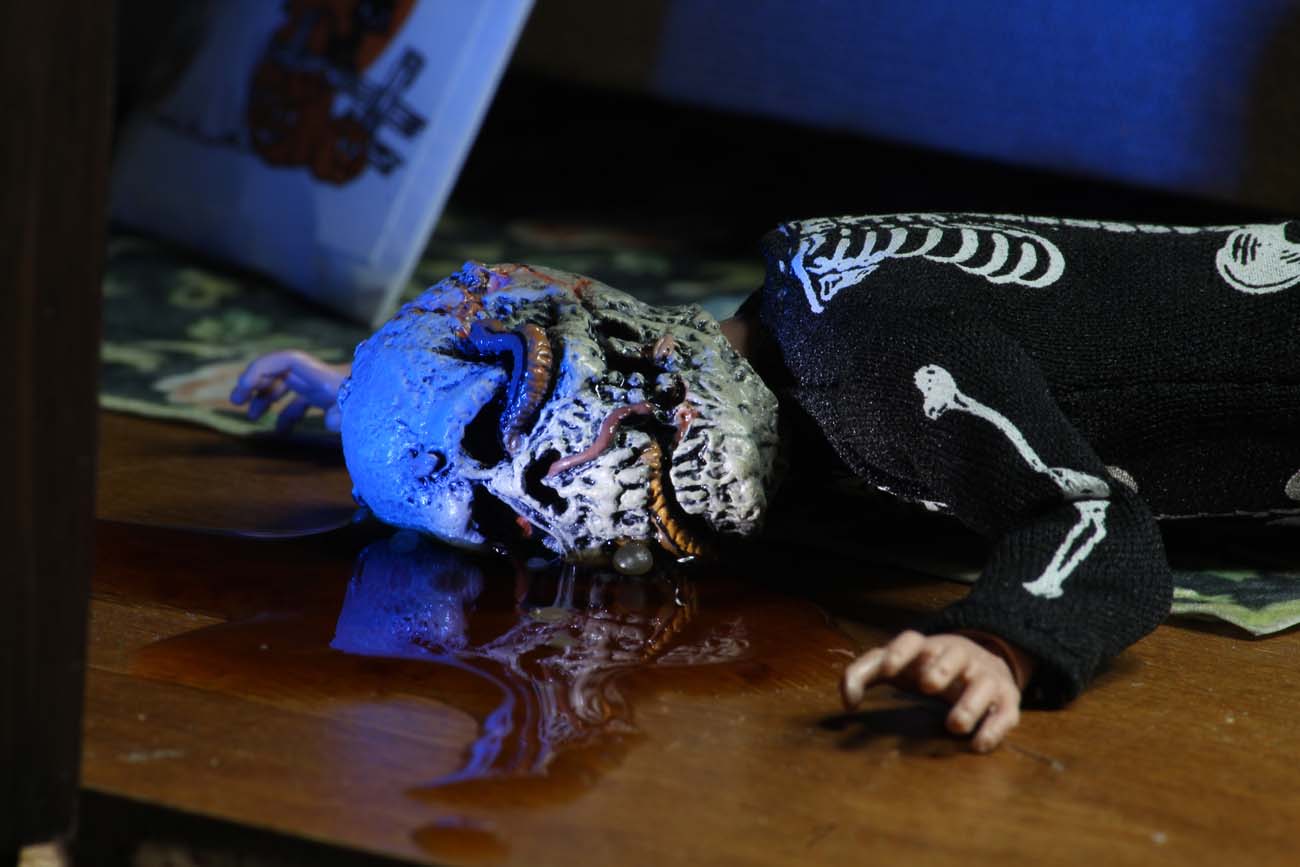
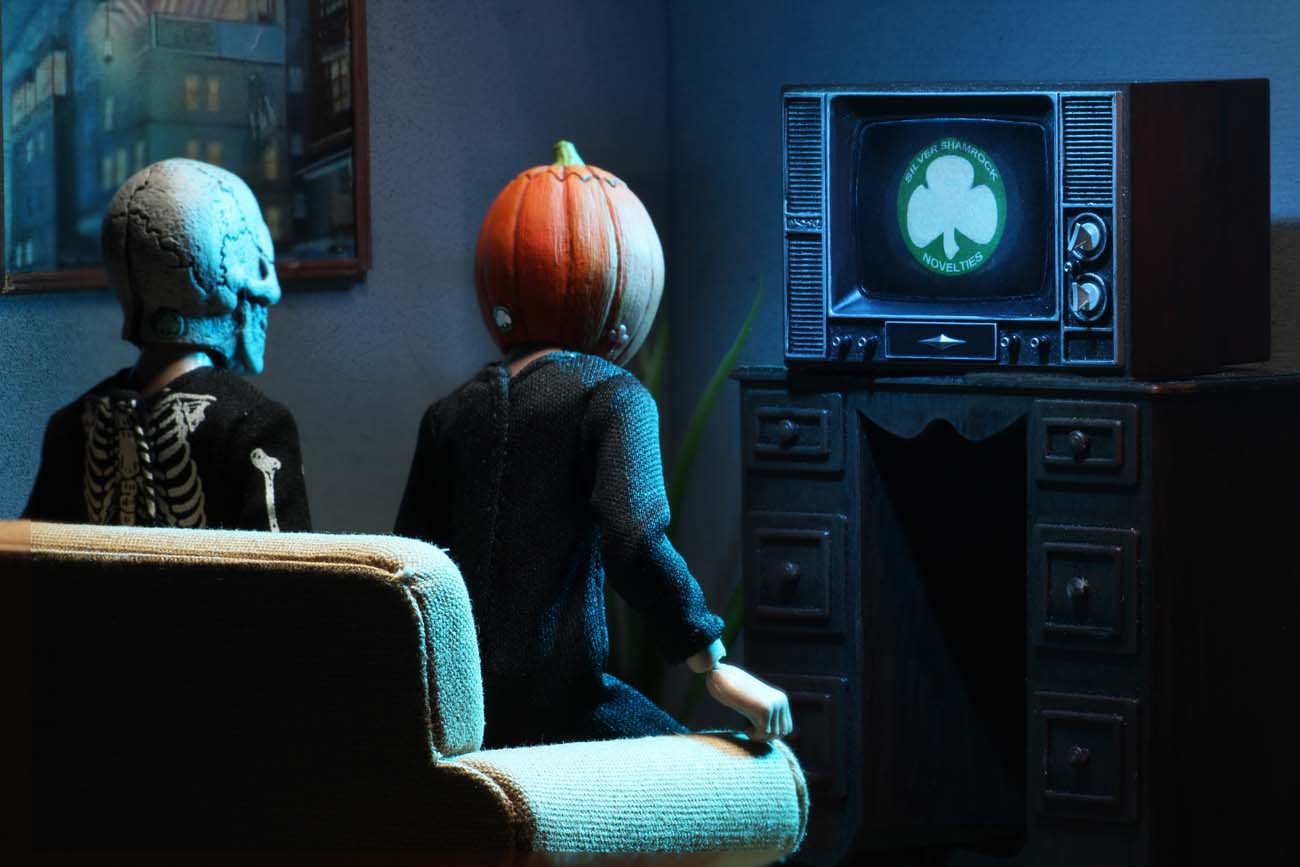
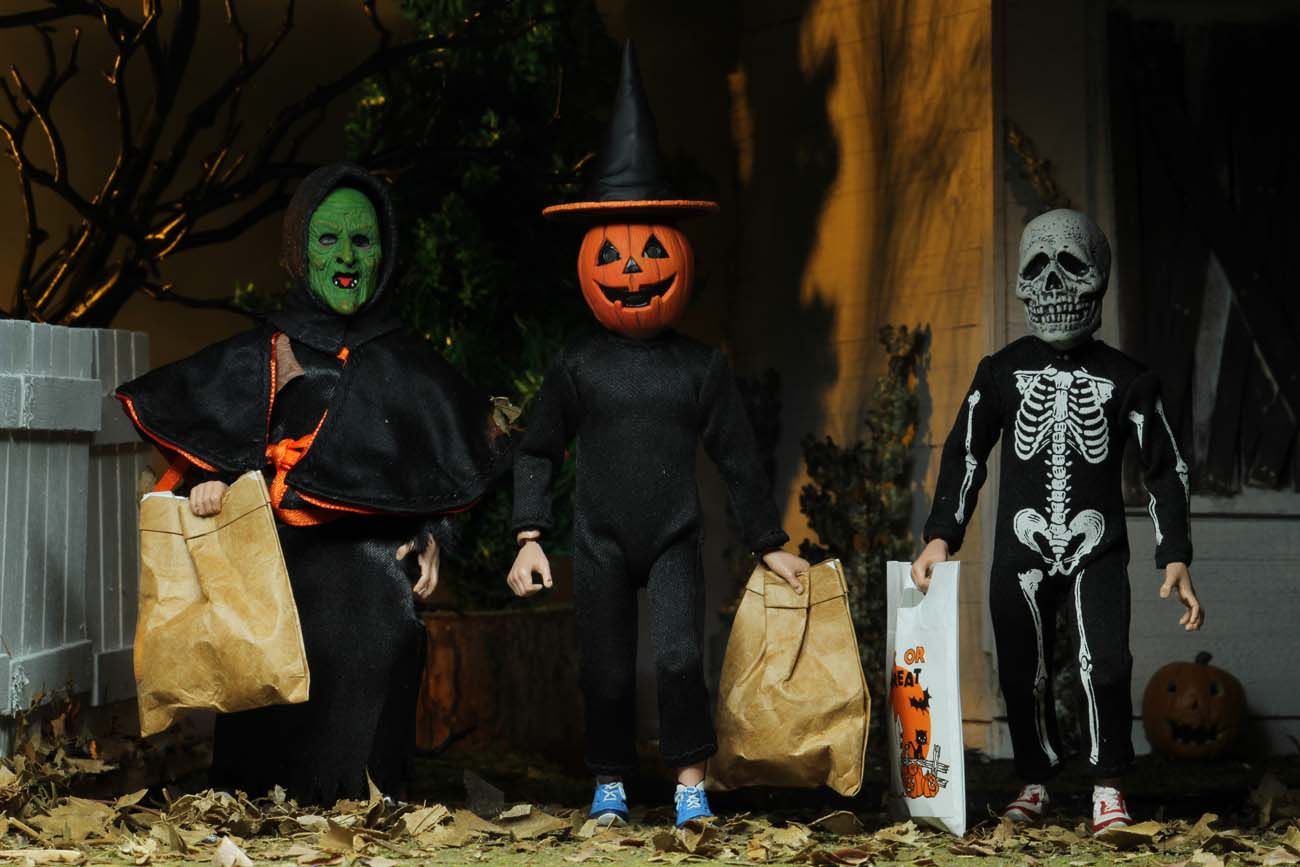
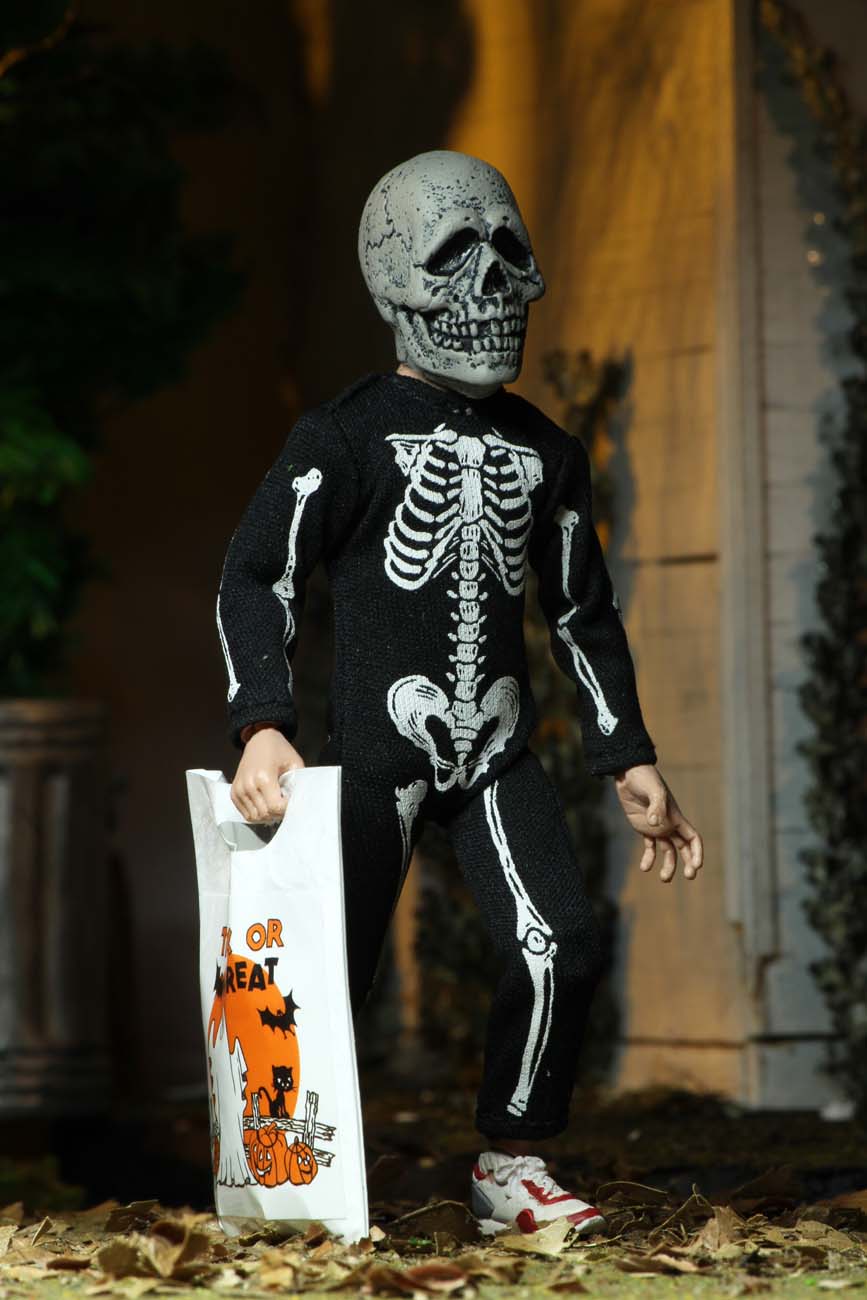
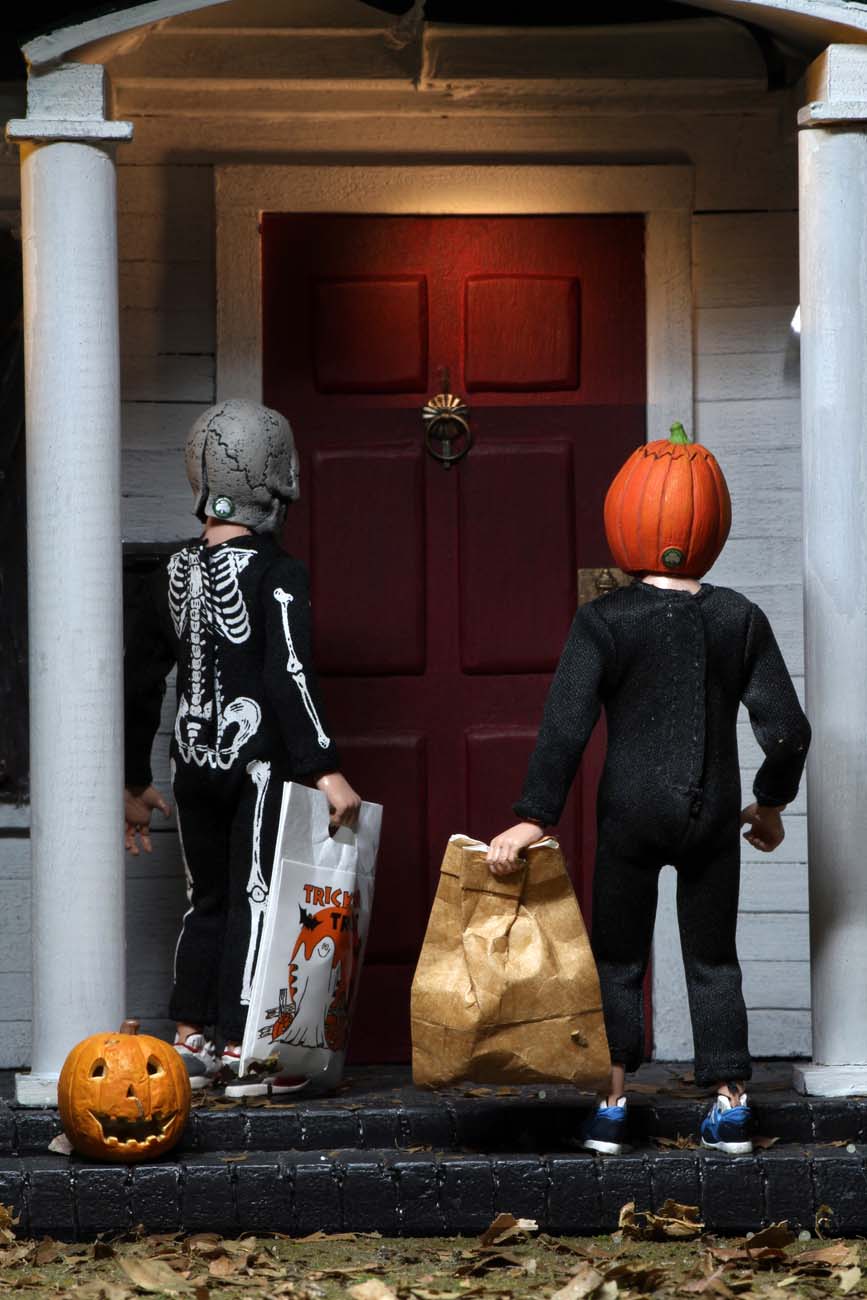
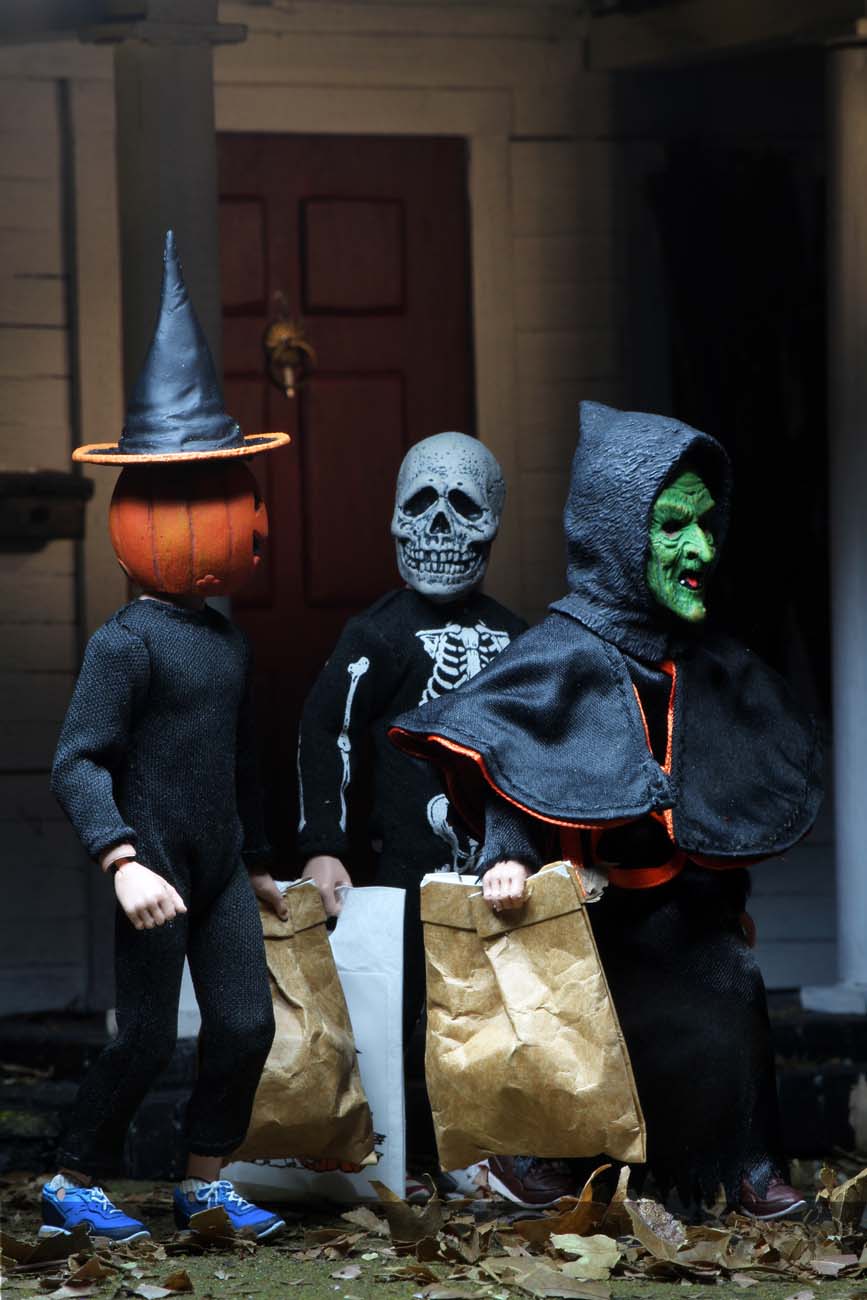
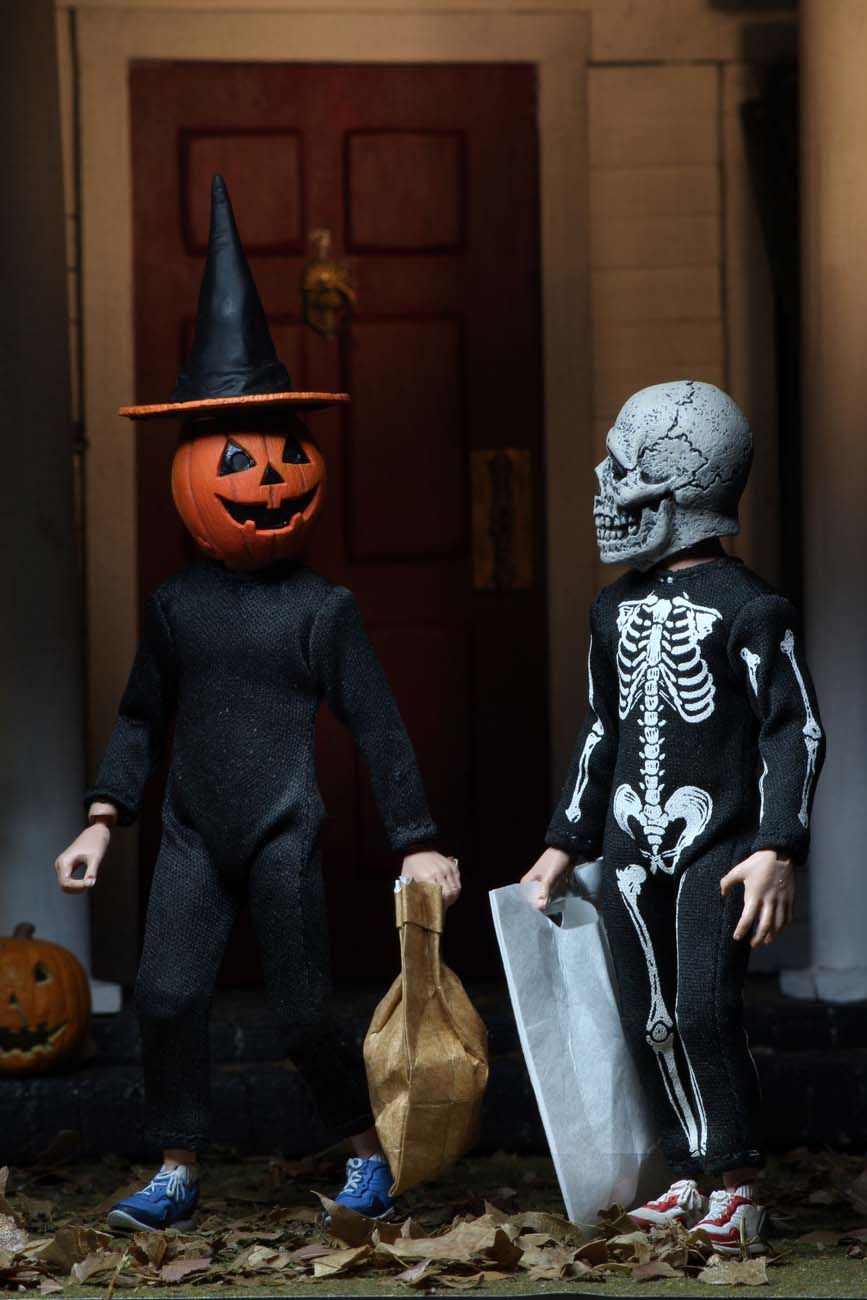
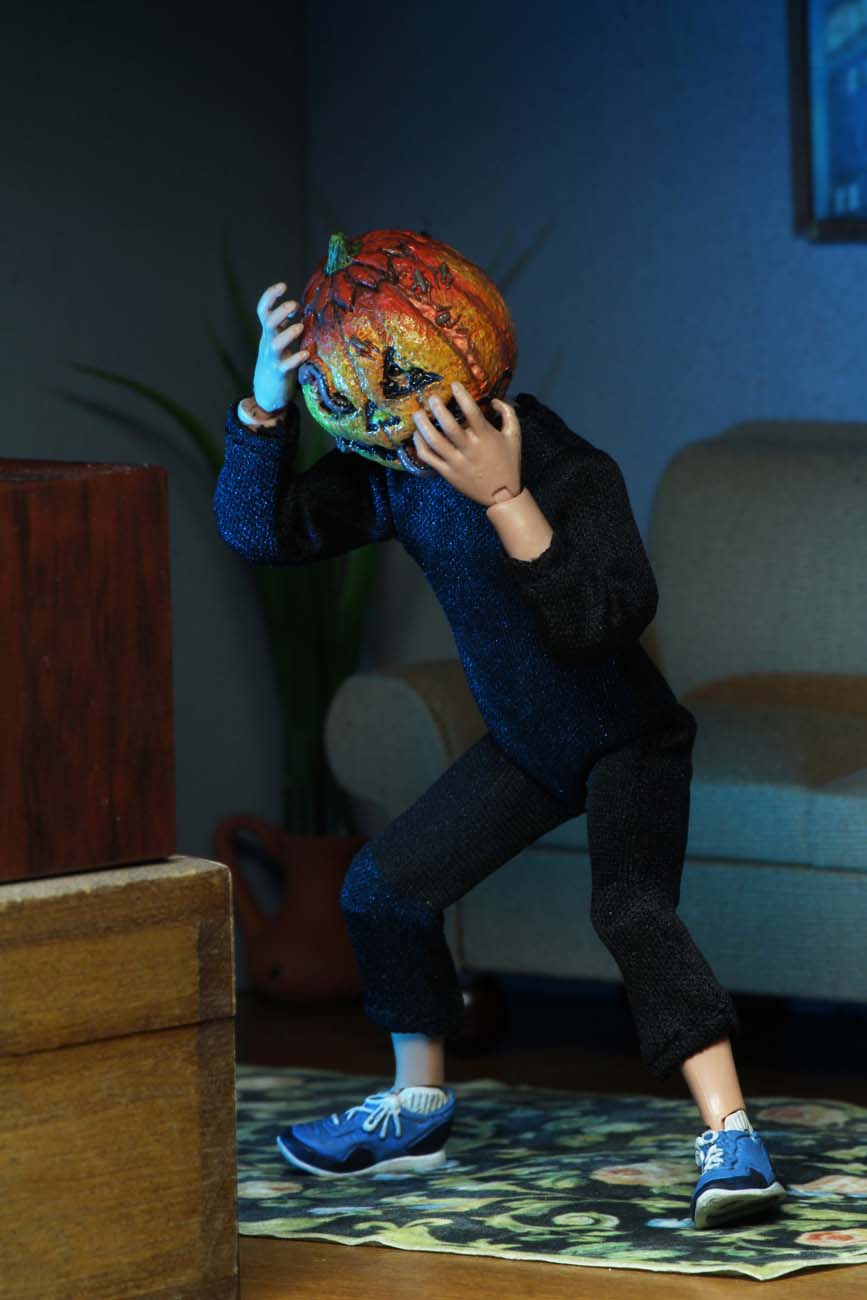
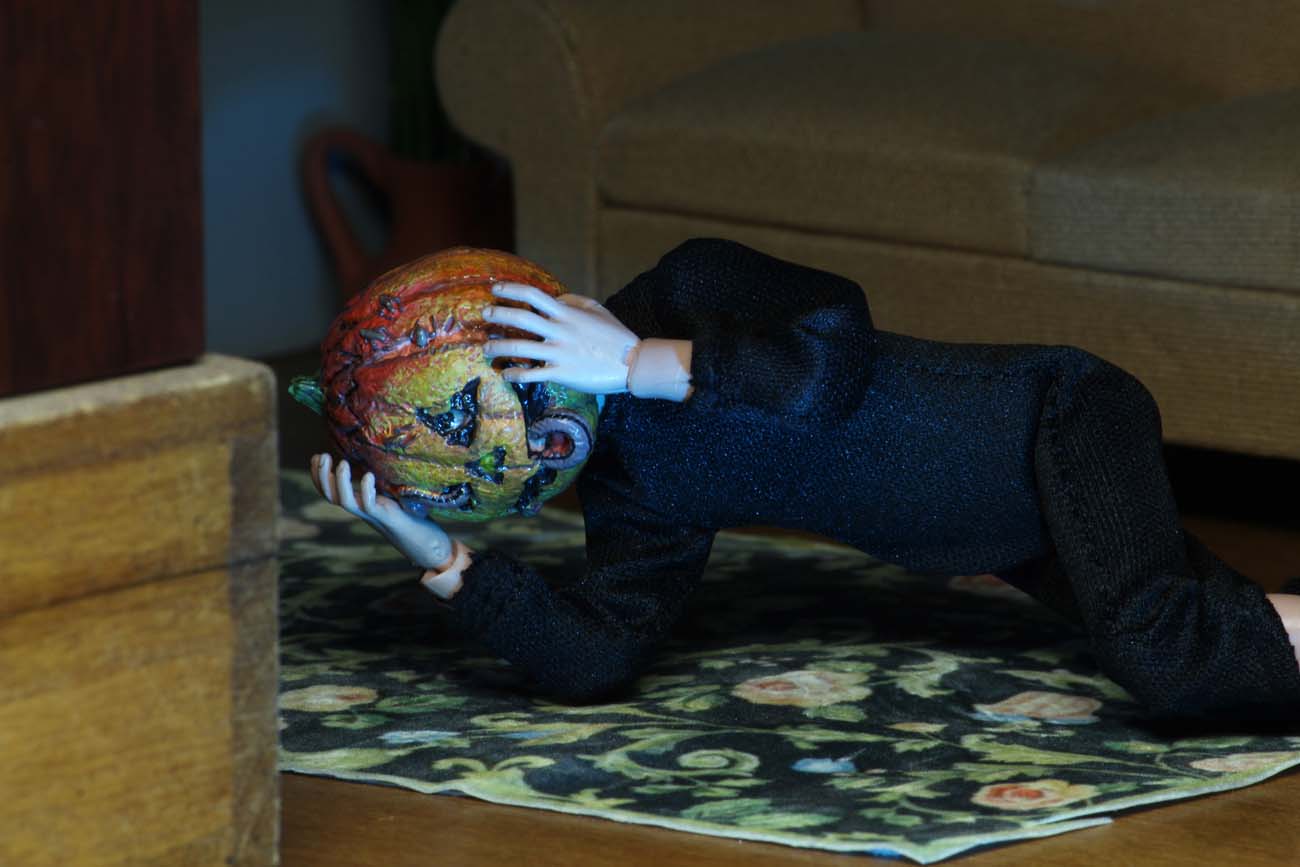
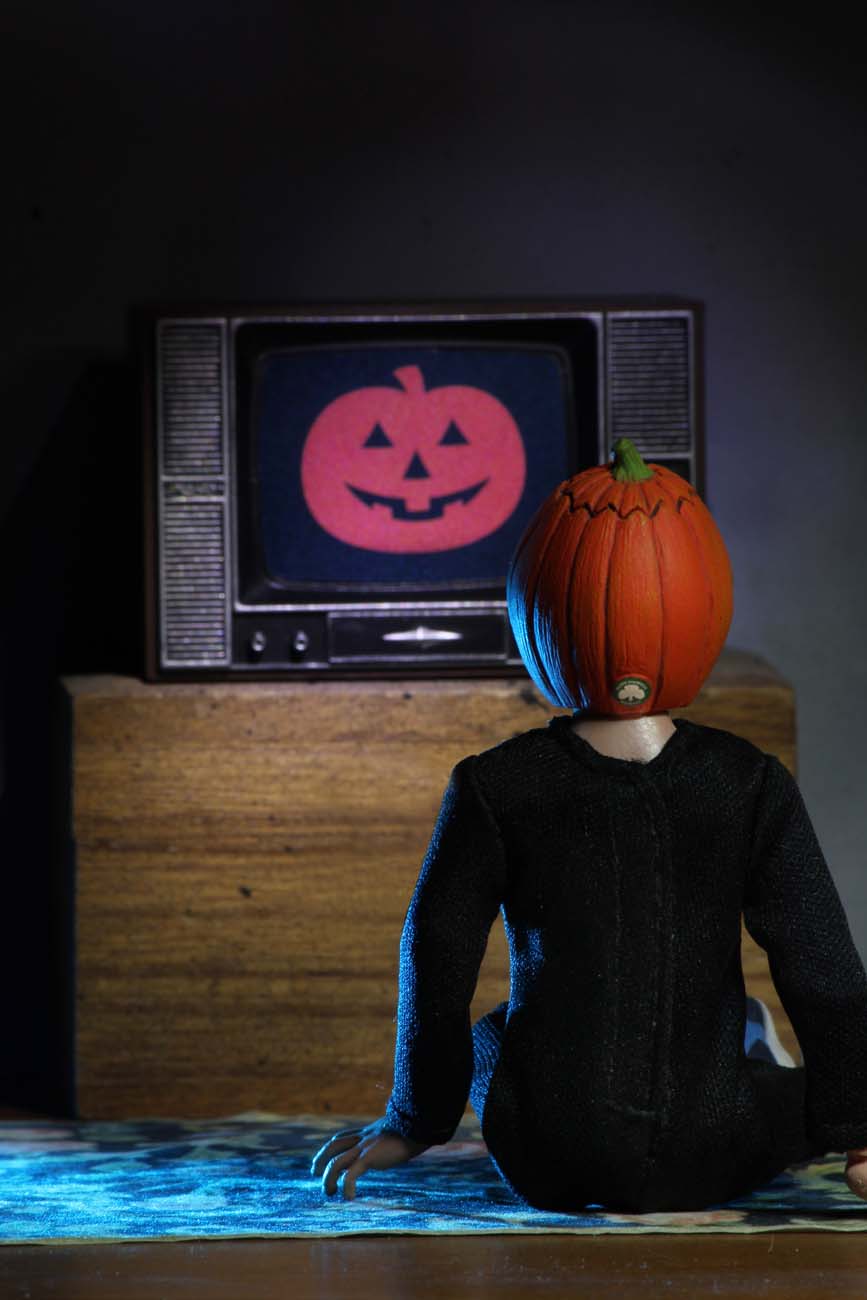
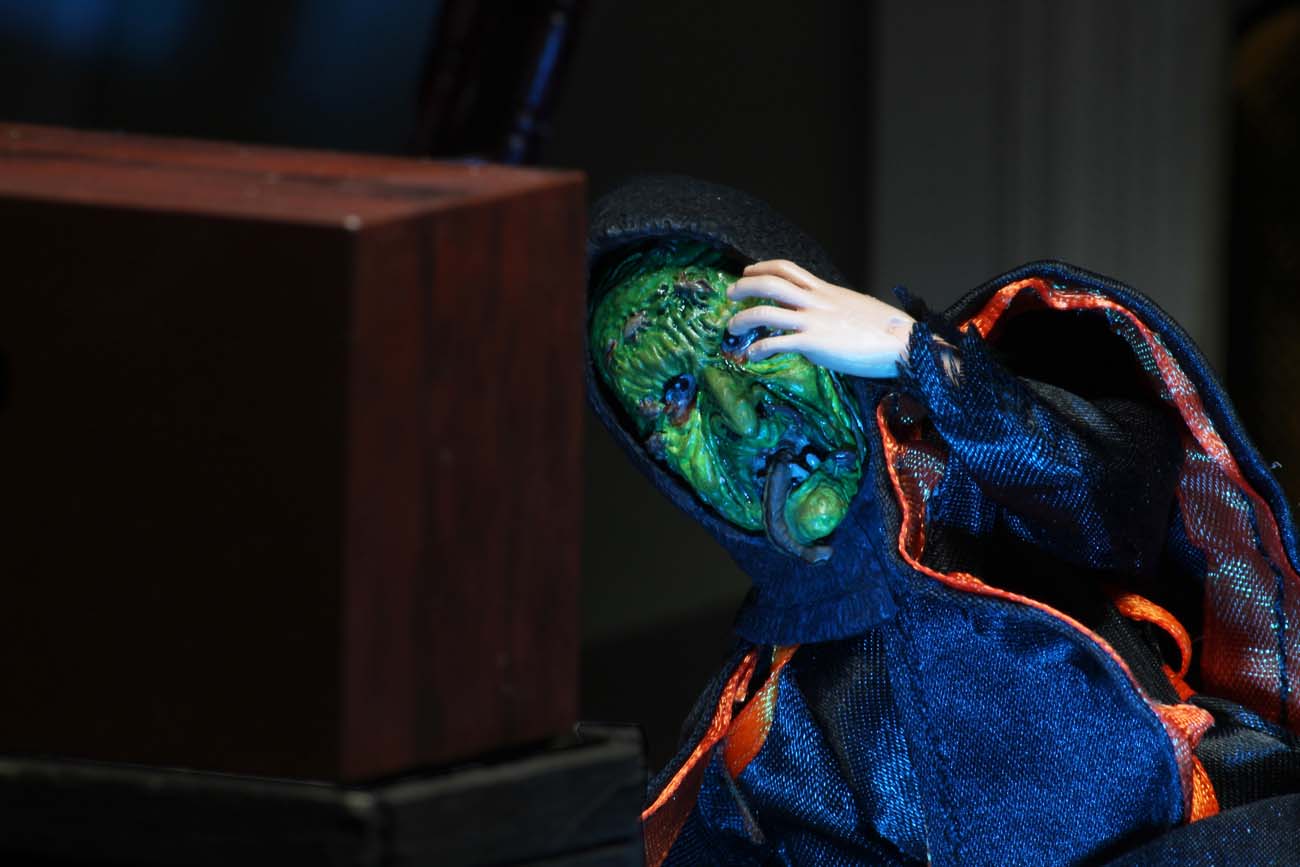
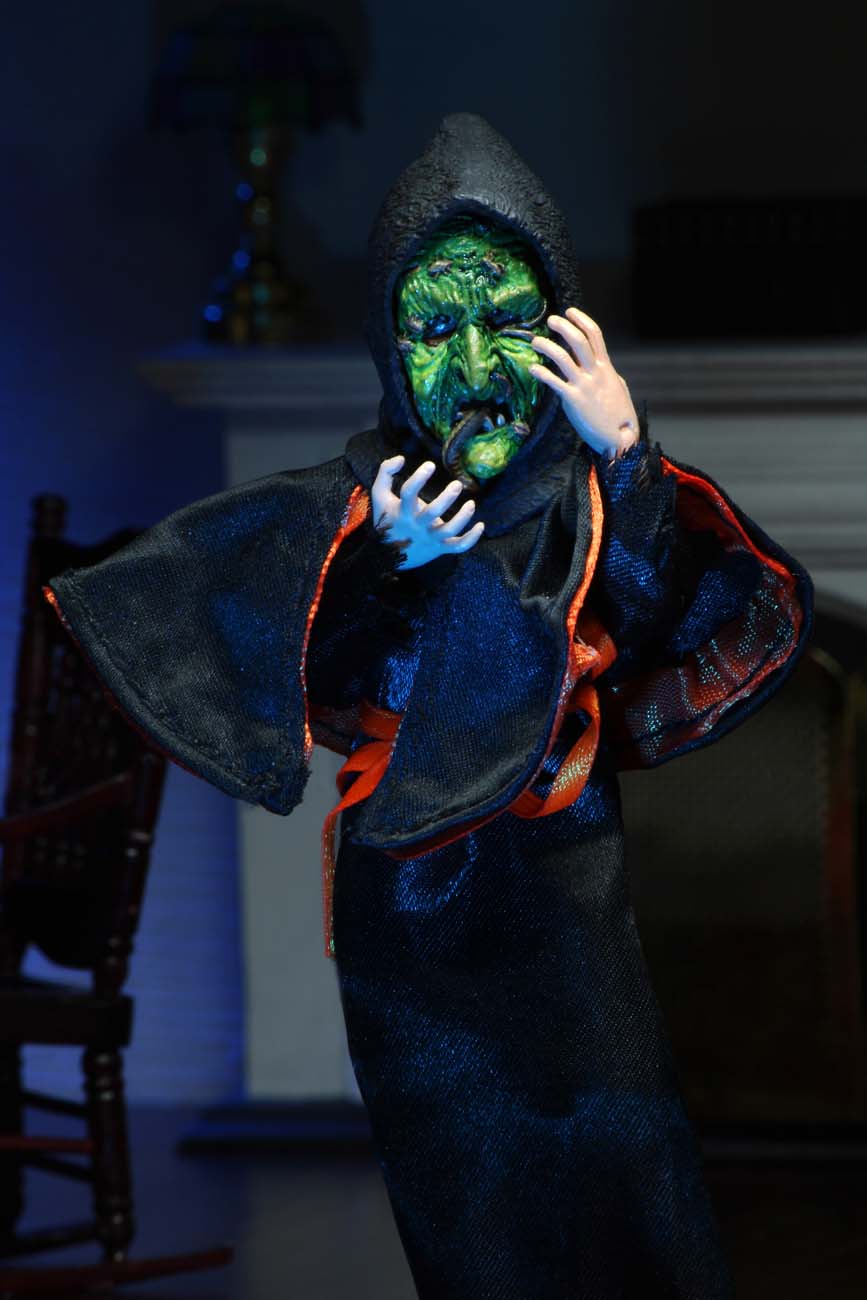
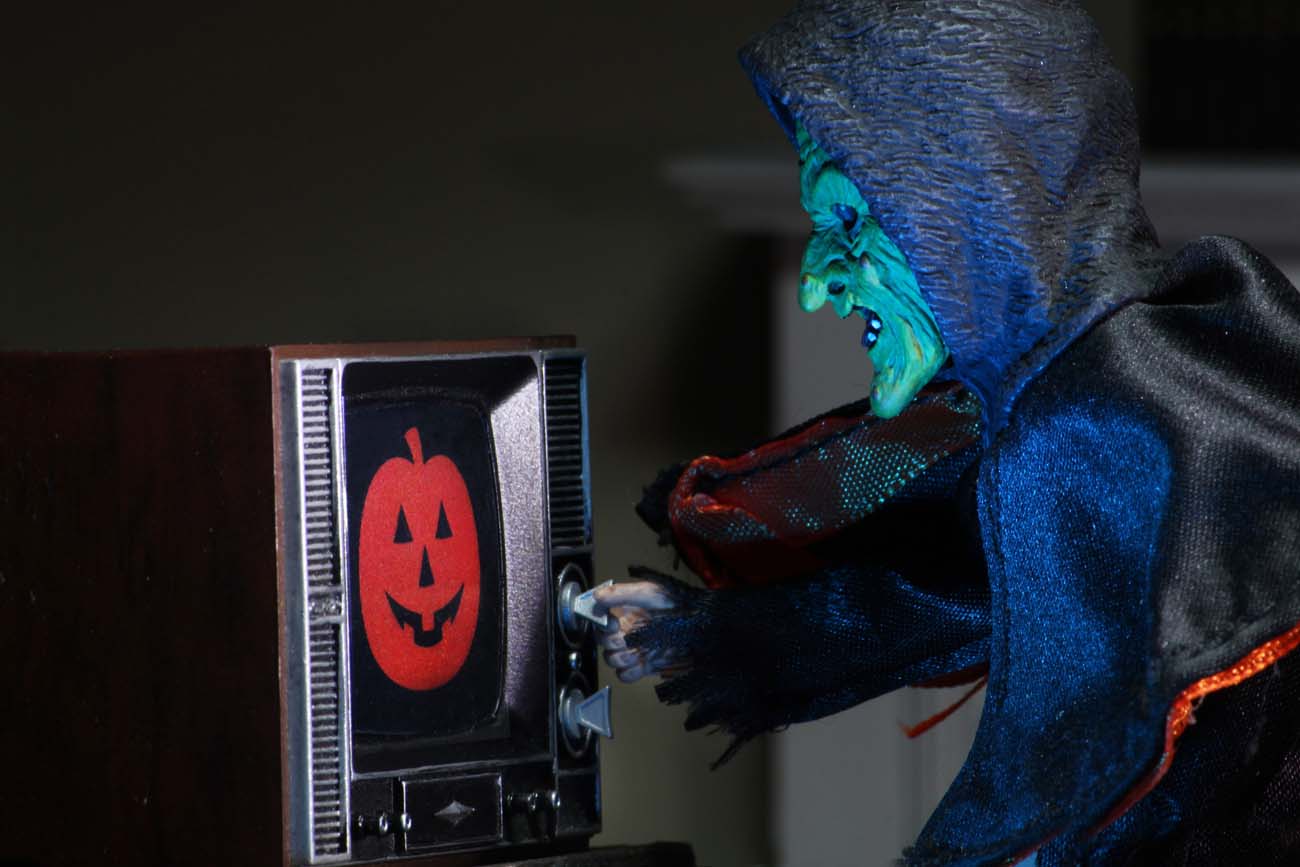
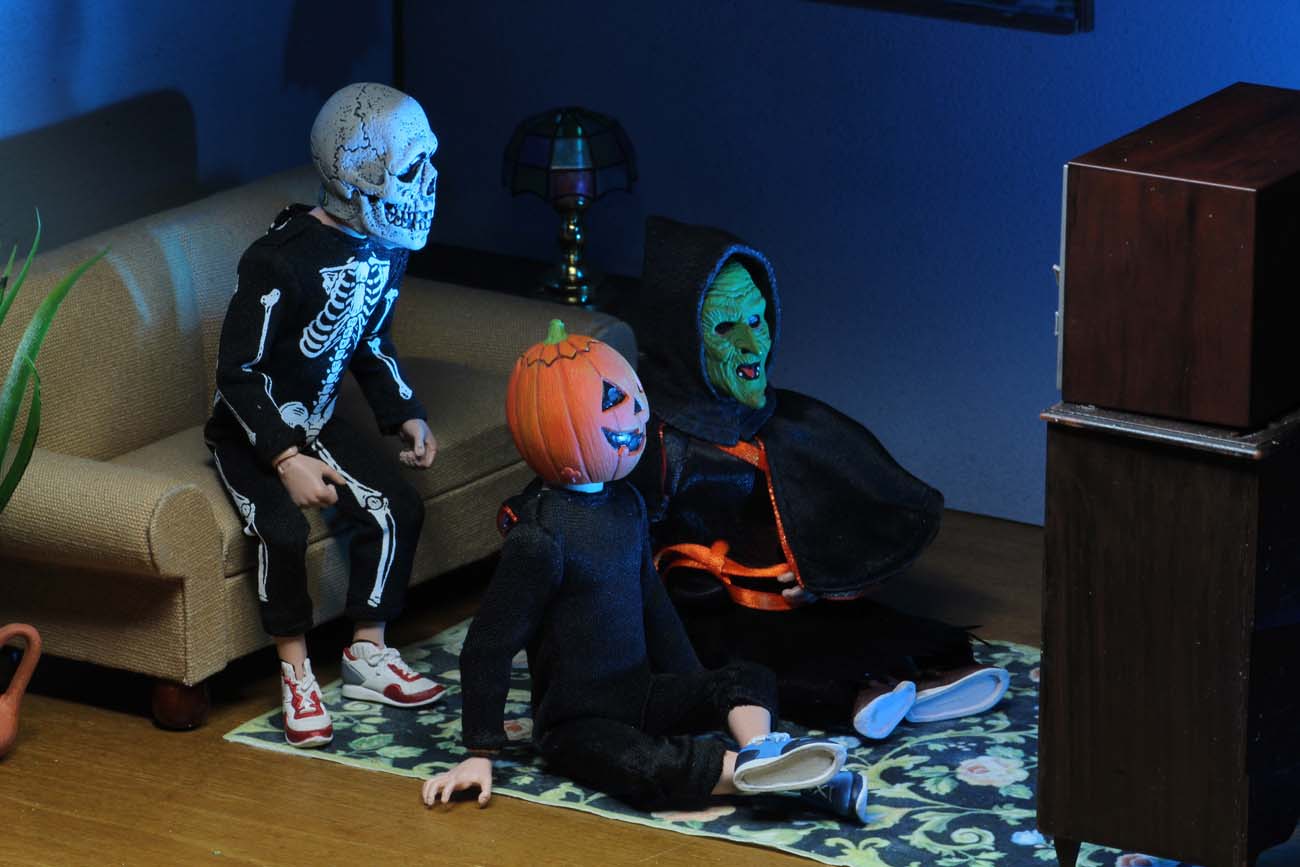
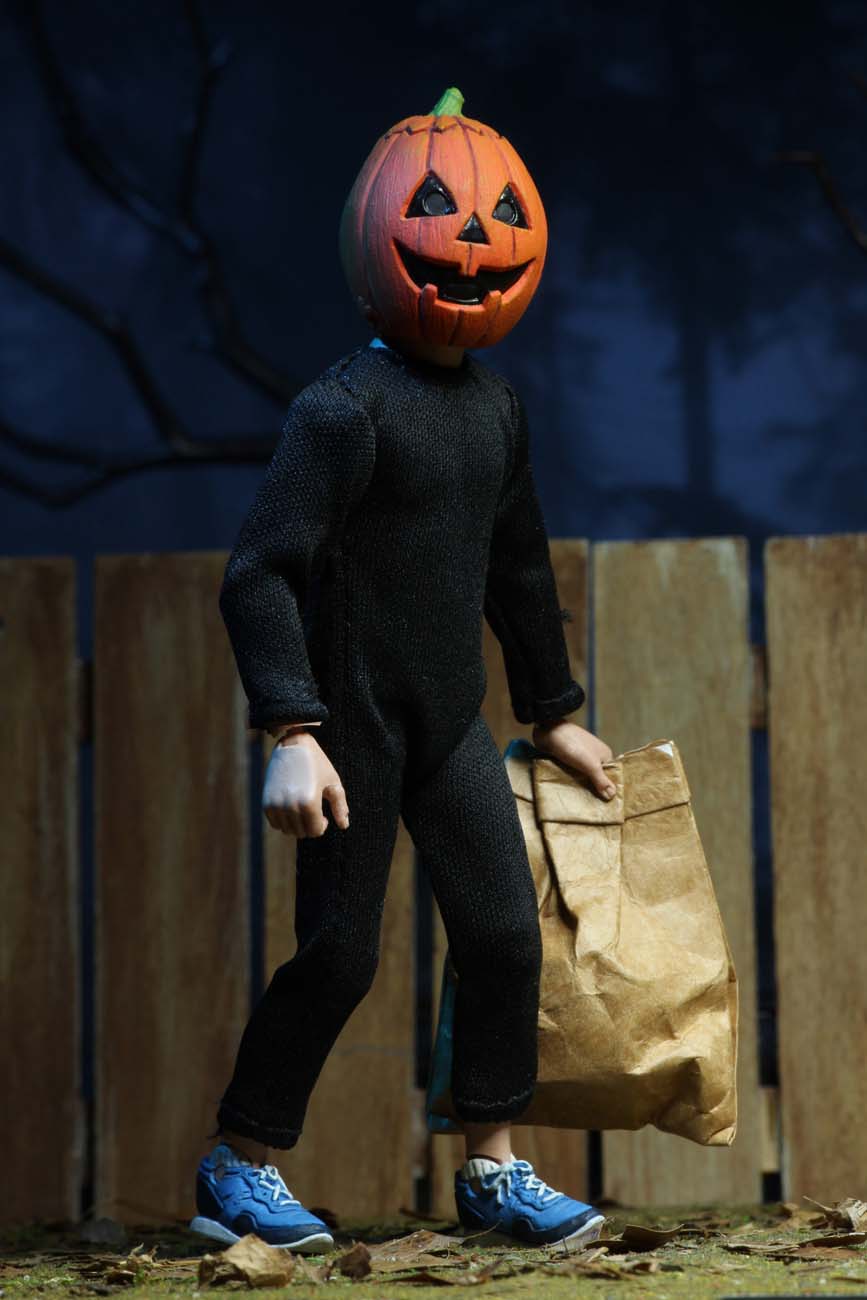
  • NECA Halloween III 8-inch clothed trick-or-treater figure set, announced in 2019 and released March 2020.
  • Trick or Treat Studios officially licensed witch mask with a Silver Shamrock Power Chip.
  • Trick or Treat Studios / Universal Studios officially licensed Halloween III: Season of the Witch Witch mask with Silver Shamrock Power Chip.

Books and publishing

Halloween III: Season of the Witch

1982 · Novelization

Author
Jack Martin
Publisher
Jove Books
Ties to
Halloween III: Season of the Witch

Replica props and masks

Halloween III: Season of the Witch Witch Mask

Trick or Treat Studios · officially licensed replica mask

Basis
Replica of the film mask; retailer reproduces Trick or Treat Studios / Universal Studios licensing and screen-accuracy description.

The catalog