Rotten Tomatoes
78%

Scream
1996

Someone has taken their love of scary movies one step too far.
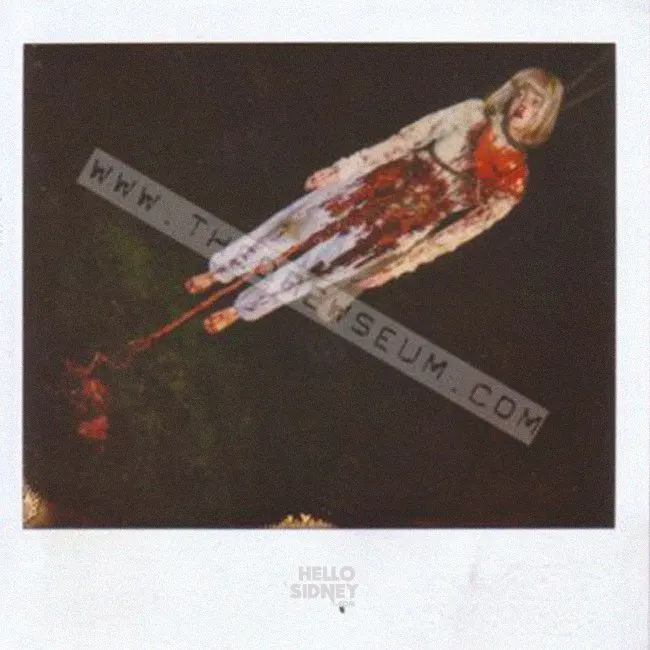
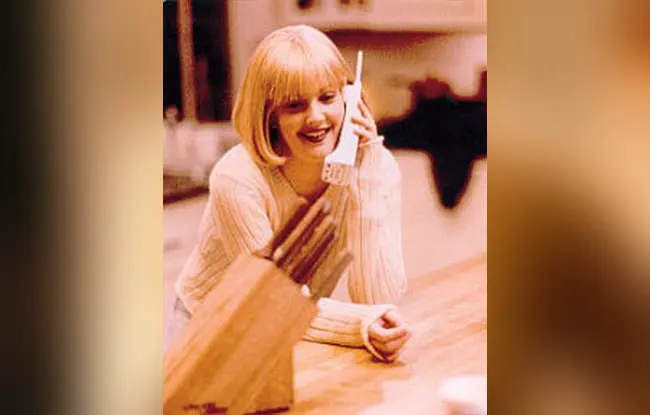
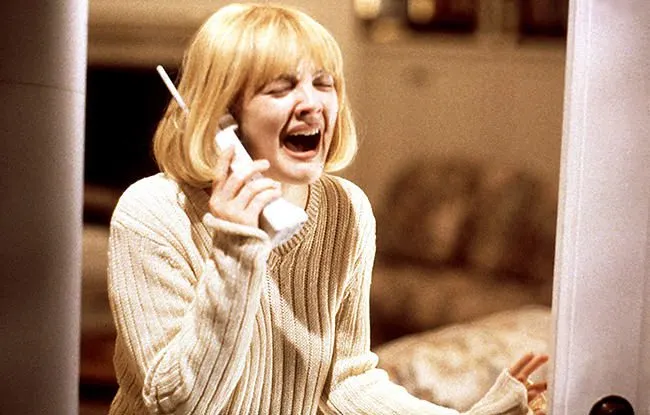
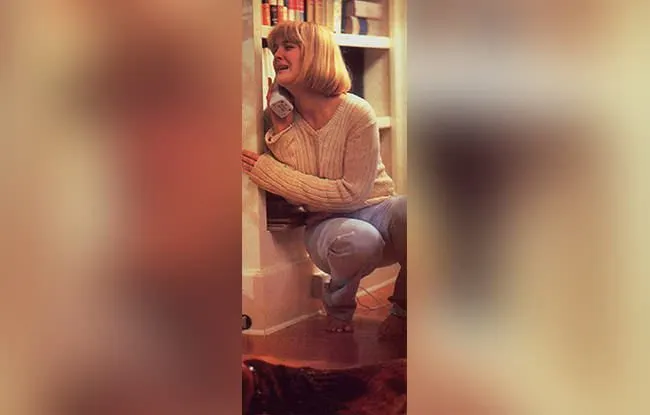
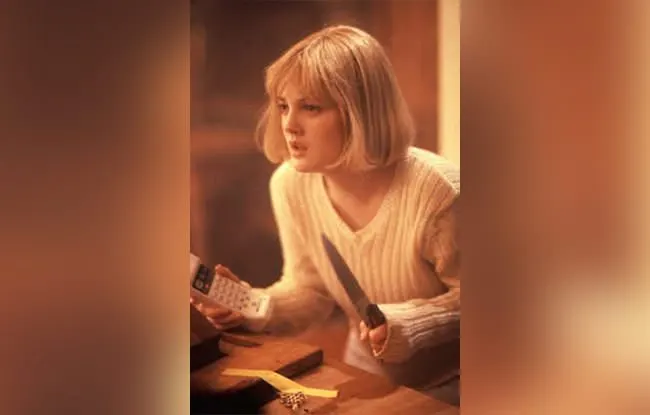
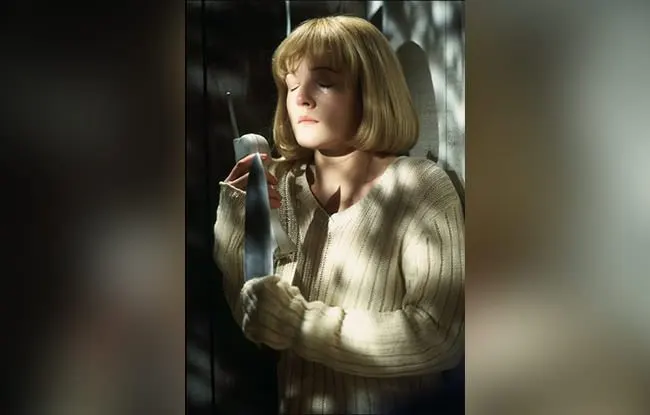
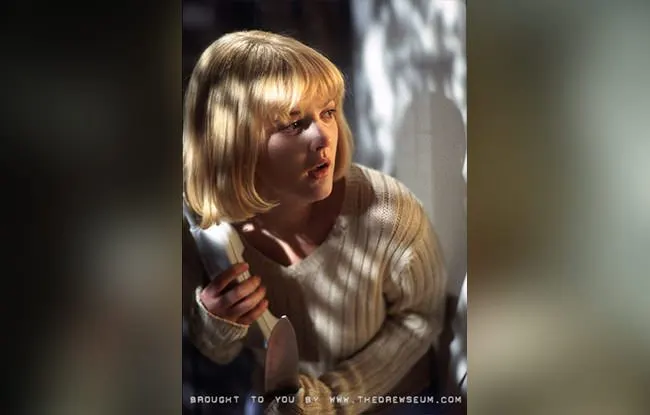
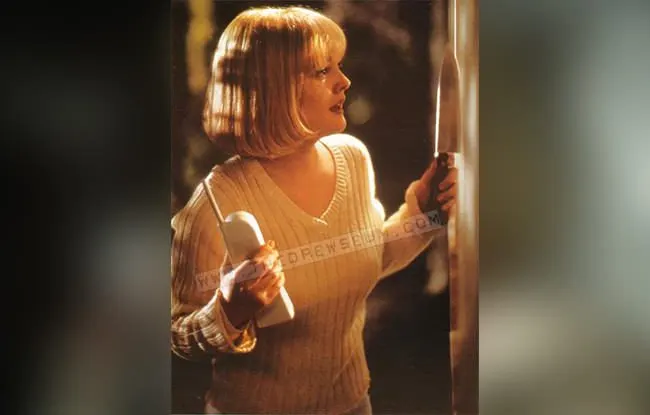
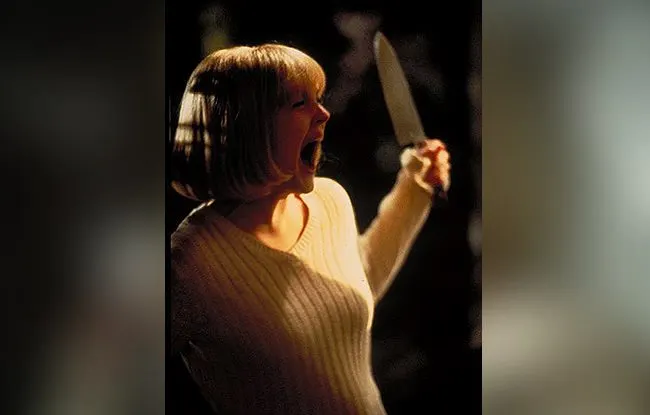
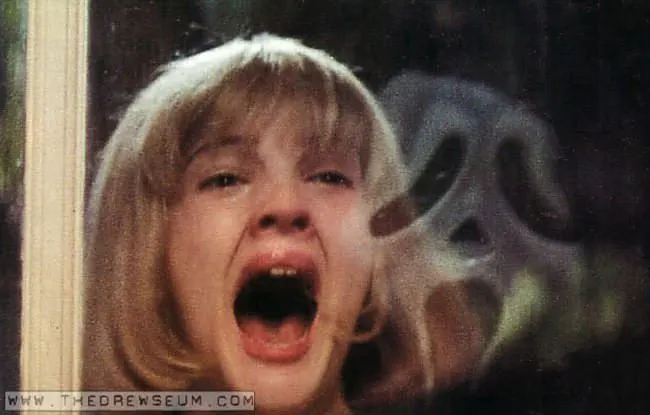
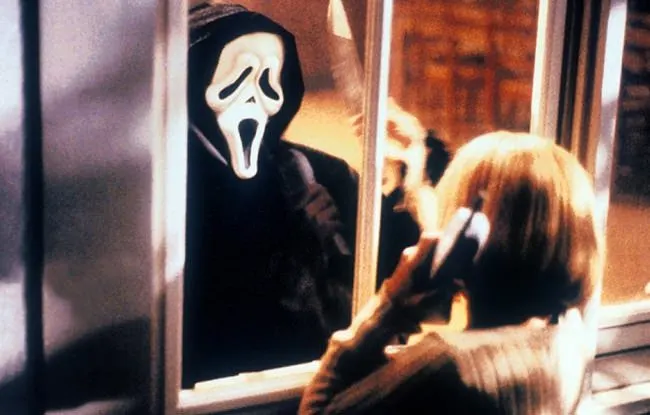
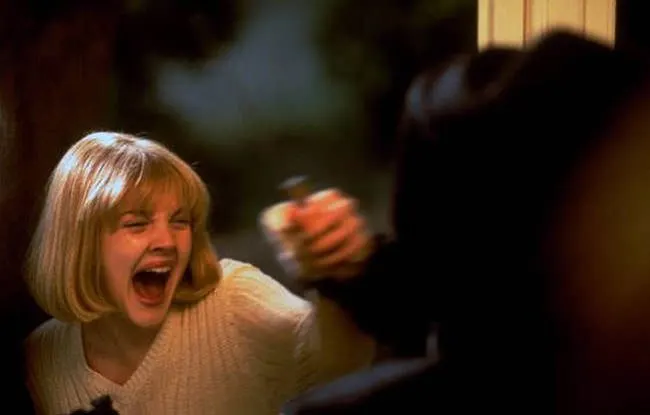
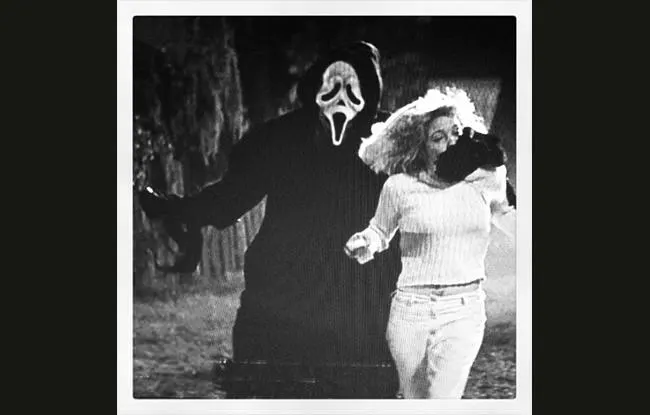
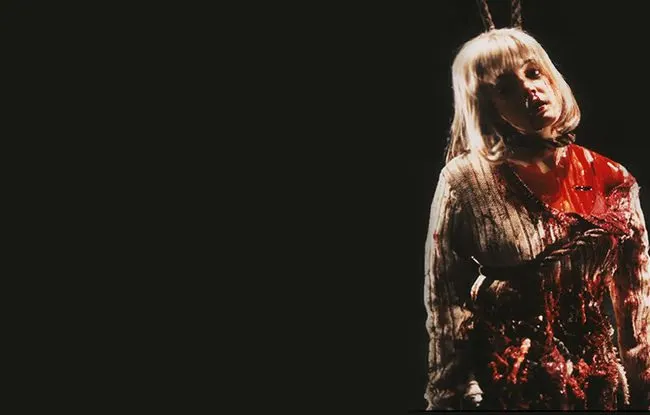
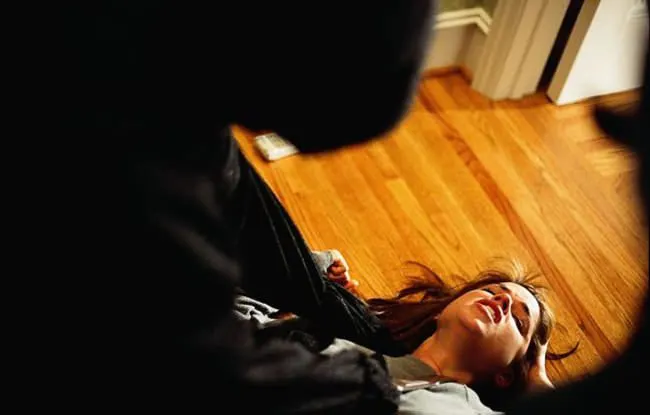
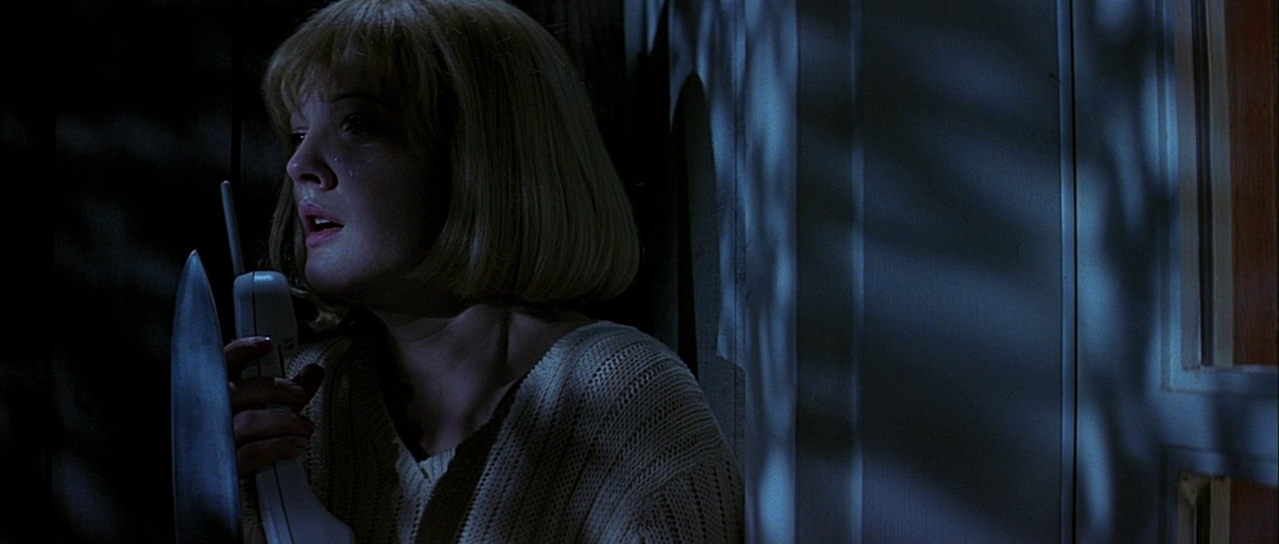
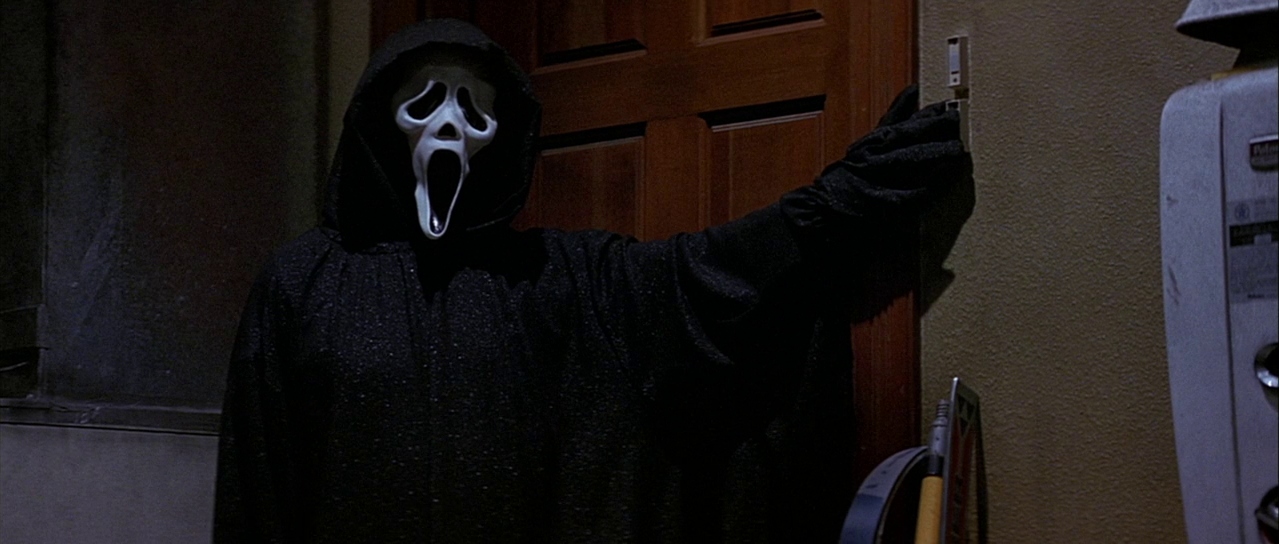
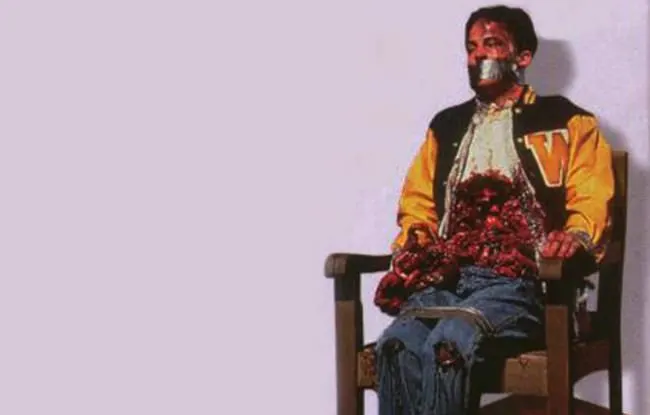
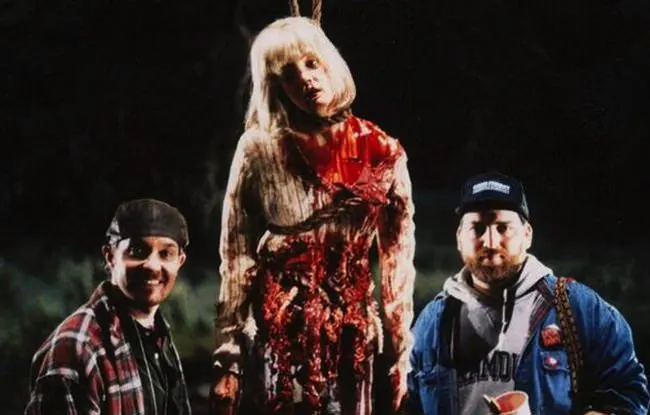
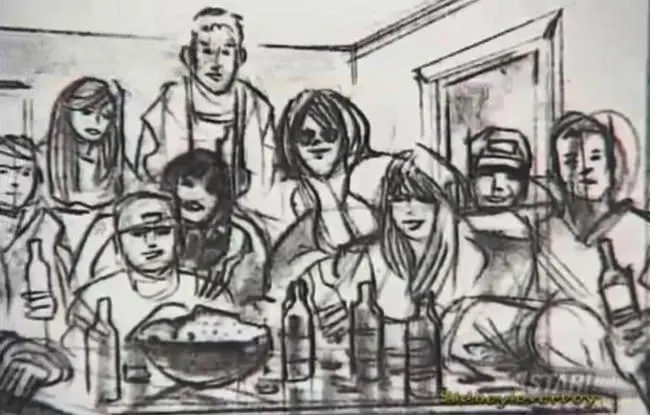
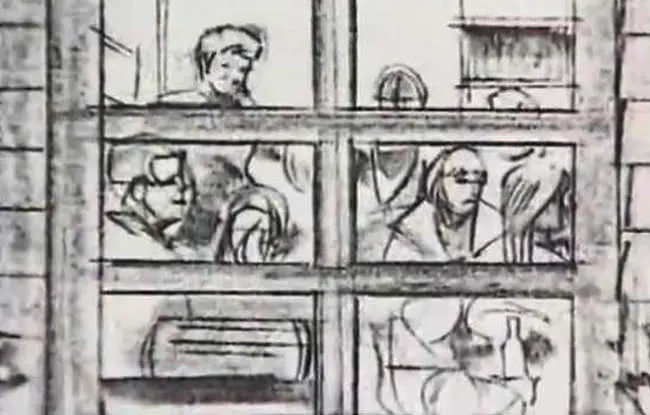
In the small town of Woodsboro, California, high school student Casey Becker is home alone making popcorn when a stranger calls. He is friendly at first and wants to talk about scary movies. The calls keep coming and turn into threats. The caller shows her that her boyfriend, Steve Orth, is tied to a chair on the back patio. He makes Casey play a horror trivia game for Steve's life. She misses a question about Friday the 13th and Steve is gutted in front of her through the glass. Casey tries to run, but a killer in a black robe and a white ghost mask stabs her on the lawn as her parents pull into the driveway. They later find her gutted body hanging from a tree.
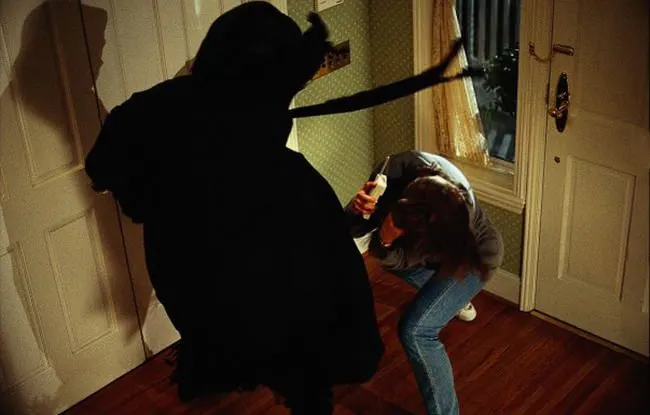
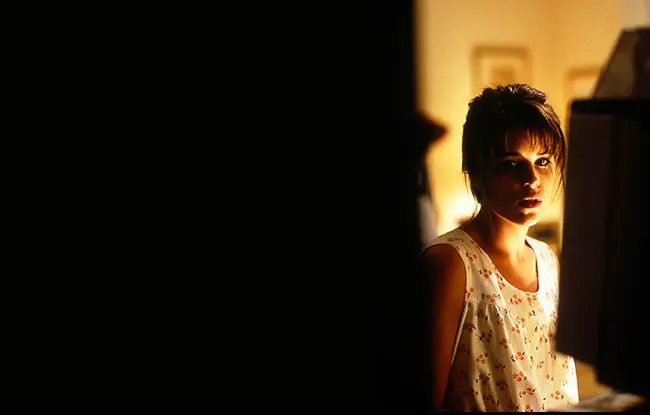
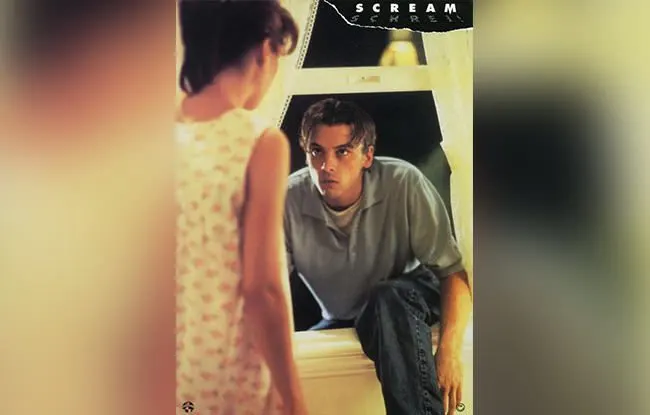
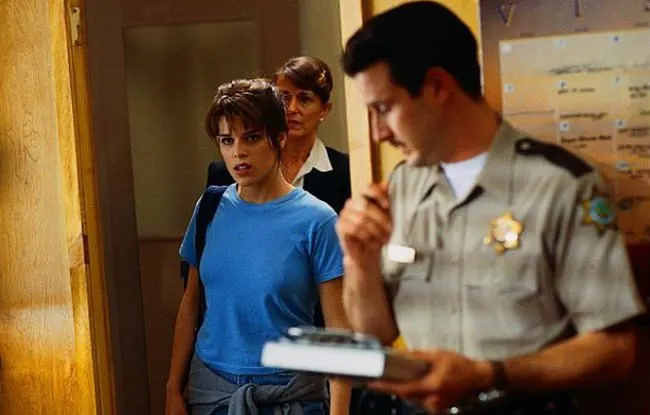
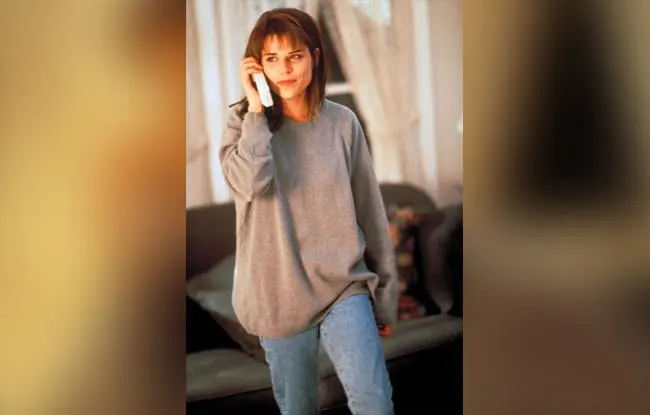
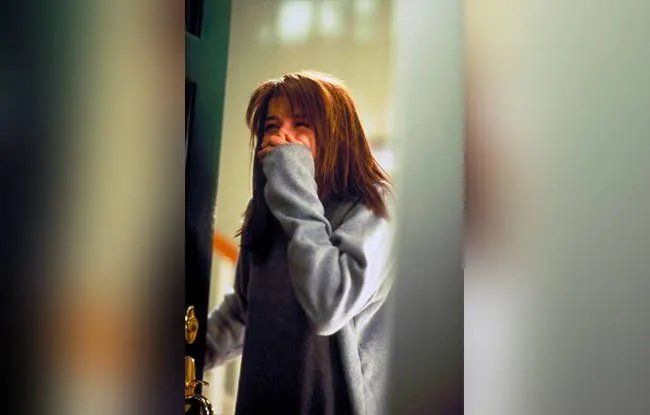
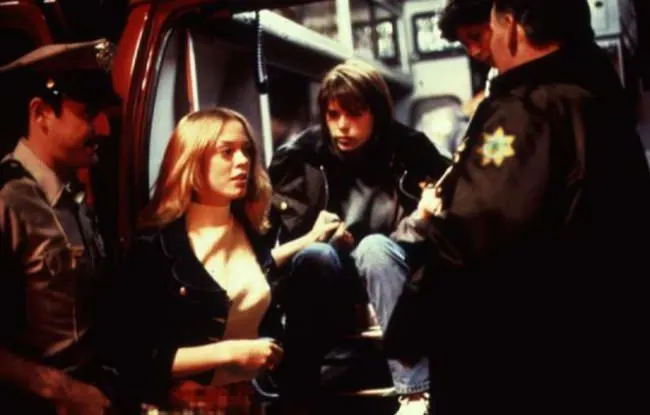
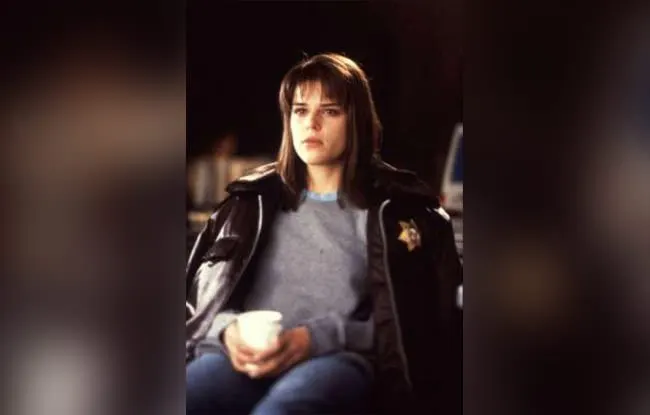
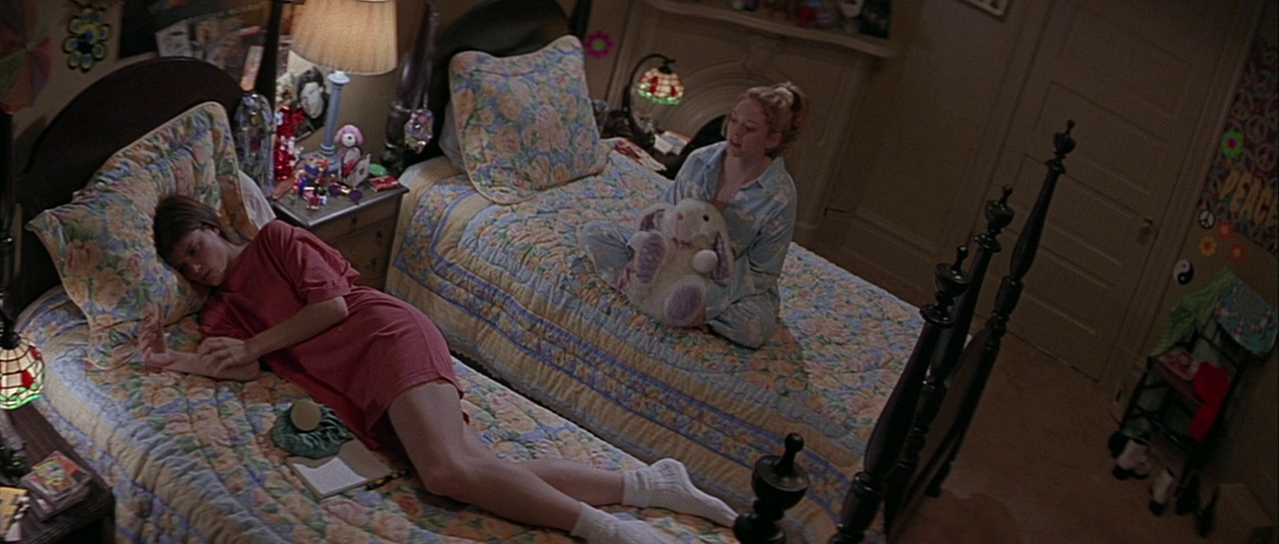
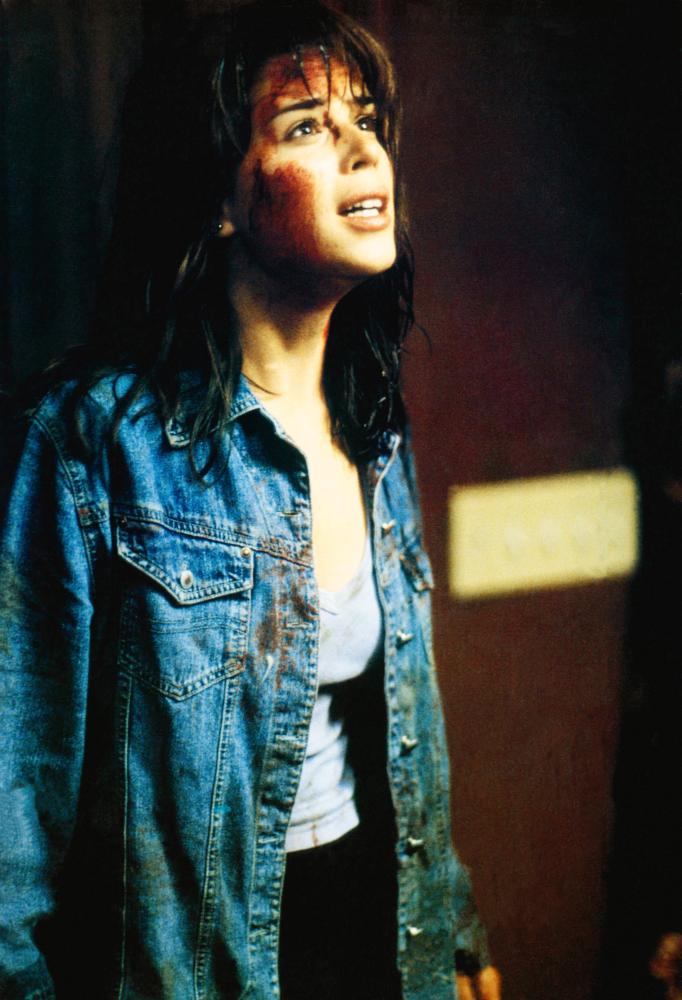
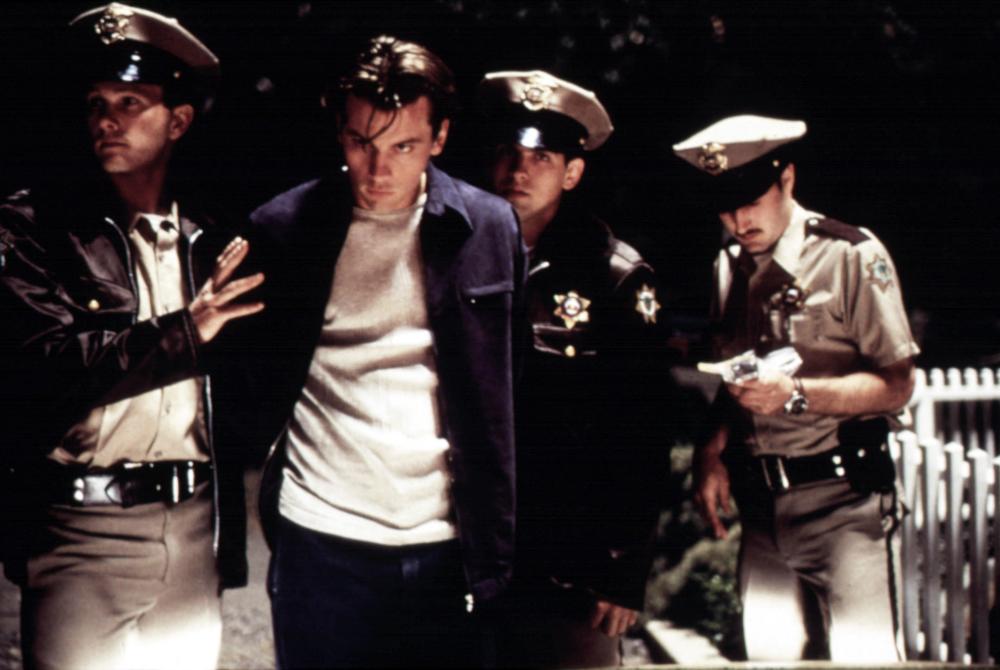
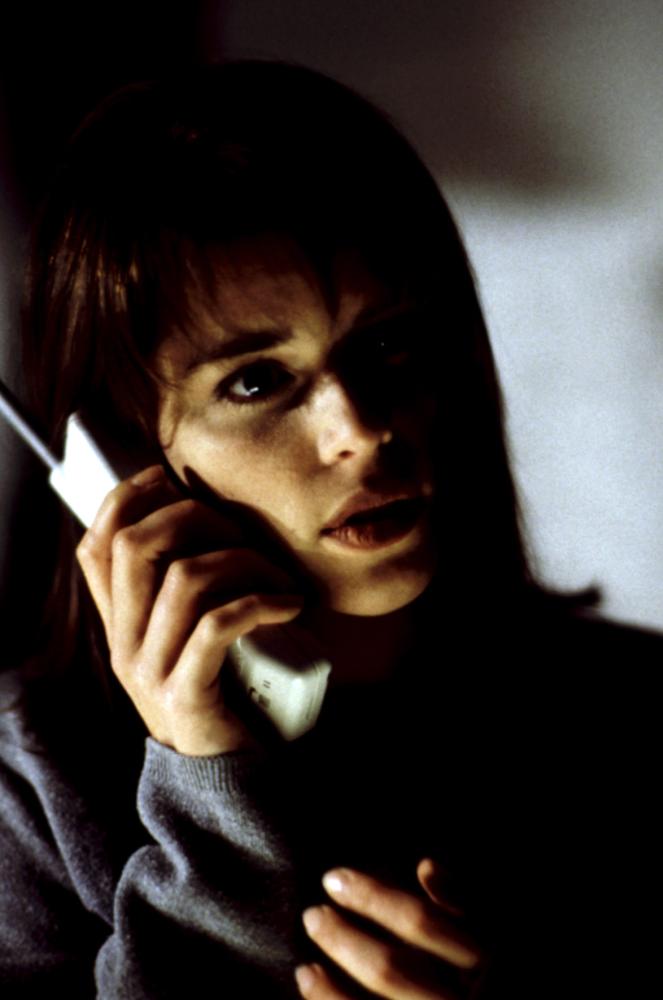
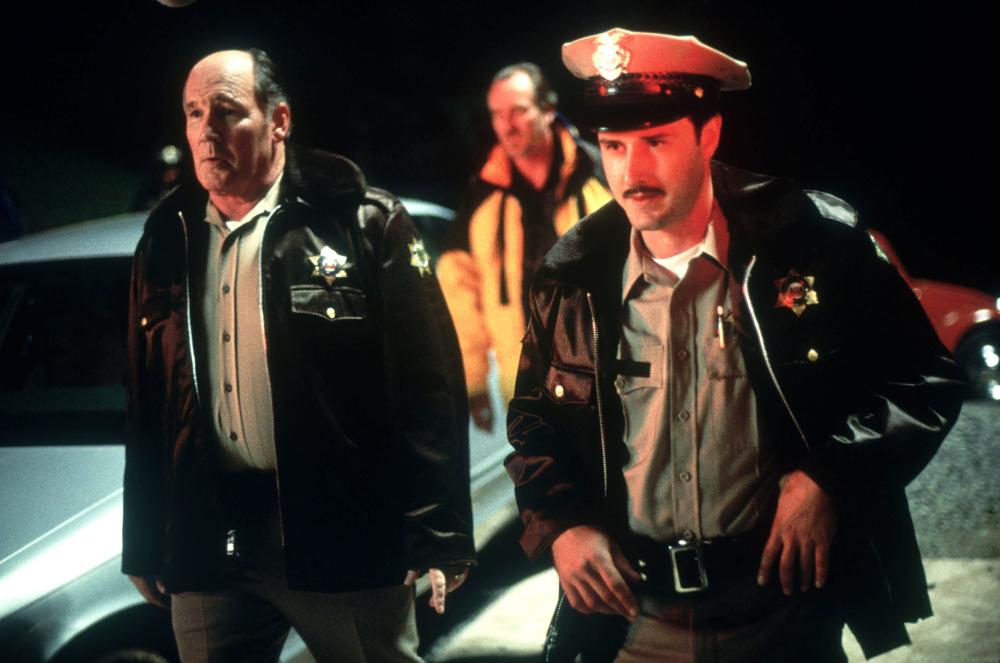
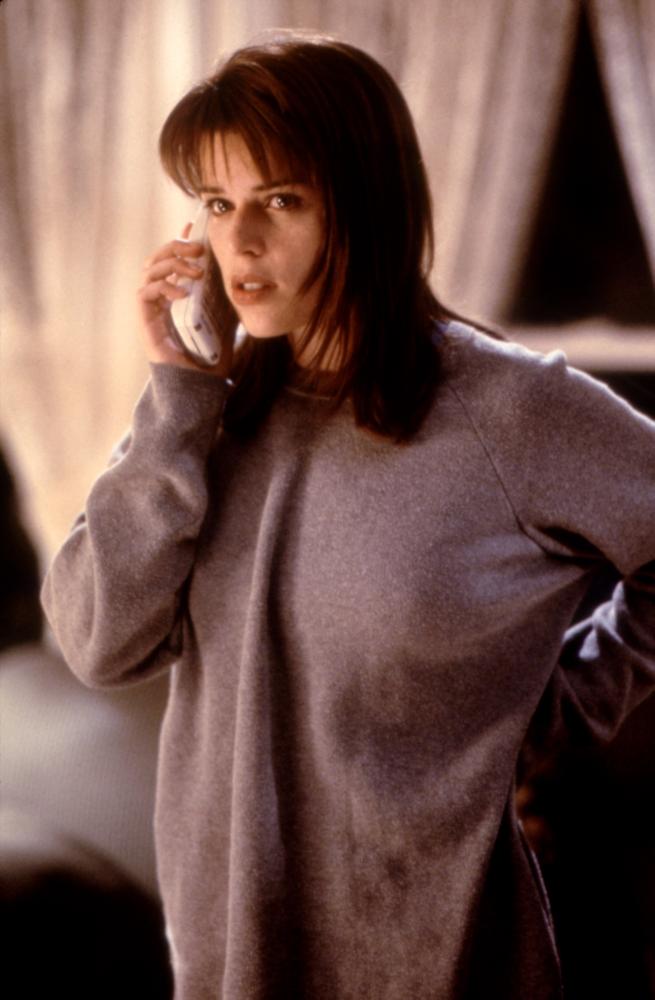
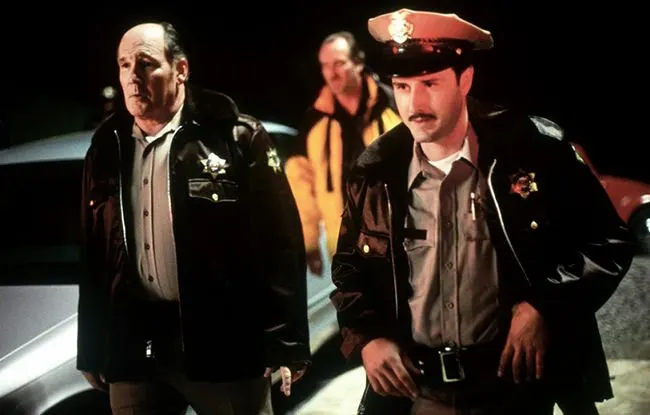
The next morning reporters flood the town. Casey's classmate Sidney Prescott is already on edge because the one-year anniversary of her mother Maureen's rape and murder is coming up. Sidney's testimony sent a man named Cotton Weary to prison for the crime. The trauma has also kept her from sleeping with her boyfriend, Billy Loomis. Her father, Neil, is away on business. While Sidney waits at home for her best friend Tatum Riley, the killer calls her, taunts her about her mother, and attacks her inside the house. The killer gets away just before Billy climbs in through her bedroom window. When a cell phone falls out of his pocket, Sidney suspects him, and Deputy Dewey Riley, Tatum's older brother, arrests him.
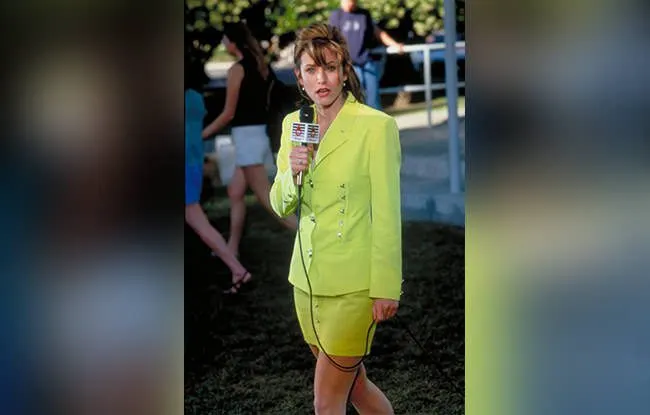
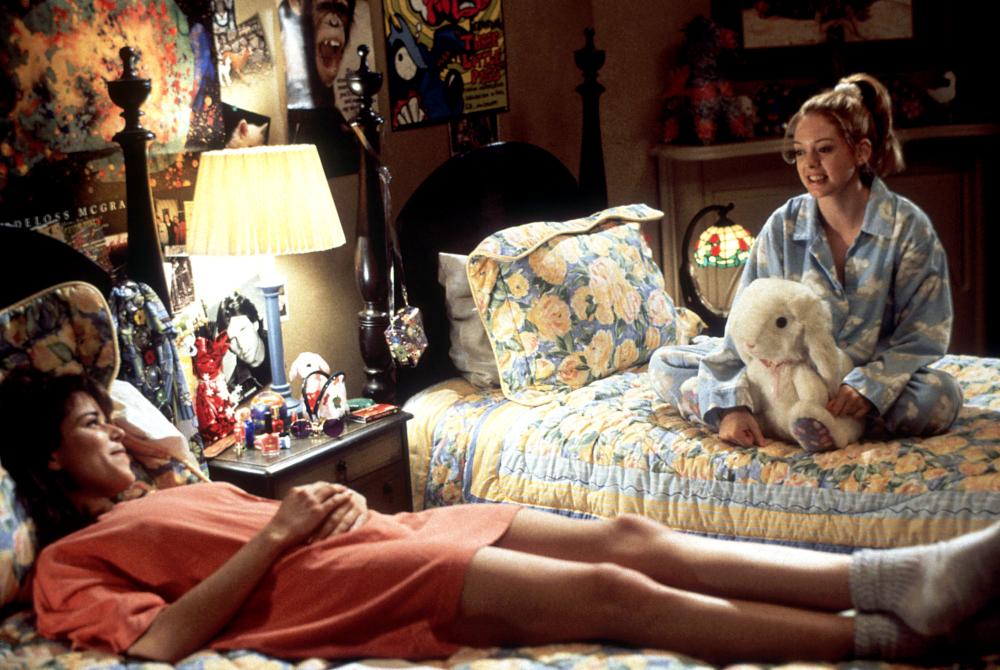
Outside the police station Sidney runs into Gale Weathers, a tabloid TV reporter whose book claims Maureen slept around, Cotton included, and that Sidney named the wrong man. Sidney moves in with Tatum for the night and gets another call. The killer mocks her for accusing both Cotton and Billy. The police trace the calls to Neil's cell phone account, but no one can reach Neil. Billy is released and he and Sidney fight, with Billy comparing his mother walking out on his family to Sidney losing her mother.
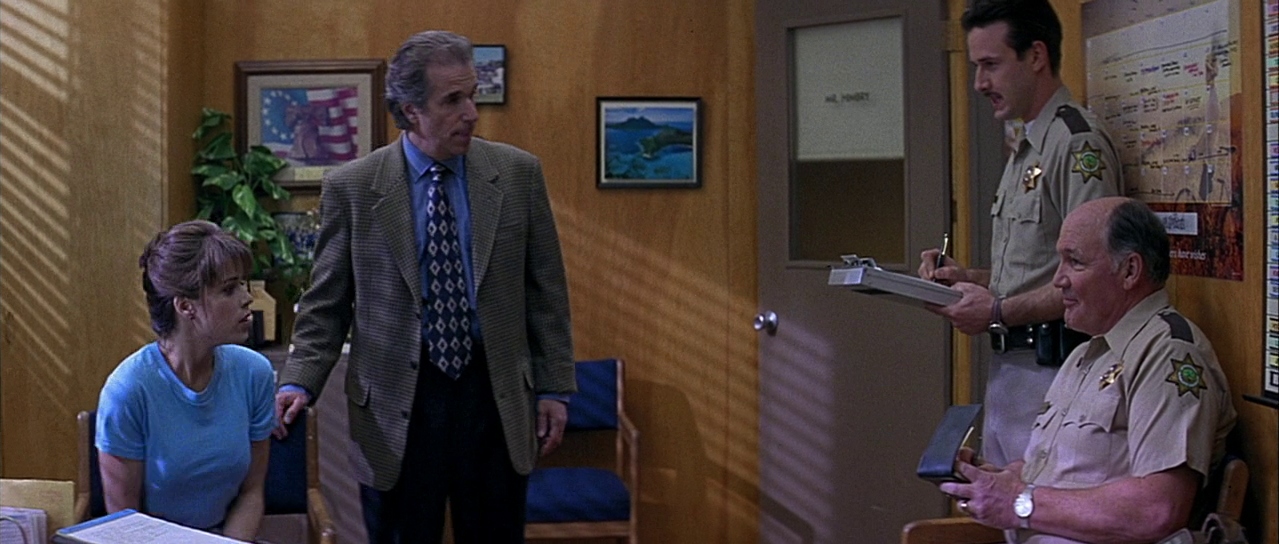
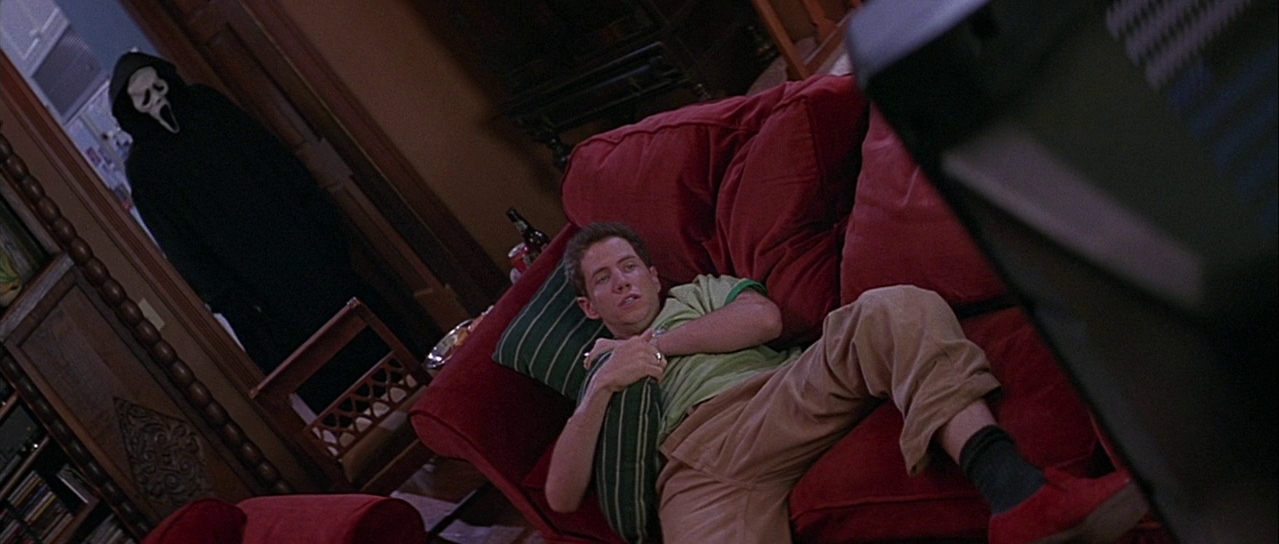
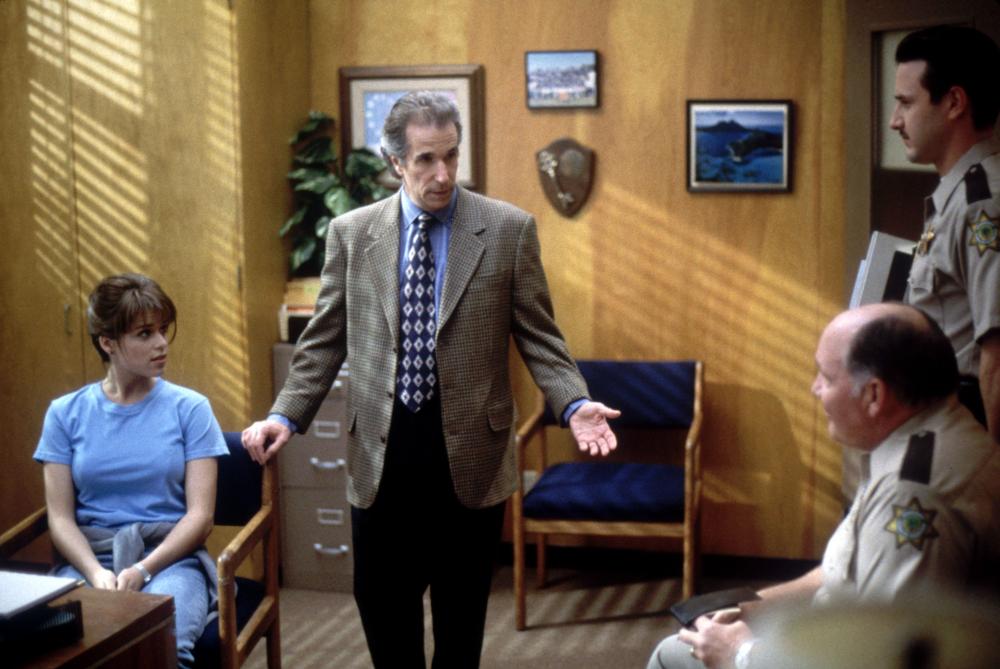
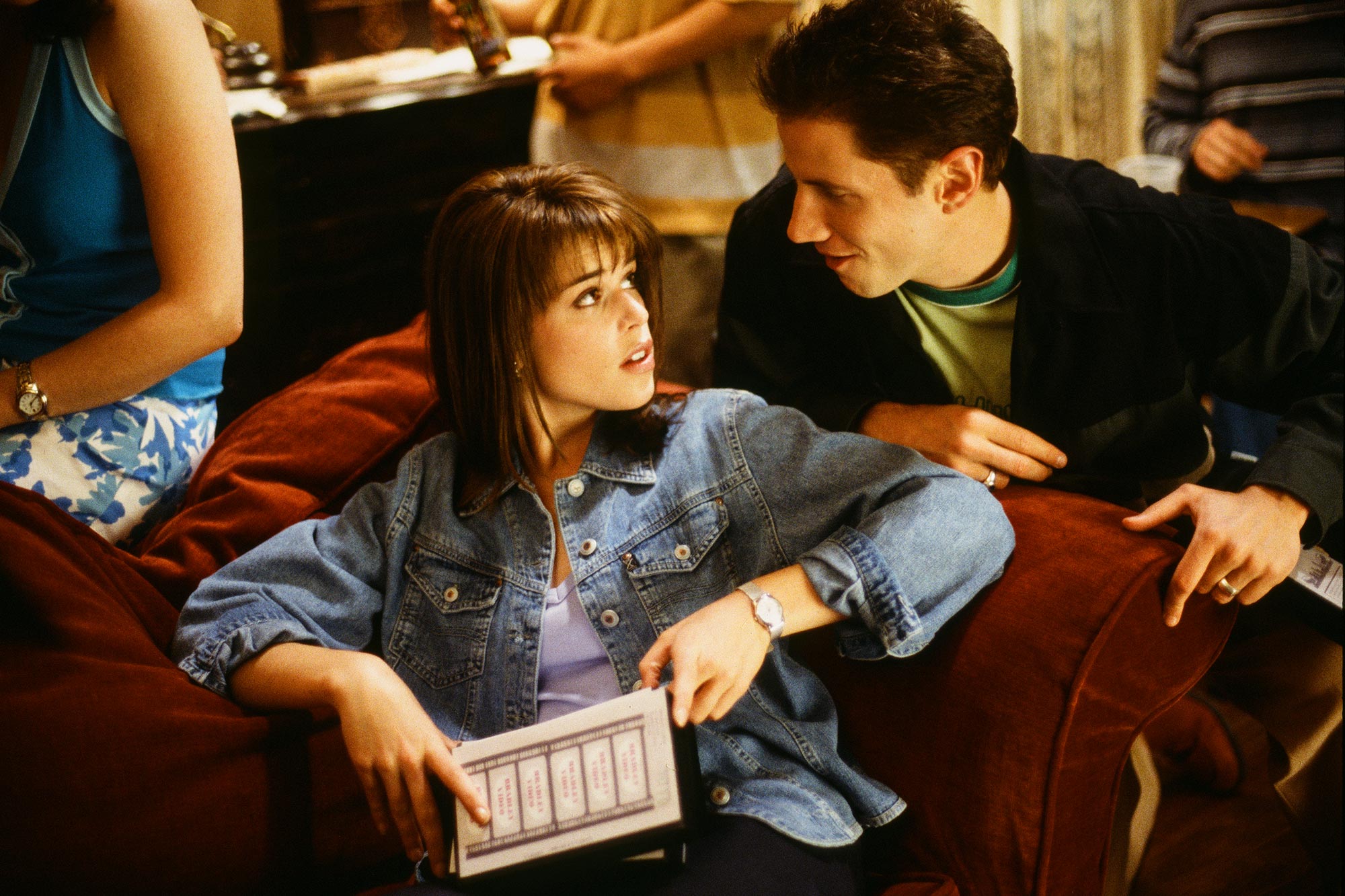
Classes are suspended because of the murders, and Principal Himbry is stabbed to death in his office. Tatum's boyfriend, Stu Macher, throws a party at his isolated house to celebrate. Dewey and Gale keep watch outside. Gale's cameraman Kenny hides a camera in the living room. The killer traps Tatum in the garage, and she dies when the automatic garage door crushes her as she tries to crawl out through the pet door. Inside, film fan Randy Meeks lays out the rules for surviving a horror movie while the guests watch Halloween. Word comes that Himbry's body has been found hanging at the school, and nearly everyone leaves to see it. The departing cars almost hit Dewey and Gale, who then stumble onto Neil Prescott's car hidden in the brush.
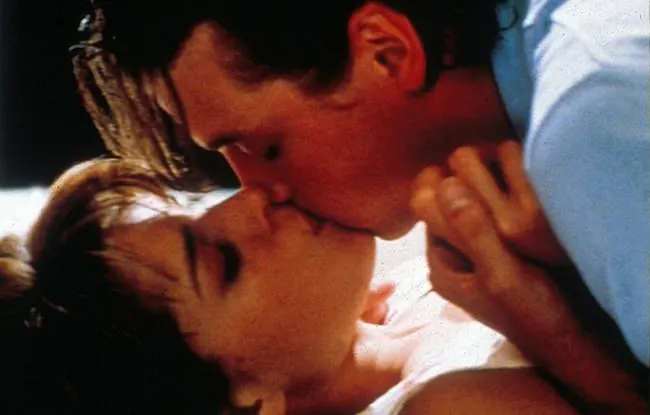
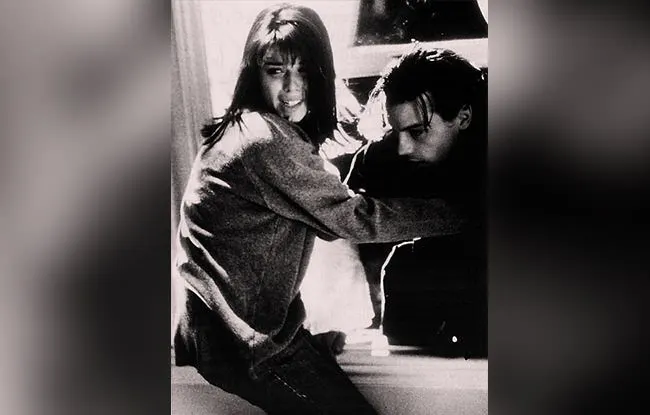
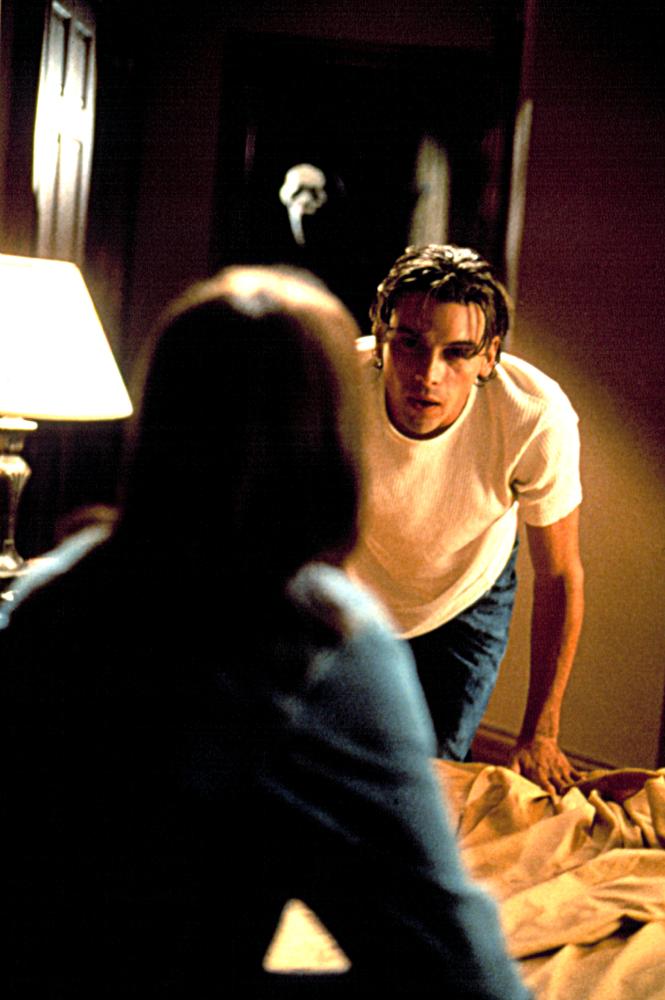
Billy shows up to make peace, and he and Sidney have sex upstairs. Minutes later the killer attacks and appears to stab Billy to death. Sidney runs. The killer slits Kenny's throat and stabs Dewey in the back. Gale tries to flee in her news van and crashes into a tree, knocking herself out. Sidney locks herself in the house, leaving Randy and Stu outside screaming that the other one is the killer.
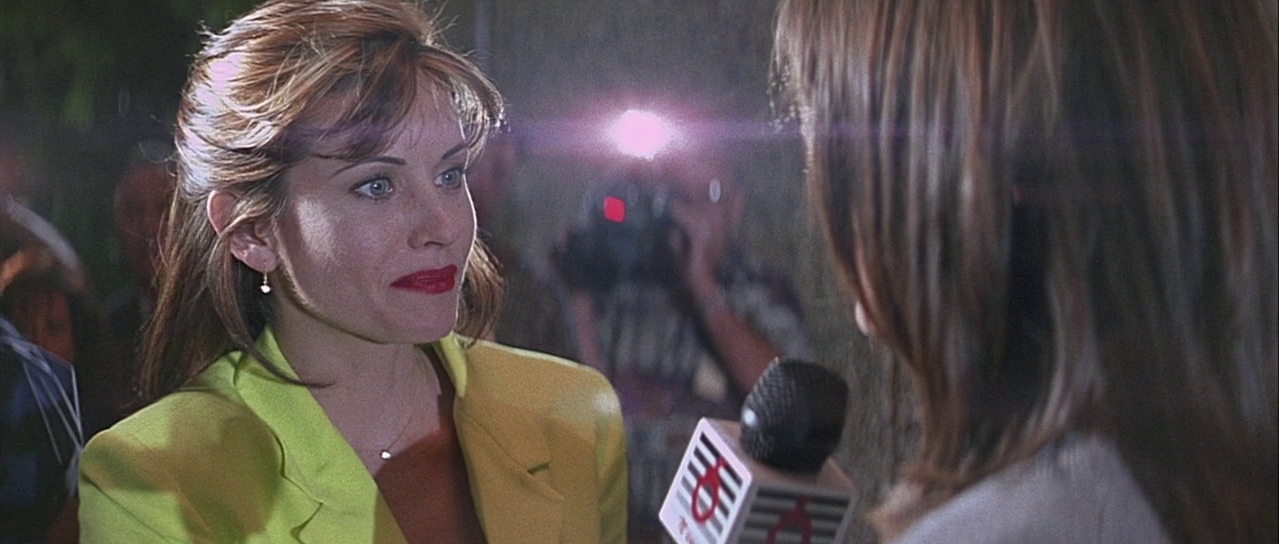
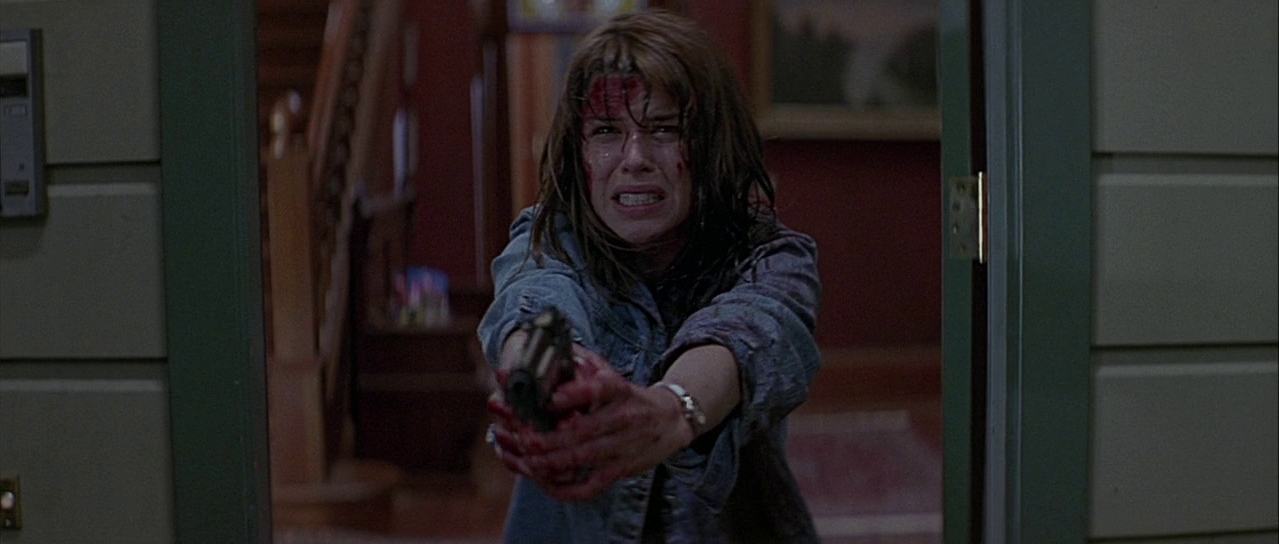
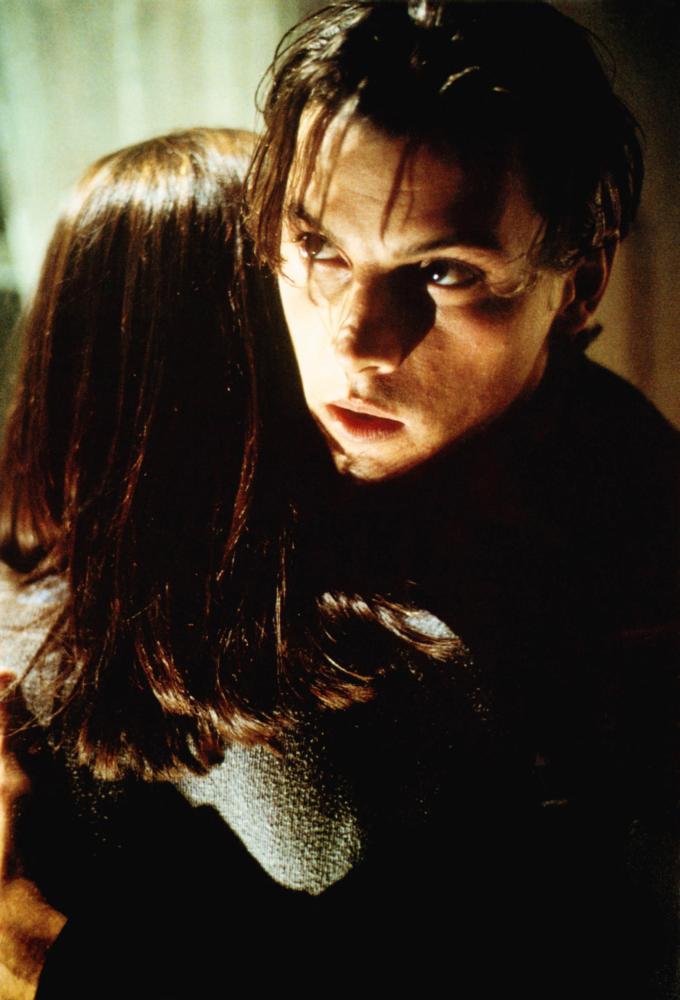
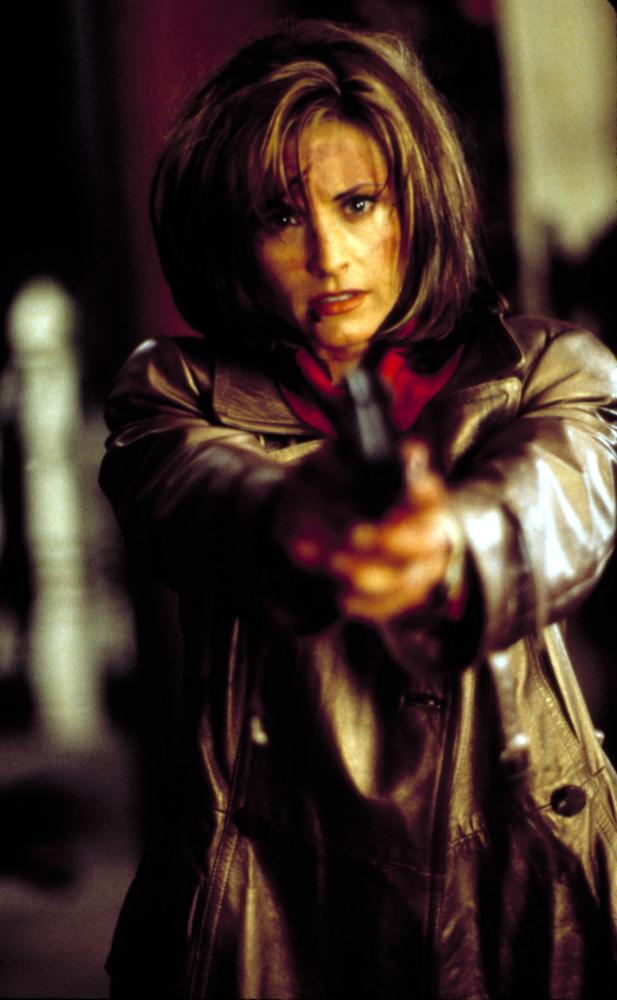
Billy comes back downstairs, bleeding, and lets Randy in, then shoots him. Billy and Stu are the killers. Billy explains that Maureen's affair with his father, Hank, drove his mother to leave the family, so he and Stu killed Maureen a year earlier and framed Cotton. They have Neil tied up in a closet and plan to pin the new murders on him. To pass themselves off as surviving victims, they stab each other, and the blood loss slows Stu down. Gale returns with a gun and is knocked down, and Sidney slips away. Sidney turns the tables with the voice changer, taunting them over the phone and telling them she has already called the police. She wears the costume to ambush them, stabs Billy with an umbrella, and kills Stu by dropping a television set on his head. When Billy comes after her again, Gale shoots him. Randy warns that the killer always comes back for one last scare, and when Billy lunges, Sidney shoots him in the head. At dawn Neil is rescued, Dewey is wheeled to an ambulance alive, and Gale reports the story live.
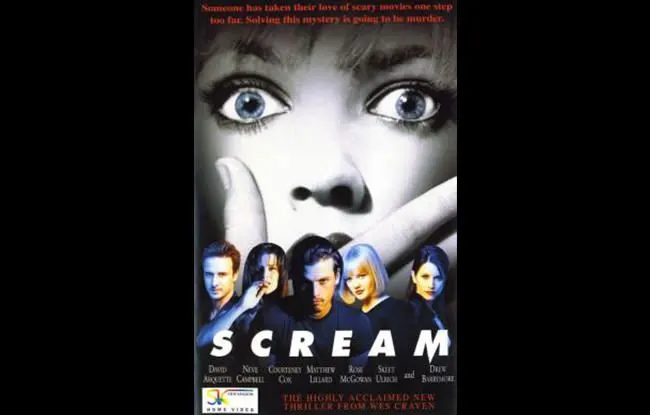
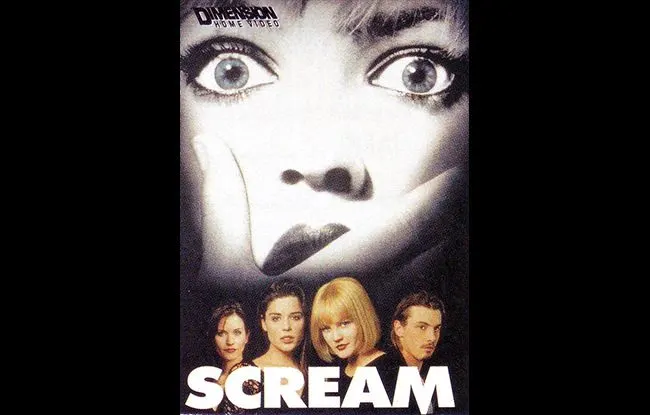
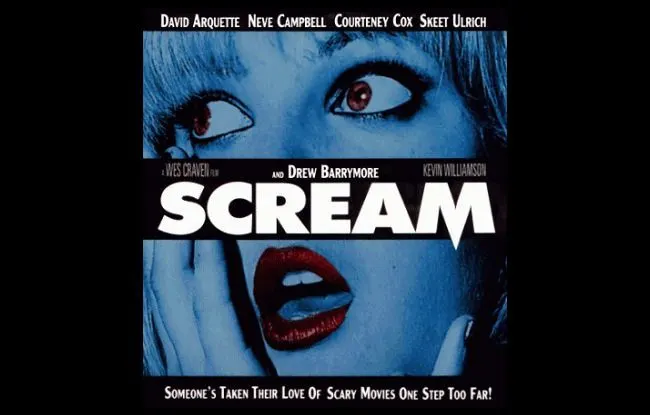
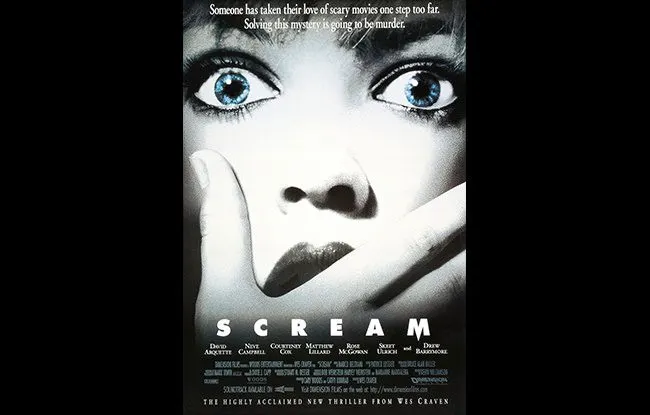
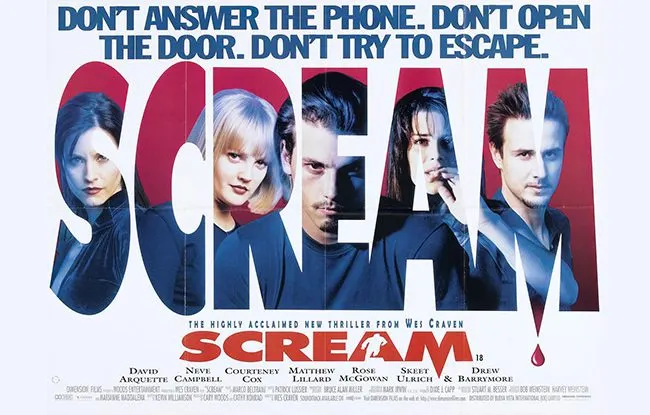
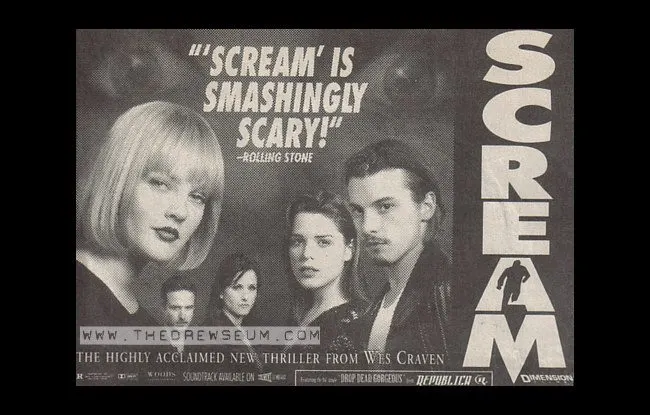
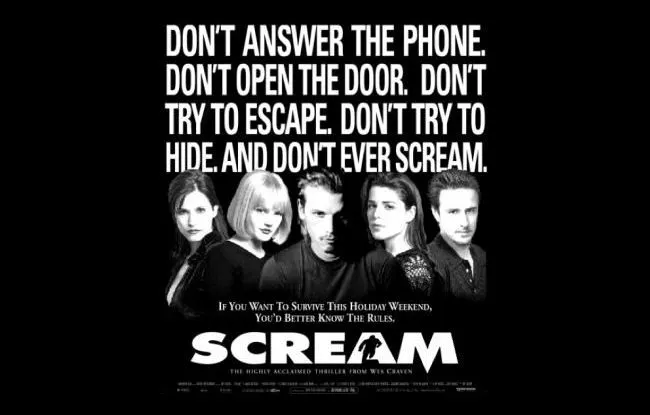
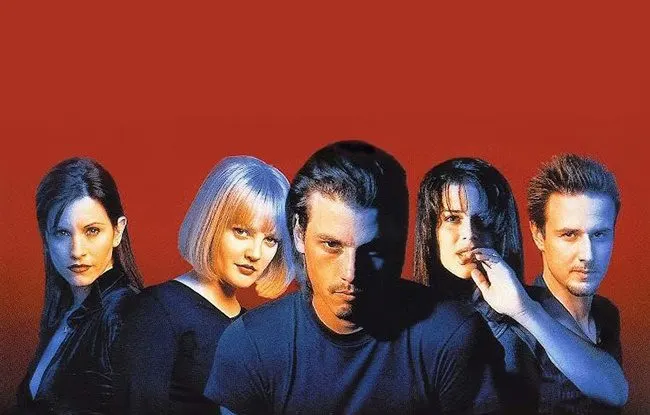
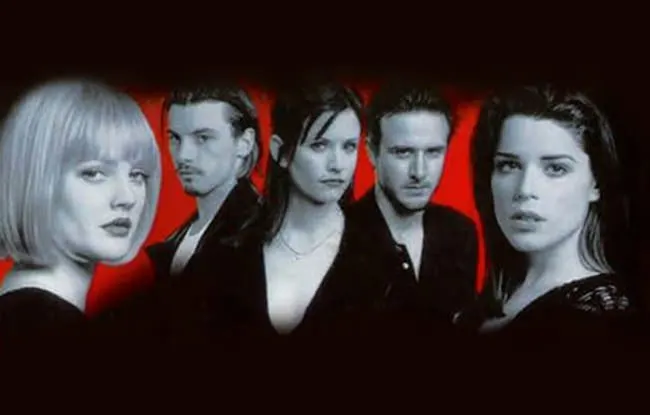
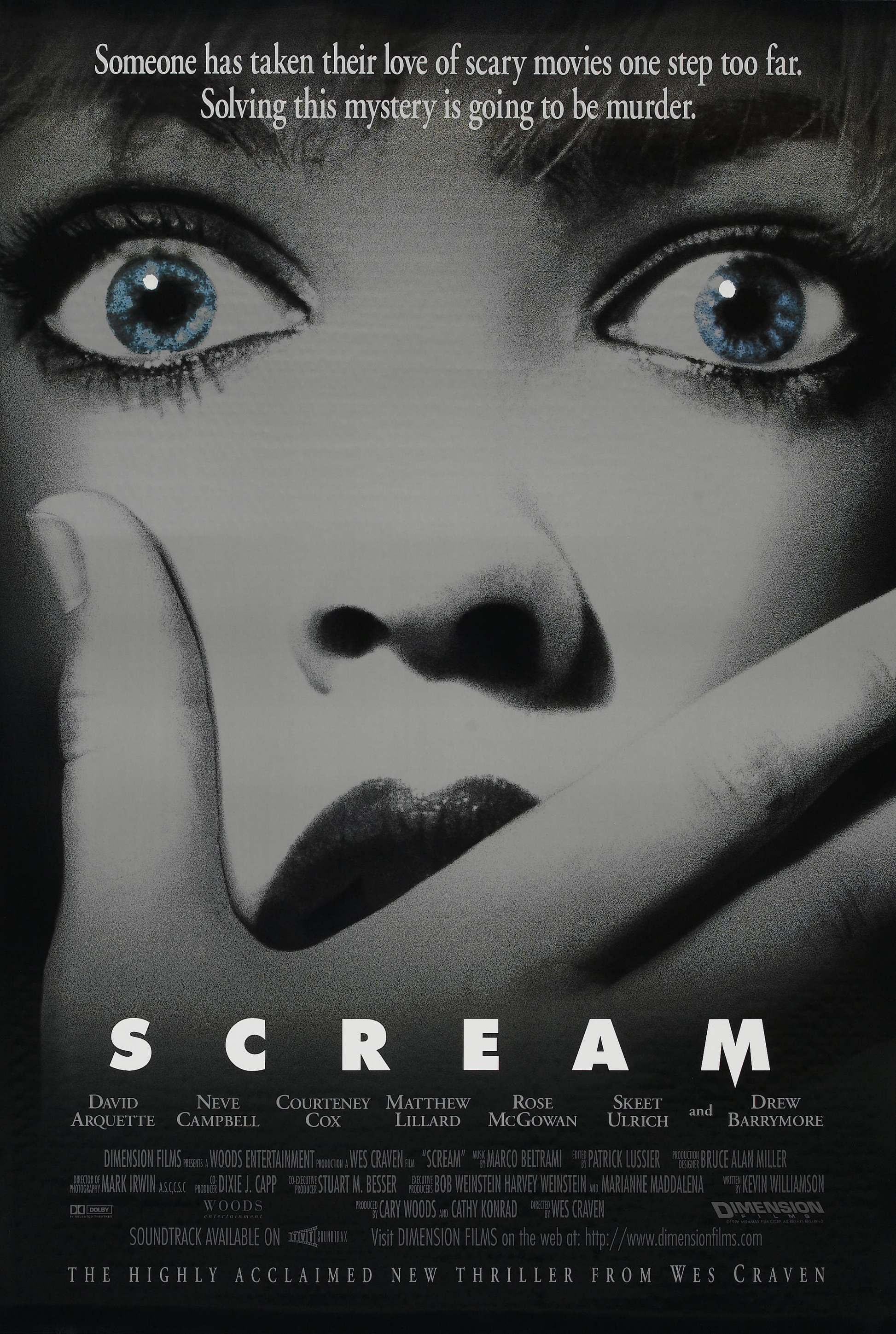
More than forty films were set for late 1996, including Beavis and Butt-Head Do America, Jerry Maguire, Mars Attacks!, Ransom, Space Jam and Star Trek: First Contact. Bob Weinstein put Scream out at Christmas as counterprogramming for teenagers. The cast and crew hated the date and Williamson expected a flop. The ads sold Drew Barrymore as the star so her early death would shock people. Skeet Ulrich slipped in an interview that he played a killer and had his agent kill the story. Dimension called its chest-up ensemble poster layouts 'Rushmores.' Winkler recalled being left off the billing because the studio feared his association with the Fonz would disrupt the horror; after preview audiences applauded his entrance, he was asked to help promote the film.
The film premiered December 18, 1996 at the AVCO Theater in Westwood and opened wide December 20. The opening weekend brought in $6,354,586 from 1,413 theaters, fourth place behind Beavis and Butt-Head Do America, Jerry Maguire and 101 Dalmatians. Maddalena recalled Variety calling it dead on arrival and seeing maybe seven people in one screening. Word of mouth was strong and CinemaScore audiences gave it a B+, so Dimension raised the ad budget. It dropped to fifth place in its second weekend but the gross went up to $9.1 million, and the third weekend brought $10 million. It stayed in the top ten for nine weeks. Beltrami recalled a Secaucus preview scoring 88 out of 100, while Lussier remembered the New Jersey audience gasping at the caller's threat about knowing who he was looking at. Arquette found a screening flyer at the newsstand where he worked and obtained permission to watch from the back beside Craven, observing the director enjoy the audience's reactions.
It finished with $103 million in the US and Canada, 13th for 1996, and was the highest-grossing slasher film until Halloween (2018). It was Miramax's second film to pass $100 million domestically after Pulp Fiction. Overseas added about $70 million, including $13.5 to 14 million in the UK, where it was the top-grossing horror release up to then. After four weeks it was the highest-grossing horror film ever in France at $6.2 million, or 37.9 million French francs. Japan pushed its release from May to August 1997 after a 14-year-old boy was murdered by a killer reportedly obsessed with horror films. The worldwide total of $173 million ranked 14th for the year. Maddalena recalled producers receiving box-office bonuses starting at $40 million, then at $10 million intervals with a $100 million cap, and Jamie Kennedy said his first residual check doubled his salary. Lillard, by contrast, estimated clearing only $11,000 to $12,000 after taxes and commissions and said the release did not immediately open career doors for him.
Reviews were mostly positive. Roger Ebert, James Berardinelli and Owen Gleiberman liked how it played with horror rules while still being scary. Kevin Thomas and Richard Harrington of The Washington Post called it witty and effective, Marc Savlov called it a return to form for Craven, and Kim Newman praised how it picks apart slasher conventions. Janet Maslin and John Hartl of The Seattle Times thought the in-jokes got in the way. Reviews in the Chicago Tribune, Variety, the BBC and USA Today called it predictable, uneven or too self-referential. Critics generally praised Campbell, including Peter Stack, Dave Kehr and Newman. Cox got mixed notices, Hartl found Arquette goofily charming, and Lisa Alspector singled out Ulrich. Its influence also appears in filmmakers' own recollections: Edgar Wright described its horror-comedy balance as a path toward Shaun of the Dead; Michael Kennedy remembered deciding to write horror after seeing it; and Guy Busick connected its tone and memorable characters to Ready or Not. James Vanderbilt and Radio Silence likewise described the original as formative to their approach to the later Scream films.
Metacritic lists a score of 66 from 25 critics. Empire ranked it No. 482 on its 2008 list of the 500 greatest movies. It was the highest-grossing Scream film until Scream 7 (2026) passed it with $214 million worldwide, not counting inflation.
At the 23rd Saturn Awards in 1997, Scream won Best Horror Film, Best Actress for Campbell and Best Writing for Williamson. It also won Best Movie at the 1997 MTV Movie Awards; Campbell was nominated for Best Female Performance, which Claire Danes won. The International Horror Guild named it Best Film, and Craven received the Grand Prize at the Gérardmer Film Festival.
78%
66
B+
Sidney Prescott
Billy Loomis
Tatum Riley
Stu Macher
credited as Stuart
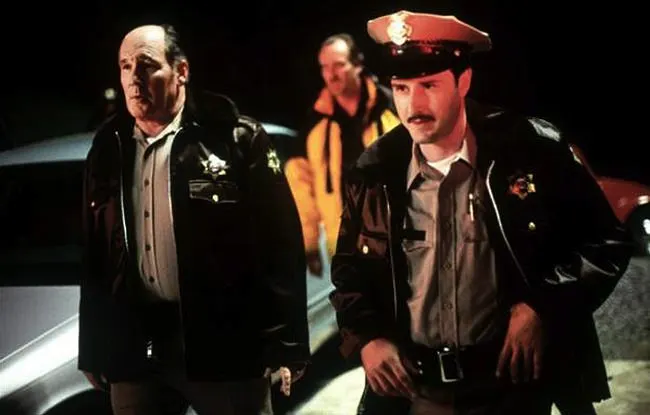
Deputy Dewey Riley
Gale Weathers
Randy Meeks
Casey Becker
Kenny, Gale's cameraman
Sheriff Burke
Cotton Weary
Ghostface (phone voice)
voice
Steve Orth
Casey's Father
Casey's Mother
Neil Prescott
credited as Mr. Prescott
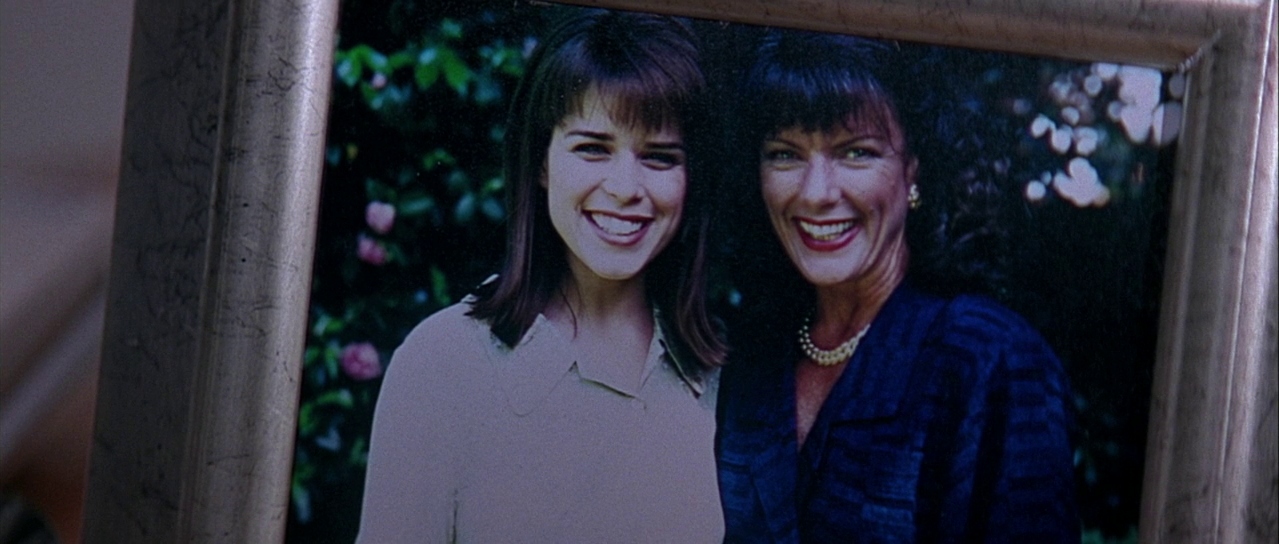
Maureen Prescott
seen in photographs
Mrs. Tate
TV Reporter #1
the film's casting director
TV Reporter #2
Hank Loomis
Mrs. Riley
Expelled Teen #1
Expelled Teen #2
Cheerleader in Bathroom
Girl in Bathroom
Reporter with Mask
Young Girl in Video Store
Party Teen #1
Party Teen #2
Teen on Couch
Bored Teen
Girl on Couch
Principal Arthur Himbry
uncredited
Obnoxious Reporter
uncredited cameo
Fred the Janitor
uncredited cameo; also wore the Ghostface costume for part of the opening
Ghostface
uncredited stunt performer
Ghostface
stunt performer; wore the costume in many scenes and created the knife-wiping move
Ghostface
stunt performer, credited as stunt coordinator
Director
Screenplay
Producer
Producer
Executive Producer
Executive Producer
Executive Producer
Co-Executive Producer and Unit Production Manager
Co-Producer
Associate Producer and First Assistant Director
Executive in Charge of Production
Executive in Charge of Production
Director of Photography
Additional Director of Photography (final three weeks)
Editor
Composer and Conductor
Orchestrator
Music Supervisor
Music Consultant
Music Editor
Production Designer
Art Director
Set Decorator
Set Decorator
Set Designer
Property Master
Costume Designer
Key Makeup Artist
Key Hair Stylist
Special Makeup Effects
Special Makeup Effects (KNB EFX Group)
Special Makeup Effects (KNB EFX Group)
Special Effects Supervisor
Casting
Casting Assistant
Stunt Coordinator
Script Supervisor
Second Assistant Director
A Camera Operator
A Camera Operator
Still Photographer
Location Manager
Sound Mixer
Sound Supervisor
Re-Recording Mixer
Re-Recording Mixer
Re-Recording Mixer
Chief Lighting Technician
First Company Grip
Unit Publicist
In 1994 Kevin Williamson was a broke screenwriter who had just sold Killing Mrs. Tingle. While house-sitting in Westwood, he watched a Turning Point documentary about Danny Rolling, the Gainesville Ripper, then found an open window. He searched the house with a butcher knife and phoned a friend; their conversation about Michael Myers and Jason became the seed of Casey Becker's opening. He also drew on a one-act play he had written in college about a stranger phoning a young woman, and initially set the story in his hometown of Bayboro, North Carolina. Williamson remembered the college piece as an unproduced forty-page comedy about a babysitter discussing horror conventions with an unsettling caller. He could not find the old script when he returned to the idea.
Williamson already had an outline when he wrote Scary Movie in three days in a Palm Springs condo, listening to the Halloween score. Inspired by Agatha Christie's mysteries, he worked backward from the reveal and rebuilt the story around two killers, loosely basing Billy and Stu on Leopold and Loeb. Sondheim's Into the Woods offered a model for revisiting familiar stories while taking their consequences seriously. Billy's line, 'movies don't create psychos, movies make psychos more creative,' became an organizing idea and Williamson's answer to worries about movie violence. He packaged the script with two five-page sequel treatments to attract buyers; the Scream 2 treatment was later expanded into the film. An early reader urged Williamson to choose between horror and comedy. Before the bidding war, Williamson considered making the film himself after reading Robert Rodriguez's Rebel Without a Crew, and kept the locations limited with that possibility in mind. Williamson linked his response to movie-violence criticism to Bob Dole's 1995 campaign attacks on Hollywood. He kept the line about movies making killers more creative on a note above his writing space.
By 1995 Morgan Creek, Paramount, Universal and Oliver Stone wanted the script. Agent Justen Dardis sent the screenplay to Cathy Konrad at Woods Entertainment, which had a Miramax deal, and Miramax executive Bobby Cohen passed a faxed copy to Dimension's Richard Potter. Potter expected a dumb spoof but was hooked by the opening. Bob Weinstein offered between $400,000 and $500,000. Other bids were reportedly higher, but Williamson's lawyer, Patti Felker, favored Dimension because she believed its new genre label would get the film made. Potter recalled an unsuccessful attempt to stop the bidding with a $1 million offer that Weinstein threatened to withdraw if the call ended; this was a preemptive proposal, rather than the eventual purchase price. Christopher Landon, then an intern at Woods Entertainment, recalled reading the first ten or fifteen pages and urging the company to buy it.
Studio notes removed descriptions of exposed organs and severed limbs. Bob Weinstein thought the roughly thirty death-free pages after the opening were too long, so Principal Himbry's murder was added; it also gave the party guests a reason to leave before the finale. The title changed late in production because Bob worried Scary Movie sounded like a comedy. The studio also asked for a motive beyond the killers' wish to get away with murder. Williamson added the affair between Maureen Prescott and Billy's father as Billy's stated explanation; Lussier remembered preferring the earlier, motive-free conception.
Danny Boyle, Tom McLoughlin, Sam Raimi, George A. Romero, Bryan Singer, Quentin Tarantino, Robert Rodriguez and Anthony Waller were considered to direct, and many read the script as a broad comedy. Craven initially turned it down because of the violence and his wish to move toward less graphic work, including a Haunting of Hill House adaptation. After Hill House fell apart and Vampire in Brooklyn flopped, assistant Julie Plec and producer Marianne Maddalena kept urging him to reconsider. Dimension increased its offer and gave him first choice on his next projects. His script notes mostly fixed typos, added a few scares, restored some gore and worked on the ending. Before accepting, Craven asked editor Patrick Lussier to read the opening. Plec recalled raising the project again over lunch at Craven's house, then relaying his request for an irresistible offer to Lisa Harrison.
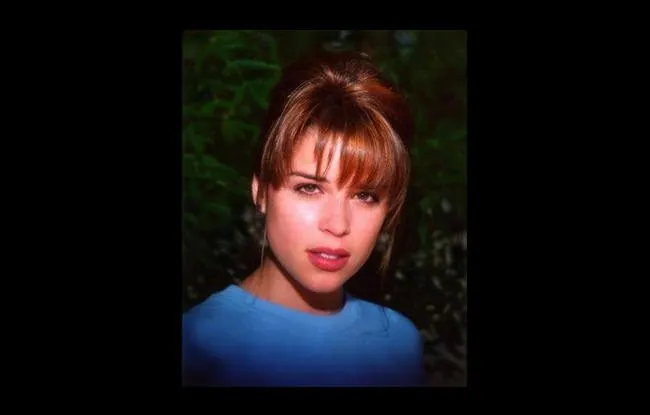
Lisa Beach joined after working with Konrad on Citizen Ruth and knowing Woods from his time as an agent’s assistant. She hired Sarah Katzman, then an unpaid intern, as her assistant after seeing her organize casting materials. Cary Woods used his friendship with Drew Barrymore's agent to land her as Sidney. Barrymore asked to play Casey instead, letting the film kill its biggest star in the opening, modeled on Janet Leigh's early death in Psycho; Maddalena recalled that she also wanted to avoid disappointing Bob Weinstein. Vinessa Shaw was considered for Sidney, and Williamson's choice Molly Ringwald thought she was too old. The casting team said Reese Witherspoon was never seriously considered. Alicia Witt, Brittany Murphy and Neve Campbell were the final contenders, with Campbell's screen test filmed first to set the standard for the others. All three tested opposite Ulrich. Beach also recalled Alicia Silverstone being considered for Casey before Barrymore chose the part; Jeremy London and James Marsden read for the film, although the casting directors did not identify their audition roles.
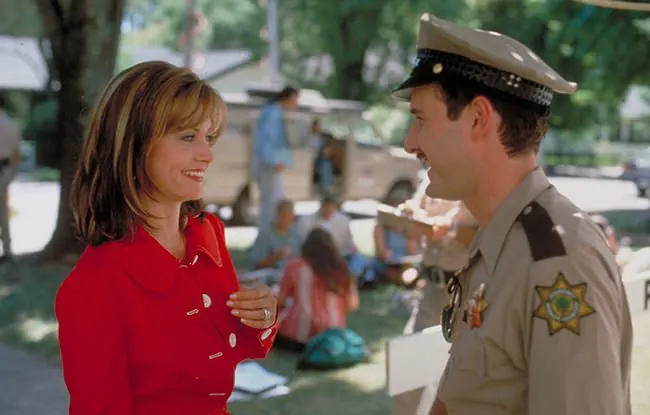
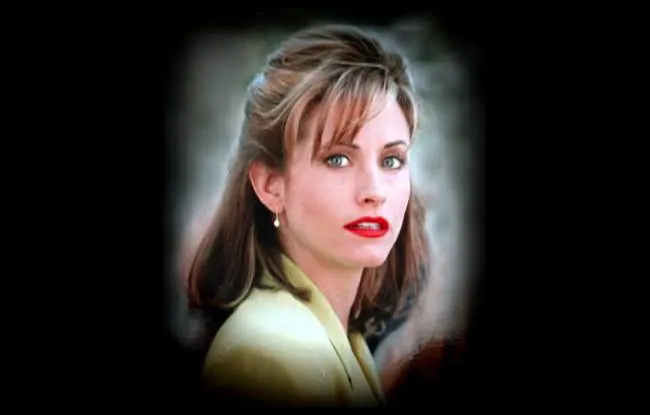
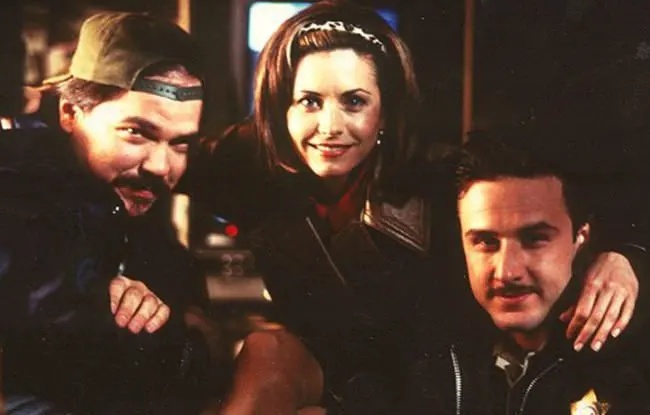
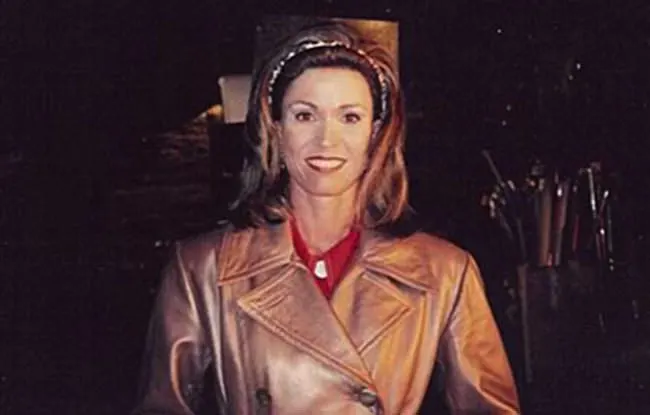
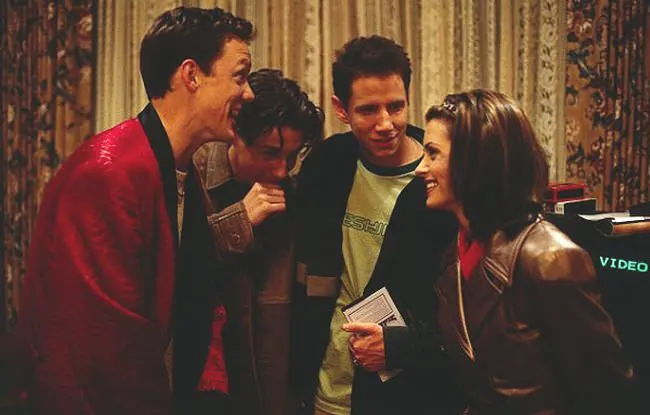
Woods suggested Courteney Cox for Gale. Craven had doubts until she wrote that playing a mean reporter—'a bitch'—would be no stretch. Brooke Shields and Janeane Garofalo were also considered. David Arquette read for younger roles and turned down Billy in favor of Dewey, whom the script described as a conventional hunk. He wanted to act opposite Cox and made the deputy a softhearted man looking for respect.
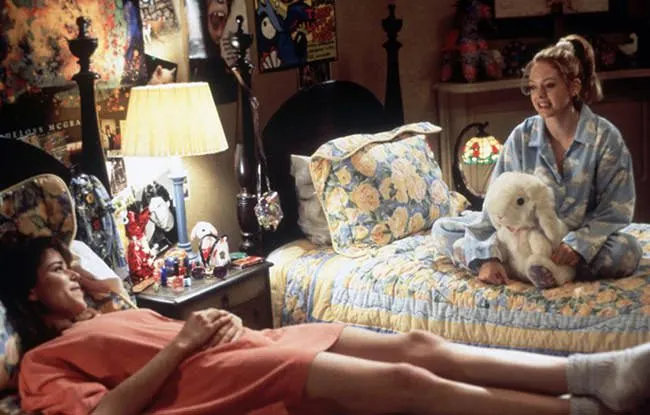
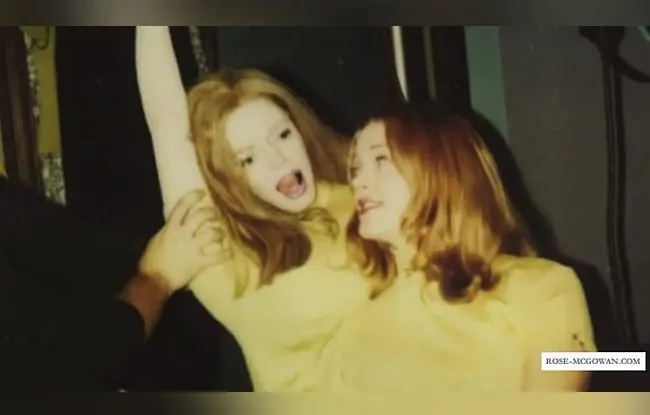
McGowan recalled being offered $50,000 for Tatum, then facing repeated tests after her lawyer sought a higher fee; she believed the extra tests were punishment for the negotiation. Her accounts differ on the counteroffer amount. Thora Birch and Natasha Lyonne also read. Katzman recalled that Lyonne was especially wanted but was under eighteen and not emancipated. McGowan dyed her hair blonde so there would not be two dark-haired leads, removed an Indigo Girls poster from Tatum's wall and bought some of her own costumes.
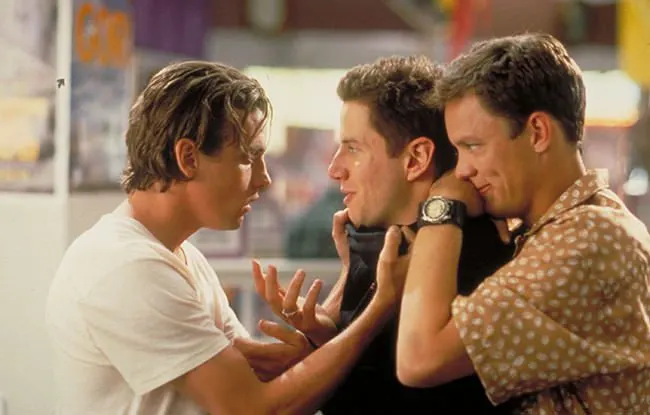
Dimension urged Vince Vaughn to audition for Billy, and he attended while ill. After Skeet Ulrich missed appointments because of scheduling, his girlfriend brought him to casting director Lisa Beach's attention and she brought him in. He prepared by reading about serial killers, watching Faces of Death and decorating his hotel room with punk posters and blacklights. He and Campbell had just made The Craft. Matthew Lillard read for Billy, was moved to Stu and got the part on the spot. Seth Green, Jason Lee and Breckin Meyer were early favorites for Randy before Craven and Williamson chose Jamie Kennedy. Kennedy flew back from Romeo + Juliet to audition with the pink hair he had for that film. Its extended shoot left him less than a week before reporting for Scream. Lillard later recalled handing Craven the telephone on his mother's birthday after overhearing him and Maddalena praising his work; Craven told her how talented he thought her son was. McGowan remembered Craven caring for her Boston Terrier puppy, Bug, on weekends when she returned to Los Angeles.
W. Earl Brown, a friend of Craven's, originally wanted Dewey but was cast as Kenny without auditioning and gained about twenty pounds. Roger L. Jackson was found at a San Francisco casting call; Barrymore needed a live actor on the other end of the phone. The filmmakers planned to redub him with Tom Kane, but Craven kept Jackson. Henry Winkler played Himbry as an uncredited favor because he and Craven shared an agent. Liev Schreiber accepted Cotton for $20,000 during an unrelated meeting with Bob Weinstein. The meeting had been about Mimic, but Schreiber was not right for that part. Sonoma local Lynn McRee spent two hours posing with Campbell for Maureen's photographs. McRee’s audition consisted of standing with other lookalikes and showing her profiles. She said she learned Maureen’s backstory only when the film came out. Many extras were locals, including the owners of restaurants the crew visited. Winkler recalled that his office was across the hall from Woods Entertainment and that he and Craven became friendly over sushi lunches. Linda Blair had previously worked with Craven on Stranger in Our House.
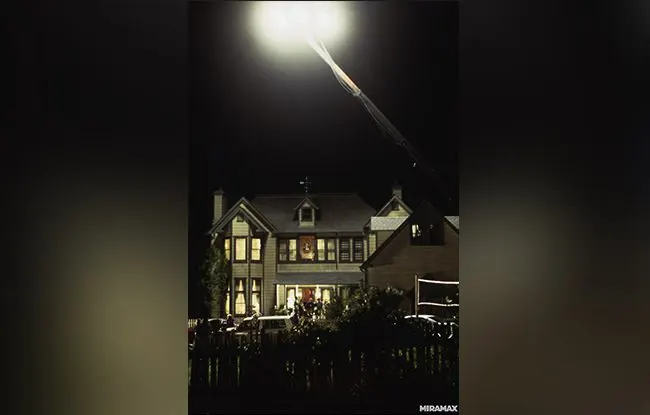
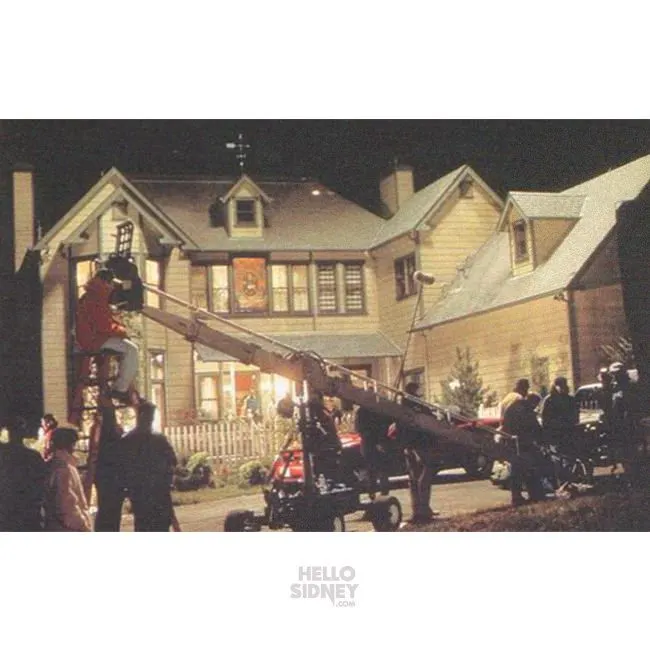
Scouts searched the US and Canada for a house with enough windows for the opening. Craven rejected Wilmington, North Carolina, where the houses were dark brown or brick, as well as locations near Vancouver and in Napa County. The Wilmington scouting trip was also interrupted by an ice storm, and the team was concerned about controlling traffic there. Sonoma County worked but added $1–2 million, which the Weinsteins initially refused. Santa Rosa High School initially granted permission as the first choice for Woodsboro High, with up to ten filming days planned for a $30,000 offer.
After objections raised in late March, a public meeting drew hundreds of residents and the school board voted 4–1 against filming on April 16, 1996, citing the script's violence and disruption during finals. Students circulated a petition supporting the shoot that gathered 300 signatures. Accounts also cite local sensitivity after the 1993 Polly Klaas abduction in nearby Petaluma. The district later allowed an eight-day shoot for Inventing the Abbotts. Craven returned with a four-day proposal, but it was rejected because of a theater-group scheduling conflict. The Sonoma Community Center replaced the school and was dressed with larger desks and lockers. The principal’s office and classroom interiors were built on an old car-dealership lot using measurements taken at the rejected school. The community center received about $27,000 for three days; Craven estimated the total disruption at roughly $350,000. The end credits read, 'No thanks whatsoever to the Santa Rosa city school district governing board.'
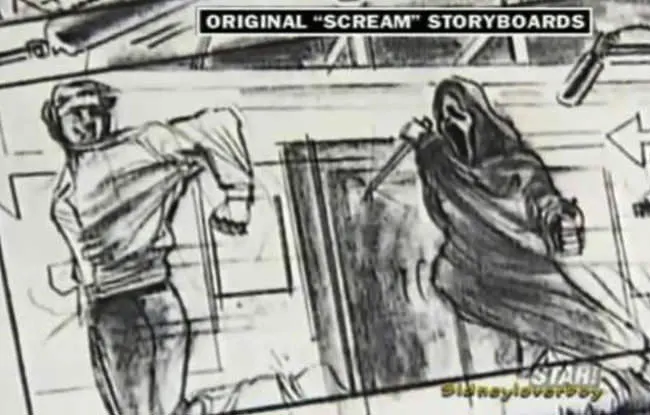
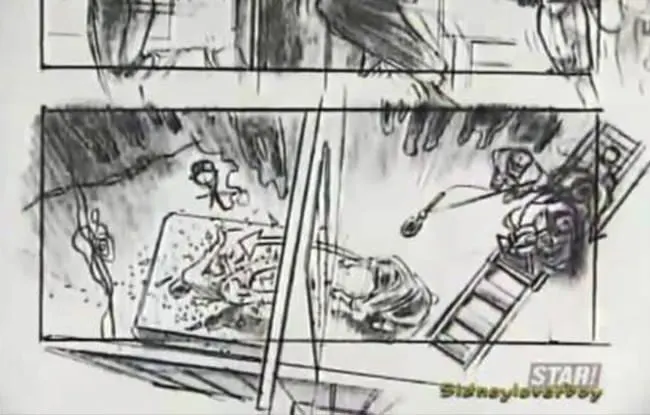
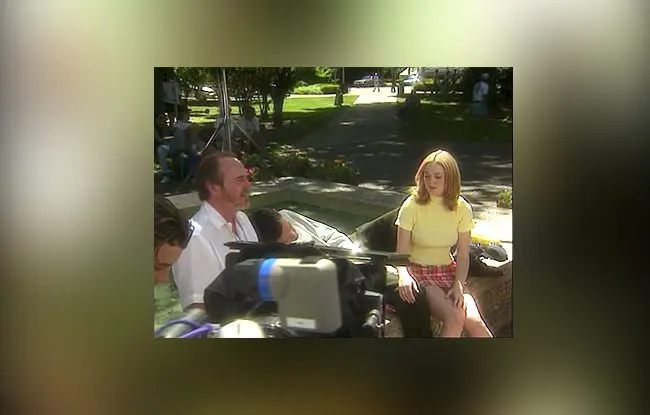
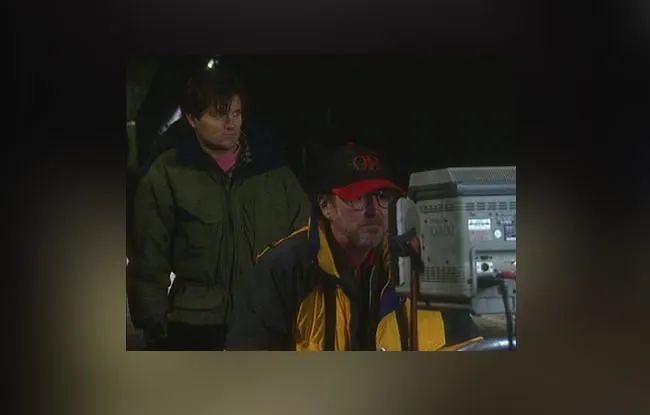
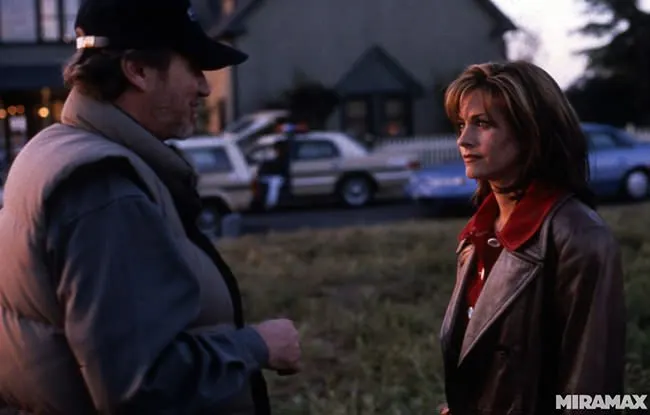
Principal photography began April 15, 1996, with the first week devoted to Casey Becker's opening. After watching the dailies, Bob Weinstein called them 'workmanlike at best,' disliked the Fun World mask and Barrymore's pageboy haircut, and ordered other masks tested. The studio considered replacing Craven and sent him Nightwatch dailies as an example. Konrad defended him; Dimension sent Cary Granat and Andrew Rona to oversee the shoot. Irwin described starting Casey's house in pale, neutral colors before letting shadows and blue moonlight take over. He used a specially made patterned screen, or cucoloris, to break up light on Barrymore. Williamson recalled Craven explaining the planned shots to him at the first night's filming. Williamson remembered one of the studio's angry calls arriving while the crew was filming at the grocery-store location and also shooting Cotton's police-escort footage.
Craven, Konrad, Maddalena and line producer Stuart M. Besser offered to assemble the opening rather than reshoot it, and to shut down if it failed. Lussier cut the sequence with temporary music, sound and effects; he recalled Craven asking for a stronger orchestral climax when Casey's body was revealed. Accounts of the decisive screening differ: Konrad remembered receiving a projectionist's running telephone report from New York before Bob called to approve the work, while Richard Potter remembered Bob, Granat and Rona watching in Santa Rosa and Bob admitting to Craven in person that he had been wrong. Both accounts describe the completed opening restoring the studio's support. Besser recalled crew members saying they would leave if Craven were fired. The producers later suspected Bob also wanted footage ready for the Milan Film Festival. Konrad also remembered a hotel-room summons from Craven in the killer's telephone voice before the producers discussed the crisis together.
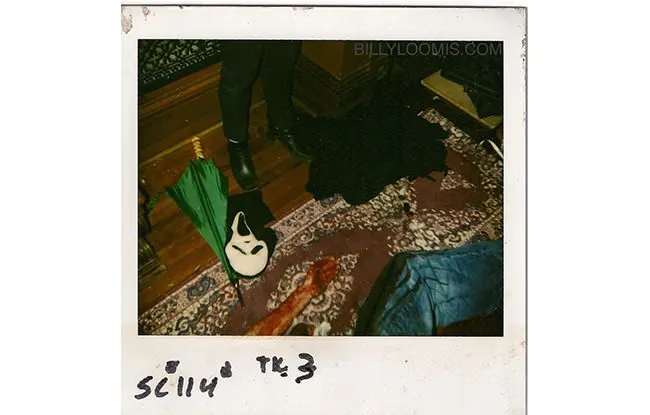
The forty-two-minute party finale, Scene 114, took twenty-one consecutive nights at Stu's hilltop house, from sunset to sunrise. The kitchen showdown alone took five nights. Campbell recalled that her blood-stained clothes were kept unwashed for continuity and sprayed with water to soften them enough to put back on. Crew members received commemorative shirts after the sequence wrapped. Lighting the uneven hilltop increased tensions between Craven and cinematographer Mark Irwin. Neither had much experience with anamorphic lenses; crew members raised concerns about flares, focus pulling and soft frames, partly blaming the focus puller Irwin hired. For some interior work the house was tented to block daylight. Production designer Bruce Alan Miller recalled being told that the chosen red walls would make blood harder to see.

Irwin was dismissed after an argument with Maddalena, and Peter Deming shot the final three weeks. Irwin said he had been told that all the footage was unusable and thirty-five days would need reshooting; he maintained he was a scapegoat for schedule delays, which Konrad denied. Lussier identified Sidney and Billy's bedroom scene as especially affected by soft focus and said the usable shots restricted the edit. Focus puller Gary Ushino recalled being ill and absent for that particular scene, with an assistant covering, and attributed its problem to slack in a lens mechanism. These recollections do not establish a single agreed cause for every focus issue. Published accounts differ over the crew transition; Deming and Scott Ressler describe a replacement camera department, with Deming bringing Ressler as first assistant cameraman on short notice. Irwin had opposed the isolated Tomales location for logistical reasons. Deming later appears as the popcorn vendor in Scream 2.
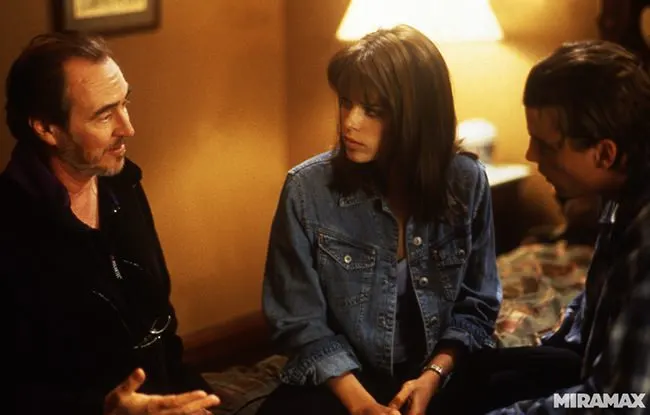
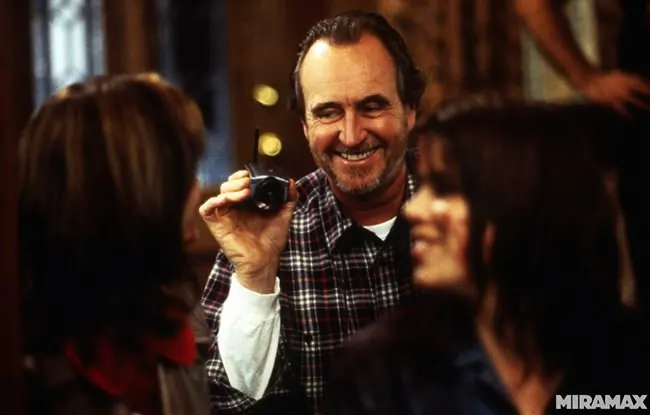
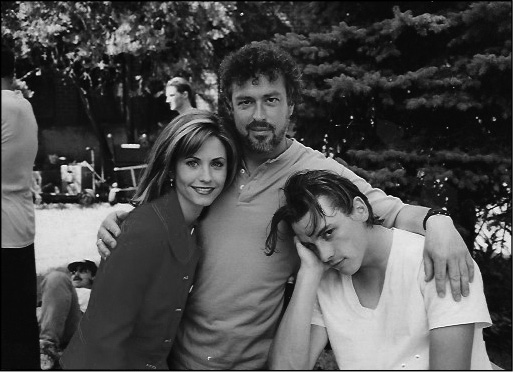
Craven encouraged improvisation, especially from Arquette and Lillard; Williamson later said many of Lillard's ad-libs improved the script. Craven also supplied Kenny’s muttered reply when Gale calls him Jesus and Dewey’s joke about asking Gale for the name of a constellation he cannot identify. Ulrich initially thought the comedy from Lillard and Kennedy was ruining the film. Kennedy asked for more takes of Randy's rules speech, and Craven used the third. The cast remembered the shoot as summer camp, with early-morning gatherings in Arquette's hotel room forming a makeshift club. After residents complained, the gatherings moved to a nearby barn. Arquette also credited Craven with Dewey's 'my whole life' reply when Gale spots Neil Prescott's car. Campbell recalled Craven helping her find the finale's fear by asking her to imagine bullets ricocheting through her body; Ulrich remembered him asking that the intensity he and Lillard maintained between takes be saved for the camera. Before filming, Craven hosted a small gathering at his Los Angeles home where Cox and Arquette first met. Mastandrea recalled changing the schedule when McGowan became ill after Campbell and Cox spoke up for her. Plec helped organize the cast and crew's long group dinners.
After filming, Harvey Weinstein suggested Scream after Michael and Janet Jackson's 1995 single. Much of the cast and crew disliked the change, and wrap gifts still carried Scary Movie. Sony challenged the title over Screamers; contemporary reporting described MPAA title arbitration followed by a settlement.
Dewey and Randy died in Williamson's script, but Craven filmed survival alternatives in case audiences liked them. Williamson told The Hollywood Reporter that Craven proposed filming Dewey being loaded into the ambulance 'just in case'; test audiences loved Arquette, so that footage was used. In the preceding shots Arquette was playing dead and visibly not breathing. Randy's death was also covered. An early draft instead ended with him asking Sidney out and her agreeing through a reference to a 'nice Meg Ryan movie.' Strong test screenings led Miramax to sign Craven for two sequels.
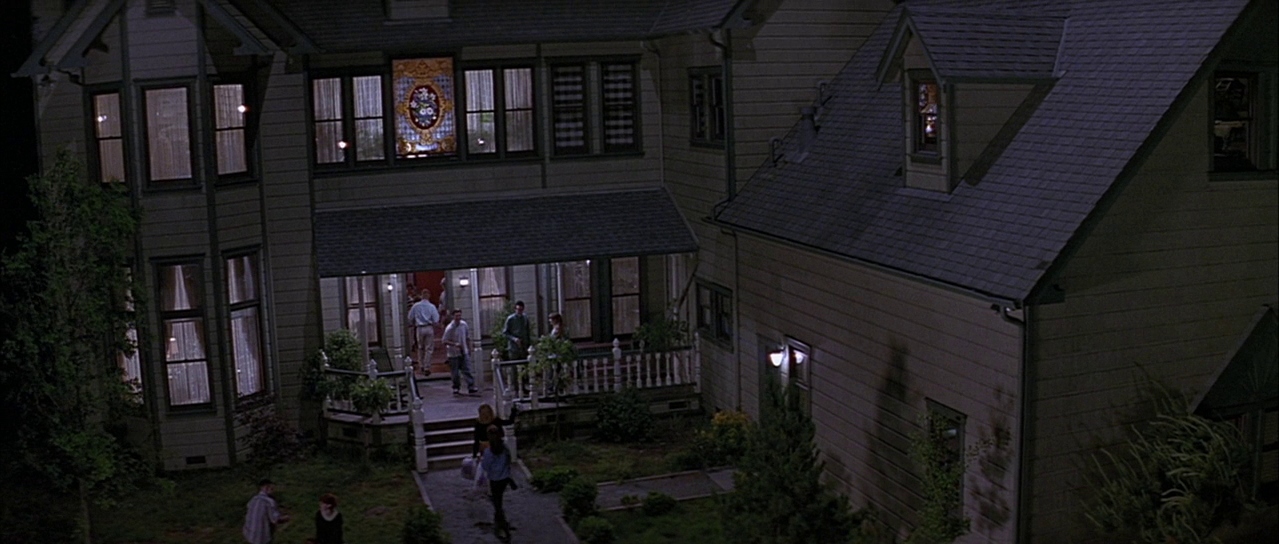
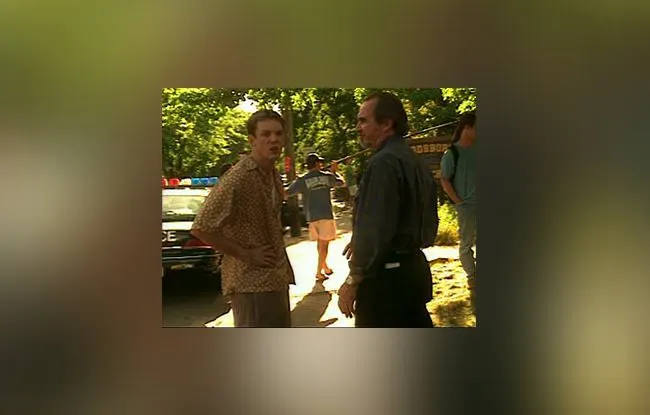
The shoot ran from April 15 into June 1996 in Sonoma and Marin counties. Accounts give June 8 and June 14 as the wrap date. The opening was filmed in Glen Ellen, and the Santa Rosa and Healdsburg locations are listed below. Stu’s unoccupied Tomales hilltop house is at 3871 Tomales Petaluma Road, the address identified by the 2022 production when building its replica. Miller’s team added a driveway, porch, fencing and cul-de-sac, disguising the original driveway as a street. A false two-sided barn hid the makeup trailers beside the house, saving the actors a long trip up from base camp.
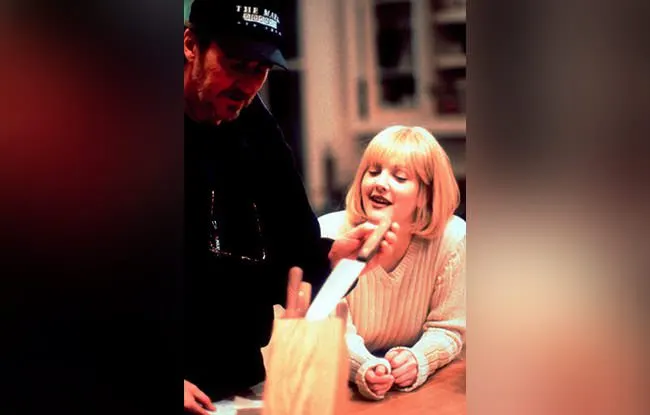
Barrymore and Craven agreed on an emotional cue drawn from a distressing newspaper story about a dog; she recalled hyperventilating rather than using artificial tears for the opening; Roger L. Jackson delivered the calls live. On the first night he was outside Barrymore's window; afterward he worked from the garage with a camera feed, out of the actors' sight. McGowan recalled that she could yell but could not produce a scream, so her calls for her mother were improvised.
Gale’s closing news report was written on set as the crew raced the sunrise. Williamson put the words onto Cox’s sides, and she memorized them just before the take. Deming also recalled trying improvised jokes when Sidney freed her father from the closet; the finished rescue played without those lines.
Note: the Tomales house was rented out by Airbnb for three nights (27, 29, 31 October 2021) for the film's 25th anniversary, with David Arquette hosting in character as Dewey, the basis for Scream 7's opening.
None yet. The seed is planted: Gale Weathers is writing/has written "The Woodsboro Murders," the book that will be adapted as Stab. Sidney's line (that if there were a movie about her she'd be played by "with my luck, probably Tori Spelling") pays off in Scream 2.
Craven applied a lesson from Vampire in Brooklyn: the satire would only work if the danger felt real. He asked the actors to play the frightening moments sincerely rather than approach them as comedy.
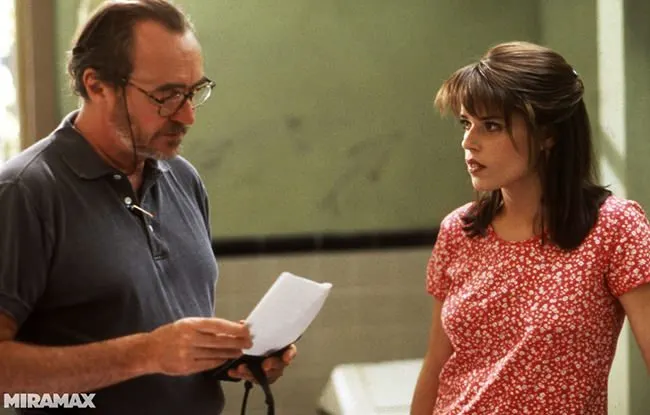
Lisa Beach supplied the name Steven Orth for the opening victim, borrowing it from her cousin. Craven let her use it in the report she delivers during her cameo as a Woodsboro reporter.
The crew's regular dinners at Ca’Bianca in Santa Rosa led to cameos for restaurant staff. Karin Hoehne and her young son appear packing a picnic basket in the curfew montage, and staff members were used as video-store extras. Marco Diana also filmed a cameo, but it was cut. Besser and Mastandrea recalled first asking the newly opened Ca' Bianca to stay open late for the production, beginning the regular dinners there.
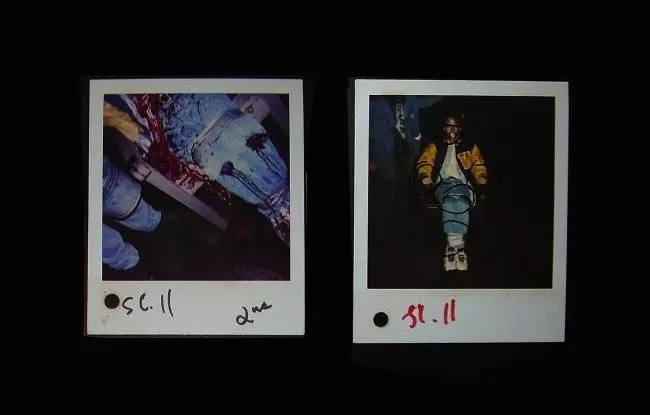
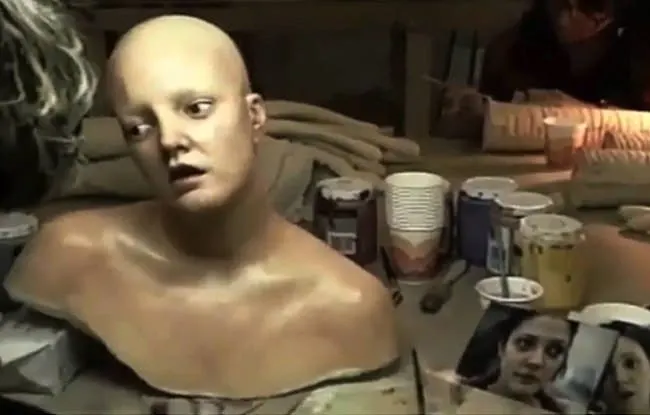
KNB EFX Group handled the makeup effects. For Casey's hanging body, Howard Berger skipped prosthetics and built a hollow mannequin with the spine showing between the upper and lower halves, filled out with rubber and vinyl organs. Nicotero recalled about five weeks of preparation, beginning with a cast of Barrymore's head and continuing through sculpting and painting the body.
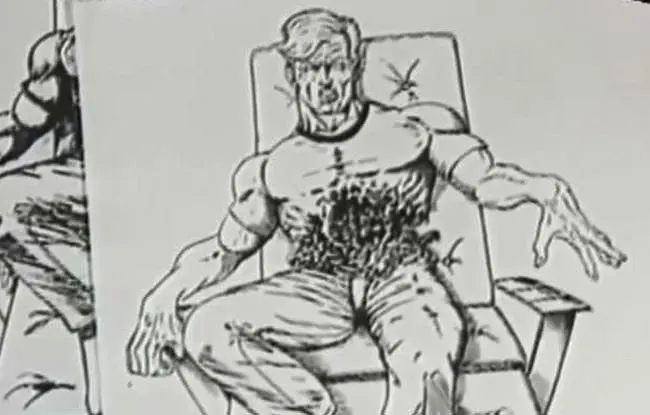
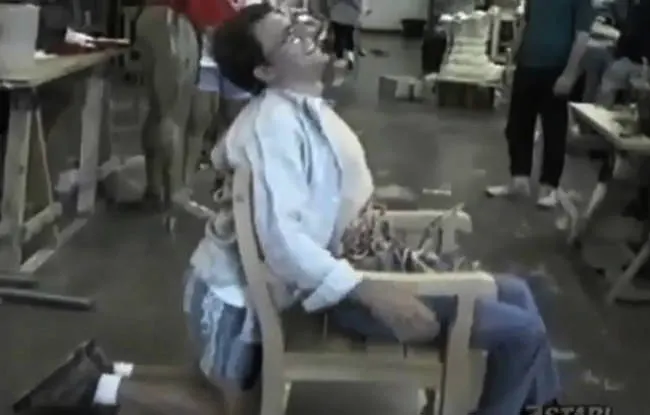
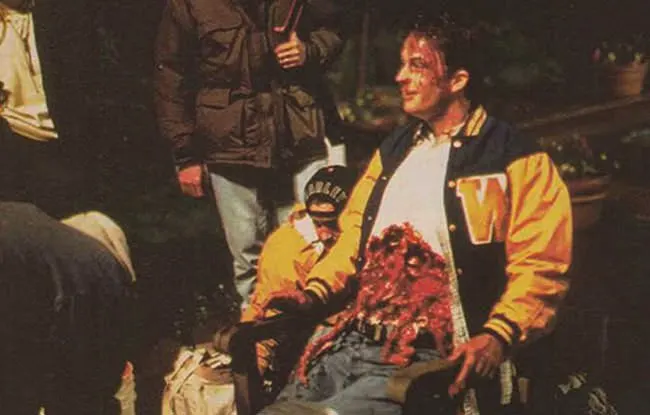
For Steve Orth, KNB built an open-backed chair so Kevin Patrick Walls could kneel behind a hollow fake torso packed with latex, rubber and gelatin intestines. Ushino recalled an additional, much gorier take using butcher's pig intestines and chemical smoke for steam, with the organs falling onto the ground; that version was not used in the film.
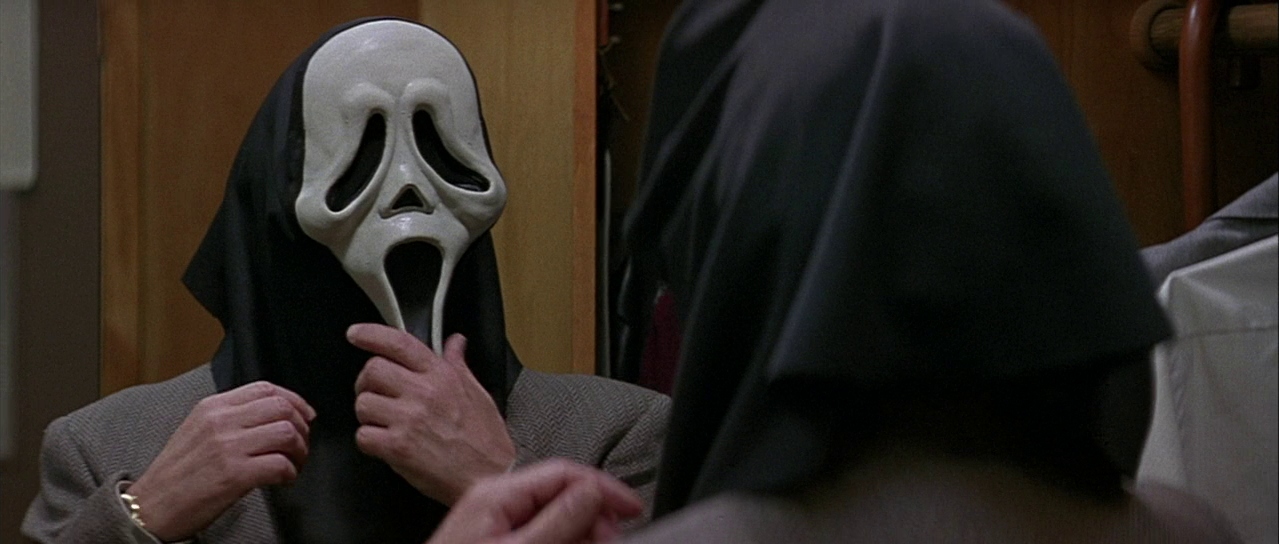
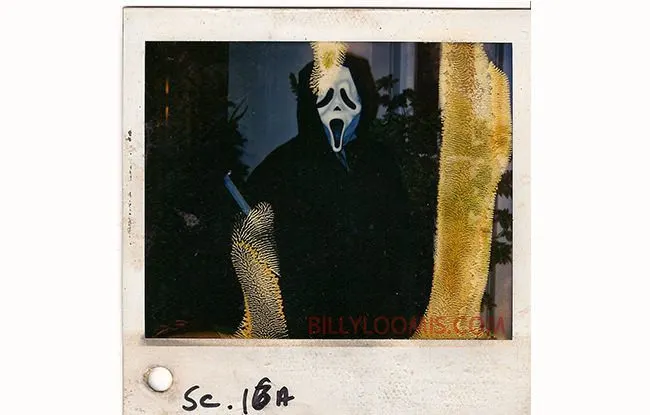
KNB was also asked to design a killer mask. The filmmakers rejected the early concepts as too gargoyle-like and witchy. Craven then had Greg Nicotero and Berger make a mask based on the Fun World design but different enough to avoid legal trouble. That custom KNB mask is still on screen in the Casey Becker and Principal Himbry scenes because those were shot before the Fun World license was signed. For Himbry's stabbing, Winkler described blood tubing threaded through slits in his costume and repeated changes and washes between takes. He recalled spending roughly two hours on the close-up that catches the killer's reflection in his eye.
The MPAA initially gave the film an NC-17 and said its intensity made an R impossible, rather than identifying one particular shot or quantity of blood. Roughly nine rounds of cuts and resubmissions followed. Movement in Steve Orth's exposed organs was removed; Kenny's throat cut was shortened because his pained expression was disturbing; Billy and Stu's mutual stabbings were trimmed; and views of Casey's hanging body and Tatum's crushed head were reduced. Casey's slow-motion stabbing lost only a few frames because there was no covering footage or alternate take. Craven told the board only one take of the opening existed to protect it. The filmmakers eventually persuaded the board to regard the film as a spoof. The theatrical R-rated cut runs 111 minutes, though the AFI Catalog lists 104. The fifth submission, dated September 30, 1996, replaced fifteen frames of moving organs with a static version and removed individual frames from Kenny's wound and Billy and Stu's injuries. Craven's accompanying letter said he had already left out the bloodier Tatum footage and argued that the kitchen scene exposed the murderers' pain and the consequences of violence. Lussier also recalled an objection to the line about movies making killers more creative. Casey's body reveal was accelerated by removing frames from the zoom; Brown described Kenny's final gesture as an attempt to protect Sidney rather than dwell on his own wound.
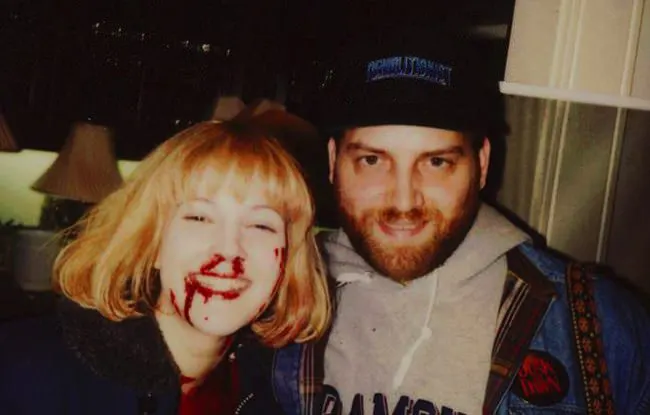
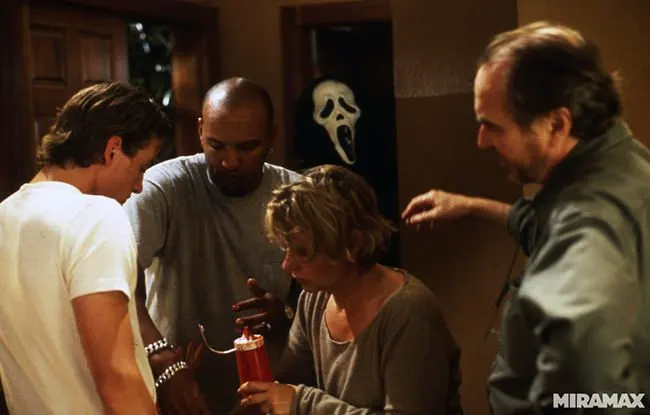
Campbell, Kennedy, Lillard and Ulrich spent several nights covered in fake blood. Their costumes could not be washed for continuity, so the crew dampened them each evening to keep the blood fresh. Nobody realized the sofa Billy stabbed was feather-stuffed; the feathers stuck to the blood, but Craven kept the shot. Maddalena thought he was mad to do so.
During the finale Campbell's stunt double missed Ulrich's protective vest with the tip of the umbrella and hit the spot of his childhood open-heart surgery. On the news van, W. Earl Brown was riding on top when an unprepared stunt driver took off at full speed and then braked hard; the stunt coordinator grabbed his pants and ankle and kept him from getting hurt. For Tatum's death, McGowan could not stay wedged in the pet door as it rose, so the crew nailed her shirt to the frame. Dane Farwell recalled performing the masked killer's physical reactions in the garage sequence, including being hit by the freezer door.
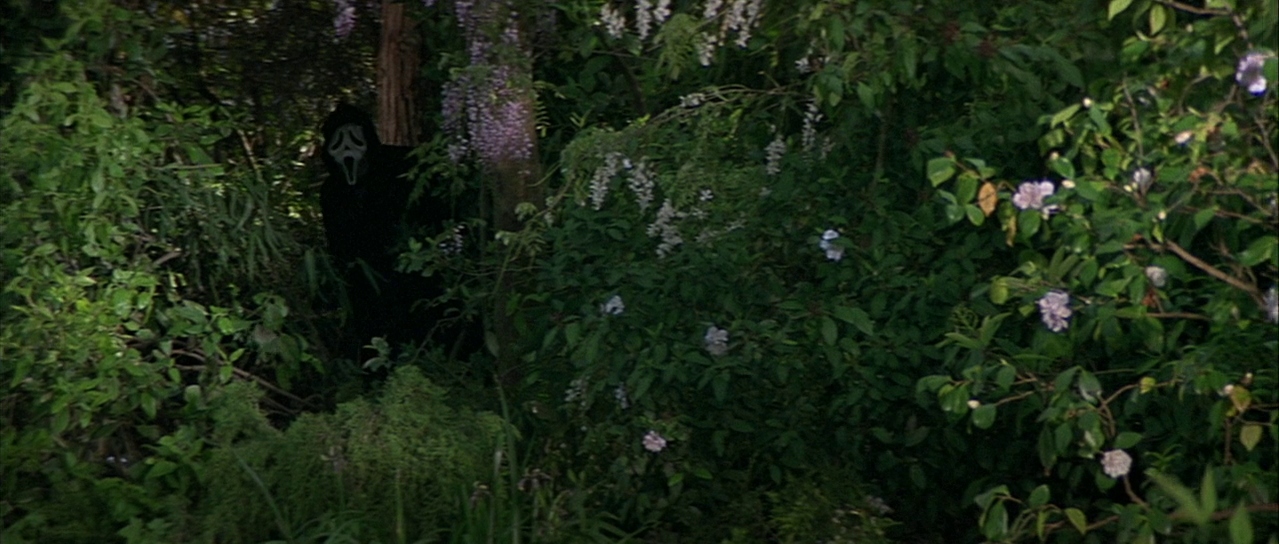
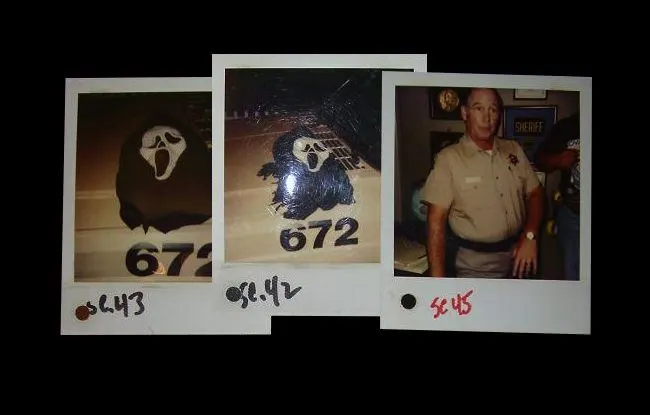
The script only described a 'ghostly white mask.' The mask used was Fun World's 'Peanut-Eyed Ghost' from its 1991 to 1992 Fantastic Faces Halloween line. Brigitte Sleiertin created Fun World's design, which Allan Geller approved; Alterian artist Loren Gitthens has described an earlier wailing-ghost mask and his belief that it influenced the later one. Their recollections differ over the design's origin. Sleiertin has said it was not inspired by Munch's The Scream.
Craven once said he found the mask, but later said Marianne Maddalena spotted it inside a house while scouting locations. Maddalena recalled that Craven and Miller initially passed on it because they wanted an original design. She put it back, then suggested retrieving it when the alternatives failed to satisfy them. Fun World licensing director R.J. Torbert, who joined the company in 1996, named it GhostFace before the film came out. Fun World owns the design and the name. Besser recalled locating the company through a distributor and obtaining a permission letter for roughly $2,000; that is his recollection of the arrangement, rather than a statement of the license's legal terms.
The robe was first planned in white to match the ghost idea. Maddalena argued black would be scarier. The 'Father Death' costume shown in its package in the film did not exist; Fun World sold only the mask, and the robe reached stores after the film. Each robe was hand-sewn by a seamstress for about $700, in heavy black fabric with reflective thread woven through it. The robe was meant to hide the killers' body shapes. Brown later gave the robe he had received as a first-film wrap gift to a friend of his daughter's who loved the movie.
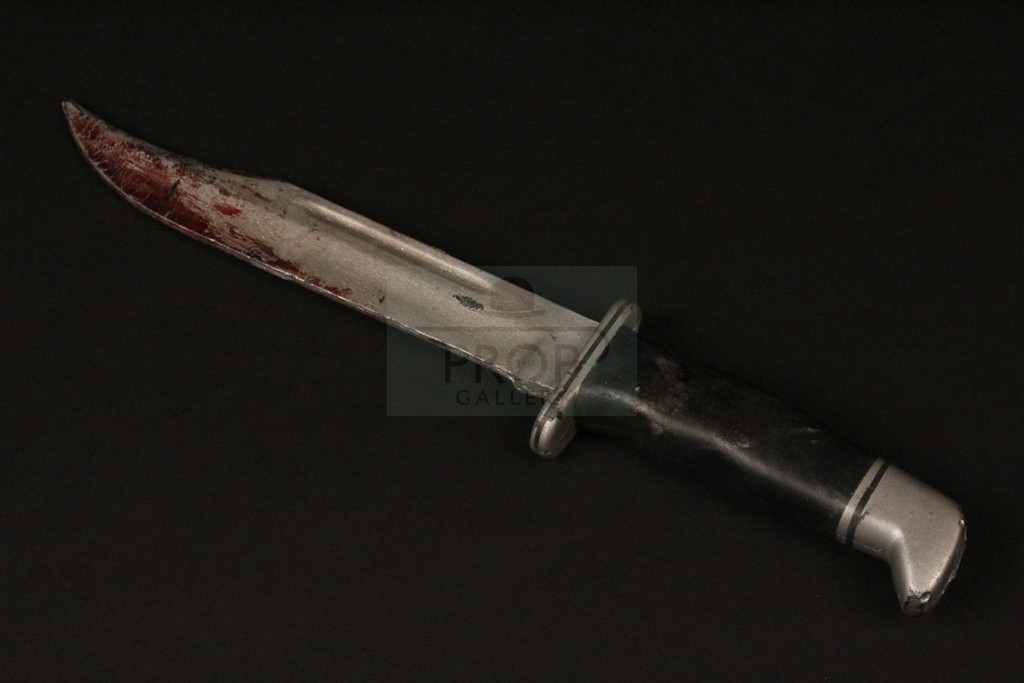
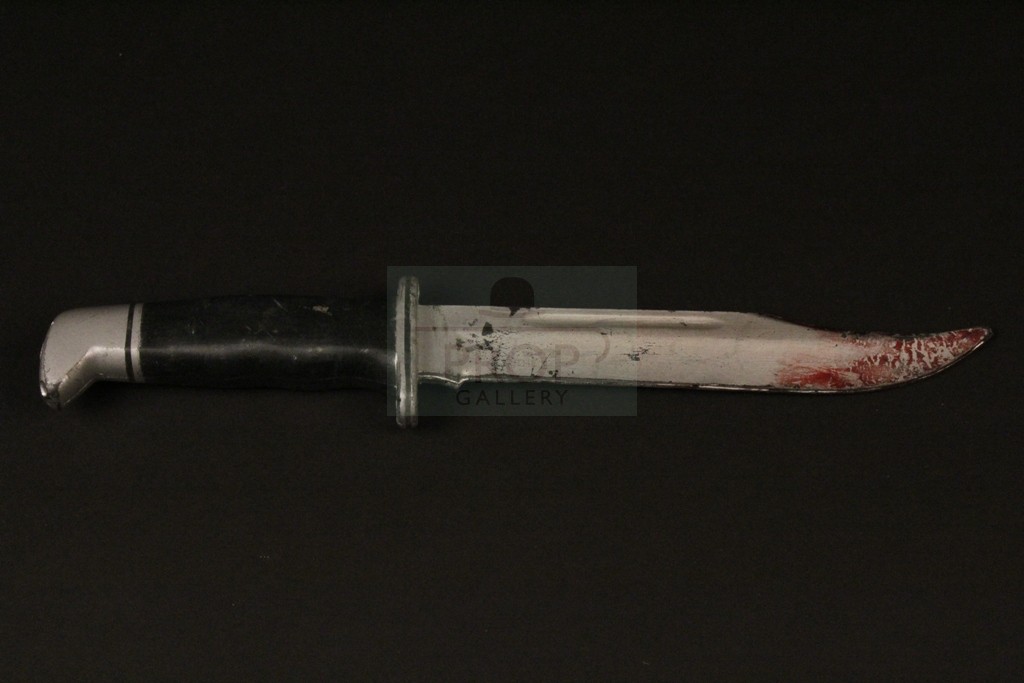
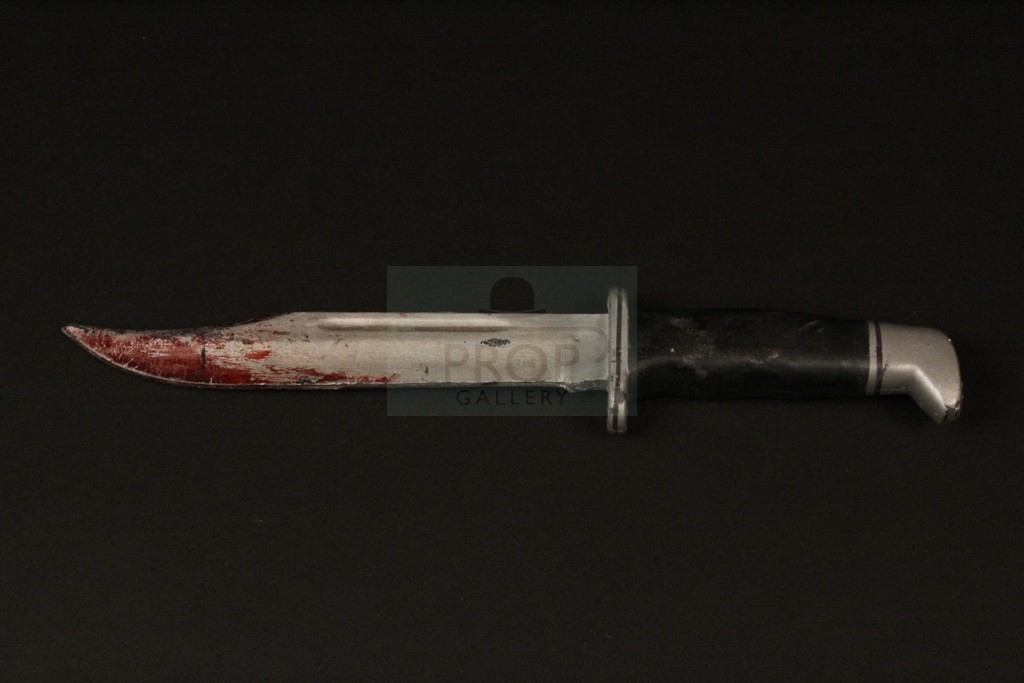
The knife is a custom prop based on the Buck 120 hunting knife, made in aluminum or chrome-painted plastic with a rubber handle depending on the shot.
Stunt performers wore the costume most of the time. Craven wore it in part of the opening, including the moment the killer is hit with the phone. Ulrich wore it once, for the shot of the killer creeping up behind Randy. Lillard never wore it. Stuntman Dane Farwell gave the killer the habit of wiping the blade clean between thumb and finger.
Tatum is the first person to call the killer by name, sarcastically, as 'Mr. Ghostface.'
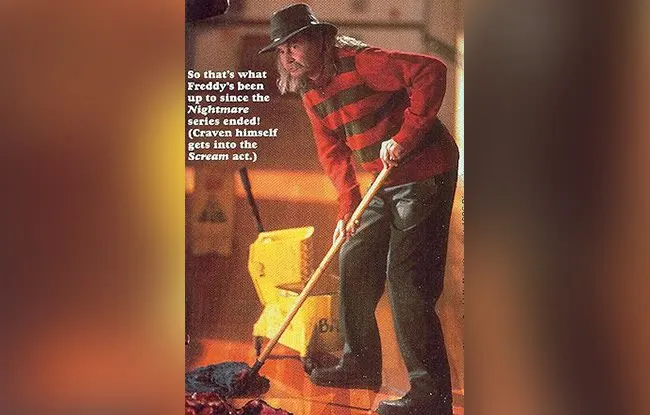
Cynthia Bergstrom designed the costumes. Rose McGowan swapped some of the suggested outfits for clothes she bought herself. Craven's janitor wears a striped sweater and fedora as a nod to Freddy Krueger.
Gen 1 "Fun World Div" masks. Seven KNB EFX prototypes were built as backup while the Fun World license was still being negotiated, and three of those reached the screen, including Casey Becker's opening and the Principal Himbry scenes.
Plec found Beltrami through the Hollywood Café chat room on America Online. She recalled Shane Salerno recommending him; Lussier tried his demo reel against the edit before Craven brought him in. Beltrami had little interest in horror and recalled that he had never seen a horror film. Craven gave him one weekend to score the opening as a studio test. He wrote 'The Cue from Hell' in Christophe Beck's home studio from Casey's point of view, using piano and brass in an operatic style; the successful screening won him the job. Beltrami separately remembered USC classmates recommending him after a radio-show host mentioned that Craven needed a composer. These are the participants' different recollections of how the recommendation reached the production.
Beltrami recalled a $30,000 package for the score and said he spent some of his own money to finish it. The budget capped the orchestra at under fifty players. To fill out the thin strings and missing harmonics, Beltrami had the string players whistle, joined by Craven, Lussier, Maddalena and Cary Woods; another account also includes Plec among the participants. He made 'Sidney's Lament' the central character theme and gave Ghostface no motif of his own, so the score would not reveal a killer's identity. Dewey's theme draws on westerns. Beltrami named Elliot Goldenthal, Ennio Morricone, Eric Serra, Christopher Young and Hans Zimmer as influences.
Songs in the film include an acoustic cover of '(Don't Fear) The Reaper' by Gus Black, 'Birds Fly (Whisper to a Scream)' by Soho, 'School's Out' by Alice Cooper, 'First Cool Hive' by Moby, 'Drop Dead Gorgeous' by Republica and 'Red Right Hand' by Nick Cave and the Bad Seeds. Pieces of John Carpenter's Halloween score play throughout.
Scream: Music from the Dimension Motion Picture came out on TVT Records on December 17, 1996. Tracks: 'Youth of America' by Birdbrain; 'Whisper' by Catherine; 'Red Right Hand' by Nick Cave and the Bad Seeds; '(Don't Fear) The Reaper' by Gus Black, an acoustic Blue Öyster Cult cover; 'Artificial World (Interdimensional Mix)' by Julee Cruise with The Flow; 'Better Than Me' by Sister Machine Gun; 'Whisper to a Scream (Birds Fly)' by Soho; 'First Cool Hive' by Moby; 'Bitter Pill' by The Connells; 'School's Out' by The Last Hard Men; and 'Trouble in Woodsboro / Sidney's Lament' by Marco Beltrami. It runs 46:30.
On the album, Alice Cooper's 'School's Out' was replaced by The Last Hard Men's cover. The European edition adds Republica's 'Drop Dead Gorgeous.' A version of the Republica video with clips from the film ran on MTV, and the song was used in a TV ad. The album sold poorly and missed the Billboard 200, though it reached No. 29 in New Zealand.
Beltrami's score was first released by Varese Sarabande on July 14, 1998, as six tracks (12 minutes) on a disc shared with Scream 2. A deluxe edition of the complete score, 25 tracks and about 63 minutes, came out June 6, 2011 in a run of 2,000 copies. Bone white and splatter vinyl followed in September 2016 and red vinyl in July 2019. A limited box set of Beltrami's first four Scream scores came out January 7, 2022, with a vinyl box set on June 10, 2022; the four-LP set's jacket folds into a Ghostface mask.
Ed Gerrard introduced Lussier to Nick Cave and the Bad Seeds while they were working on Vampire in Brooklyn. Lussier placed “Red Right Hand” in his first edits of the Woodsboro scenes, and it remained through the finished cut. Dimension agreed to pay for the song rather than replace it. Gerrard handled both the recording and synchronization licenses, recalling a combined cost of no more than $5,000.
Beltrami named a score cue “NC-17” after the fight over the film’s rating.
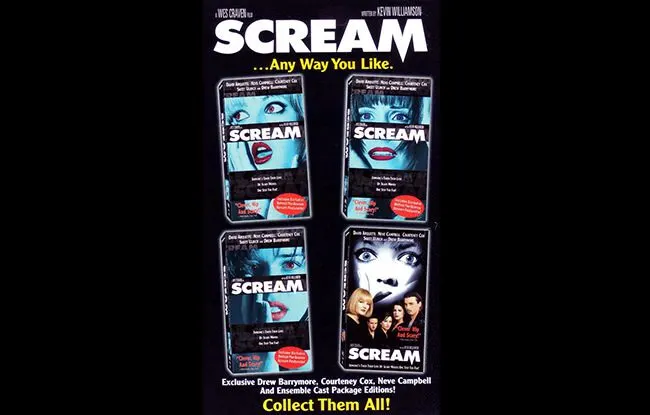
VHS and LaserDisc, June 24, 1997. It was the second most-rented film of 1997 in the US.
Dimension Collector's Series DVD, December 8, 1998. It is 2.35:1 widescreen but not anamorphic, with Dolby Digital 5.1. Extras: commentary by Wes Craven and Kevin Williamson, two short behind-the-scenes featurettes, a featurette on shooting Drew Barrymore's chase, a longer production featurette, a Q&A with cast members, a special effects gallery of molds and concept drawings, cast and crew bios, trailers and TV spots, and a 'Did you know' section with 19 trivia notes. Release notes also describe a Marco Beltrami score section.
The Ultimate Scream Collection box set, September 26, 2000 (Dimension), with Scream 2 and Scream 3. It added the short documentary Behind the Scream, cast screen tests, outtakes and deleted scenes. The documentary interviews Craven, Williamson, Campbell, Cox and Arquette.
Europe and Japan got Scream, Scream 2 and Scream 3 on DVD together on February 26, 2001 from Buena Vista, individually and as a Scream Trilogy pack.
A director's cut restored footage trimmed for the R rating. DVD Exotica reports that the 1997 and 1998 Dimension LaserDiscs carry the uncut director's cut in 2.35:1 with Craven and Williamson commentary, with DTS added to the 1998 disc. The same comparison identifies every US DVD—the 1997 and 1998 discs, the 2000 Ultimate Scream Collection, the 2009 Triple Pack and the 2011 Triple Feature—as the R-rated cut in non-anamorphic widescreen. The German 2005 Kinowelt Special Edition DVD reportedly carries the complete unrated cut.
Blu-ray, March 29, 2011, from Lionsgate under a sublicense from Filmyard Holdings, alone and in a set with Scream 2 and Scream 3, two weeks before Scream 4 opened. Extras include the commentary, trailers and behind-the-scenes footage. The anamorphic Blu-ray still uses the R-rated cut.
25th anniversary 4K Ultra HD, October 19, 2021, Paramount Home Entertainment, as a standard 4K, a limited SteelBook and a Blu-ray. The 4K disc is region free, HEVC with HDR10, 2.35:1, with English DTS-HD Master Audio 5.1. The theatrical R-rated cut and original commentary remain. Extras: the Craven and Williamson commentary, the new 'A Bloody Legacy: Scream 25 Years Later' (about 8 minutes, also timed at roughly 7.5 minutes) with cast interviews, a production featurette (6 minutes), behind the scenes (6 minutes) and a Q&A session (6 minutes).
Paramount's two-disc 4K Ultra HD + Blu-ray SteelBook returned in February 2026. The German publisher dates its edition February 13; US release listings date the two-disc set February 17. Its specifications are 111 minutes, R, HEVC/H.265 native 4K with Dolby Vision and HDR10, 2.35:1 and English DTS-HD Master Audio 5.1.
Rights history: Disney sold Miramax, which held the pre-2005 Dimension library, to Filmyard Holdings in 2010. beIN Media Group bought Miramax in March 2016, and on April 3, 2020 ViacomCBS (now Paramount Skydance) took a 49 percent stake.

Scheduled for December 15, 2026 · Amazon-exclusive 4K Ultra HD + Blu-ray + digital collector's set
NECA · official Fun World Ghost Face collectible
NECA · official Fun World Ghost Face collectible
2026 · Amazon-exclusive 4K Ultra HD + Blu-ray + digital collector's set
Included with any plan
Check current availability
Free with adverts
Free with a library card
About $3.99 to rent, $5 to $9.99 to buy
Miramax
The original theatrical trailer, put out by the studio that made the film.
Rotten Tomatoes Classic Trailers
A clean archive copy of the first trailer.
Paramount Movies
Paramount's own trailer, cut for the re-release.
Miramax
The official clip of Sidney being stalked in her own house.
Miramax
Randy and Stu arguing about who the killer could be.
IGN
Where the mask came from, made for the twenty fifth anniversary release.
FilmIsNow Epic Movie Zone
On set footage of the cast and crew shooting the film in 1996.
FilmIsNow Epic Movie Zone
A longer cut of the same on set footage, with more of Wes Craven directing.
FilmIsNow Epic Movie Zone
The original casting test with the two of them reading together.
Analog Jones and the Temple of Film
A tape rip of the making of piece that ran on television at the time.
filmSCHOOLarchive
A making of piece covering how the film was shot.
MovieClips and Mashups
SPOILERS
The other version of the ending.
Ectoviolence
SPOILERS
Scenes that were cut out of the finished film.
Cinerama
SPOILERS
Another set of cut scenes from the first film.