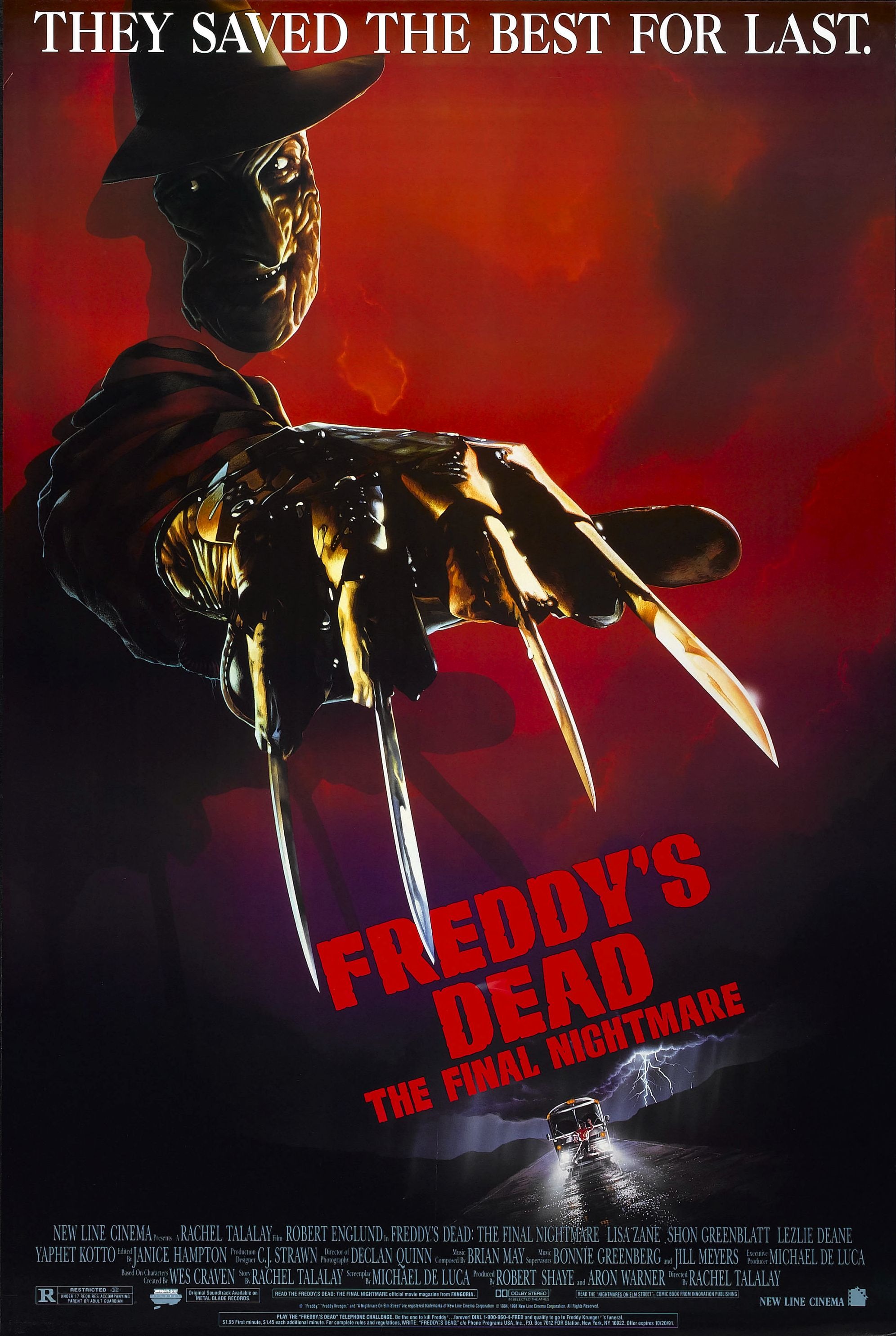
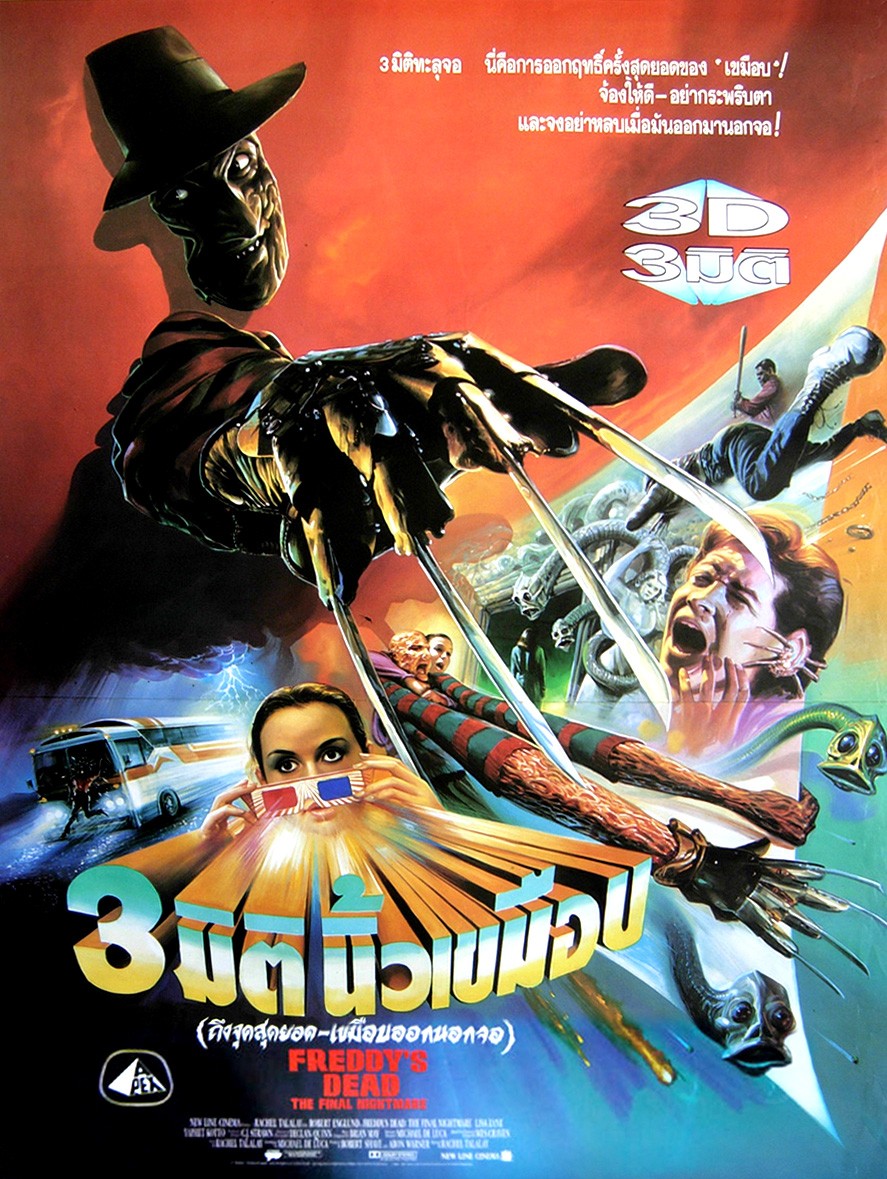
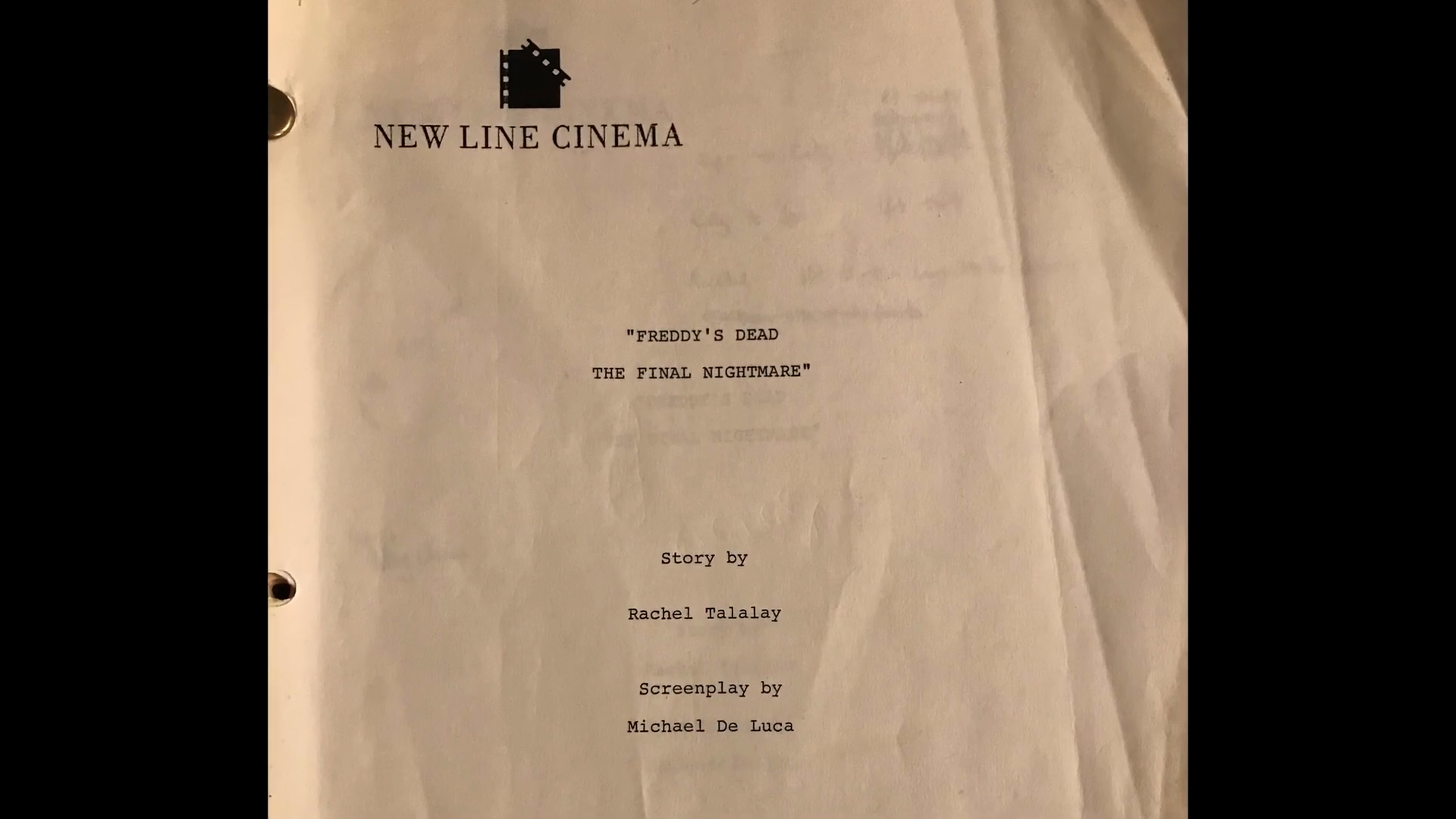
Freddy's Dead: The Final Nightmare press kit
1991 · studio publicity kit
- Contents
- press-kit notes PDF; glossy photos

A Nightmare on Elm Street
1991
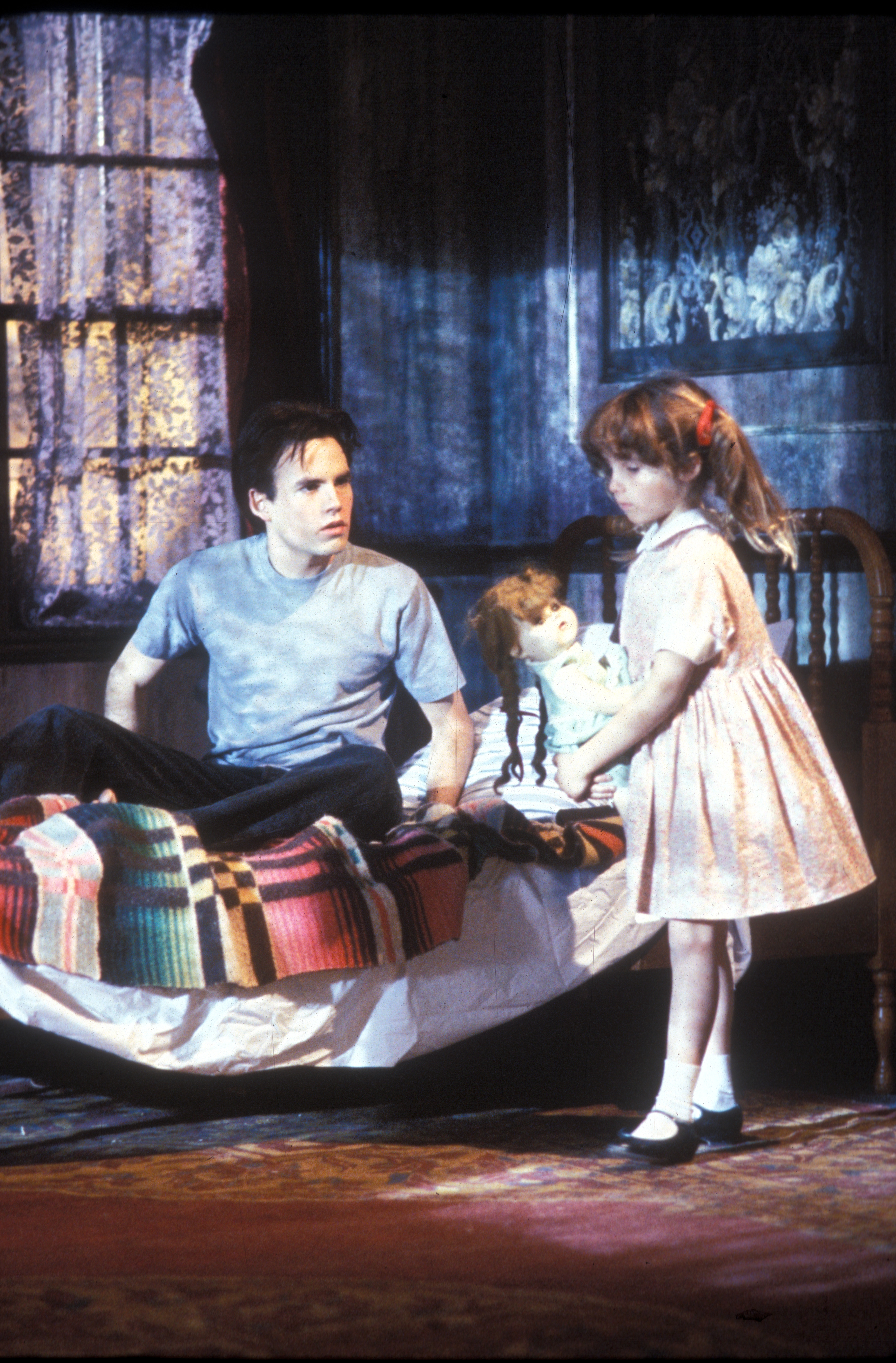
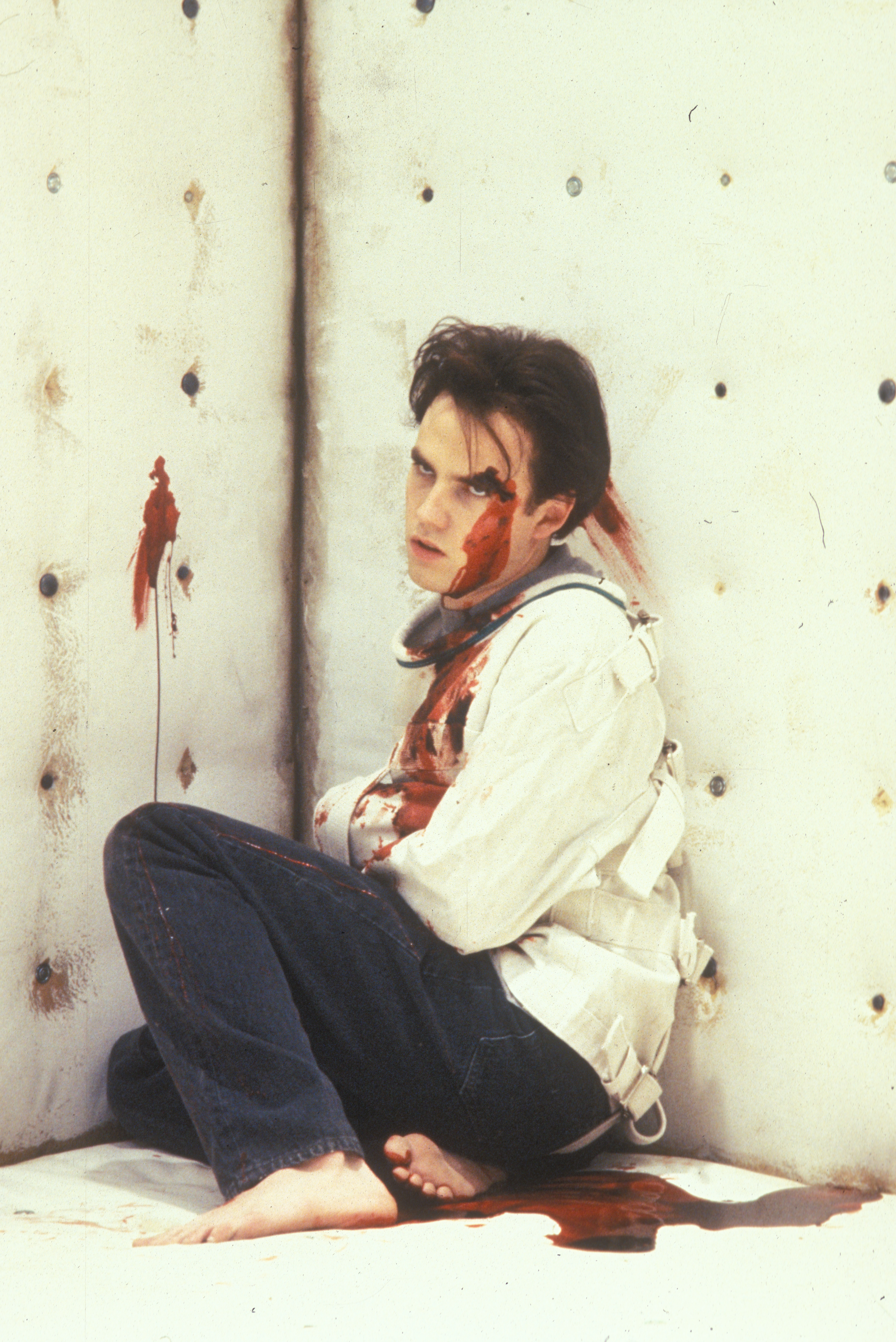
Ten years from now, Freddy Krueger has killed nearly every child and teenager in Springwood, Ohio, and the adults left behind have lost their grip on reality. The last surviving teen dreams he is on a plane in a storm. A little girl with red ribbons in her hair warns him, and then his seat drops through the floor. He falls onto his own house, which is itself falling from the sky, while Freddy flies past on a broomstick dressed as the Wicked Witch. Freddy then runs him down with a bus that knocks him through the invisible town limits. Freddy can't cross the line himself, so he tells the boy to go fetch. The teen wakes up outside town with a head injury and no memory of who he is.
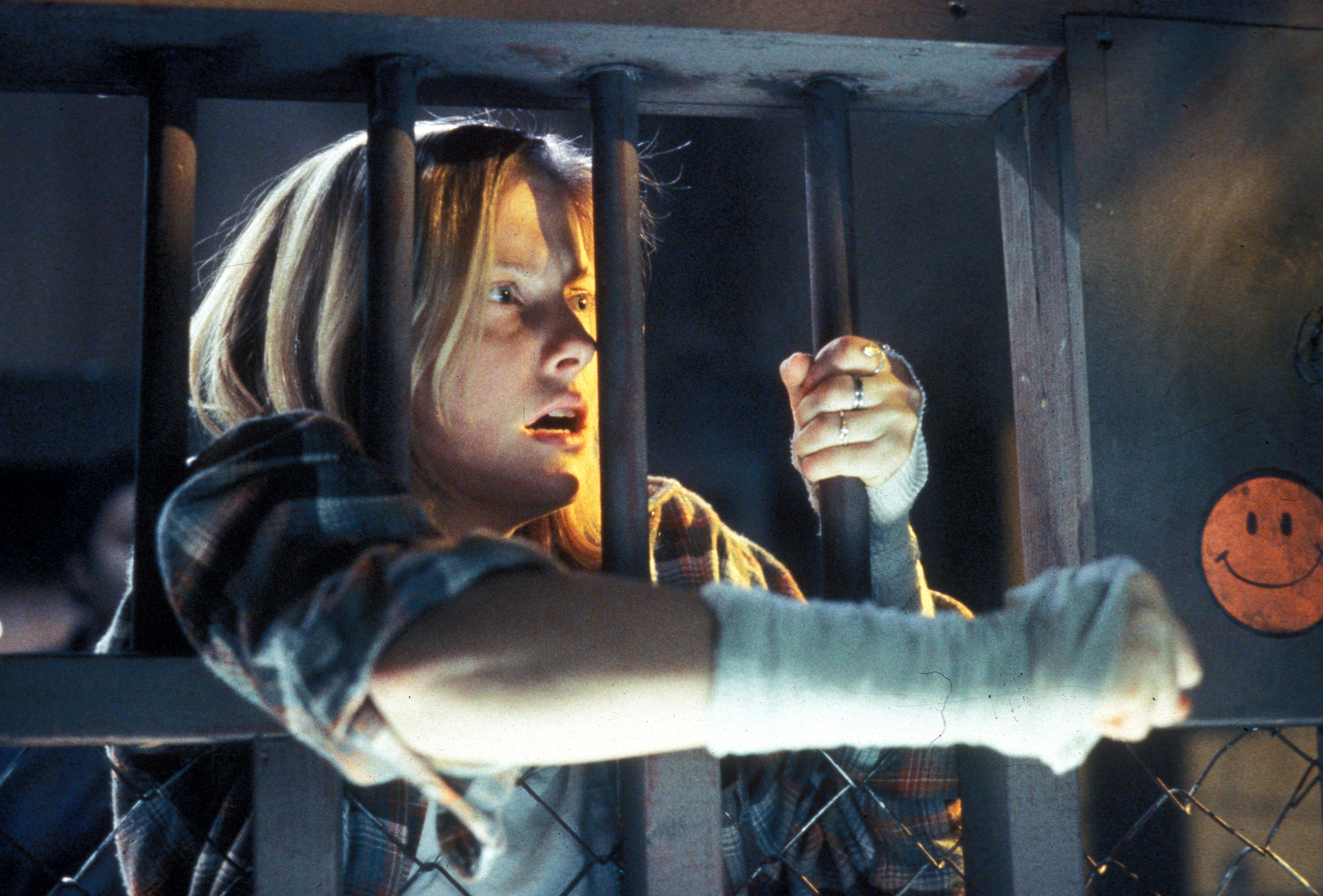
Police bring him to a youth shelter in a nearby city, where he is named John Doe and becomes a patient of Dr. Maggie Burroughs. Maggie has her own recurring nightmares about a little girl and a water tower. Three shelter kids plan to run away to California: Spencer Lewis, a rich stoner who hates his controlling father; Carlos Rodriguez, whose mother beat him until he lost hearing in one ear; and Tracy Swan, a tough girl who was sexually abused by her father. Doc, a therapist who has learned to control his own dreams, tells Maggie about ancient dream demons.
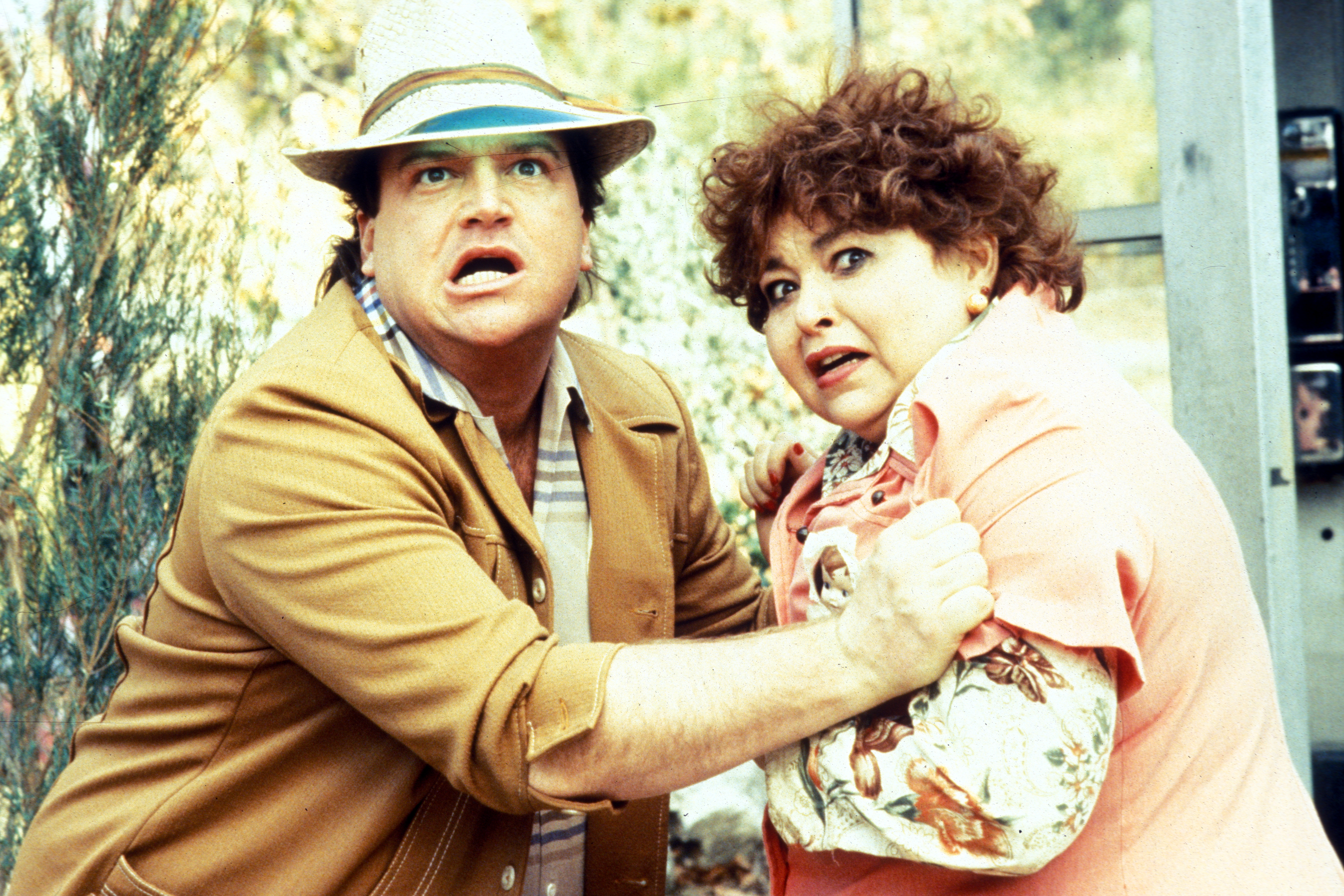
Maggie finds a Springwood newspaper clipping on John and drives him there to jog his memory. Spencer, Carlos and Tracy stow away in the van and get caught when John has a vision of the little girl and nearly crashes. In Springwood there are no children anywhere. At a town fair a childless woman tries to take the teens home, and her husband drags her off, saying kids bring him. Maggie sends the three runaways back in the van, but every road loops back into town, so they stop at the empty house at 1428 Elm Street.
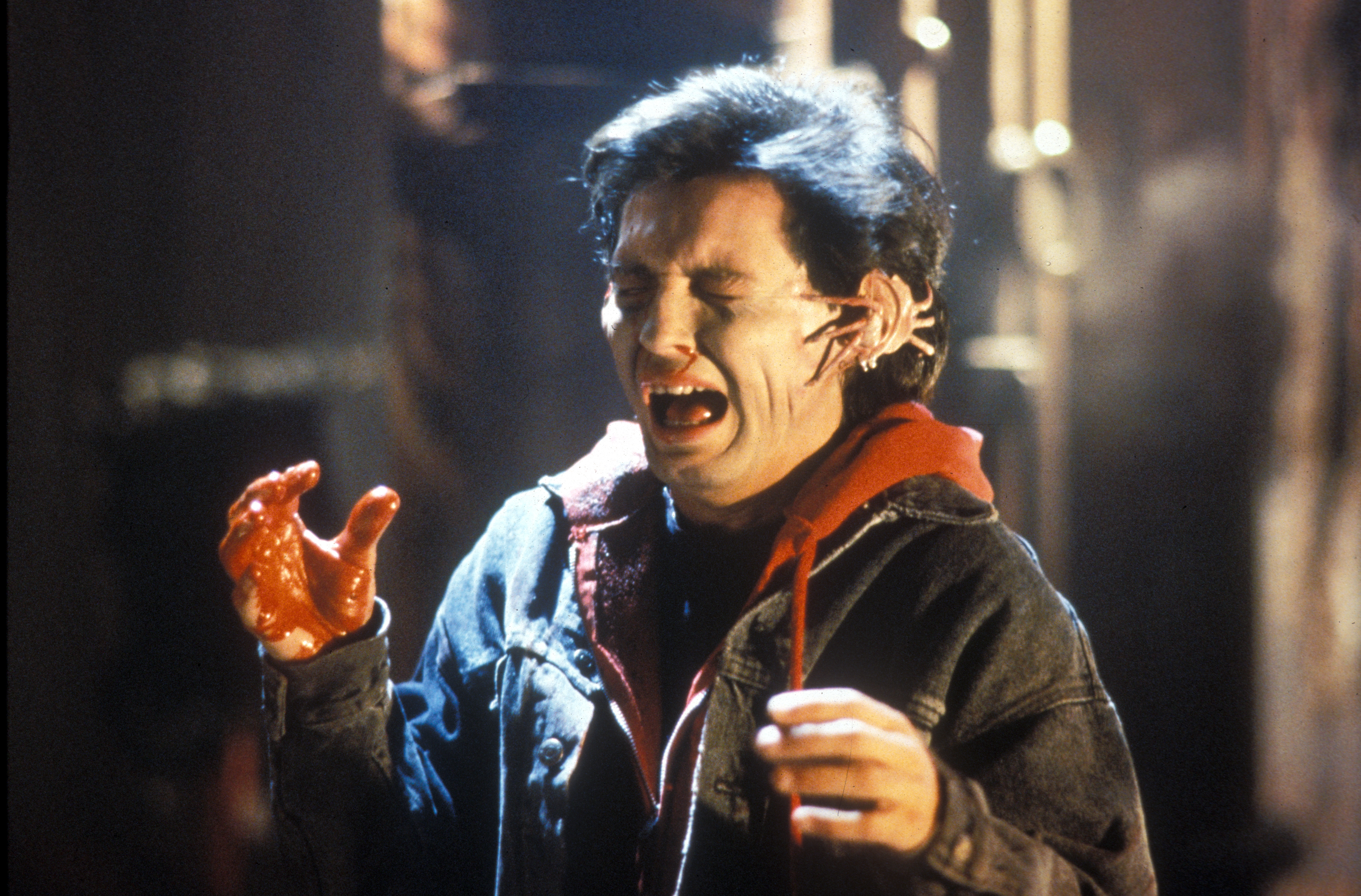
Maggie and John visit the school, where a teacher talks to empty desks, and the orphanage, where the director is just as lost. They find records saying Freddy had a child who was taken away, signed K. Krueger. John decides he must be Freddy's son, since Freddy let him live. Back at the house, Carlos falls asleep. Freddy, disguised as his mother, takes his hearing aid, cuts off his good ear and gives the aid back so every sound becomes deafening. Freddy drops pins, then drags his claws down a chalkboard until Carlos's head explodes.
Spencer gets high watching TV and is pulled into a video game, where Freddy controls him with a Power Glove and makes him fight a copy of his father. In the real house Spencer runs wild, bouncing off walls. Tracy and John go to sleep to save him, but Freddy wins the game and Spencer dies. Maggie wakes Tracy in time. On the drive out of town John, still asleep, falls from the sky again, pulls a parachute, and Freddy cuts the lines. He tells John he is only a means to get to his daughter and drops him onto a bed of spikes. John dies in the van after telling Maggie that Freddy's child is a girl, not a boy. Freddy has now followed Maggie out of Springwood.
Back at the shelter, nobody remembers John, Carlos or Spencer except Doc. Maggie finds her adoption papers. She was born Katherine Krueger and renamed after her father was arrested and killed. Tracy dreams of her abusive father, who turns into Freddy, and wakes herself by holding her arm to a hot stove. Doc dreams too and learns that the dream demons gave Freddy his power. He reasons Freddy can be killed if he is pulled out into the real world, the same idea Nancy tried in the first film.
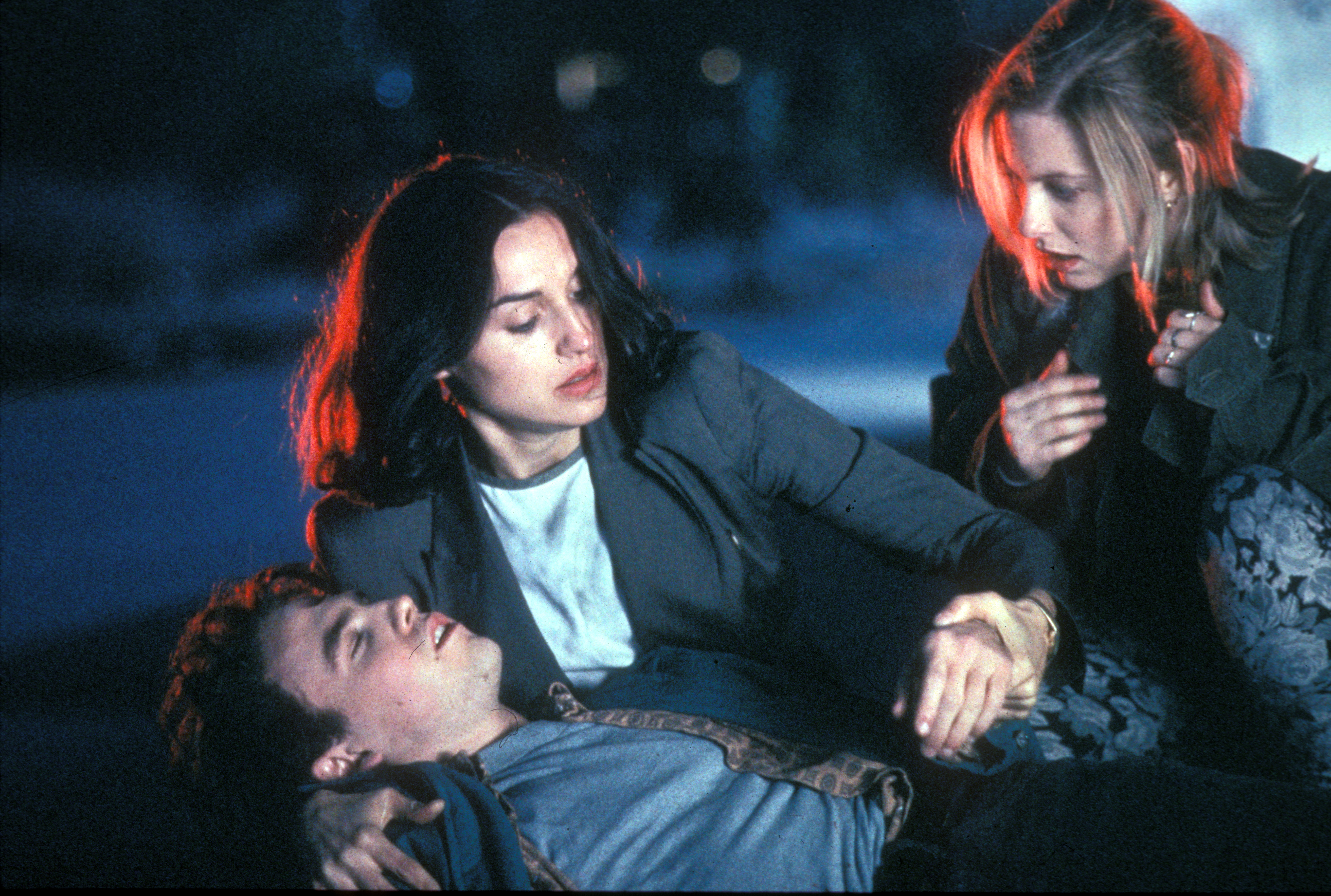
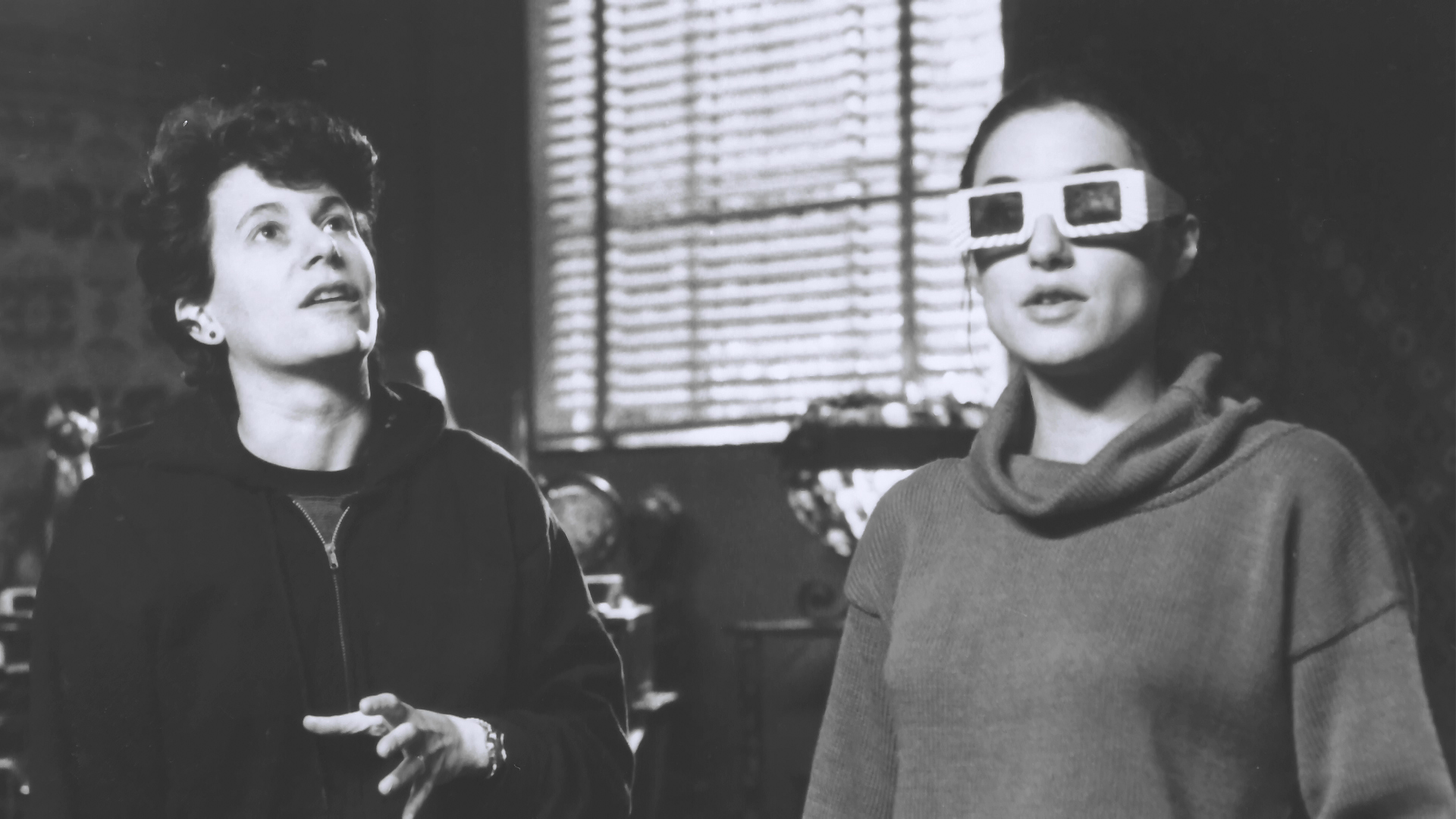
Maggie goes to sleep wearing Doc's 3-D glasses and enters Freddy's mind. She sees Freddy as a boy killing the class hamster and being mocked as the son of a hundred maniacs. She sees teenage Freddy cutting himself while his foster father Mr. Underwood beats him. She sees adult Freddy caught in his basement workshop by his wife Loretta, whom he strangles while young Katherine watches. Finally she sees the three fiery demons offering to make him forever after he dies. Maggie drags Freddy out of the dream.
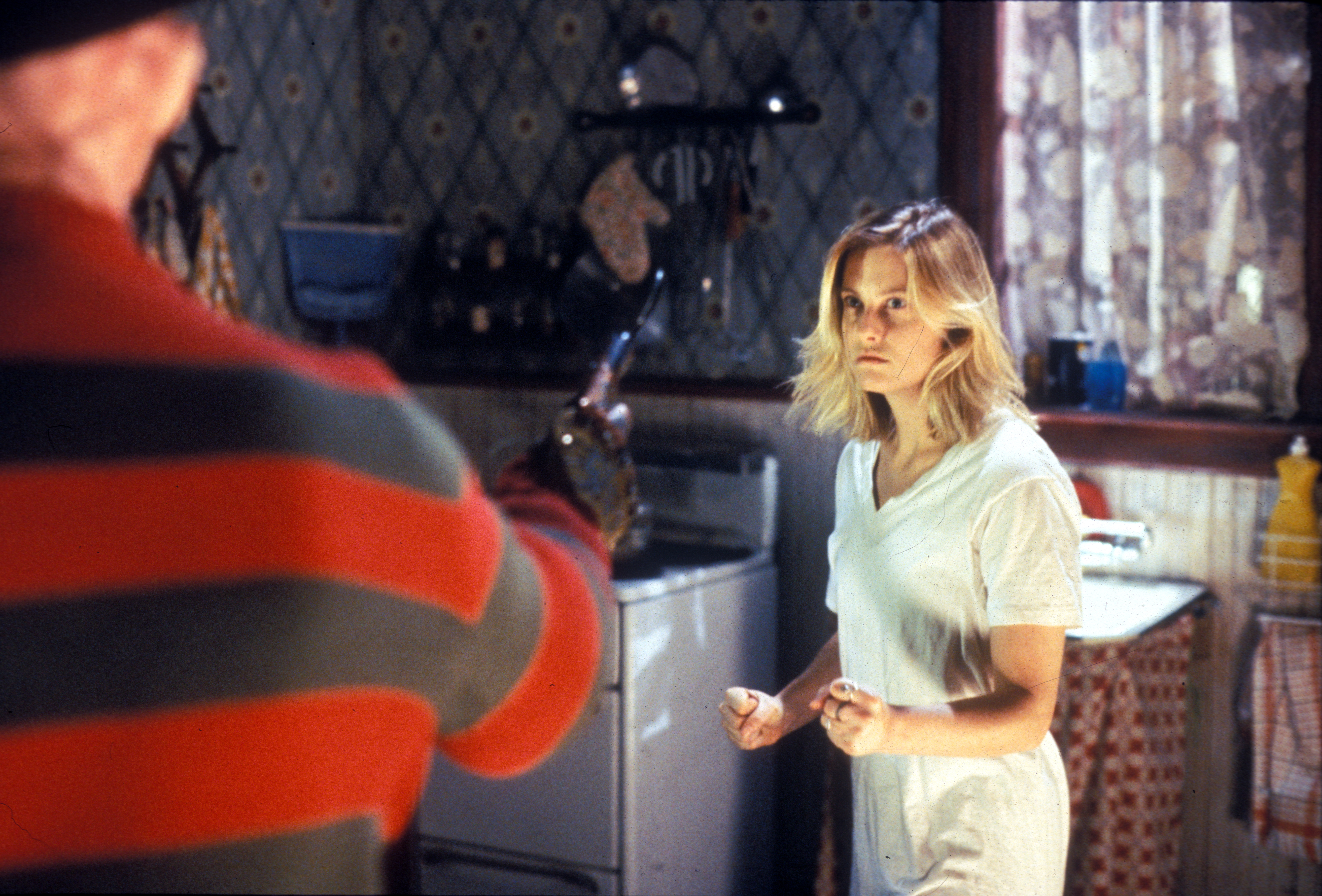
In the shelter's basement, Maggie and Freddy fight hand to hand. Doc and Tracy hand her weapons confiscated from shelter kids. She rips off his glove and stabs him with it. Then Tracy throws her a pipe bomb from Spencer's stash, and Maggie shoves it into his chest and wishes him a happy Father's Day. Freddy mutters kids before the bomb goes off. The three dream demons fly out of his body and can't revive him in the real world. Maggie tells Doc and Tracy that Freddy's dead.
New Line staged a mock funeral for Freddy at Hollywood Forever Cemetery. Attendees included Alice Cooper, Lezlie Deane, Shon Greenblatt, Ricky Dean Logan, Breckin Meyer, Tobe Sexton, Lisa Zane, Lisa Wilcox and Whit Hertford.
At New Line's request, Mayor Tom Bradley proclaimed September 13, 1991 Freddy Krueger Day in Los Angeles. Critics said it glorified murder.
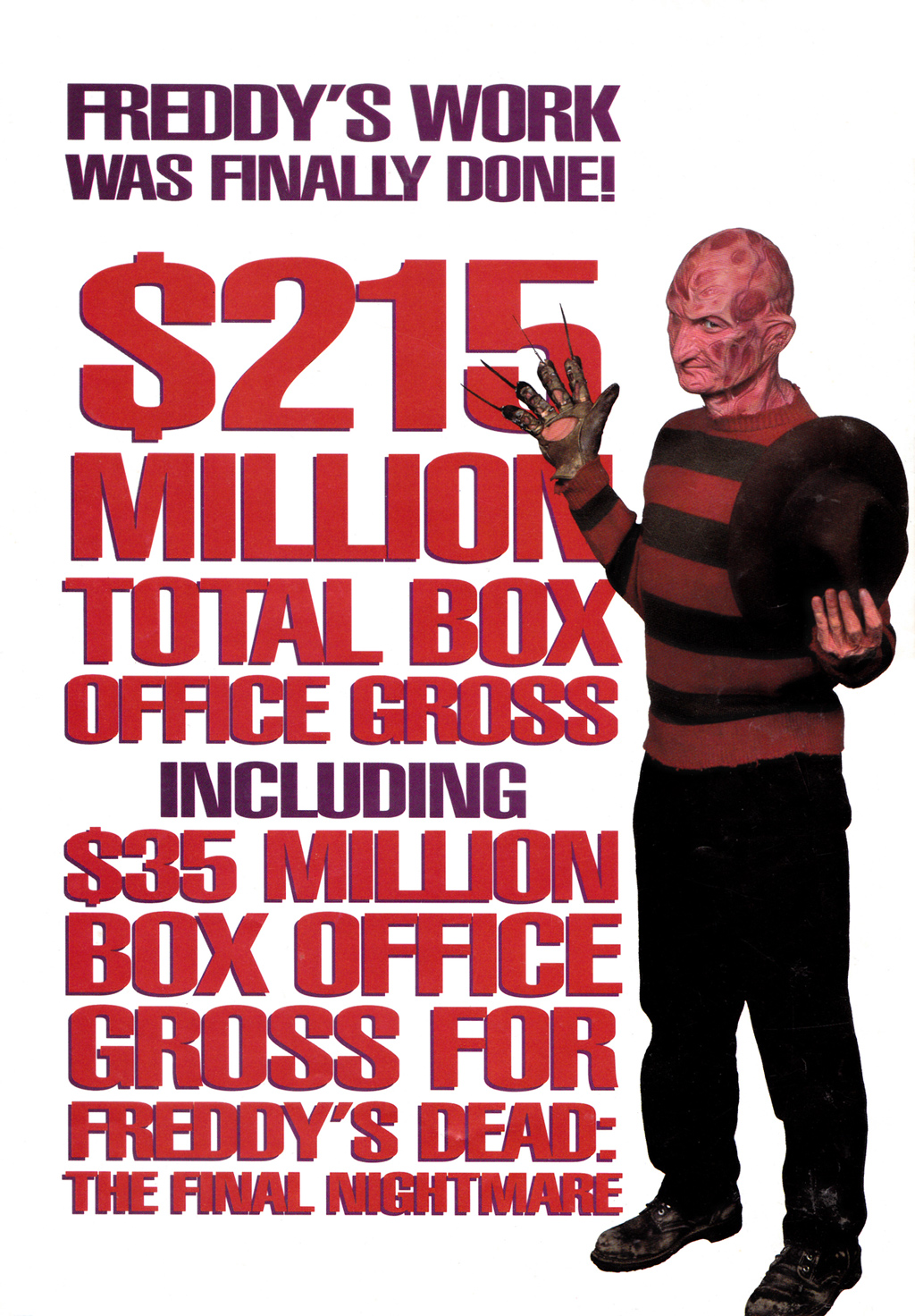
The film opened on Friday the 13th and made $12,966,525 its first weekend, according to Box Office Mojo. It was the biggest September opening at the time. It made $6.6 million its second weekend and finished at $34,872,033 domestic, beating The Dream Child. It spent one week at number one in the UK. Barq's root beer attached coupons to the 3-D glasses.
Critics were rough on it. Rotten Tomatoes shows 23% from 40 reviews, with a consensus saying the joyless climax will leave audiences hoping Freddy stays dead. Metacritic gives it 39. Marc Savlov of The Austin Chronicle wrote that Freddy had turned into a bland, predictable bogeyman loved by kids everywhere.
Why Was I Born? (Freddy's Dead) was nominated for Worst Original Song at the 12th Golden Raspberry Awards.
1991 · studio publicity kit
Theatrical / home video
TV / workprint / select DVD
2025 · 4K UHD supplement/version
Freddy Krueger
Maggie Burroughs / Katherine Krueger
John Doe
Tracy Swan
Carlos Rodriguez
Spencer Lewis
Doc
Childless Woman
cameo, credited as Mrs. Tom Arnold
Childless Man
cameo, credited as Mr. Tom Arnold
Orphanage Woman
cameo
Teen on TV
cameo, credited as Oprah Noodlemantra
Mr. Underwood, Freddy's foster father
cameo; Wikipedia names the character Edward Underwood; the Companion lists him as uncredited
Little Maggie / young Katherine Krueger
Teenage Freddy
Young Freddy
Wikipedia spells it Chase Schrimer
Loretta Krueger
credited as Lyndsey Fields
Kelly
Maggie's Mother
Woman in Plane
Stewardess
Carlos' Mother
Tracy's Father
Spencer's Father
the Companion spells it McRab
Springwood Teacher
Officer #1
Officer #2
Cop in Shelter
the Companion spells it Barrington
Security Guard
Angry Boy
Ticket Seller
credited as L.E. Moko
Director and story
Screenplay and executive producer
Characters
Producer
Producer
Associate producer and second unit director
Director of photography
Editor
Music
Music supervisor
Music supervisor
Electronic music producer
Music editor
Production designer
Art director
Set decorator
Costume designer
Casting
Casting
Casting
Freddy Krueger makeup
Special makeup effects, Magical Media Industries
Special makeup effects artist
Makeup artist
Makeup artist
Special visual effects supervisor
Visual effects supervisor
Computer graphics animator, VIFX
Visual effects editor
Special effects coordinator
Stunt coordinator
First assistant director
Assistant director
Property master
Property master
Set dresser
Sound mixer
Supervising sound editor
Supervising sound editor
Post-production supervisor
Steadicam operator
Steadicam operator
Location manager, reshoots
The Nightmare films had carried New Line so far that it was called The House that Freddy Built. By 1990 the studio had other franchises, including Critters and Teenage Mutant Ninja Turtles. Bob Shaye said it was time to move on, and the sixth film was planned as the last. The Dream Child's weak box office also pushed the decision.
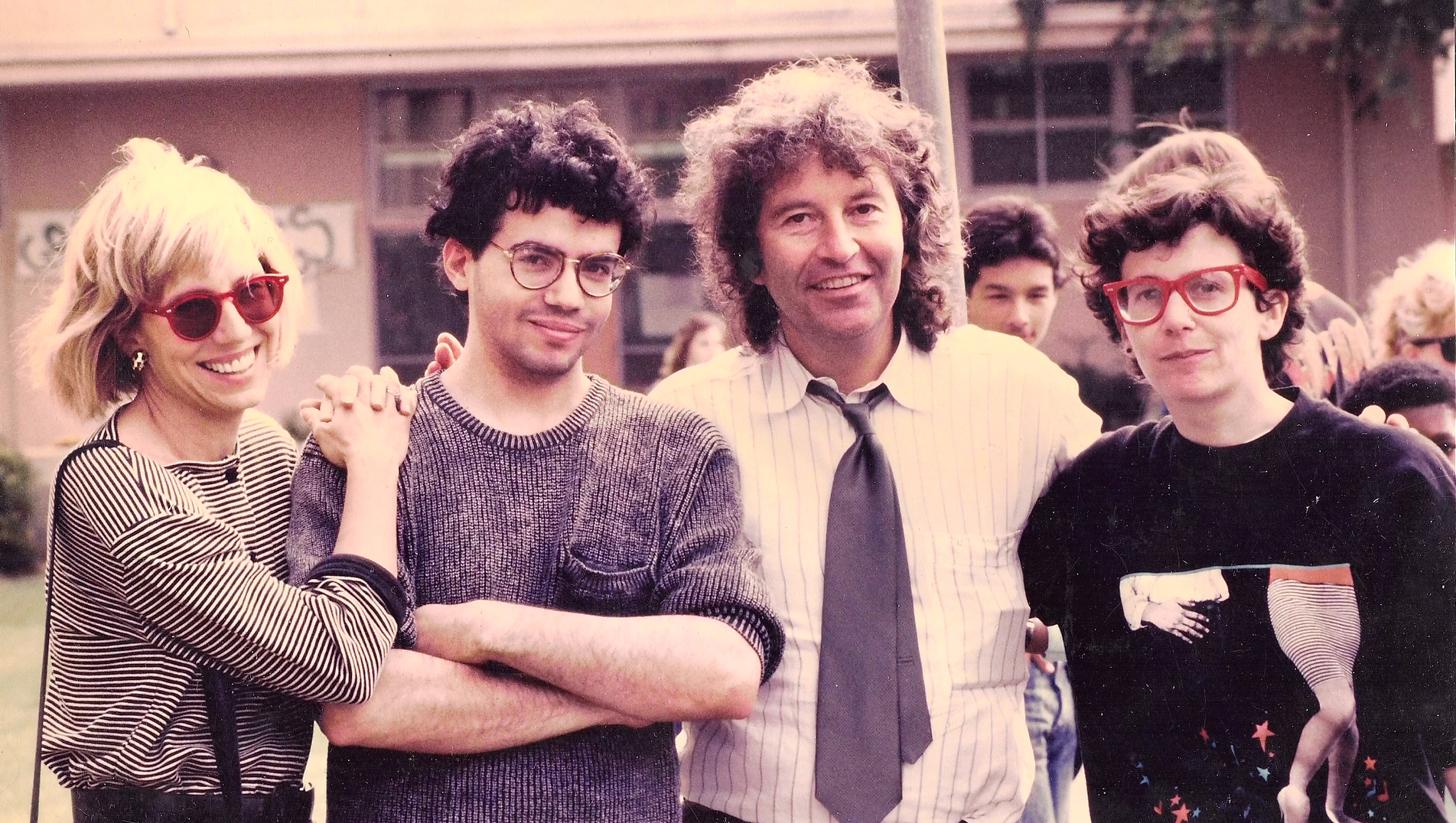
Rachel Talalay, who had worked on films 1 through 4 as accountant, location manager and producer, talked New Line into letting her direct. She wrote the story outline. She dropped the Nightmare on Elm Street Part 6 title and wanted more fun than the serious, Gothic fifth film.
An earlier draft centered on a 15-year-old Jacob Johnson and returning Dream Warriors after Freddy kills Alice. Peter Jackson also wrote an unused script about teens who take sleeping pills to go into Freddy's world for fun. Talalay's outline was first scripted by Michael Almereyda. Talalay said they hated it, and the Writers Guild ruled against his request for credit. New Line executive Michael De Luca then wrote the script. The shooting script on file is the Third Draft, Revised, dated December 19, 1990.
Talalay and De Luca were both in love with Twin Peaks and wanted something more off-kilter. The film is packed with cameos from Roseanne Barr, Tom Arnold, Johnny Depp and Alice Cooper. The humor includes Freddy's Power Glove and a cartoon-style bed of spikes.
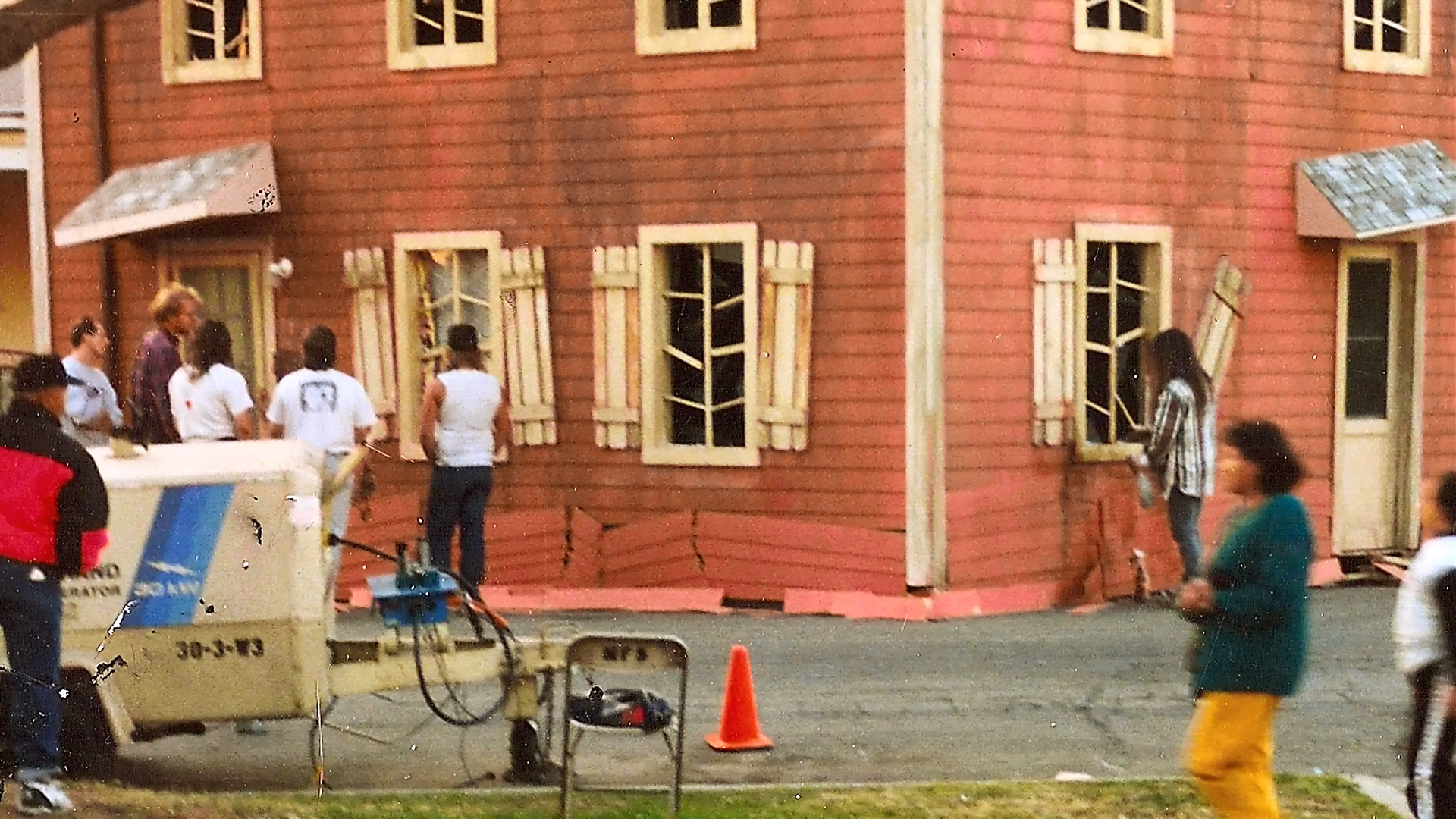
Fangoria visited near the end of the shoot. The crew was shooting on subzero nights at an isolated Southern California location. Carlos's nightmare, with Englund and Ricky Dean Logan up on a steaming catwalk, was filmed at a power station in Pasadena. Robert Englund asked Talalay to cut Freddy's jokes in one scene from four to three. Roseanne Barr complained that her one little cameo at the town fair took all day.
John Carl Buechler's MMI handled all the makeup effects except Freddy himself, replacing the many-shop approach of earlier sequels. David Miller did Freddy's makeup again. Talalay said that for once she had the script well ahead of shooting and would not face a rushed post-production.
The last ten minutes were shot in 3-D. While the 3-D was being processed, the lab accidentally sent her two seconds of the unreleased Terminator 2.
Talalay's first cut ran long, and about 47 minutes of footage was removed from the final print. A filmed coda showed the dream demons entering another boy. It was cut before test screenings, since you can't sell a film as the final nightmare and then end it like that. Talalay says nobody seems to have the footage now.
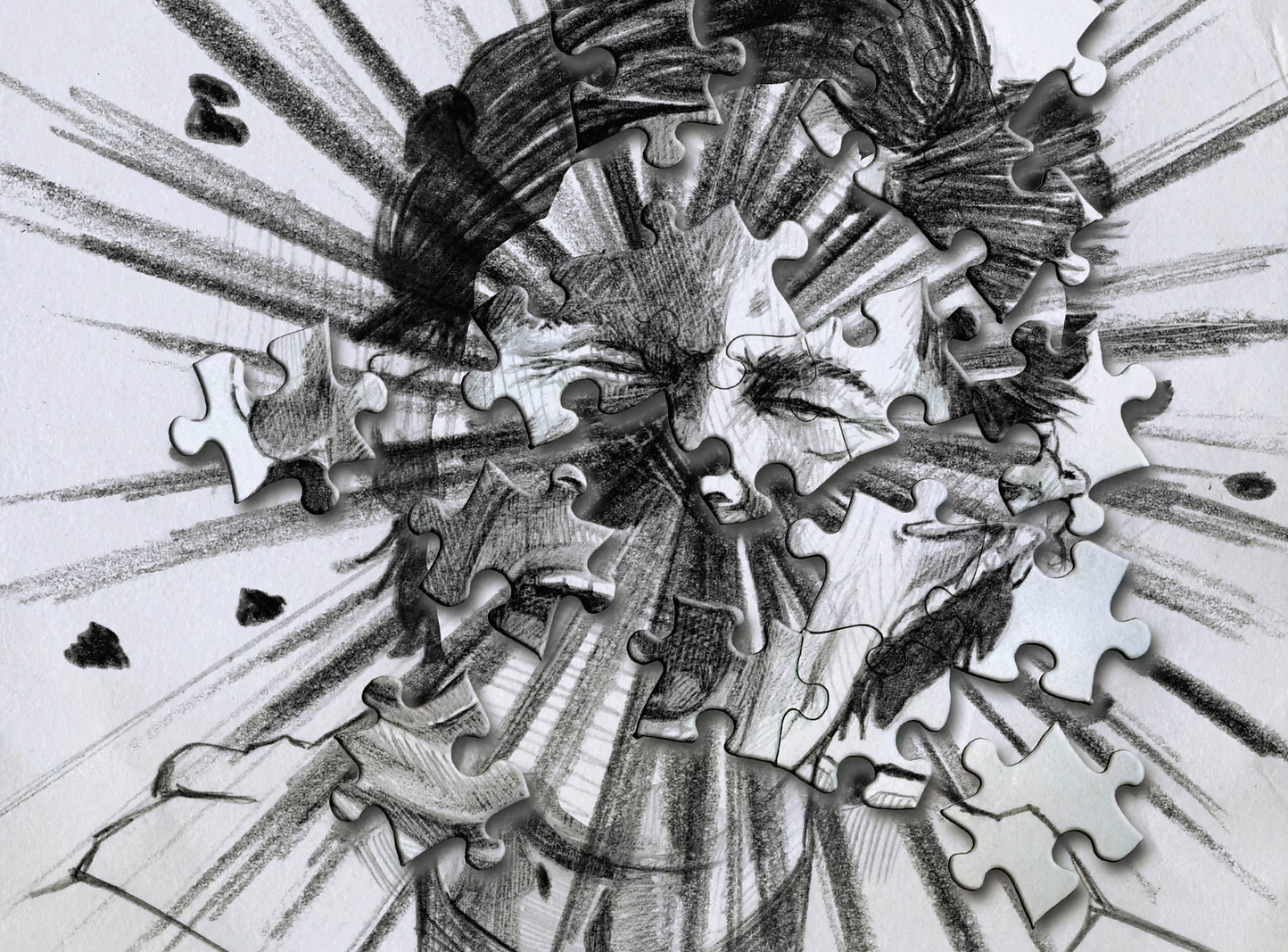
For Carlos's missing ear, Buechler's team made an appliance that covers half the actor's face and builds out flat over his real ear. The exploding head was a series of fake heads with bladders underneath, pumped with air until they burst.
Buechler said Freddy's death was part makeup, part pyrotechnics, part mechanical effects and part computer imagery. Hoyt Yeatman supervised the special visual effects, with Michael Shea as visual effects supervisor and computer animation by Larry Weiss at VIFX.
Talalay said the effects were pushed to a cartoon level while staying away from blood.
The 3-D finale is cued when Maggie puts on 3-D glasses in the dream. American Paper Optics distributed more than 11 million pairs of glasses for theaters, with tear-off coupons for soft drinks and sweepstakes.
John Carl Buechler's MMI crew handled the non-Freddy makeup effects: Carlos' missing ear used a prosthetic appliance built over the actor's real ear, while the exploding-head gag used fabricated heads with air bladders inflated until rupture.
The 3-D climax combined makeup, pyrotechnics, mechanical effects and computer imagery rather than relying on a single technique; David B. Miller handled Freddy's own makeup while Buechler's team supplied the surrounding gore and creature work.
Freddy's Nintendo Power Glove is used to control Spencer in the video game dream.
Maggie's 3-D glasses double as the story device that lets her into Freddy's mind and as the audience's cue to put theirs on.
The weapons Doc and Tracy give Maggie are items taken from kids at the shelter, including knives, nunchucks, a crossbow and Spencer's pipe bomb.
Nanrose Buchman designed the costumes.
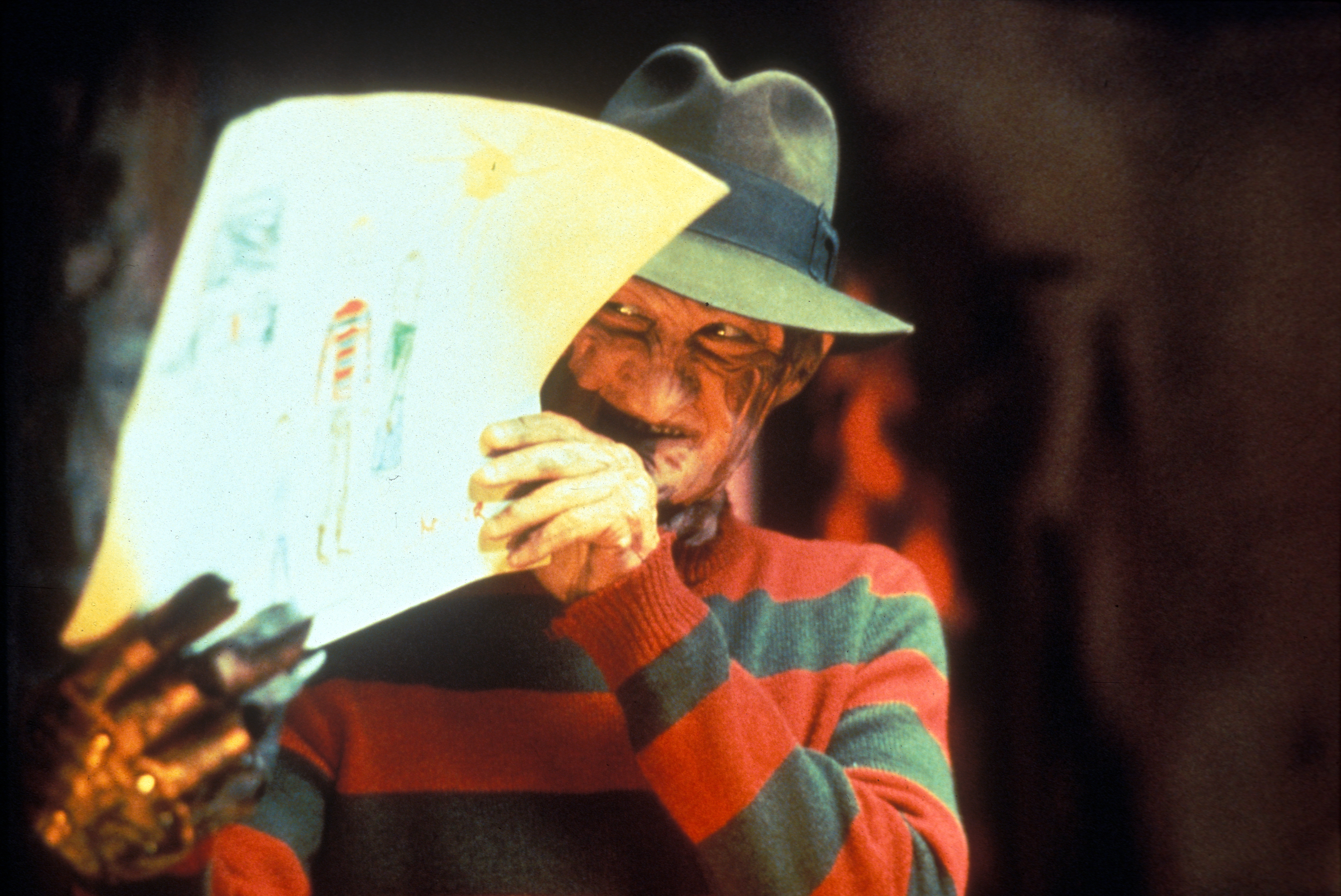
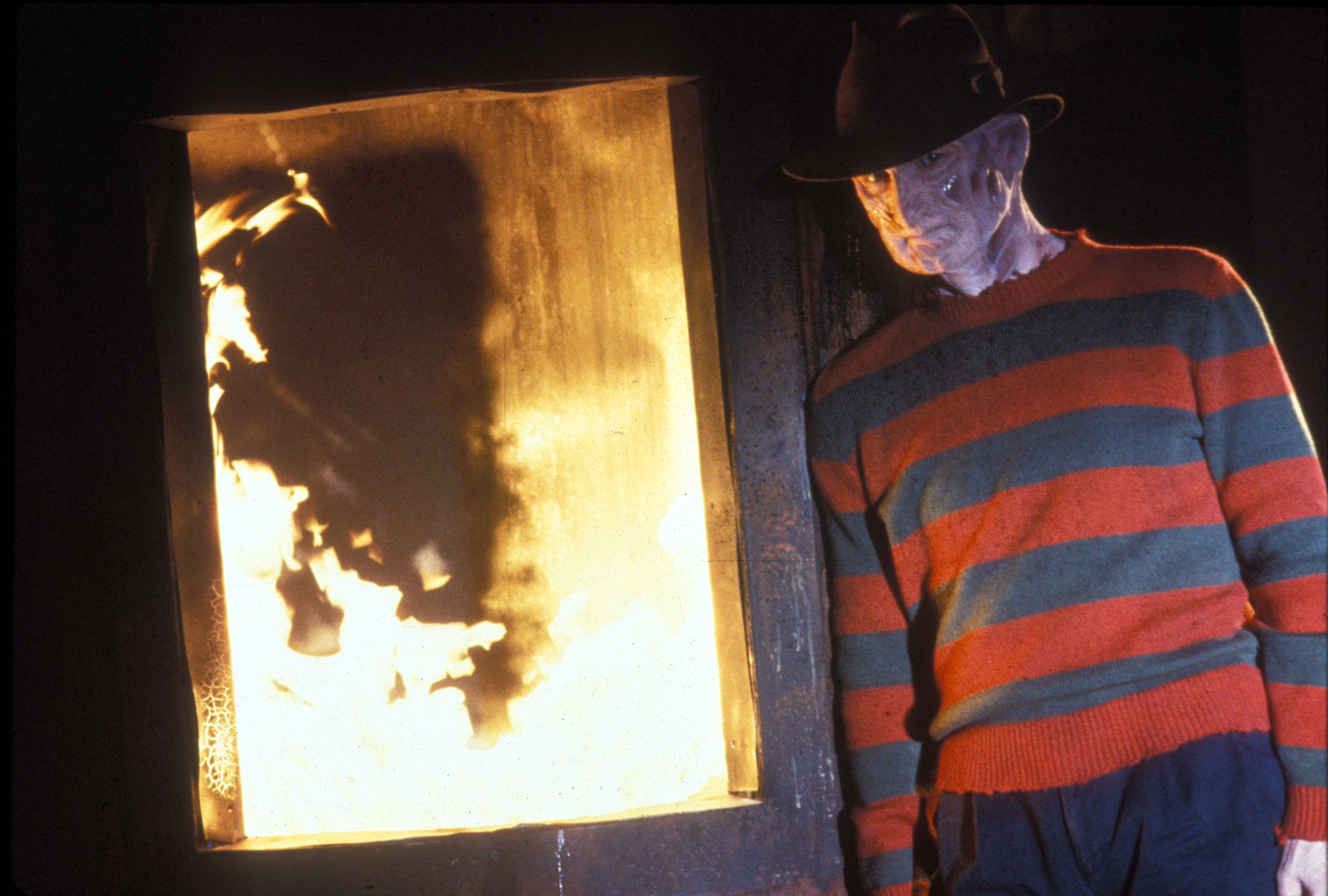
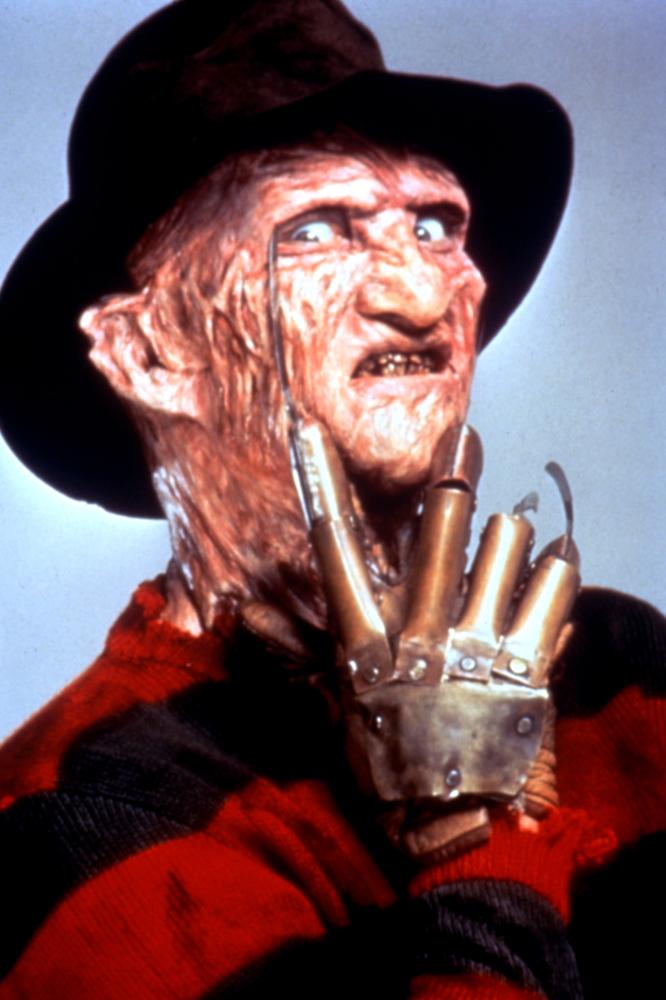
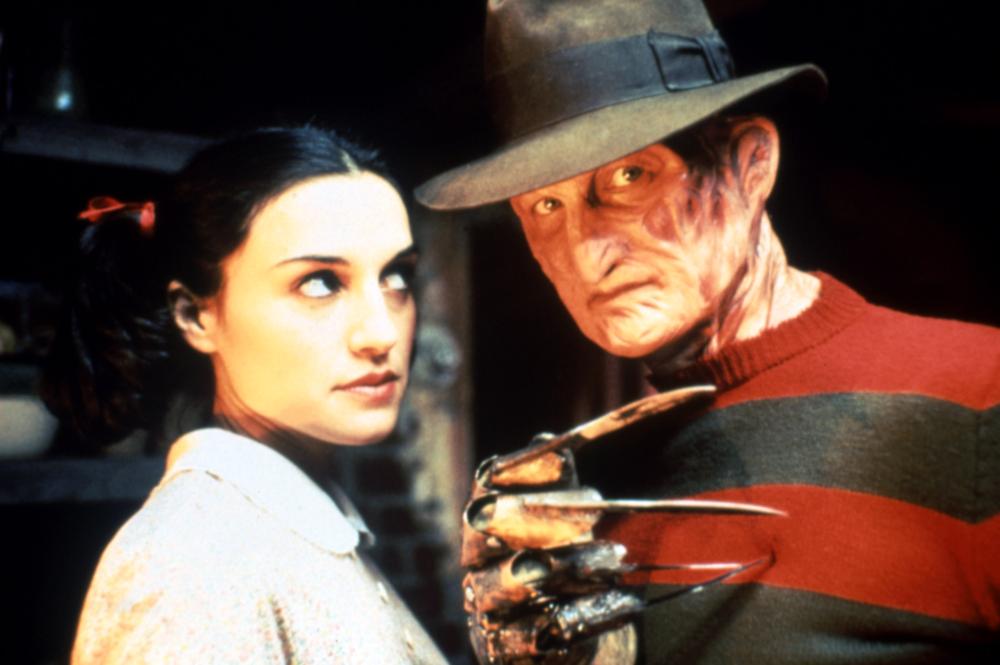
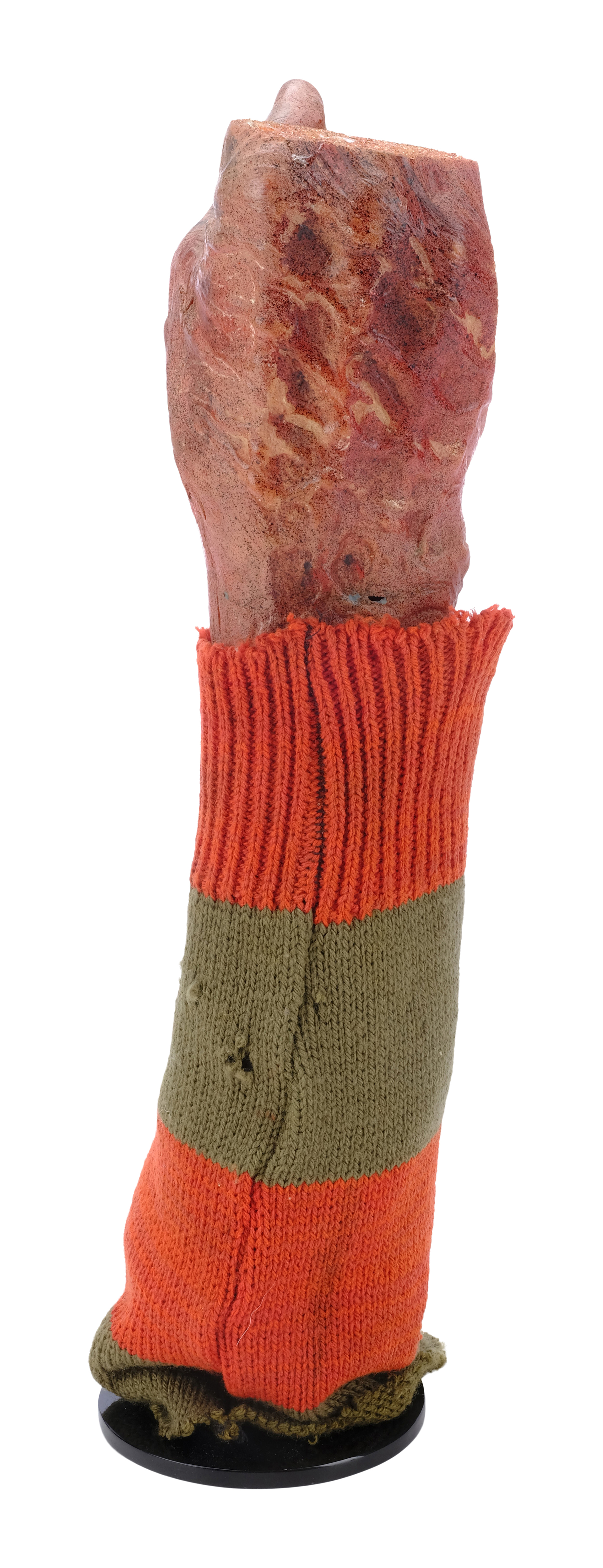
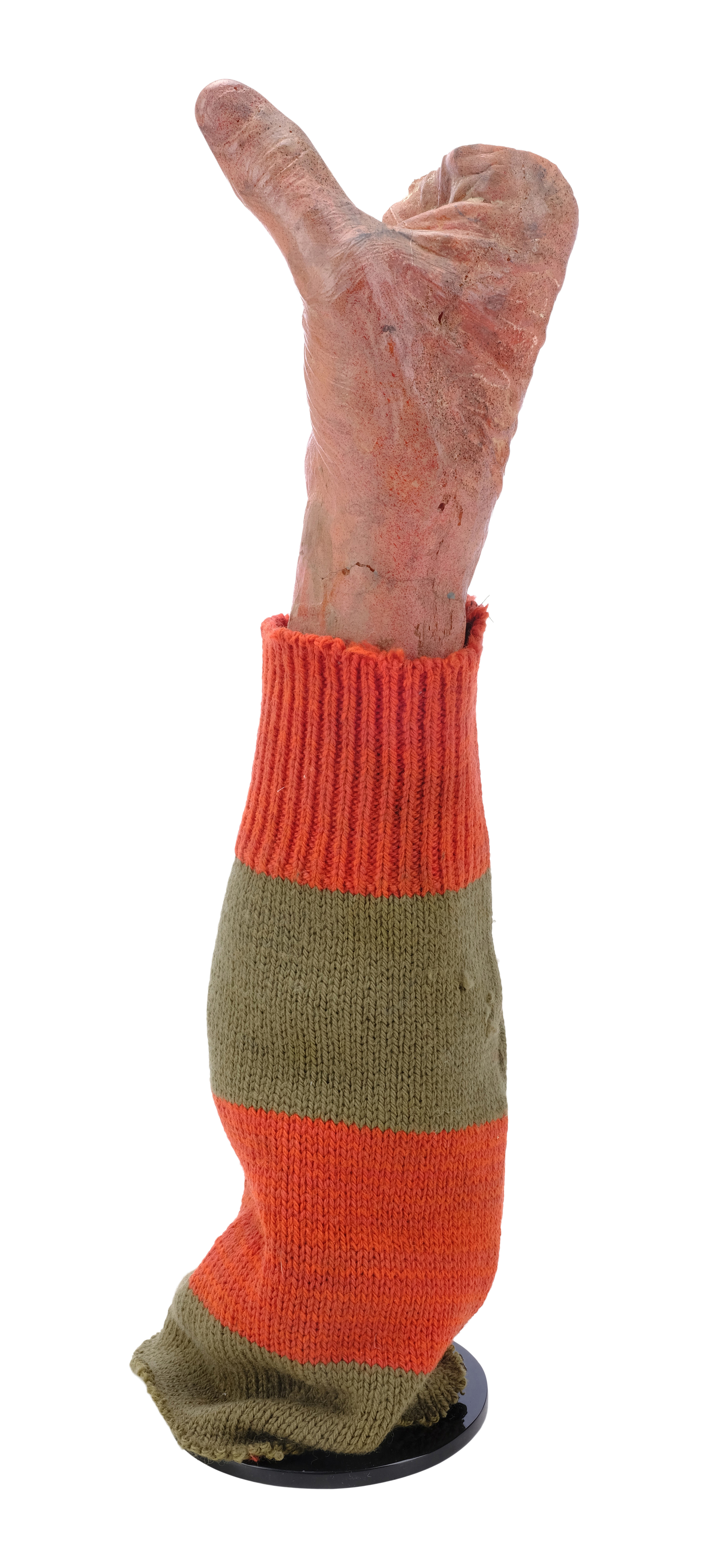
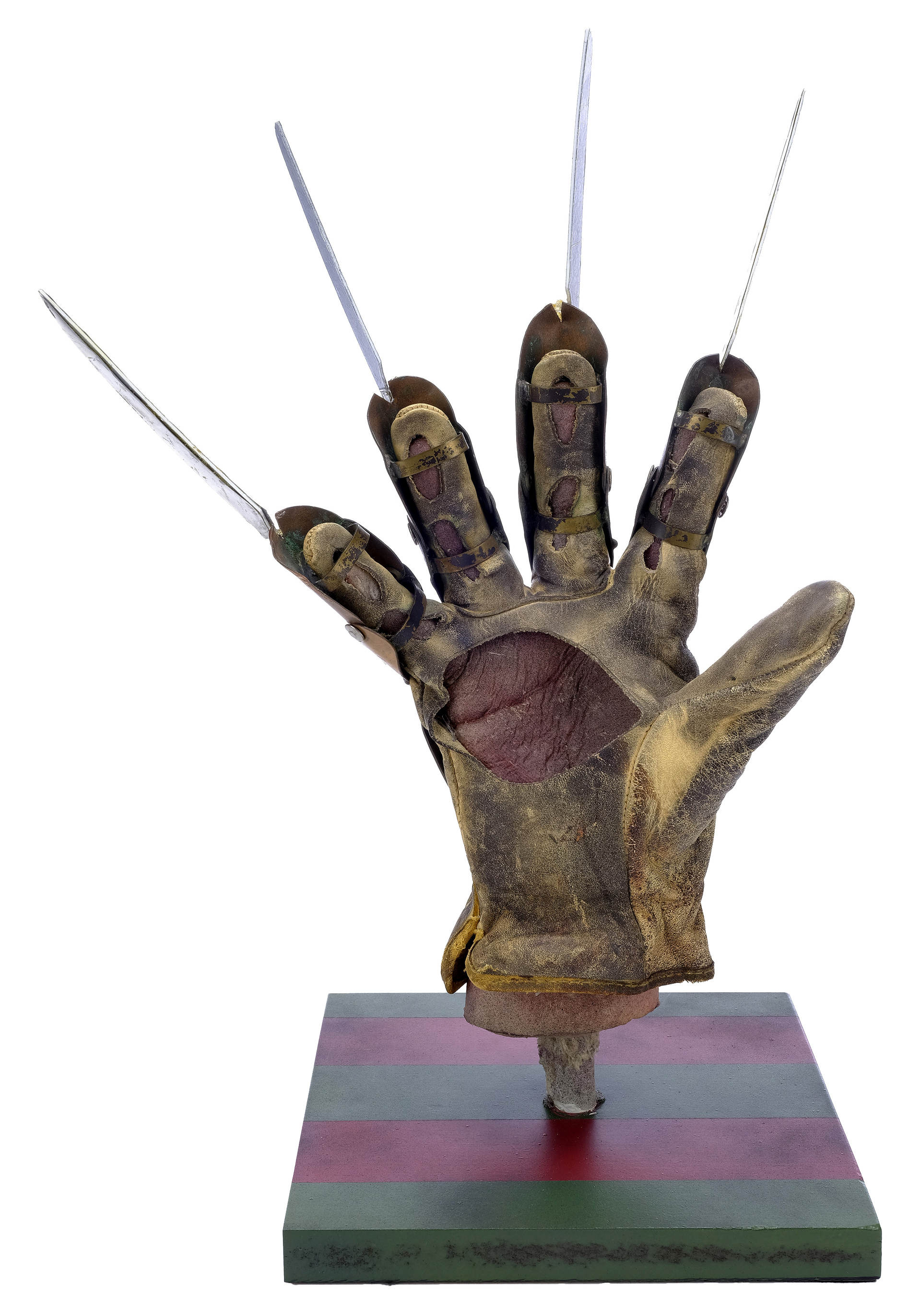
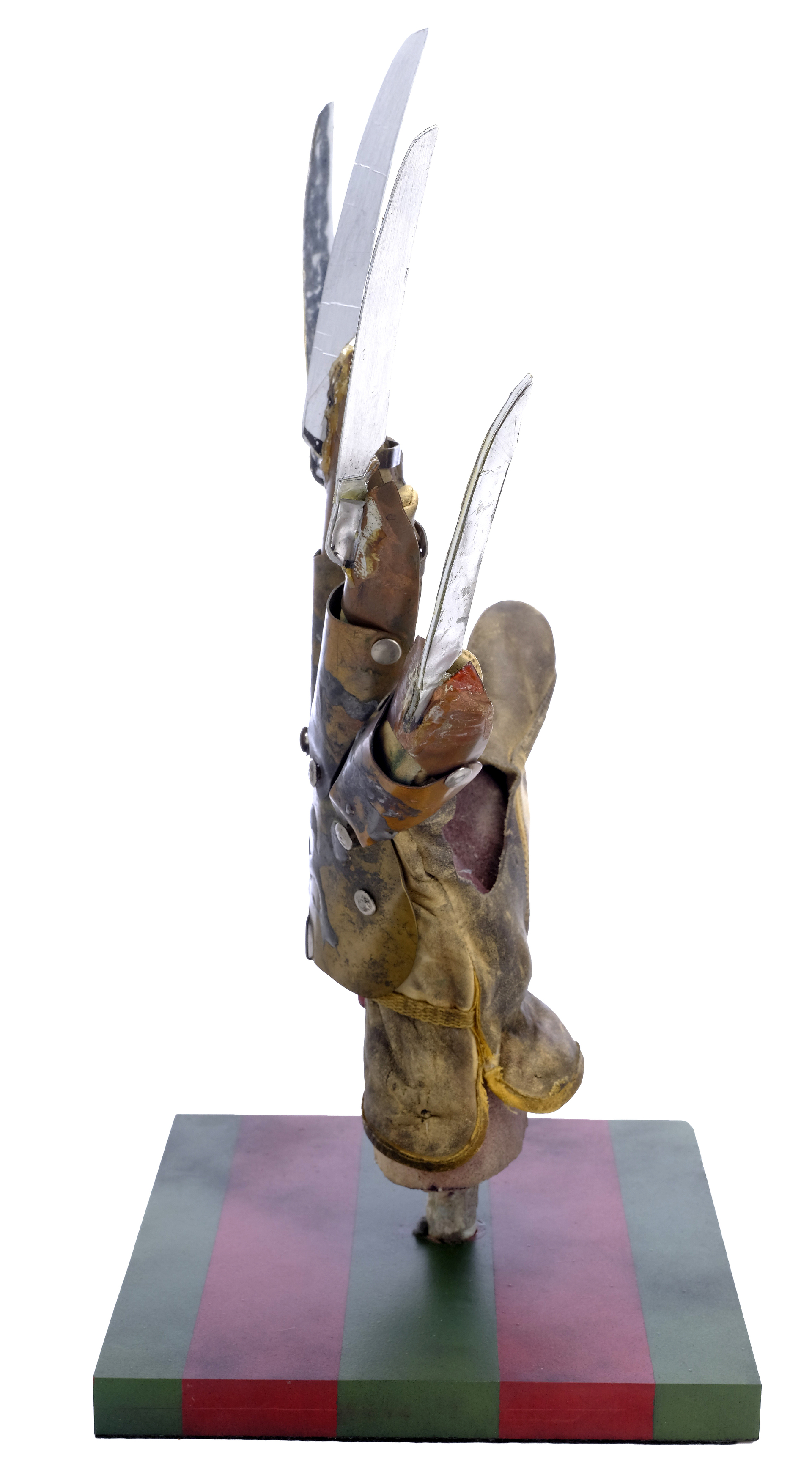
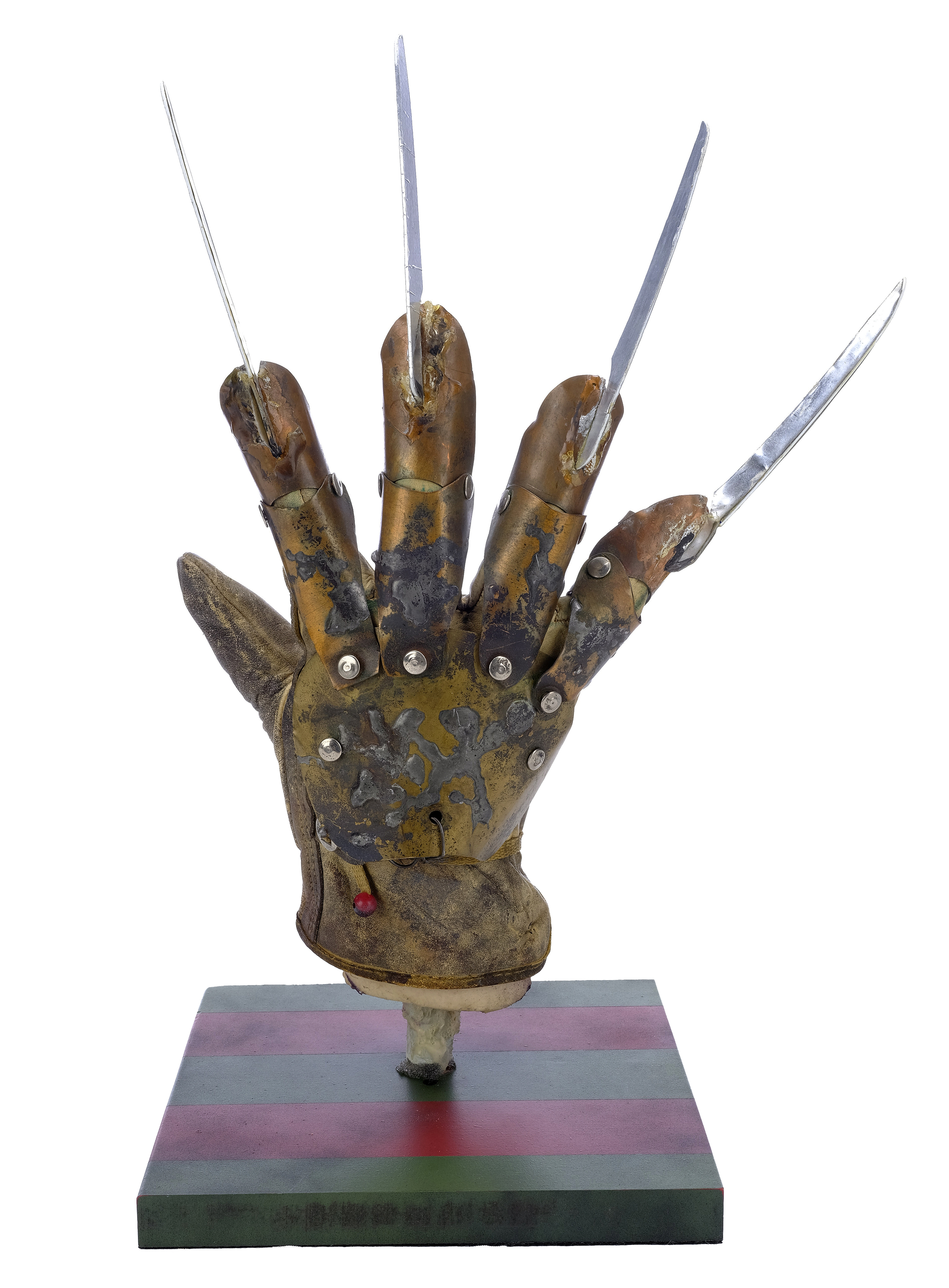
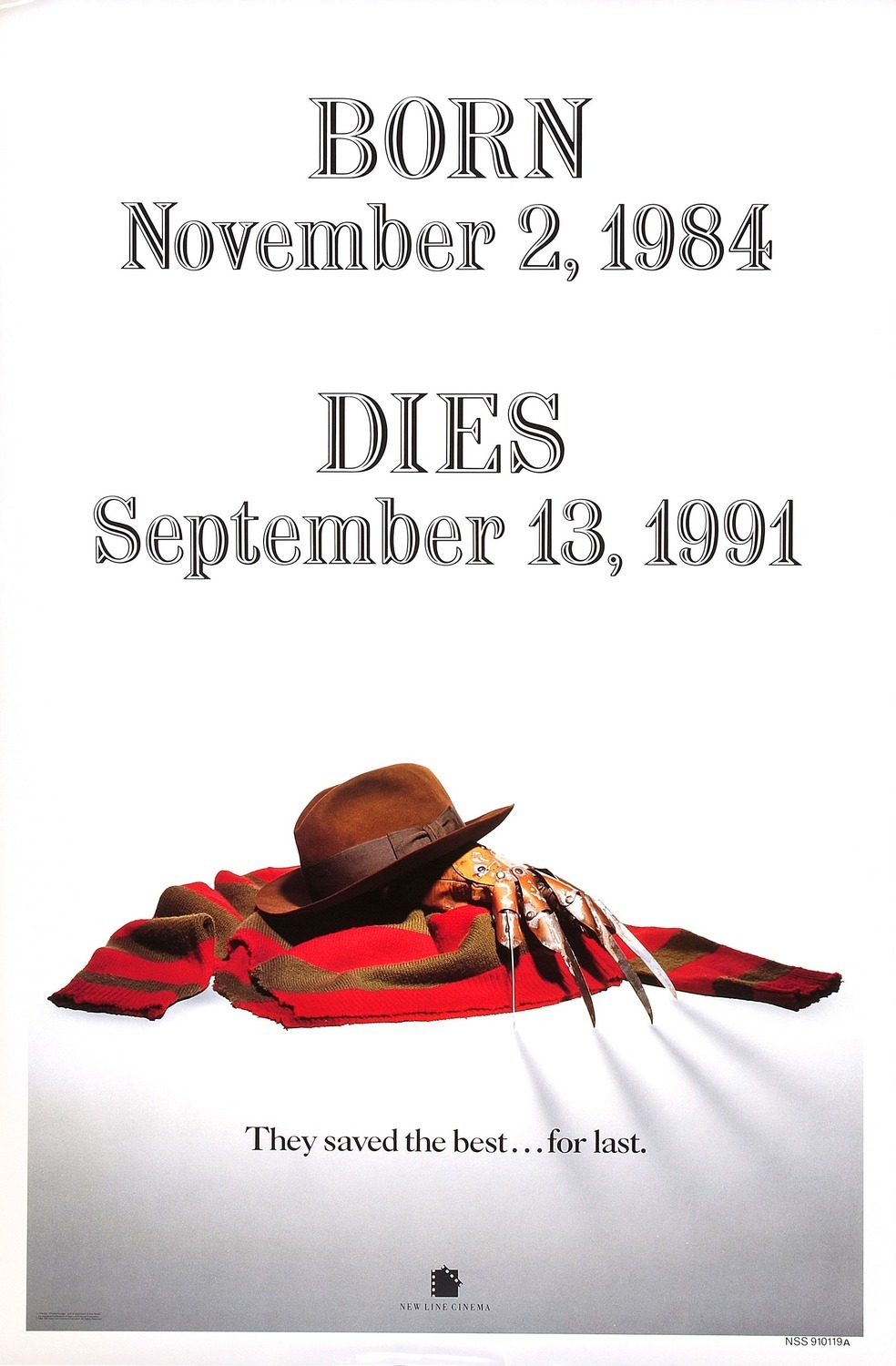
The film kept Freddy's recognizable striped sweater, fedora and razor glove as active performance props/costume pieces even while presenting itself as the character's finale; contemporary set coverage specifically records Englund suiting up and slipping on the glove for photographed takes.
The final-act 3-D glasses were integrated into the story itself before the image transitions into 3-D, making the exhibition gimmick part of the film's on-screen prop design.
1991 · production-made / screen-matched artifact
Brian May wrote the score. Varèse Sarabande released it on September 3, 1991 with 28 cues, including Opening Titles, Doc's Dream Theory, Wizard of Odd, Crossing the Line, No Kids at the Fair, Map Hell, Freddy 101, Mama's Q-Tip, Tracy and Freddy's Fight, Freddy's Dad, Freddy Is Made Forever, Freddy into Reality and Happy Father's Day.
Warner Bros. Records released the song soundtrack on September 24, 1991: I'm Awake Now (Goo Goo Dolls), Everything Remains the Same (Junk Monkeys), You Know What I Mean (Goo Goo Dolls), Remember the Night (Johnny Law), Treat 'em Right (Chubb Rock), Why Was I Born? (Freddy's Dead) (Iggy Pop), Hold Me Down (Johnny Law), Two Days in February (Goo Goo Dolls), Give Me a Beat (Young Lords) and Nothing Left to Say (Fates Warning). Total time 44:16.
Iggy Pop wrote Why Was I Born? with Whitey Kirst. It plays over the end credits and a montage of the earlier films. Talalay knew Pop from Cry-Baby. Lisa Zane said she submitted a James Bond style ballad called The Worst Is Over for the end credits.
In-A-Gadda-Da-Vida by Iron Butterfly is in the film but not on the album.
Metal Blade released a Goo Goo Dolls I'm Awake Now radio edit CD single in 1991.
May's music later appeared on Freddy's Favorites (Varèse, October 12, 1993), Varèse's 8-CD Nightmare box (October 16, 2015) and Death Waltz's Box of Souls vinyl set (October 25, 2017).
2025-09-30 · 4K Ultra HD
1992 · VHS
1992 · comic limited series
1991 · comic adaptation
1992 · comic limited series
1992 · hardcover film adaptation
NECA · licensed action figure
Fright-Rags · cross-franchise collector card
NECA · action figure assortment
Warner Bros. Entertainment