
A Nightmare on Elm Street (1984)
Tina Gray wakes up from a nightmare in which a burned man in a boiler room comes after her with a glove fitted with blades. Her mother points out four slashes…
Explore A Nightmare on Elm Street
Franchise archive
Start with Nancy Thompson on Elm Street, then follow Freddy Krueger through the sequels, the crossover with Jason and the 2010 remake. The archive brings together film stories, casts, production notes, home-video releases and galleries.
Tina Gray wakes up from a nightmare in which a burned man in a boiler room comes after her with a glove fitted with blades. Her mother points out four slashes…
Explore A Nightmare on Elm Street
Five years after Nancy Thompson's fight with Freddy Krueger, the Walsh family moves into her old house at 1428 Elm Street. Seventeen-year-old Jesse Walsh lives…
Explore A Nightmare on Elm Street 2: Freddy's Revenge
Kristen Parker, who builds a papier-mache model of a house, dreams of Freddy Krueger, and he comes after her. When she wakes, it looks like she has cut her own…
Explore A Nightmare on Elm Street 3: Dream Warriors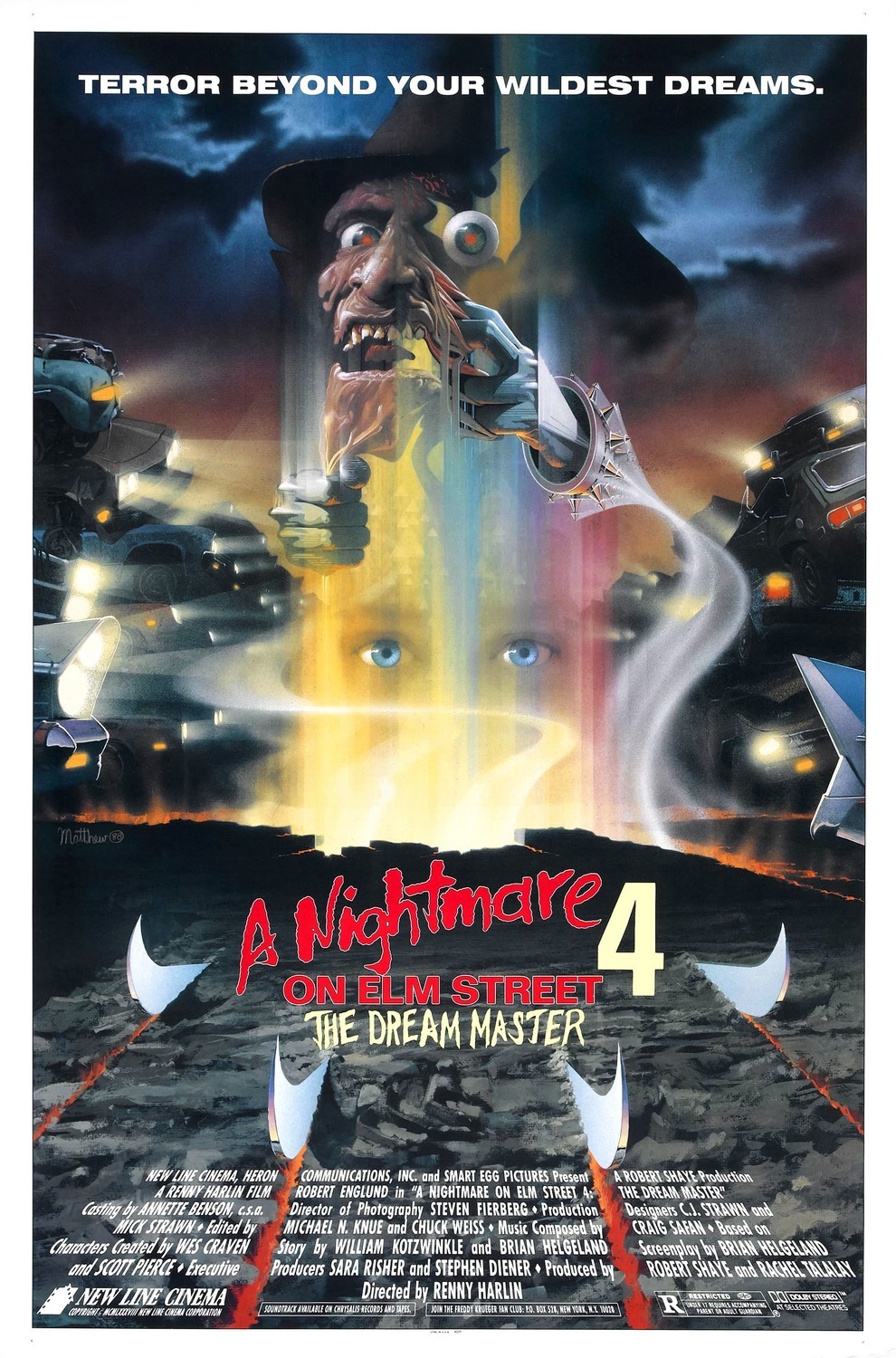
A year after the Westin Hills battle in Dream Warriors, Kristen Parker, Roland Kincaid and Joey Crusel are out of the hospital and back in school. Kristen…
Explore A Nightmare on Elm Street 4: The Dream Master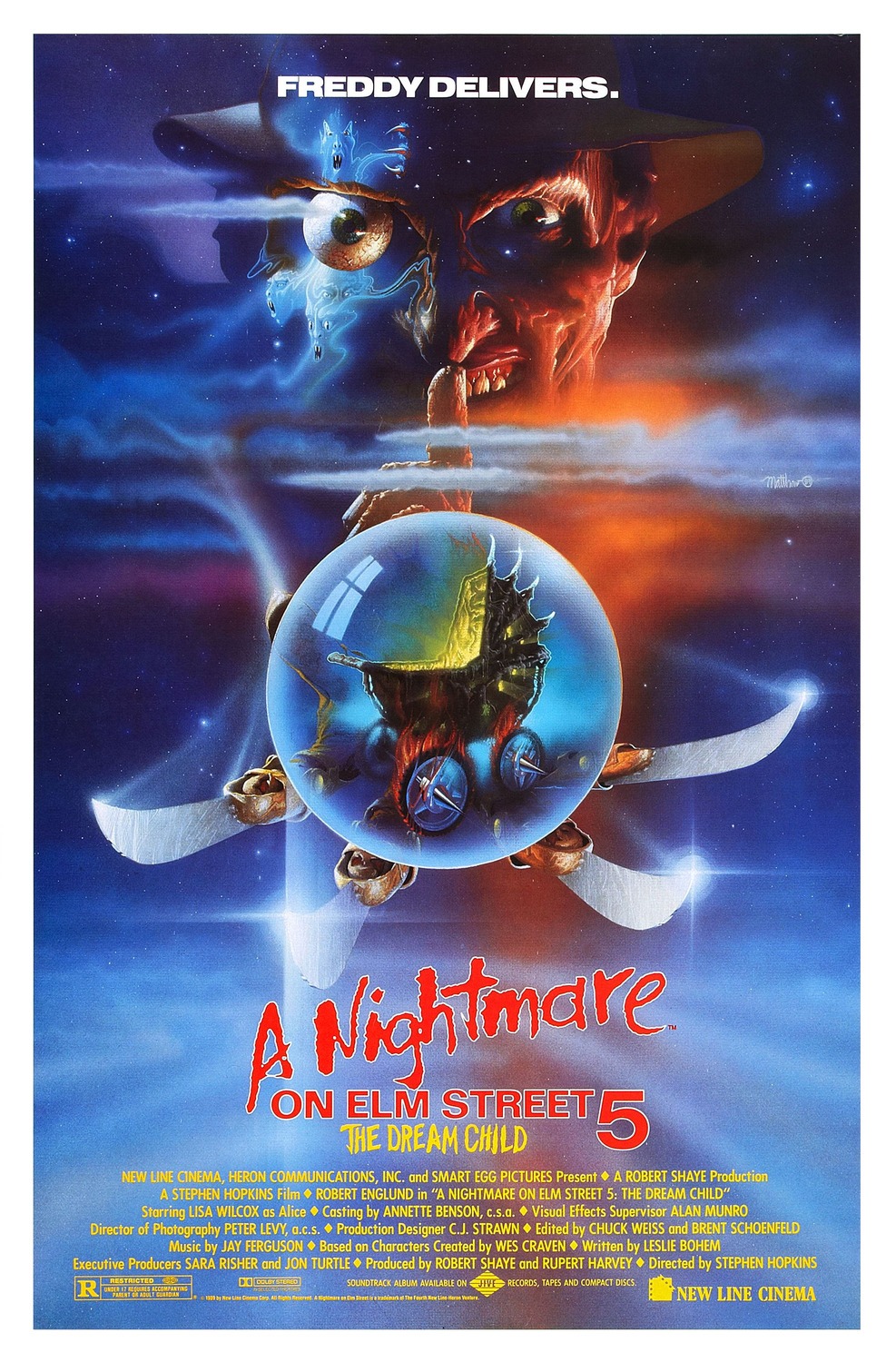
About a year after beating Freddy, Alice Johnson is dating Dan Jordan. After they sleep together, Alice takes a shower and the stall floods. She breaks out and…
Explore A Nightmare on Elm Street 5: The Dream Child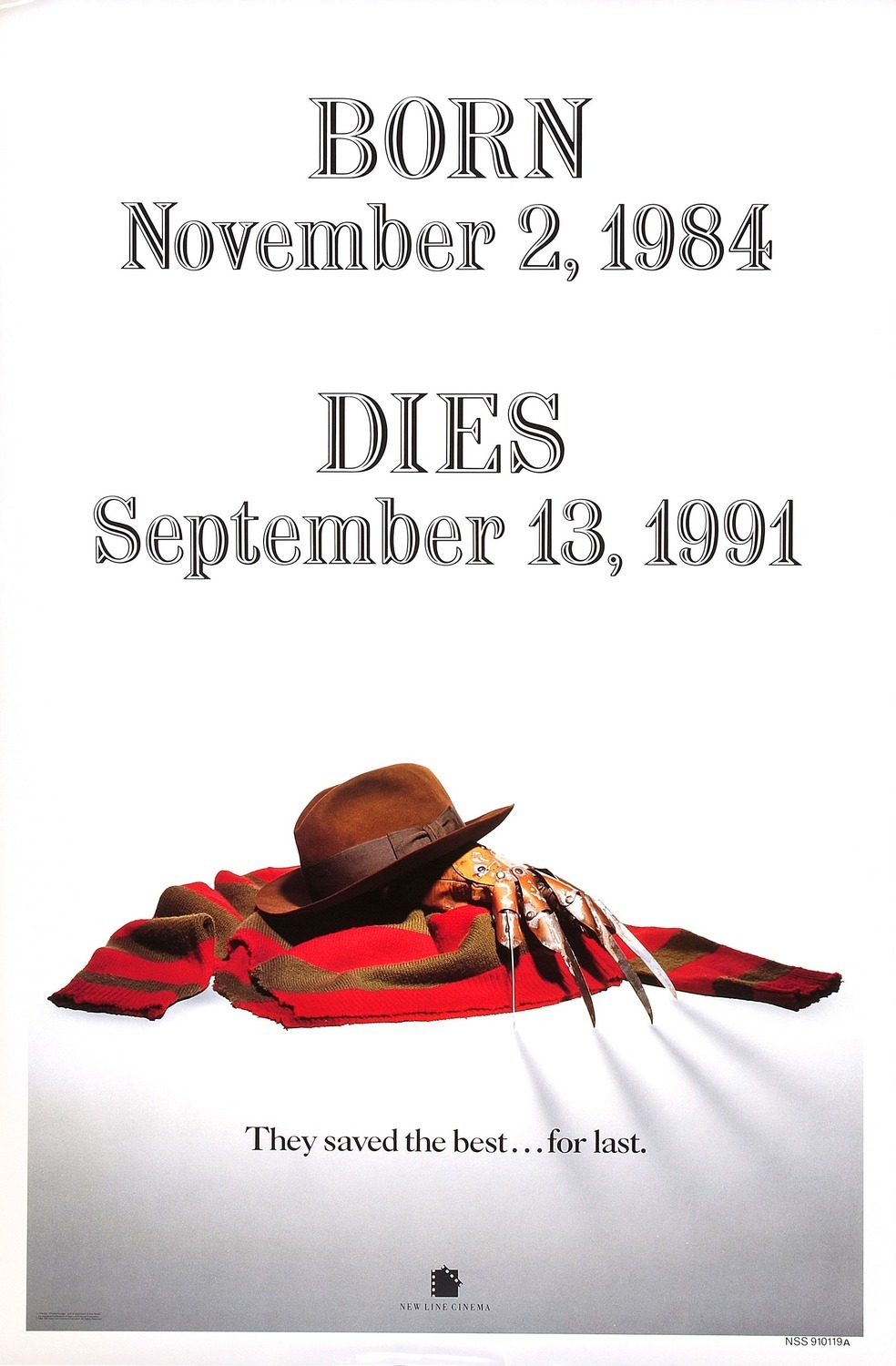
Ten years from now, Freddy Krueger has killed nearly every child and teenager in Springwood, Ohio, and the adults left behind have lost their grip on reality.…
Explore Freddy's Dead: The Final Nightmare
Heather Langenkamp lives in Los Angeles with her husband Chase Porter, a special effects artist, and their young son Dylan. She is best known for playing Nancy…
Explore Wes Craven's New Nightmare
Freddy Krueger is stuck in Hell. The adults of Springwood have wiped out every trace of him. Anyone who dreams about him is locked up at Westin Hills…
Explore Freddy vs. Jason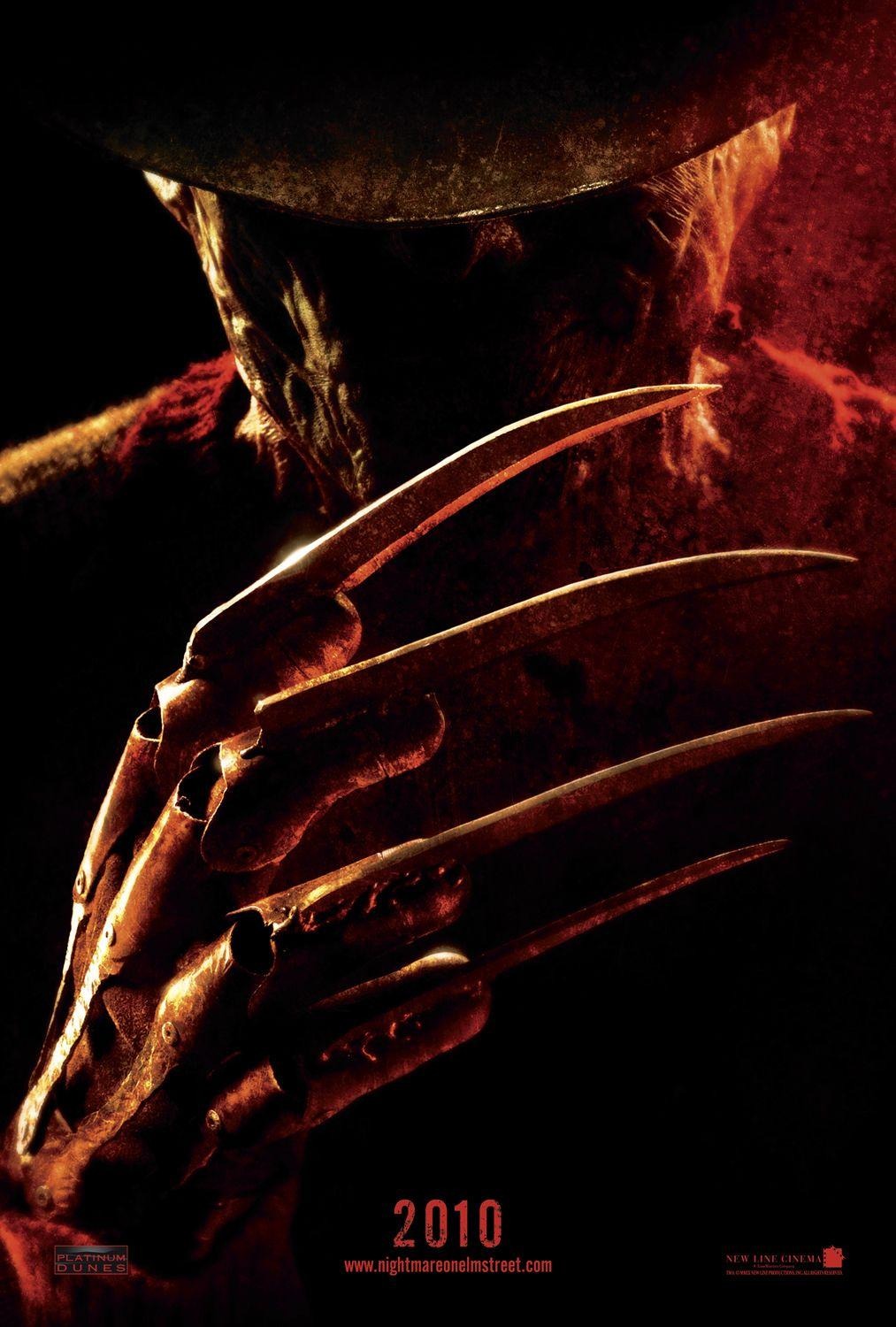
Dean Russell falls asleep at the Springwood Diner, where his friend Nancy Holbrook works as a waitress. In his dream a burned man in a red and green sweater,…
Explore A Nightmare on Elm StreetFreddy's Nightmares, also sold as A Nightmare on Elm Street: The Series, is a horror anthology spun off from the movies. New Line did not want a regular cast,…
Explore Freddy's NightmaresA Nightmare on Elm Street started with one man's script and a small distributor that had never produced a hit. Wes Craven began writing it around 1981, after Swamp Thing. He got the idea from Los Angeles Times stories about young men from Southeast Asian refugee families who had terrible nightmares, fought to stay awake, and died in their sleep. He added a killer named after a boy who bullied him at school, a look borrowed from a scary old man he saw from his window as a kid, and a red and green sweater picked because a 1982 Scientific American article said those two colors clash hardest for the human eye.
Nobody in town wanted the script. Disney wanted a tamer film. Paramount passed because it seemed too close to Dreamscape. Universal sent a rejection letter that Craven later framed. Robert Shaye's New Line Cinema, a New York company founded in 1967 that started out renting foreign and art films to colleges, finally took it. The money came from a patchwork of backers, including Media Home Entertainment, Heron Communications and Smart Egg Pictures. The first budget was $700,000. Reports of the final cost run from $1.1 million to $2.5 million, and $1.8 million is the figure The Numbers uses.
The film opened on November 9, 1984, in 165 theaters. It made $1,271,000 its first weekend. It went on to earn about $25.5 million in its first domestic run and roughly $57 million worldwide. Robert Englund, then best known for the TV miniseries V, played Fred Krueger. Heather Langenkamp played Nancy Thompson, and Johnny Depp made his film debut as Glen. The film saved New Line, and the company is still called The House That Freddy Built.
New Line moved fast. Freddy's Revenge came out one year later, in November 1985, without Craven. It turned a $3 million budget into about $30 million in the U.S. and left behind a long argument about its gay subtext. Craven came back as co-writer for Dream Warriors in February 1987, New Line's first national release. It opened at number one with $8.9 million, a record for an independent film at the time, and finished with $44.8 million. That film brought back Nancy, gave Freddy a mother named Amanda Krueger, and turned the teens into a team with dream powers.
By 1988 Freddy was a pop star. The Dream Master opened on 1,765 screens in August 1988 with the biggest opening yet for an independent release and made $49.4 million, the series record until 2003. The Fat Boys rapped with him. DJ Jazzy Jeff & the Fresh Prince made an unlicensed song about him, and New Line sued. A fan club, a board game, a talking doll and video games followed. In October 1988 Freddy started hosting his own syndicated TV show, Freddy's Nightmares, which ran 44 episodes over two seasons until March 1990.
The run cooled off with The Dream Child in August 1989. It was cut heavily for its R rating and dropped to $22.2 million domestic. New Line decided to end the story. Rachel Talalay, who had worked her way up through the crew of the earlier films, directed Freddy's Dead: The Final Nightmare in 1991. It opened on Friday, September 13, 1991, gave Freddy a daughter and a backstory, blew him up in 3-D, and had the best opening in the series to that point.
Freddy did not stay dead. New Line went back to Craven, and in October 1994 he released Wes Craven's New Nightmare, a film where Langenkamp, Englund and Craven play themselves and Freddy is an old evil wearing a movie character's face. Critics liked it much more than the late sequels, but it made only $18.1 million domestic, the lowest in the series. Its ideas about horror movies bleeding into real life led straight to Craven's Scream two years later.
The fight between Freddy and Jason Voorhees took about 16 years to reach theaters. New Line and Paramount first talked about it in 1987. New Line bought the Friday the 13th rights after Jason Takes Manhattan, then spent years and a reported $6 million on scripts from a long list of writers. Ronny Yu finally shot Freddy vs. Jason in and around Vancouver in late 2002. It opened August 15, 2003, at number one with $36.4 million and became the top domestic grosser of both franchises. It was Robert Englund's eighth and last film as Freddy.
In 2008 Michael Bay's Platinum Dunes made a deal with New Line to remake the 1984 film. New Line was folded into Warner Bros. later that year. The remake, directed by music video director Samuel Bayer with Jackie Earle Haley as Freddy, opened April 30, 2010. It won the weekend with $32.9 million and became the top worldwide grosser of the series, but critics tore it apart and the planned sequels never happened.
The years after 2010 were full of talk and no new films. New Line hired Orphan writer David Leslie Johnson for another remake in 2015, and it stalled. Wes Craven died on August 30, 2015. In September 2019 the U.S. rights to the 1984 film reverted to his estate, which began taking pitches for films and a possible HBO Max series that November. Mike Flanagan said publicly he had a pitch. Heather Langenkamp said in 2022 and 2024 that she would come back as Nancy, and Englund said in 2025 he would return as Freddy in an animated film.
Freddy kept working outside the films. He became a playable fighter in Mortal Kombat in 2011 and a killer in Dead by Daylight in 2017. Englund put the hat back on for The Goldbergs in 2018. Warner Bros. released the original film in 4K in October 2024 for its 40th anniversary and a seven-film 4K collection on September 30, 2025. The Library of Congress added the 1984 film to the National Film Registry in 2021, and Englund got a star on the Hollywood Walk of Fame on Halloween 2025.
In July 2026 the series came back to life. Paramount Pictures licensed U.S. rights to Craven's original screenplay from his estate. The untitled film is the first project for Paramount Primal, a new genre label run by J.D. Lifshitz and Raphael Margules, with Craven's widow Iya Labunka, his son Jonathan Craven and attorney Marc Toberoff producing. New Line and Warner Bros. still hold the international rights. At the end of July, Puck and Dread Central reported that Warner Bros. was developing its own version for overseas release, with Irish filmmaker Lee Cronin in talks to write and direct.
As of September 2026 there is no writer, director, cast or release date for the Paramount film. The series stands at nine theatrical films, one TV series, a long shelf of comics and novels, and about $490 million in worldwide box office by Wikipedia's count. Freddy has not been in a new theatrical release in more than 16 years, and two studios are now racing to be the one that brings him back.
The basic rule is simple. Freddy kills you in your dreams, and you die for real. Wounds from a dream show up on the body. He is close to all-powerful in the dream world and can take any shape, but if someone holds on to him while waking up, he comes out into the real world with normal human weakness. Nancy works this out in 1984, and Maggie, Lori and Nancy Holbrook all use it later. Staying awake is the only other defense, which is why coffee, pills and the dream drug Hypnocil keep showing up.
His backstory was built in pieces. The first film says he was a child killer who went free when a search warrant was signed in the wrong place, and the Elm Street parents burned him alive. Dream Warriors adds his mother, Amanda Krueger, a nun raped by a hundred maniacs locked in an asylum tower, which makes him the bastard son of a hundred maniacs. Freddy's Dead adds his foster father Mr. Underwood, his wife Loretta, his daughter Katherine and the Dream Demons who gave him his power as he burned.
The sources of his strength shift across the films. Dream Warriors says the souls of his victims make him stronger. The Dream Master shows those souls trapped in his chest, and they tear him apart when Alice shows him his reflection. The Dream Child has him reach new victims through Alice's unborn son. Freddy vs. Jason says out loud what earlier films hint at: he needs to be remembered and feared. Springwood hid his name, locked up teens who dreamed of him and gave them Hypnocil, and he went powerless until Jason's killings made people afraid again.
The first four films keep Freddy's victims mostly to the Elm Street children, the kids of the parents who burned him. Once they are gone, he uses Alice as a doorway to other kids. Freddy's Nightmares and Freddy's Dead add the idea that he is trapped inside Springwood, which is why he needs his daughter to escape. The films do not apply these rules evenly, and Lori dreams of him on the road to Crystal Lake.
The Nightmare on Elm Street Companion's timeline puts the original films in this order: Freddy burned in 1968, the first film in 1981, Freddy's Revenge in 1986, Dream Warriors in 1987, The Dream Master in 1988, The Dream Child in 1989 (the graduation caps say 89), Freddy's Dead in 1999 (the film says ten years from now), and Freddy vs. Jason in late summer 2003. The Companion places Amanda Krueger's birth in 1907, the attack on Amanda in about 1940 and Katherine's birth in 1961.
Freddy's address is argued about. Freddy's Dead shows 1428 Elm Street as his old home, the house where he kept his gloves, which means the Thompsons moved into the killer's house. Nothing in the first film says so.
There are three film continuities. The original line runs from the 1984 film through Freddy's Revenge, Dream Warriors, The Dream Master, The Dream Child, Freddy's Dead and Freddy vs. Jason. Dream Warriors mostly skips Freddy's Revenge but does not erase it. Wes Craven's New Nightmare stands outside that line in a fictional version of the real world in 1994, where the films are movies and Freddy is the current mask of an ancient entity. The 2010 remake starts over, with Freddy as a preschool gardener who abused children and a glove made from garden tools.
Freddy's Nightmares is loosely canon. Its pilot changes the story of Freddy's release: he walks because Lt. Tim Blocker never read him his rights, not because of a bad warrant. The Companion's fan timeline also draws on the comics and the Black Flame novels.
Tie-in books do not always match the films. The Part 3 section of the 1987 novelization tells a different story from Dream Warriors, and its chapters on Freddy's past are no longer treated as canon. Marvel's 1989 comic and the later novels add details of their own.
The first film's ending is still debated. Craven wanted Nancy to walk into a bright morning with her friends, and Bob Shaye wanted a last scare. Wikipedia says five endings were considered and filmed. The release shows Freddy trapping the kids in a car and pulling Marge through a window. The sequels treat Nancy as a survivor. Freddy vs. Jason also ends open, with Freddy's head winking.
Announced July 13–14, 2026
4K Ultra HD
2005 · Novel
2005 · Novel
2006 · Novel
2006 · Novel
1987 · film novelization collection
1989 · black-and-white comic magazine series
1991–1992 · comic series
2005 · comic one-shot
2005–2006 · comic limited series
2006 · comic one-shot
2006–2007 · comic series
NECA · display accessory
Matchbox · talking doll
Impel Marketing · trading cards
Cardinal / Victory Games · board game
New Line Cinema · fan-club kit
New Line Cinema · mail-order catalog
New Line Cinema · mail-order catalog
Mezco Toyz · large-scale talking figure
Mezco Toyz · jack-in-the-box collectible
McFarlane Toys · two-figure display
Mezco Toyz · mini figure set
Hawthorne Village · village/display set
Fright-Rags · replica candy / novelty collectible
1988
DVD box set
2015 · Halloween Horror Nights 25 haunted house
2024 · 2024-10-04 · television marathon
2024 · 2024-11-09 · anniversary theatrical event
2017 · 8xLP vinyl box set
1992 · 90-card horror-magazine trading-card set
1999 · 1999-09-07 · 8-disc DVD
2000 · 7-VHS box set
2025 · 7-disc 4K UHD
1990 · video game
2011 · licensed playable-character DLC
1984–2003 · location / set lineage
1984–1994 · prop lineage
1988 · direct-to-fan promotion
Fright-Rags
Fright-Rags
Fright-Rags
1989 · film novelization collection
1988 · television / music-channel promotion
Fright-Rags · trading cards
Fright-Rags
2007–2008 · comic crossover limited series
2009 · comic crossover limited series
Creator; writer and director of the 1984 film and New Nightmare; co-writer and co-producer of Dream Warriors; plays himself in New Nightmare; died August 30, 2015
A Nightmare on Elm Street (1984), Dream Warriors, Wes Craven's New Nightmare
Founder of New Line Cinema; producer or executive producer across the series; executive producer of Freddy's Nightmares; cameos in most films, sometimes as L.E. Moko
A Nightmare on Elm Street (1984), Freddy's Revenge, Dream Warriors, The Dream Master, The Dream Child, Freddy's Dead: The Final Nightmare, Wes Craven's New Nightmare, Freddy vs. Jason, Freddy's Nightmares
Freddy Krueger in eight films and host of all 44 episodes of Freddy's Nightmares; himself in New Nightmare; directed the episodes Cabin Fever and Monkey Dreams; Hollywood Walk of Fame star October 31, 2025
A Nightmare on Elm Street (1984), Freddy's Revenge, Dream Warriors, The Dream Master, The Dream Child, Freddy's Dead: The Final Nightmare, Wes Craven's New Nightmare, Freddy vs. Jason, Freddy's Nightmares
Nancy Thompson and herself; narrator and executive producer of Never Sleep Again; producer of I Am Nancy
A Nightmare on Elm Street (1984), Dream Warriors, Wes Craven's New Nightmare, Never Sleep Again, I Am Nancy
Freddy Krueger in the remake; came with Johnny Depp to his 1984 audition
A Nightmare on Elm Street (2010)
New Line executive and producer on the original series
A Nightmare on Elm Street (1984), Freddy's Revenge, Dream Warriors, The Dream Master, The Dream Child, Freddy's Dead: The Final Nightmare, Wes Craven's New Nightmare
Worked on the crew of the early films, producer of The Dream Master, director and story writer of Freddy's Dead
The Dream Master, Freddy's Dead: The Final Nightmare
Writer on Freddy's Nightmares; screenwriter of Freddy's Dead; later co-chair of Warner Bros. Pictures with Pam Abdy
Freddy's Nightmares, Freddy's Dead: The Final Nightmare
Director of Freddy's Revenge
Freddy's Revenge
Writer of Freddy's Revenge; admitted in 2010 he wrote in the gay subtext on purpose
Freddy's Revenge
Director and co-writer of Dream Warriors, his first feature; later directed The Blob, The Mask, Eraser and The Scorpion King; died July 22, 2026
Dream Warriors
Co-writer of the Dream Warriors story and script
Dream Warriors
Co-writer of Dream Warriors with Chuck Russell
Dream Warriors
Finnish director of The Dream Master
The Dream Master
Co-writer of The Dream Master; co-wrote Englund's 976-EVIL; later won an Oscar for L.A. Confidential
The Dream Master
Polished The Dream Master under the name Scott Pierce
The Dream Master
Story credit on The Dream Master
The Dream Master
Director of The Dream Child
The Dream Child
Screenwriter of The Dream Child; pitched the pregnancy idea during Freddy's Revenge
The Dream Child
Share story credit on The Dream Child with Leslie Bohem
The Dream Child
Wrote the Freddy's Nightmares episode Safe Sex; wrote an early Freddy vs. Jason draft
Freddy vs. Jason, Freddy's Nightmares
Producer of The Dream Child
The Dream Child
Producer of Freddy's Dead
Freddy's Dead: The Final Nightmare
Producer of New Nightmare; plays herself in it
Wes Craven's New Nightmare
Director of Freddy vs. Jason
Freddy vs. Jason
Writers of Freddy vs. Jason
Freddy vs. Jason
Producer of Freddy vs. Jason; headed a second unit on the dream scenes of the 1984 film
A Nightmare on Elm Street (1984), Freddy vs. Jason
Wrote a Freddy vs. Jason draft with James Dale Robinson
Freddy vs. Jason
New Line executive; wrote the Freddy vs. Jason vs. Ash treatment in 2003
Freddy vs. Jason, Freddy vs. Jason vs. Ash (comic)
Director of the remake, his first feature
A Nightmare on Elm Street (2010)
Co-writer and story credit on the remake
A Nightmare on Elm Street (2010)
Co-writer of the remake; came up with micro-naps
A Nightmare on Elm Street (2010)
Producers of the remake through Platinum Dunes
A Nightmare on Elm Street (2010)
New Line production chief; producer attached to the stalled 2015 remake
Writer hired in 2015 for a second remake that never got made
Producers attached to the 2015 remake
Wes Craven's widow; producer of the Paramount Primal film
Untitled Paramount Primal film
Wes Craven's son; producer of the Paramount Primal film
Untitled Paramount Primal film
Attorney who helped the Craven family regain ownership of the 1984 film; producer of the Paramount Primal film
Untitled Paramount Primal film
Heads of Paramount Primal and executive producers of the new film; producers of Barbarian and Weapons
Untitled Paramount Primal film
Reported in talks to write, direct and produce Warner Bros.' international Nightmare film
Untitled Warner Bros. film
Composer of the 1984 score and the Never Sleep Again title music
A Nightmare on Elm Street (1984), Never Sleep Again
Composer of Freddy's Revenge
Freddy's Revenge
Composer of Dream Warriors; died December 11, 2022
Dream Warriors
Composer of The Dream Master
The Dream Master
Composer of The Dream Child
The Dream Child
Composer of Freddy's Dead
Freddy's Dead: The Final Nightmare
Composer of New Nightmare
Wes Craven's New Nightmare
Composer of Freddy vs. Jason
Freddy vs. Jason
Composer of the remake
A Nightmare on Elm Street (2010)
Cinematographer of the first two films
A Nightmare on Elm Street (1984), Freddy's Revenge
Cinematographer of Dream Warriors, brought in to replace an earlier hire
Dream Warriors
Cinematographer of The Dream Master
The Dream Master
Cinematographer of The Dream Child
The Dream Child
Cinematographer of Freddy's Dead
Freddy's Dead: The Final Nightmare
Cinematographer of New Nightmare
Wes Craven's New Nightmare
Cinematographer of Freddy vs. Jason
Freddy vs. Jason
Cinematographer of the remake
A Nightmare on Elm Street (2010)
Editor of the 1984 film
A Nightmare on Elm Street (1984)
Editor of New Nightmare; went on to edit Scream
Wes Craven's New Nightmare
Production designer of the 1984 film; New Nightmare is dedicated to him
A Nightmare on Elm Street (1984), Wes Craven's New Nightmare
Production designers on Dream Warriors and The Dream Master; C.J. Strawn also designed The Dream Child
Dream Warriors, The Dream Master, The Dream Child
Designed Freddy's makeup in 1984
A Nightmare on Elm Street (1984)
Freddy's makeup on Freddy's Revenge, Dream Warriors and The Dream Master
Freddy's Revenge, Dream Warriors, The Dream Master
Makeup effects on The Dream Master, covered in the making-of Elm Street U.S.A.
The Dream Master
Built Freddy's original glove
A Nightmare on Elm Street (1984)
Poster artist for the original series; painted the Never Sleep Again cover
The Dream Child, Never Sleep Again
Directed the Freddy's Nightmares pilot, No More Mr. Nice Guy; died August 26, 2017
Freddy's Nightmares
Directed the Freddy's Nightmares episode It's a Miserable Life
Freddy's Nightmares
Episode directors on Freddy's Nightmares
Freddy's Nightmares
Director linked to the unmade prequels
Makers of Never Sleep Again; Hutson also wrote a book on the making of the first film
Never Sleep Again
Director of I Am Nancy
I Am Nancy
Directors of Scream, Queen! My Nightmare on Elm Street
Scream, Queen!
Writer of all three Innovation comic series
Nightmares on Elm Street (comic)
Writer of Marvel's 1989 Freddy comic
Freddy Krueger's A Nightmare on Elm Street (comic)
Writer of WildStorm's 2006 to 2007 series
A Nightmare on Elm Street (WildStorm comic)
Writer of the Avatar Press comics
A Nightmare on Elm Street Special, Paranoid, Fearbook
Writer and artist of the Freddy vs. Jason vs. Ash comics
Freddy vs. Jason vs. Ash (comic)
Authors of the Black Flame novels, 2005 to 2006
Black Flame novels
Author of the 1987 novelization of the first three films
A Nightmare on Elm Street (1984), Freddy's Revenge, Dream Warriors
Lt. Donald Thompson and himself; died July 25, 2020
A Nightmare on Elm Street (1984), Dream Warriors, Wes Craven's New Nightmare
Marge Thompson
A Nightmare on Elm Street (1984)
Glen Lantz, his film debut; cameo in Freddy's Dead as Oprah Noodlemantra
A Nightmare on Elm Street (1984), Freddy's Dead: The Final Nightmare
Tina Gray
A Nightmare on Elm Street (1984)
Rod Lane; cameo in New Nightmare
A Nightmare on Elm Street (1984), Wes Craven's New Nightmare
Teacher in the 1984 film; a nurse in New Nightmare
A Nightmare on Elm Street (1984), Wes Craven's New Nightmare
Jesse Walsh; subject of Scream, Queen!
Freddy's Revenge, Scream, Queen!
Lisa Webber
Freddy's Revenge
Ron Grady
Freddy's Revenge
Ken Walsh; died August 5, 2022
Freddy's Revenge
Kristen Parker, her film debut
Dream Warriors
Kristen Parker in The Dream Master and singer of its title song Nightmare; cameo in New Nightmare
The Dream Master, Wes Craven's New Nightmare
Dr. Neil Gordon
Dream Warriors
Roland Kincaid
Dream Warriors, The Dream Master
Joey Crusel
Dream Warriors, The Dream Master
Max Daniels
Dream Warriors
Amanda Krueger in Dream Warriors; died March 4, 2010
Dream Warriors
Alice Johnson
The Dream Master, The Dream Child
Dan Jordan
The Dream Master, The Dream Child
Jacob Johnson; won a Young Artist Award
The Dream Child
Maggie Burroughs
Freddy's Dead: The Final Nightmare
Doc; died March 15, 2021
Freddy's Dead: The Final Nightmare
Tracy Swan
Freddy's Dead: The Final Nightmare
Spencer Lewis
Freddy's Dead: The Final Nightmare
Mr. Underwood
Freddy's Dead: The Final Nightmare
Dylan Porter
Wes Craven's New Nightmare
Jason Voorhees
Freddy vs. Jason
Lori Campbell
Freddy vs. Jason
Kia Waterson
Freddy vs. Jason
Will Rollins
Freddy vs. Jason
Nancy Holbrook
A Nightmare on Elm Street (2010)
Quentin Smith
A Nightmare on Elm Street (2010)
Talked with Craven about playing Freddy in 1984; played Freddy's gloved hand in Jason Goes to Hell; replaced as Jason for Freddy vs. Jason
Freddy vs. Jason
Craven's first choice for Freddy; did makeup tests and dropped out over scheduling
A Nightmare on Elm Street (1984)
Dr. Heffner in New Nightmare
Wes Craven's New Nightmare
Director who owned the real Elm Street house from 2013 until it sold in January 2022
Wikipedia's franchise table gives $370,625,814 in the United States, $119,822,390 in other territories and $490,448,204 worldwide for the nine films, on combined budgets of $105.6 million to $105.9 million. Adding The Numbers' per-film figures gives $370,795,466 domestic and $492,470,554 worldwide. Most of the gap comes from the first film, Freddy vs. Jason and the remake, where the two sources differ. Foreign grosses for Freddy's Revenge through Freddy's Dead were never reported, so every worldwide total undercounts. The top domestic grosser is Freddy vs. Jason. The top worldwide grosser is the 2010 remake by The Numbers, or Freddy vs. Jason by Wikipedia's franchise table. New Nightmare is the lowest on both counts.
New Line Cinema produced and released the first film. Robert Shaye had founded the company on June 18, 1967, to supply foreign and art films to colleges. The money came from outside. Two English investors put in 40 and 30 percent, a Texas Chain Saw Massacre producer 10 percent, and Media Home Entertainment 20 percent. When one of the English investors pulled out, Media Home raised its share to 40 percent. Heron Communications and Smart Egg Pictures also backed the film.
Media Home Entertainment released the first film on video in early 1985, where it earned about $8 million. Dream Warriors was New Line's first national release. New Line went public in 1986.
Freddy's Nightmares was made by New Line Television and Stone Television and first sold by Lorimar-Telepictures. Warner Bros. took over after buying Lorimar in 1989. Only one DVD volume ever came out, in the UK and Ireland in 2003. The show now streams on Tubi but not on Warner's own Max.
New Line guarded the brand. In 1988 it sued Jive and RCA Records over DJ Jazzy Jeff & the Fresh Prince's A Nightmare on My Street. The case settled out of court, and New Line made Jive destroy the music video. Vinyl copies carry a disclaimer saying the song is not authorized by or tied to the Nightmare films. New Line went instead with The Fat Boys' Are You Ready for Freddy.
Merchandise was a big business by 1988. New Line ran the Freddy Fan Club and licensed board games from Victory Games, a Matchbox talking doll and video games from LJN and Rare on the NES and Monarch on Commodore 64 and PC. The Companion credits the computer game to ShareData and Wikipedia credits Westwood Associates as developer. Impel made a 144-card set in 1991. Later licensees include McFarlane Toys, Mezco, NECA, Sideshow, Funko and Fright-Rags. Marvel held the comic license in 1989, Innovation from 1991 to its bankruptcy in 1992, Trident for UK reprints in 1992, Avatar Press in 2005 and 2006, and DC's WildStorm from 2006.
On January 28, 1994, Turner Broadcasting System bought New Line for $500 million. Turner merged with Time Warner in October 1996, and New Line kept running as its own studio inside the company. Englund has said the prequel The First Kills got lost in the Turner sale.
The crossover needed Jason. Paramount owned the Friday the 13th films and made Jason Takes Manhattan in 1989 after crossover talks failed. New Line got the Friday rights in 1992. Jason Goes to Hell (1993), which ends with Freddy's glove grabbing Jason's mask, and Jason X (2001) came out before Freddy vs. Jason finally arrived in 2003. A planned sequel with Ash from The Evil Dead died over money and creative control.
On January 29, 2008, Variety reported a deal for Platinum Dunes to remake the first film with New Line. A month later, on February 28, 2008, Time Warner folded New Line into Warner Bros., and Shaye and co-chairman Michael Lynne left. Warner Bros. Pictures released the remake in 2010. Warner wanted it converted to 3-D, and the producers talked the studio out of it.
In August 2015 Warner and New Line hired David Leslie Johnson for a new remake, but it stalled. In September 2019 the U.S. rights to A Nightmare on Elm Street reverted to Wes Craven's estate. New Line and Warner kept the international rights. The estate began taking pitches for films and a possible HBO Max series that November. Variety later credited attorney Marc Toberoff with helping the family regain ownership of the original film.
In July 2026 Paramount Pictures licensed the U.S. rights to Craven's original screenplay from the estate for the first film at its new genre label, Paramount Primal. On July 30, 2026, Dread Central, citing Kim Masters at Puck, reported that Warner Bros. had tried to make its own deal with the estate but would not agree to a very aggressive back-end split. Warner executives Michael De Luca and Pam Abdy then started their own film for international release only, with Lee Cronin in talks to write, direct and produce. Paramount said its domestic rights deal was negotiated on its own and was not based on any pending merger. Neither studio controls worldwide rights by itself.
Home video has moved through several hands. Media Home released the early tapes. New Line Home Video released the 1999 eight-disc DVD box set and the 2000 VHS collection, New Line's Infinifilm line put out a 2006 special edition of the first film, and Warner handled the 2010 Blu-ray of the original, the 2011 Blu-ray collection, the 2024 4K of the first film and the 2025 seven-film 4K collection. Varese Sarabande put the scores in an eight-CD box in 2015, and Death Waltz and Mondo released the eight-LP Box of Souls in 2017.
Freddy has been licensed well beyond film. NetherRealm added him to Mortal Kombat in 2011 as downloadable content, and he was later playable in the Mortal Kombat X mobile game. Behaviour added the 2010 Freddy and Quentin Smith to Dead by Daylight on October 26, 2017. Universal has used Freddy in Halloween Horror Nights mazes in Orlando and Hollywood.
Critics liked the first film from the start. Rotten Tomatoes has it at 93 percent from 71 reviews, and Metacritic gives it 76. Empire ranked it 162nd on its 2008 list of the 500 greatest movies, and in 2021 the Library of Congress put it in the National Film Registry.
The sequels got rougher treatment. Rotten Tomatoes scores run from 68 percent for Dream Warriors and 56 percent for The Dream Master down to 49 percent for Freddy's Revenge, 31 percent for The Dream Child and 23 percent for Freddy's Dead. Roger Ebert gave Dream Warriors one and a half stars. Kevin Thomas of the Los Angeles Times praised The Dream Master and Lisa Wilcox. New Nightmare turned things around with 76 percent and three stars from Ebert, though Gene Siskel gave it a thumbs down. Freddy vs. Jason sits at 41 percent with a B+ CinemaScore, and the remake at 14 percent with a C+.
Freddy changed the slasher villain. Jason and Michael Myers were silent men in masks. Freddy talked, joked and showed his face, and by the late 1980s he was more of a star than the heroes. Wizard ranked him the 14th greatest villain of all time, Sky2 ranked him 8th, and AFI put him 40th on its heroes and villains list. The 2010 remake set out to make him dark again.
Freddy was controversial in real life too. Protesters picketed The Dream Child when it opened in 1989. Queensland in Australia banned Dream Warriors over its drug scenes. Marvel dropped its Freddy comic because it feared anti-violence groups.
Freddy's Revenge found a second life as a gay cult film. Its gay subtext was argued about for decades before writer David Chaskin admitted in 2010 that he put it there on purpose. Mark Patton, who was gay and not out at the time, said the film hurt his career. The 2019 documentary Scream, Queen! My Nightmare on Elm Street told his story, and critics now often call Jesse a male final girl.
Nancy Thompson became one of horror's model heroines. She studies her enemy, makes a plan and fights back. Heather Langenkamp's 2011 documentary I Am Nancy asked why fans love the villain more than the hero.
Dream Warriors shaped later films and games. Josh Boone named it a big influence on The New Mutants (2020). The NES game let players turn into Dream Warriors, and the computer game used Dream Warriors characters. Dokken's Dream Warriors video topped VH1's 2015 list of killer 1980s metal horror videos, and Riverdale covered the song in 2018.
New Nightmare's idea of a horror movie that knows it is a horror movie led straight to Craven's Scream in 1996. Critics still call New Nightmare the warm-up for Scream.
The films opened doors for young actors. Johnny Depp made his debut in the first film, Patricia Arquette in Dream Warriors, and Laurence Fishburne had an early role there. Brad Pitt tried out for Jesse and was turned down as too nice. He later appeared in an episode of Freddy's Nightmares, along with Mariska Hargitay, Kyle Chandler, Lori Petty and Morris Chestnut. Brian Helgeland, who co-wrote The Dream Master, later won an Oscar. Chuck Russell went on to The Blob, The Mask, Eraser and The Scorpion King.
Behind the scenes, the series built a studio. New Line went from a small distributor to a public company on Freddy's money, and it is still called The House That Freddy Built. The 2010 documentary Never Sleep Again, with 106 interviews and four hours of footage, won the Saturn Award for Best DVD Release, and Bloody Disgusting gave it a perfect score.
Freddy's Nightmares had a harder time. John Kenneth Muir's book Terror Television ranked it low among horror series of 1970 to 1999. It still found new audiences in reruns and on Tubi, and it gave early work to a long list of future stars.
The films were copied around the world. India made Khooni Murda (1989) and Mahakaal (1993). A Belarusian children's film, Keshka i Fredi (1992), used Freddy without a license.
Fans keep the series going. The Nightmare on Elm Street Companion website archives scripts, press kits, comics and merchandise. Cast members from every film appear at conventions. Anniversary screenings for the 40th in 2024 ran at Popcorn Frights in Fort Lauderdale, Cinema Arts Centre, the Union County Performing Arts Center in Rahway and on AMC's FearFest.
The Nightmare on Elm Street Companion is the biggest fan archive for the series. It collects scripts, storyboards, press kits, home video scans and comic and book bibliographies for all nine films and Freddy's Nightmares. Its forum ran from 2004 until a June 2019 database crash wiped out fifteen years of posts. Fans voted 95 percent in favor of a new one, and it relaunched in May 2020. The site also keeps a fan-built in-universe timeline, from Amanda Krueger's birth in 1907 through the comics and Black Flame novels, placing Freddy's trial and burning in 1968 and the first film in 1981.
A fan documentary called FredHeads covers the fan base. Popcorn Frights screened it in Fort Lauderdale on January 20, 2023 and gave all proceeds to Mark Patton, who was going through a serious medical emergency.
Heather Langenkamp's I Am Nancy (2011) is really about the fans. She went to horror conventions asking fans why Freddy got famous and Nancy didn't, and talked it over with Englund and Craven.
Mark Patton became a convention favorite after Never Sleep Again. He is often called the first male scream king. He gives most of his appearance fees to HIV groups and LGBTQ youth charities like The Trevor Project. Freddy's Revenge now has a strong LGBTQ cult following, which Scream, Queen! My Nightmare on Elm Street documents.
Fans have spent years pitching who should make the next film. Mike Flanagan had a pitch in 2019 when the Craven estate opened up. Lee Cronin told Variety in April 2026 he would find it hard not to take a swing at Freddy someday.
The real house at 1428 North Genesee Avenue in Los Angeles is a fan landmark and a stop for tour buses. Its owner, director Lorene Scafaria, bought it in 2013 for $2.1 million, and Bo Burnham's Netflix special Inside was shot inside. It sold in January 2022 for $2.8 million after listing at $3.25 million.
Fan-made collectibles keep appearing. In April 2026 Jack's Attic sold custom 1984-style cards with real glove slash marks, only 20 sets.
Rachel Talalay has asked fans about lost material. In her January 2026 video she says the cut Freddy's Dead coda and some Dream Master scenes cannot be found.
1987 · novelization
1989 · novelization
1990 · novelization
1990 · novelization
1990 · novelization
1990 · novelization
1990 · novelization
1990 · novelization
1991 · novelization
1992 · novelization
1992 · novelization
1992 · novelization
1992 · novelization
1992 · novelization
1992 · novelization
1993 · novelization
1993 · novelization
1993 · novelization
1994 · novelization
2003 · novelization
1994 · novel
1995 · novel
1995 · novel
1995 · novel
1995 · novel
1995 · novel
2005 · novel
2005 · novel
2005 · novel
2006 · novel
2006 · novel
2006 · novel
1991 · novel
1987 · guide
1988 · non-fiction
1992 · non-fiction
1999 · non-fiction
2005 · non-fiction
2009 · non-fiction
2010 · guide
2011 · non-fiction
2014 · non-fiction
1989 · guide
1991 · guide
1994 · guide
2003 · guide
1988 · guide
2003 · film novelization
1992 · hardcover film adaptation
1992 · hardcover film adaptation
1992 · hardcover film adaptation
1992 · hardcover film adaptation
1992 · hardcover film adaptation
1992 · hardcover film adaptation
1991 · comic adaptation
1992 · comic limited series
1987
1988
1990
1989
1994
2005
Unreleased
1999
2011
2017
2017 · licensed game chapter
1989
1991
1991
1992
1999
2010
2011
2019
2023
2026
2026
2026
1984
1985
1987
1987
1988
1988
1988
1988
1988
1988
1987
1989
1989
1989
1991
1991
1993
1994
2003
2003
2010
2015
2017
2018
music-video / soundtrack promotion
2024 · 2024-10-24 · anniversary theatrical event
New Line Cinema (Freddy Fan Club)
Screamin' Models
Warner Bros. U.K.
Cardinal / Victory Games
Matchbox
Impel Marketing
Comic Images
Gottlieb
McFarlane Toys
NECA
Mezco Toyz
Sideshow Collectibles
Hawthorne Village
USAOPOLY
SEGA Toys
The Horror Collection
Gemmy Industries
Kotobukiya
Funko
Trick or Treat Studios
Vans
Fright-Rags
Jack's Attic
1989 · 3-tape VHS (Media Home Entertainment)
1991 · VHS (Warner Home Video)
1998 · 3-tape PAL VHS (Entertainment in Video)
1998 · 3-tape PAL VHS (Metropolitan)
1999 · 8-disc DVD (New Line Home Video, N4788)
2000 · 7-tape VHS (New Line Home Video)
2001 · 5-disc Region 2 DVD (Entertainment in Video)
2002, 2005 · 7-disc Region 2 DVD (Metropolitan)
2003 · Region 2 DVD (Warner Home Video)
2004 · DVD and VHS (New Line)
2004 · 6-disc and 7-disc Region 2 DVD (Entertainment in Video)
2005 · 7-disc Region 2 DVD (Warner, Sandrew Metronome, RCV)
2005 · 3-disc Region 4 DVD sets (Roadshow)
2005 · 7-disc Region 4 DVD (New Line)
2005 · 3-disc and 4-disc Region 4 DVD (Play Arte)
2007, 2011 · Region 4 DVD (Roadshow)
2008 · Region 5 DVD (Central Partnership Digital)
2010 · DVD
2010 · 8-disc Region 1 DVD (New Line)
2010 · DVD and Blu-ray
2011 (UK), 2012 (Best Buy), 2013 (US) · 5-disc Blu-ray (Warner Home Video)
2011 · DVD
2020 · DVD, digital, Blu-ray
2023 · Blu-ray and SteelBook
2024 · 4K UHD, standard and SteelBook
2025 · 7-disc 4K UHD (Warner Bros.)
Mezco Toyz · 1:12 figure
tv
2025 · home_media
2010 · international digital marketing archive
1989 · television press kit
1988–1990 · television publicity materials