Friday the 13th Part VIII: Jason Takes Manhattan press kit
1989 · studio press kit
- Photographs
- 5
- Repository
- University of Illinois Rare Book & Manuscript Library — Leskosky film press-kit collection

Friday the 13th
1989

New York has a new problem.
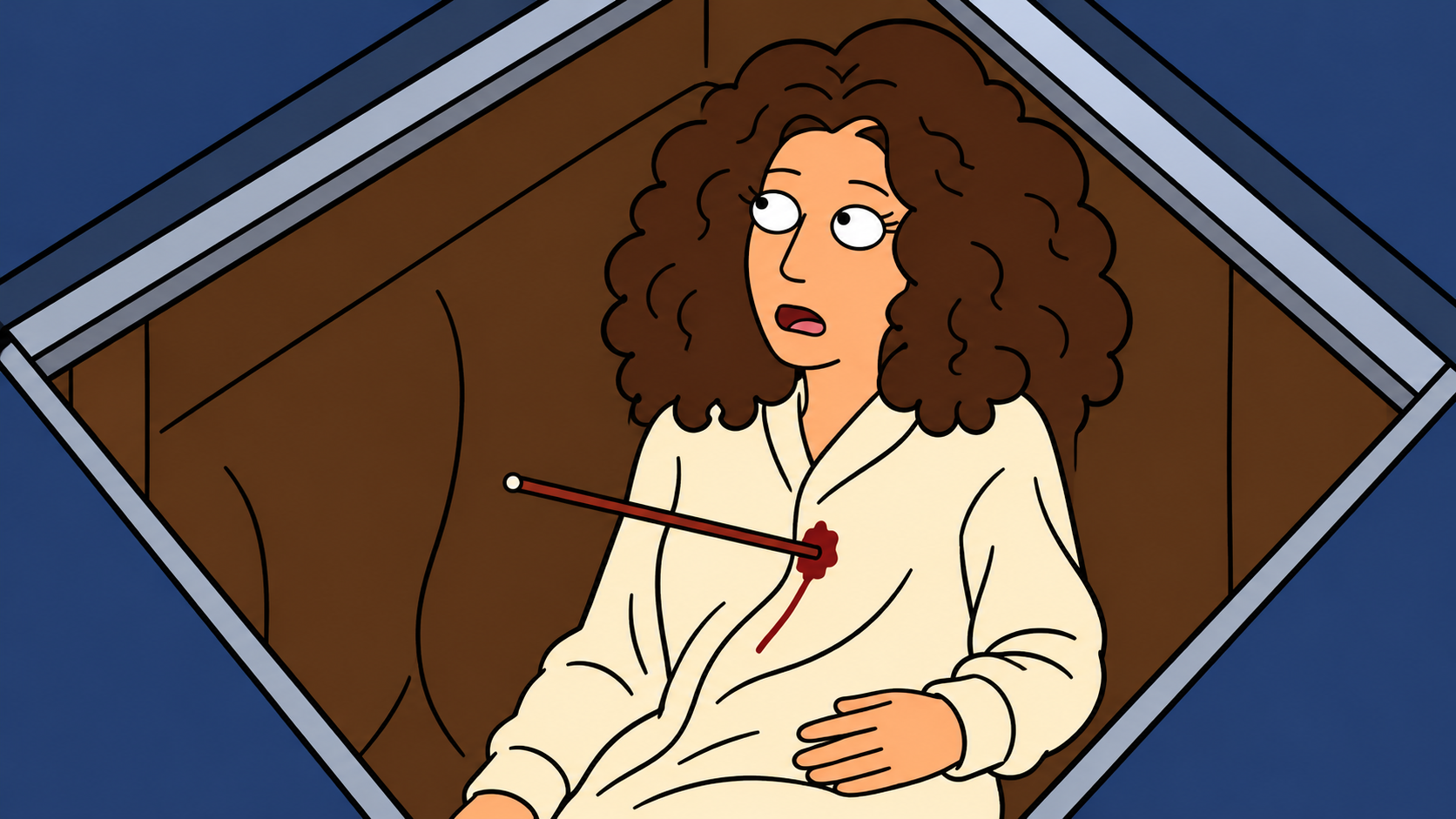
Two teenagers, Jim Miller and his girlfriend Suzi Donaldson, take Jim's houseboat out on Crystal Lake. Jim tells Suzi the legend of Jason Voorhees and scares her with a hockey mask and a fake knife. The boat's anchor drags an underwater power cable across Jason's body at the bottom of the lake, where the spirit of Tina Shepard's father dragged him at the end of The New Blood. The electric shock brings him back. Jason climbs aboard, takes the mask, kills Jim with a speargun and stabs Suzi with the spear after she hides below deck.
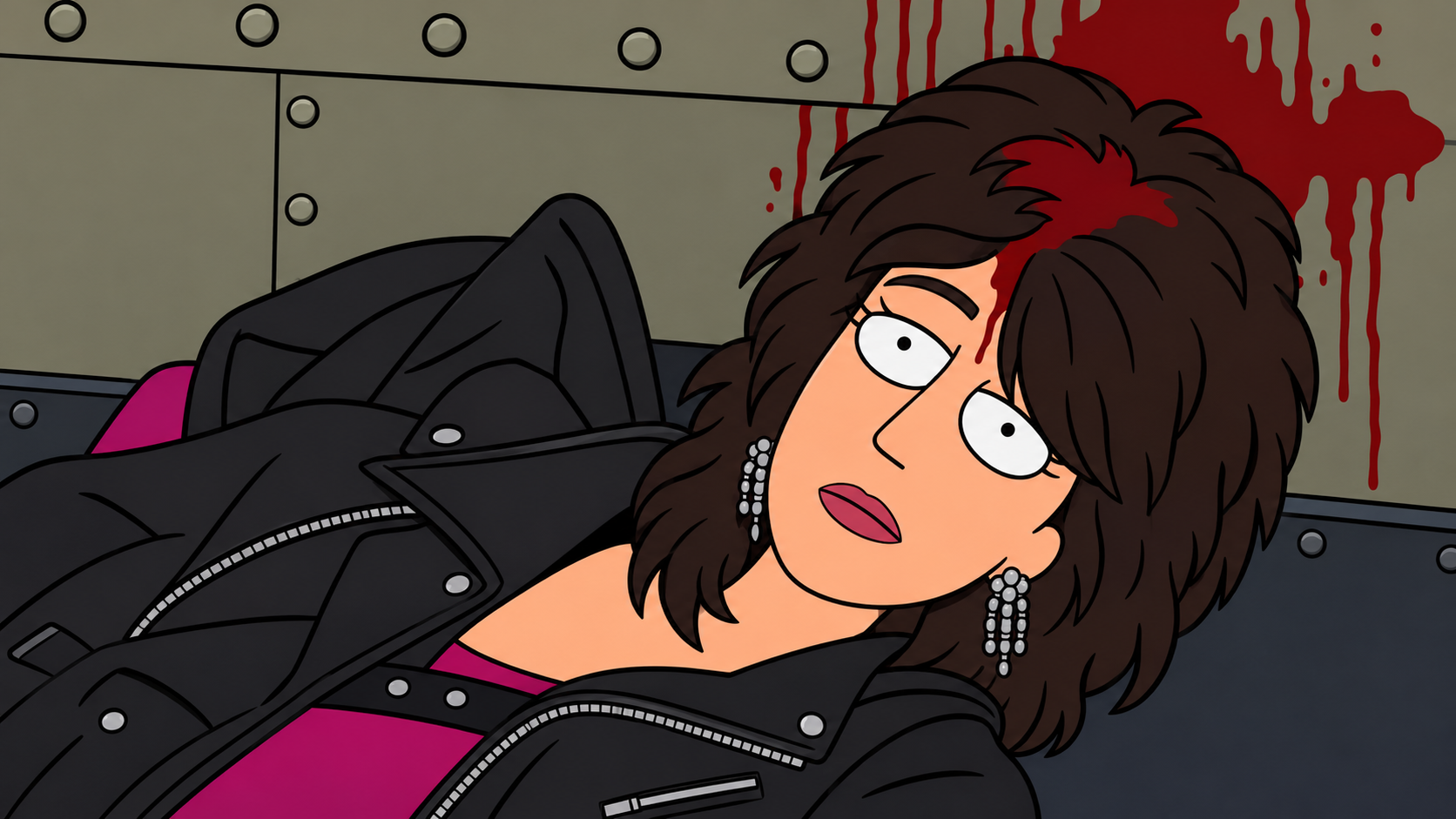
The next morning the SS Lazarus leaves Crystal Lake for New York City with the graduating seniors of Lakeview High School. The chaperones are Charles McCulloch and English teacher Colleen Van Deusen. Colleen has brought along Charles's niece Rennie Wickham, who is terrified of water, and Charles is not happy about it. The ship is captained by Admiral Robertson, whose son Sean is Rennie's boyfriend. Jason has stowed away. He kills J.J. Jarrett, a would-be rock star, with her own electric guitar.
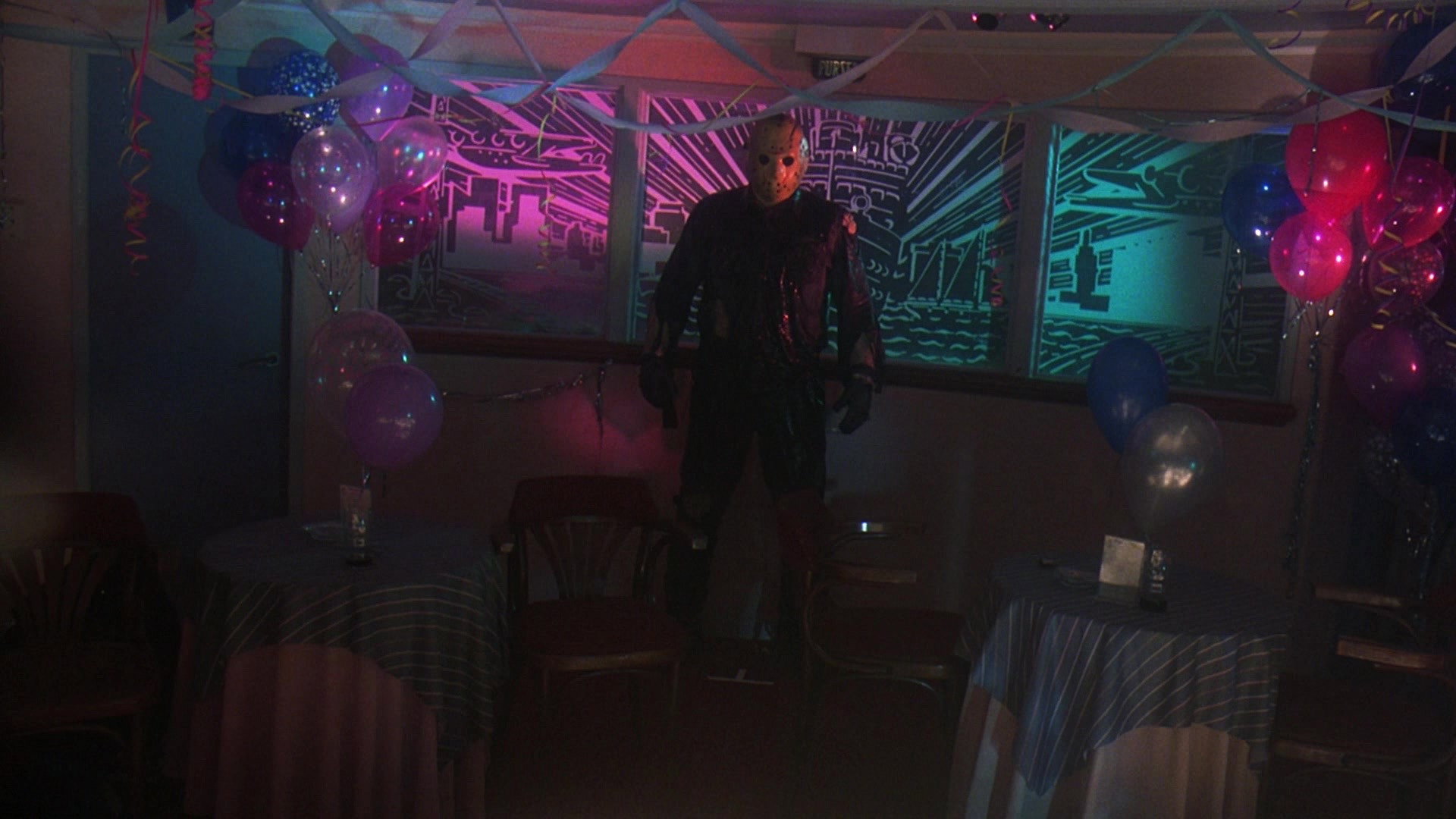
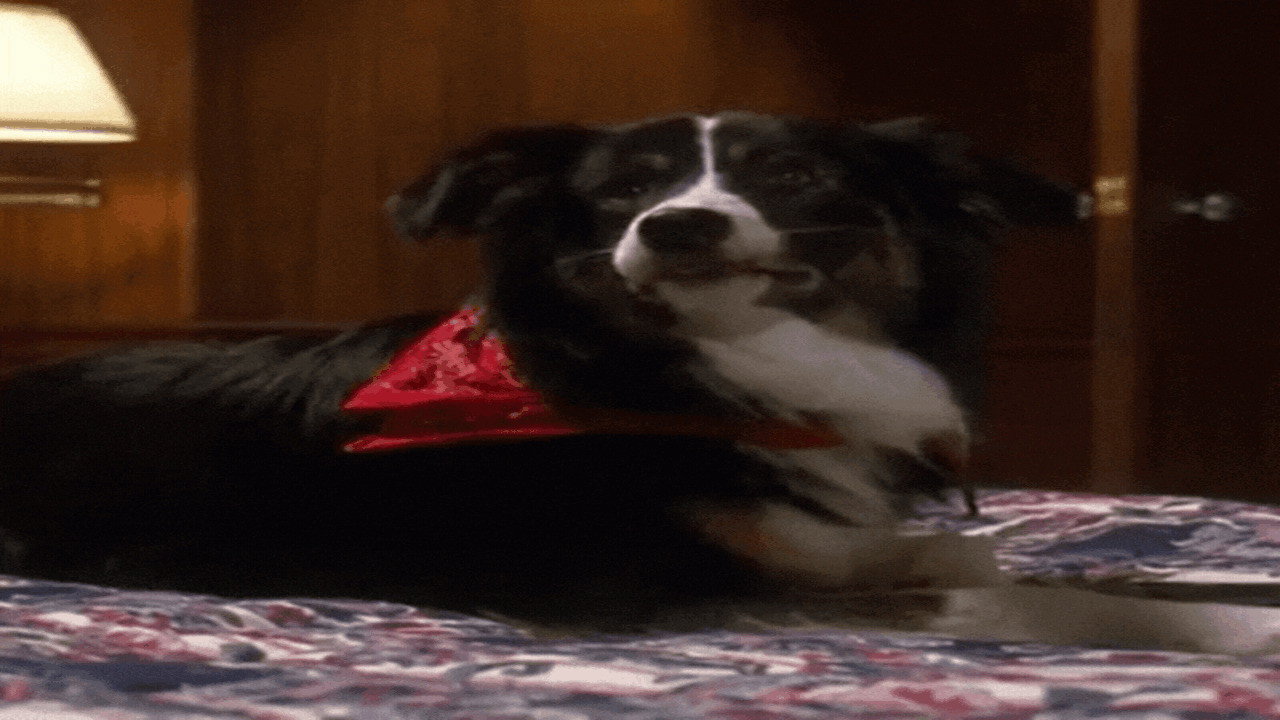
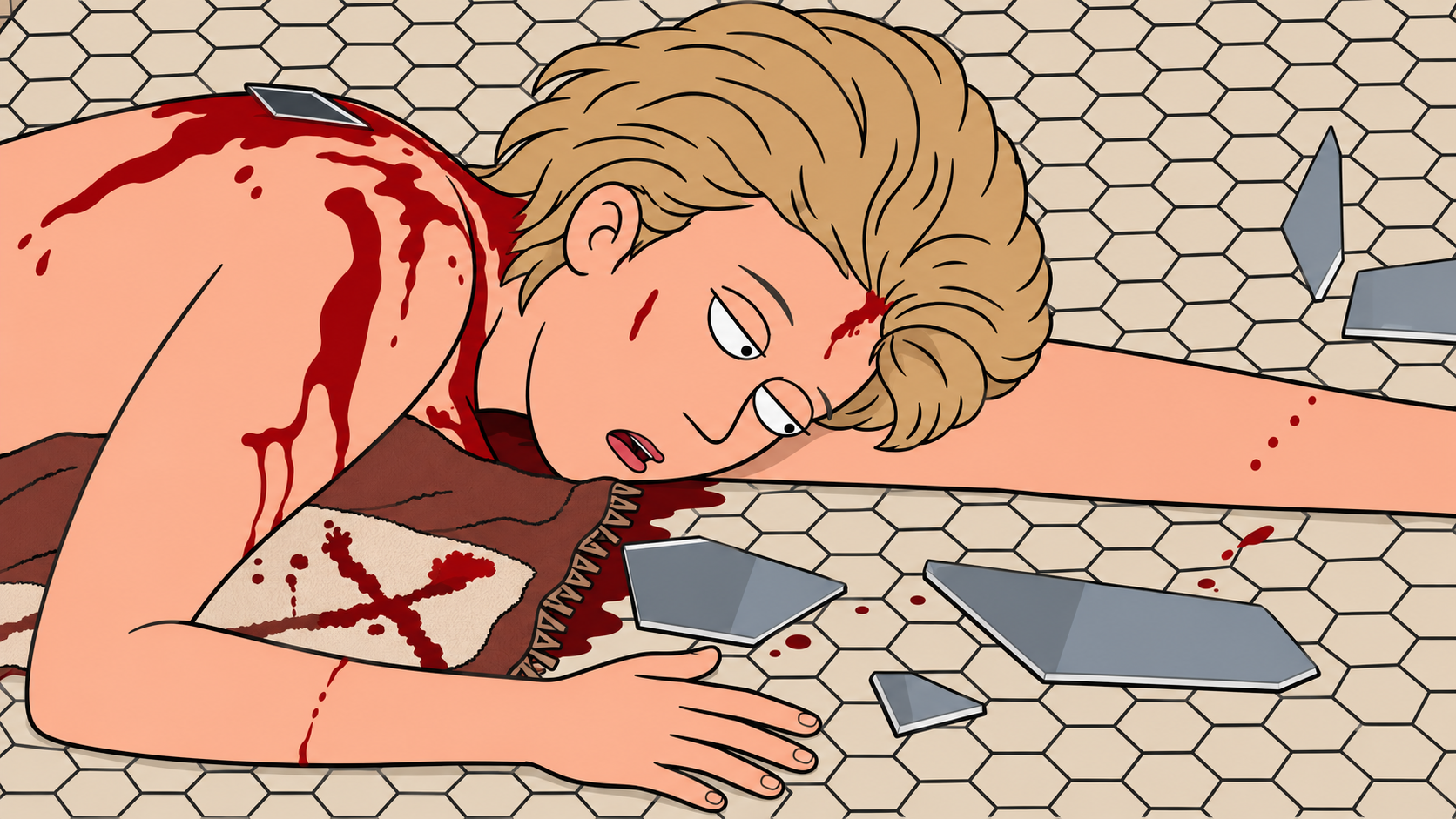
Rennie keeps seeing visions of Jason as a young boy around the ship. When her dog Toby runs off, she goes looking for him and walks in on prom queen Tamara Mason and her friend Eva Watanabe doing drugs. Charles nearly catches them. Tamara thinks Rennie told on her and shoves her overboard. Sean and Colleen pull Rennie out. After a boxing match with Julius Gaw, the other boxer goes to the sauna, where Jason drives a hot sauna rock into his chest. Tamara gets video student Wayne Webber to film Charles in a compromising position with her, then turns down Wayne's advances. After her shower, Jason kills her with a shard of broken mirror.
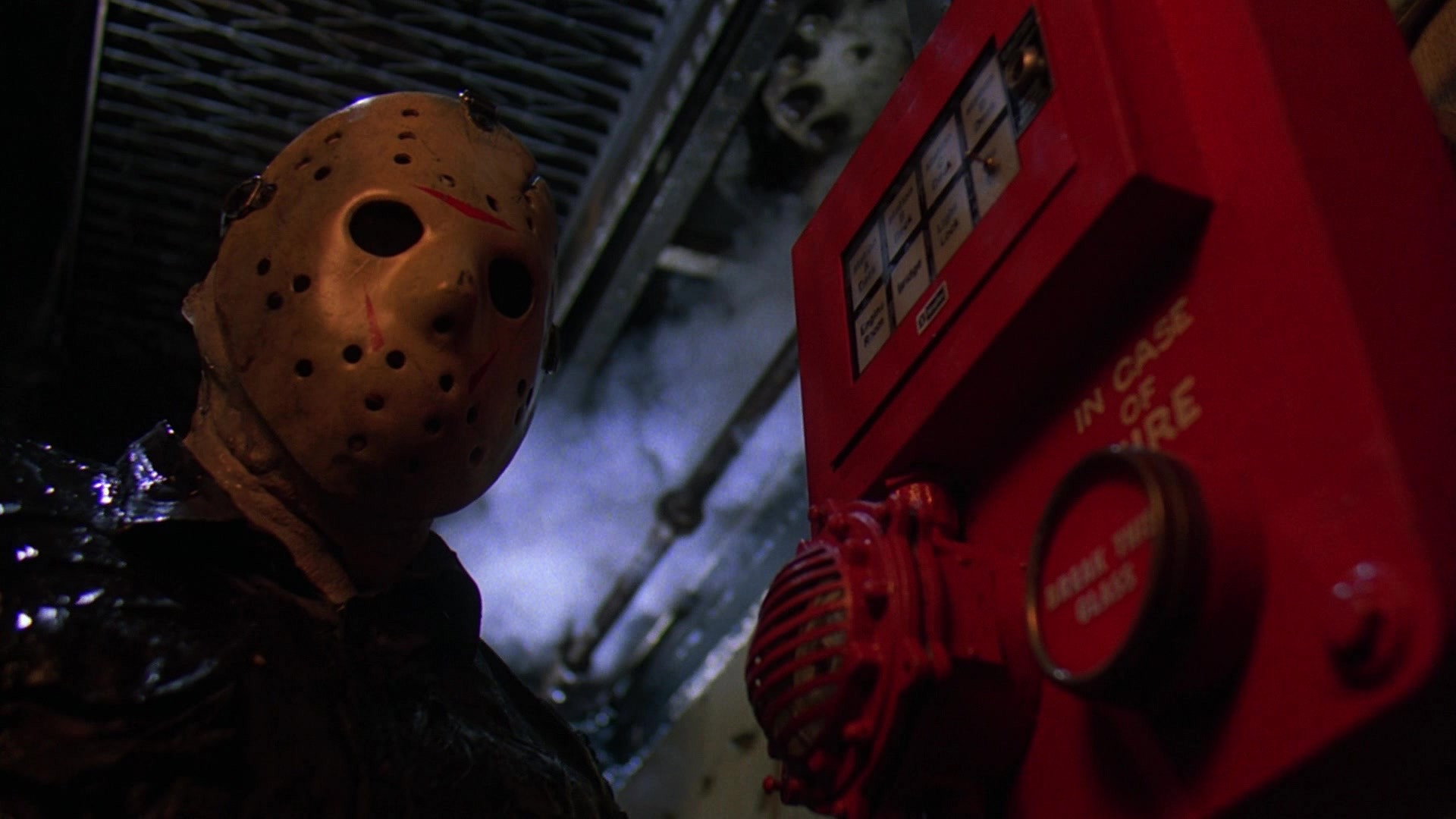
Jason kills Chief Engineer Jim Carlson with a harpoon and cuts Admiral Robertson's throat. The deckhand keeps warning everyone that they are doomed. Eva finds Tamara's body and runs, and Jason strangles her on the dance floor of the ship's disco. Julius believes Jason is aboard and leads the students in a search. Wayne loses his glasses and accidentally shoots a crewman with a shotgun. Jason then throws him into an electrical panel. Wayne is electrocuted, and the fire from his body starts the damage that sinks the ship. Jason chases Miles Wolfe up a ladder and throws him down onto the radio antenna, then knocks Julius overboard. Charles is sure the deckhand is behind the killings and goes after him with a flare gun, but the deckhand staggers out and falls dead with a fire axe in his back.
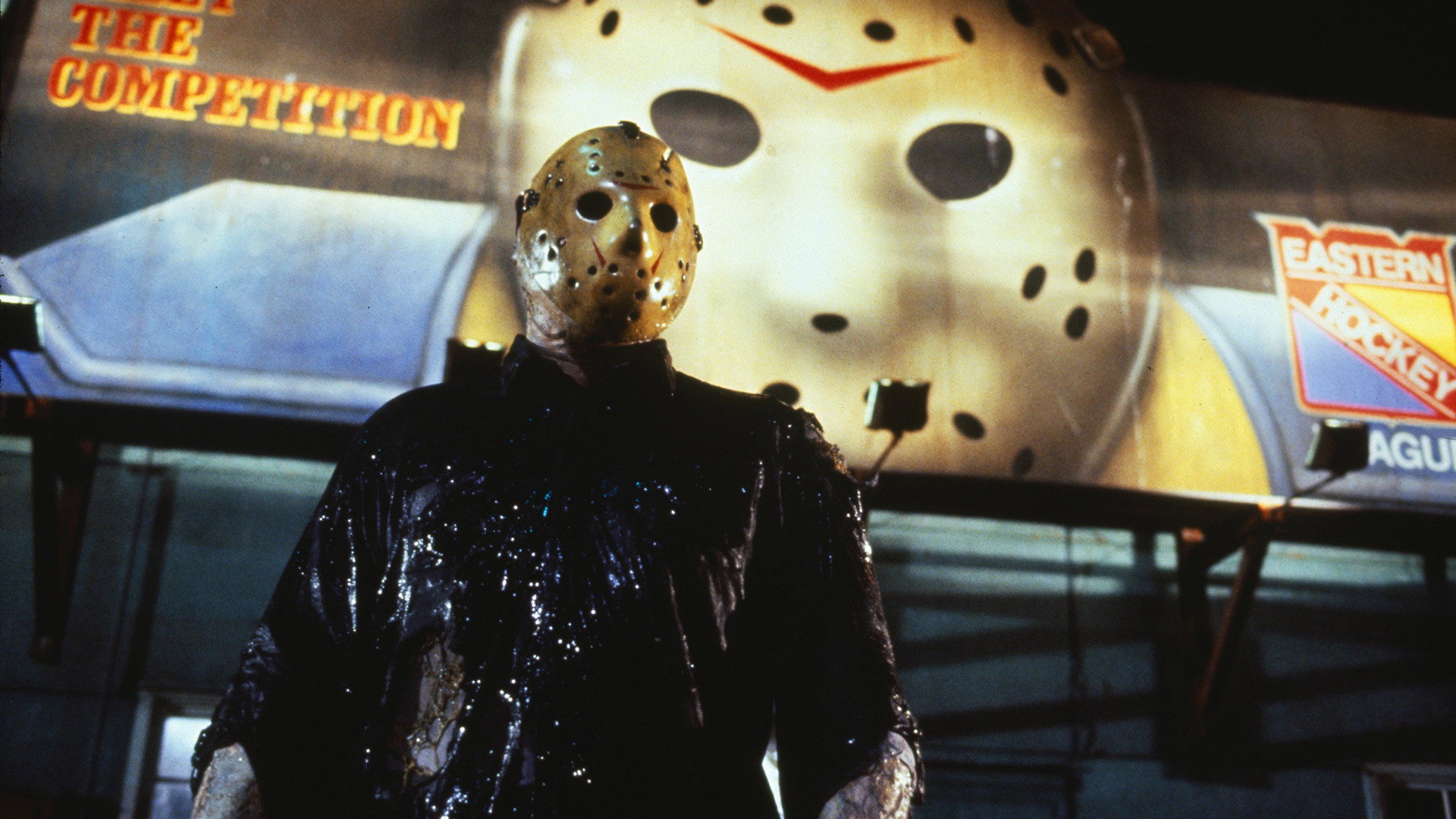
Charles, Colleen, Rennie and Sean escape in a lifeboat, pick up Julius and find Toby. They row to New York City and wander into a rundown, empty part of the city. Jason follows them. On the way he stops to stare at a billboard with a hockey mask on it. Two drug addicts, Homes and JoJo, rob the group, scare off Toby and drag Rennie away. They inject her with heroin and are about to rape her when Jason shows up. He stabs Homes in the back with the syringe. JoJo empties his gun into Jason, who keeps coming and smashes JoJo's head against a pipe. Rennie gets away.
Julius takes Jason on in a rooftop fist fight. He throws punch after punch until he is worn out, and Jason knocks his head off with a single blow. The others find a police officer, who puts them in his car. Julius's head is sitting in the front seat. Jason kills the officer. Rennie drives the car at Jason and hits him, then swerves when she sees the boy Jason in the road and crashes into a wall. Charles, Rennie and Sean get out. Colleen is still inside when the car explodes. Rennie now remembers that Charles pushed her into Crystal Lake as a child to teach her to swim, and that the boy Jason pulled her under. Rennie and Sean leave Charles behind. Jason throws him through a window and drowns him head first in a barrel of sewage.
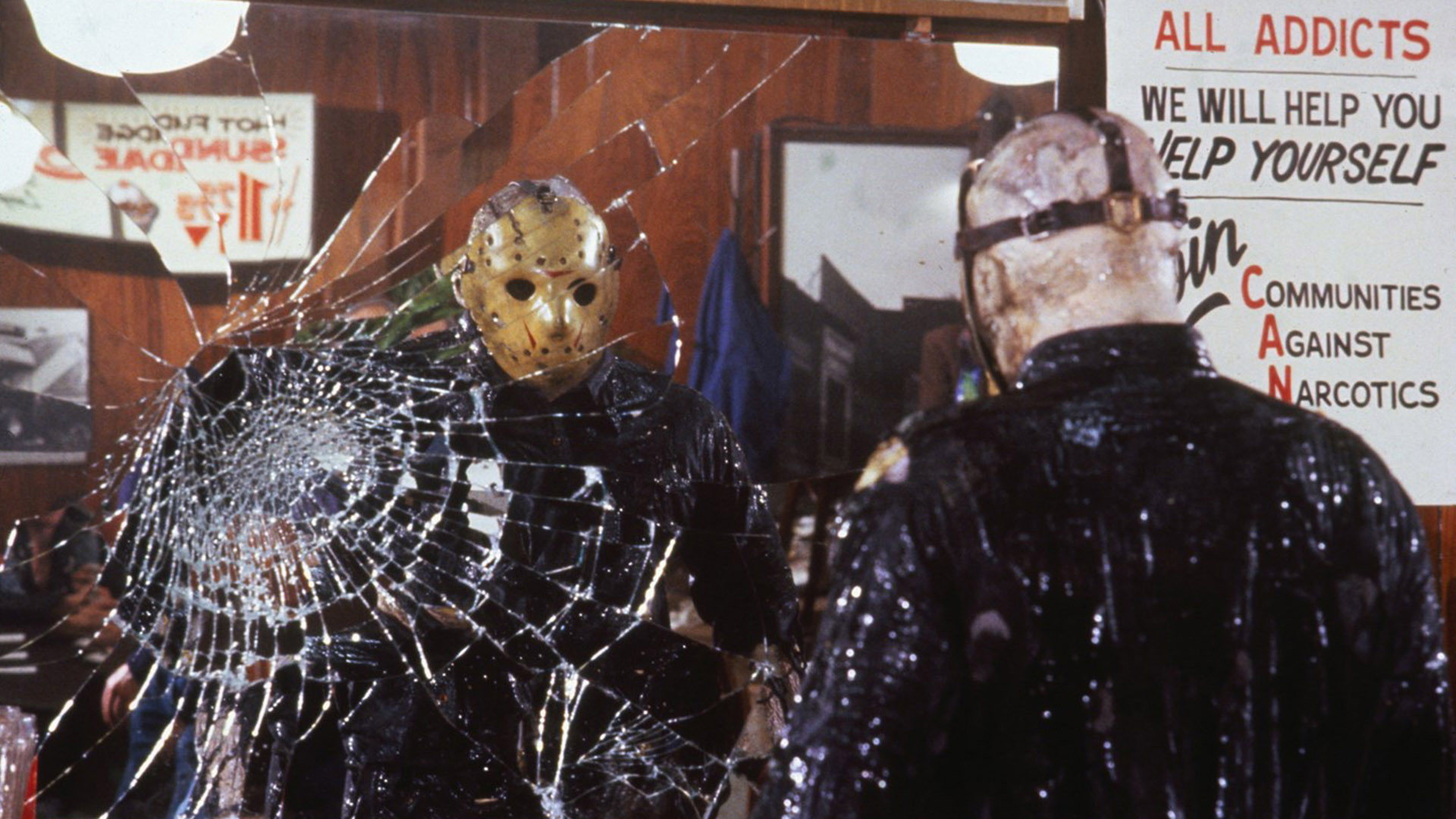
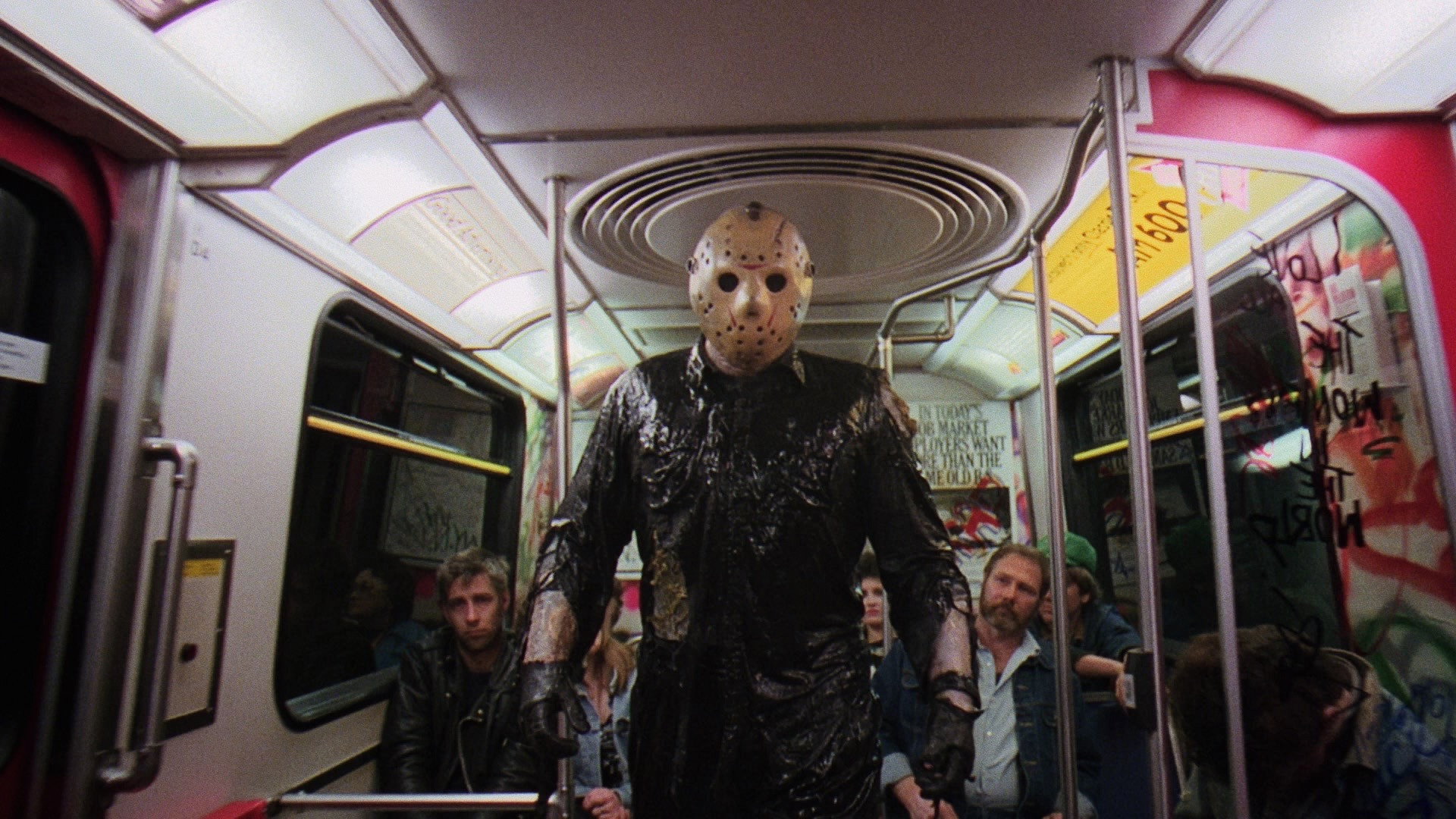
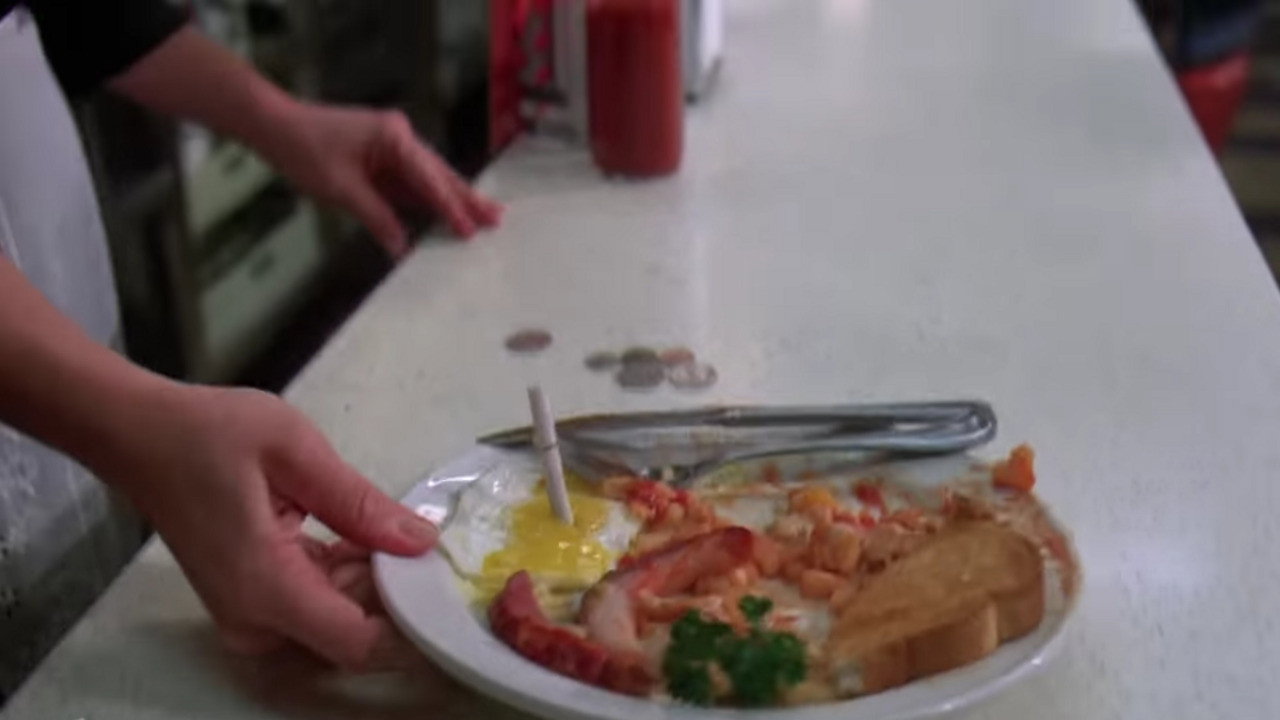
Jason chases Rennie and Sean into the subway. Sean knocks him onto the third rail and he goes down, but he gets back up. The chase moves through Times Square, where Jason scares off a gang of punks by lifting his mask at them, and into a diner, where he throws the cook into the mirror behind the counter. Rennie and Sean run into the sewers. A sanitation worker tells them the tunnels flood with toxic waste every night at midnight, which is only minutes away. Jason kills him with his own wrench and goes after Sean.
Rennie shines a flashlight in Jason's face to draw him away from Sean, then throws a drum of toxic waste in his face. He pulls off his mask as his face melts. Rennie and Sean climb a ladder. At midnight the flood comes and the wave carries Jason off. As the water rushes past, Rennie sees him as a small boy one last time, and her fear of him is gone. She and Sean come back up to the street and find Toby waiting for them in Times Square.
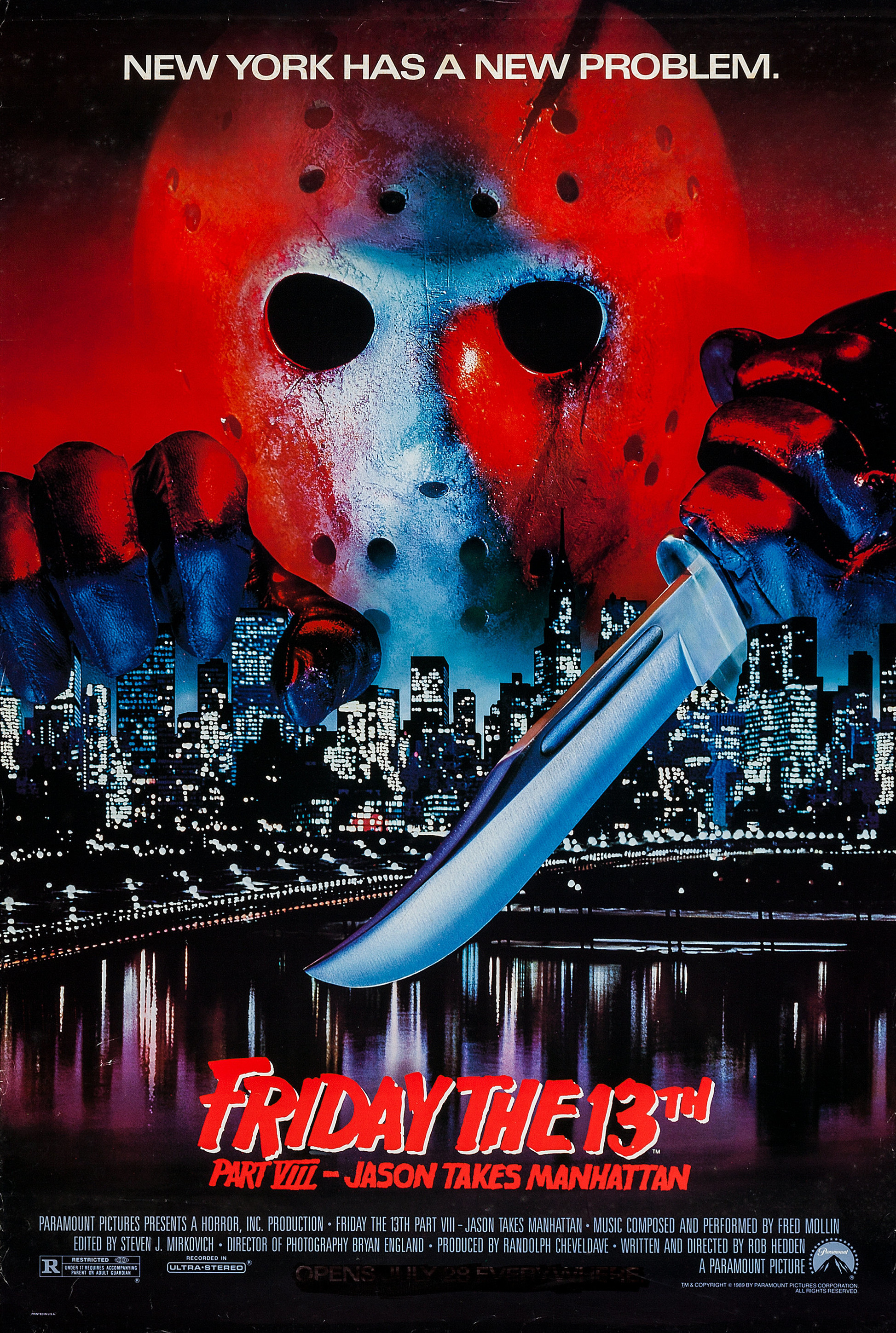
Paramount ran a heavy print and TV campaign. The first poster showed Jason slashing through the I Love New York logo. Vincent Tese of the New York State economic development office complained about the unauthorized use of the logo and threatened legal action. Paramount apologized, pulled the poster and put out a new one with Jason looming over the Manhattan skyline. Chris Willman of the Los Angeles Times praised the funny ad campaign even while panning the film.
The film opened July 28, 1989 and came in at number 5 for the weekend with $6.25 million. It was up against A Nightmare on Elm Street 5: The Dream Child, Halloween 5 and Fright Night Part 2 that year, and the trade press called it one of the summer's biggest disappointments. It finished with $14.3 million in the United States, the lowest gross in the series, and ranked number 70 for the year.
Critics were rough on it. Rotten Tomatoes has it at 13% from 30 reviews, Metacritic at 14 out of 100, and CinemaScore audiences gave it a C+. Willman called it a real dunghill. The Detroit Free Press gave it zero stars. Eleanor Ringel of The Atlanta Constitution and Betsy Sherman of The Boston Globe both complained that most of the movie happens on the boat, and Sherman said it should have been called Jason Takes a Cruise. Gary Thompson of the Philadelphia Daily News liked the change of scenery and the humor. Leonard Maltin gave it two stars out of four and called it the best in the series.
Adam Marcus, who directed the next film, said the New York idea was good but that keeping Jason on a boat for most of the running time insulted the audience. Entertainment Weekly ranked it the eighth worst sequel ever in 2007. Opinion has warmed since. Scott Meslow of GQ wrote in 2018 that it is one of the most stylish films in the series. Chad Villella, a producer of Scream VI (2023), said the Scream team studied Jason Takes Manhattan before shooting their own New York slasher.
The weak box office kept up the slide the series had been on. Paramount sold the rights to New Line Cinema soon after, and did not put out another Friday film until it co-distributed the 2009 remake.
1989 · studio press kit
2009 · DVD/Blu-ray supplement
Rennie Wickham
Sean Robertson
Colleen Van Deusen
Charles McCulloch
credited by the AFI Catalog as Mark Richman
Wayne Webber
Miles Wolfe
Julius Gaw
also listed as Vincent Craig Dupree
Eva Watanabe
feature film debut
J.J. Jarrett
Tamara Mason
Deck Hand
Admiral Robertson
Jason Voorhees
Jim Miller
credited by the AFI Catalog as Todd Shaffer
Suzi Donaldson
Young Jason Voorhees
Young Rennie Wickham
Chief Engineer Jim Carlson
the AFI Catalog credits him as Chief engineer; the Friday the 13th Wiki calls him Chief Petty Officer
Homes
credited as Gang banger #1 in the AFI Catalog
JoJo
credited as Gang banger #2 in the AFI Catalog
Irish Cop
Sanitation Engineer
Street Urchin
credited by the AFI Catalog as Vinny Capone; also a stunt player
New York Waitress
Boxer
uncredited in the role; credited as a stunt player
Trainer
uncredited
New York Diner Cook
uncredited; also stunt coordinator, and doubled Jason in two shots
Young Boy
listed by the Friday the 13th Wiki
Toby the dog
credited by the AFI Catalog
Director
Writer
Characters
Producer
Associate Producer
Unit Production Manager
Production Manager
Production Supervisor
First Assistant Director
Second Assistant Director
Third Assistant Director
Director of Photography
Camera Operator
Steadicam Operator
Still Photographer
Director of Photography, Special Effects Unit
Underwater Photographer
Steadicam Operator, Second Unit
Film Editor
First Assistant Film Editor
Music
Music Supervisor and Music Editor
Original Jason sound effects
Production Designer
Assistant Art Director
Storyboard Artist
Set Decorator
Construction Coordinator
Property Master
Costume Designer
Costume Supervisor
Special Makeup Effects Created
Assistant Special Effects Makeup
Assistant Special Effects Makeup
Special Effects Makeup Artist
Makeup Artist
Hairstylist
Mechanical Effects Coordinator
Special Effects Coordination
Visual Effects Supervisor
Miniature Effects
Miniatures Supervisor
Special Photographic Effects (Effects Associates, Inc.)
Titles and Optical Effects
Title Designer
Casting
Casting
Voice Casting
Extras Casting, Second Unit
Sound Mixer
Supervising Sound Editor and Supervising Sound Designer
Re-recording Mixing Supervisor
Re-recording Mixer
Stunt Coordinator
Script Supervisor
Location Manager
Production Coordinator
Dog Trainer
Color Timer
Producer
The New Blood (1988) did disappointing business. Director John Carl Buechler started working up a follow-up that would bring back Tina Shepard after her release from a mental hospital. Lar Park Lincoln, who played Tina, wrote her own script with her husband Michael Lincoln that had Tina working as a psychologist for troubled girls. Kevin Spirtas wrote one that turned The New Blood into a long dream with his character Nick as the killer. Paramount passed on all of them and gave the film to Rob Hedden, who had worked in television, including Friday the 13th: The Series. It was his first feature as writer and director.
Hedden, a former Universal Studios employee, wanted Jason out of Crystal Lake. One idea kept the whole film on a cruise ship, with Jason hiding in the lower decks. The other put him loose in New York. For the city version Hedden pictured a fight on the Brooklyn Bridge, a boxing match at Madison Square Garden, Jason walking through department stores, Times Square and a Broadway show, and even diving off the Statue of Liberty. Paramount approved both ideas, and Hedden combined them: the ship for the first half and Manhattan for the second. Money was the main reason. Shooting a whole film in New York cost more than the studio wanted to spend.
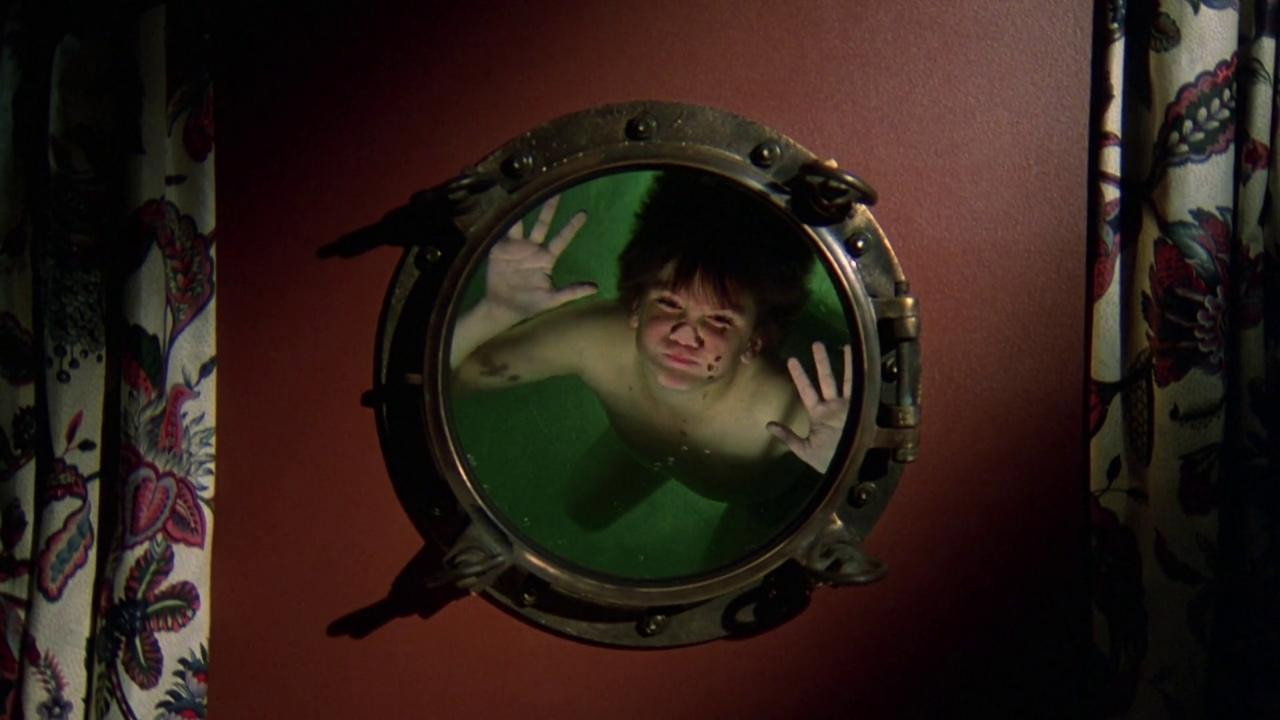
Hedden also wanted to look at Jason as a child, which is where Rennie's visions of the boy Jason came from. The script went out under the working title Ashes to Ashes to hide that it was a Friday the 13th film. An April 9, 1989 Los Angeles Times item reported that a film called Ashes to Ashes had started shooting in Canada, and Paramount at first said the two were separate projects. In the months before release the film was also called Friday the 13th Part VIII: Terror in Times Square.
Jensen Daggett won the part of Rennie over Elizabeth Berkley, Dedee Pfeiffer and Pamela Anderson. Lisa Wilcox was offered a role and turned it down. Scott Reeves was cast as Sean at the last minute, after the producers decided the actor first cast had no chemistry with Daggett. Kelly Hu made her feature debut here, and the AFI Catalog lists it as the first feature for Sharlene Martin, Martin Cummins, costume designer Carla Hetland and producer Randolph Cheveldave. Kane Hodder came back as Jason for the second time.
Most of the film was shot in and around Vancouver, British Columbia, in April 1989, with Vancouver alleys and a Vancouver SkyTrain station standing in for New York. The AFI Catalog says principal photography wrapped in late April. The unit then shot in Los Angeles and in New York City, where the Times Square scenes were filmed with crowds watching. Many of them were Friday fans. Hodder has said he pointed at one woman between takes and she fainted. The budget came in a little over $5 million, the most any film in the series had cost up to then.
Hedden later admitted on his DVD commentary that more of the film should have taken place in Manhattan, and blamed the budget and schedule. A scene at the Empire State Building was dropped because the crew had so little time in New York.
Jamie Brown is credited with creating the special makeup effects, with Tibor Farkas and William Terezakis as his assistants. The Horror Costume Index credits Farkas, Brown, Terezakis and Kane Hodder with the film's Jason design. For the finale, the unmasked Jason's face melts after Rennie throws toxic waste at him, and a separate melted mask was made for that scene.
Martin Becker coordinated mechanical effects, Reel EFX handled special effects coordination, Light & Motion Corp. built the miniatures under John Jackson with Dale Fay supervising visual effects, and Jim Danforth of Effects Associates did special photographic effects. Cinema Research Corporation did the titles and opticals. A special effects unit shot with Brenton Spencer as cameraman, and Pete Romano shot the underwater work.
The 2009 deluxe DVD added a Slashed Scenes section with two or three extended kills.
Jamie Brown created the principal special-makeup-effects look with Tibor Farkas and Bill Terezakis among the Vancouver technicians. The waterlogged Jason was repeatedly slicked and distressed, with the sewer-finale makeup engineered so the toxic-waste attack could bubble and melt the mask/flesh treatment on camera.
The physical-effects package also used mechanical effects, miniatures, optical work and underwater equipment. Credits identify Reel EFX, Light & Motion, Effects Associates and Cinema Research among the effects vendors supporting the ship, city and sewer material.
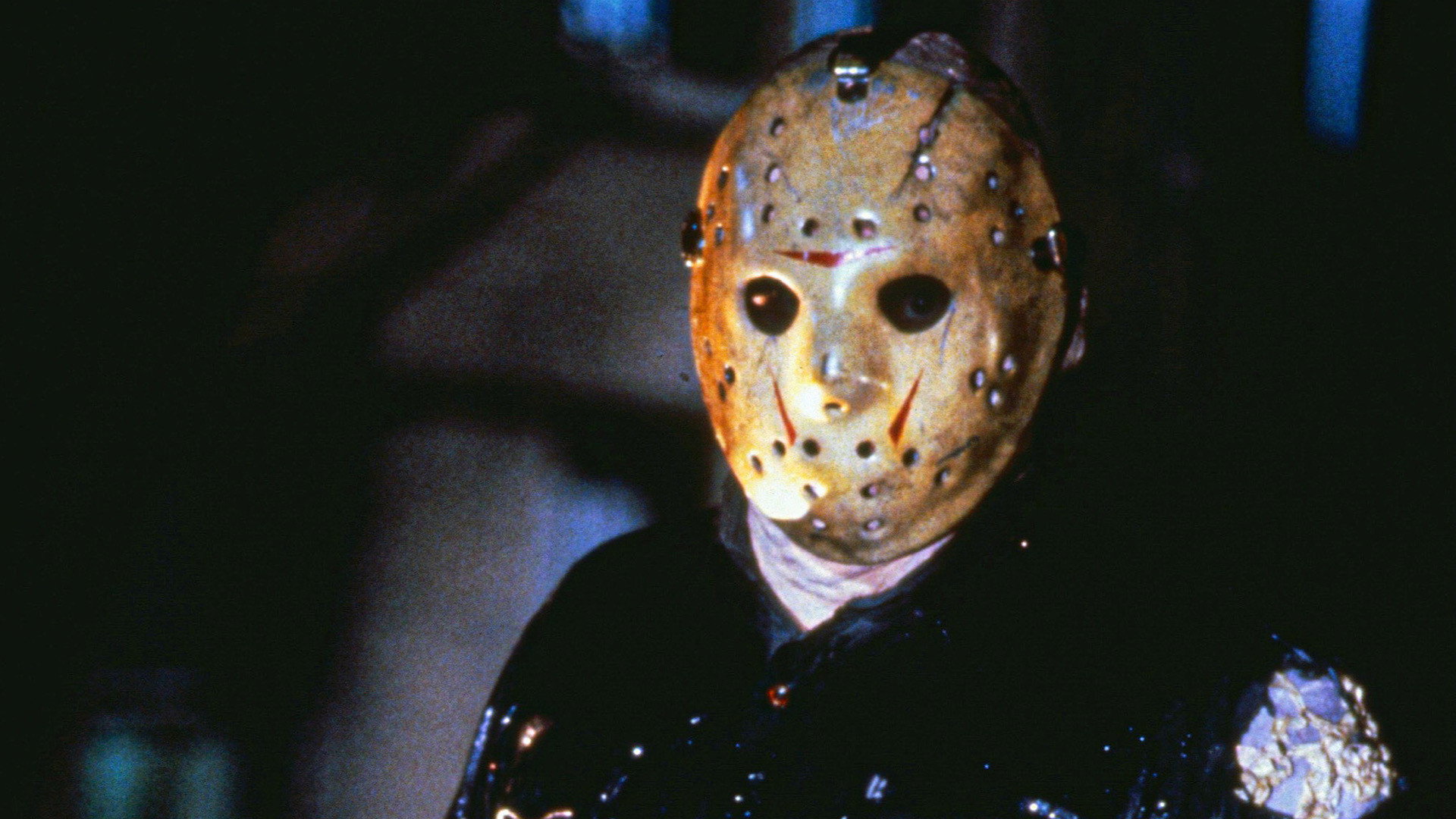
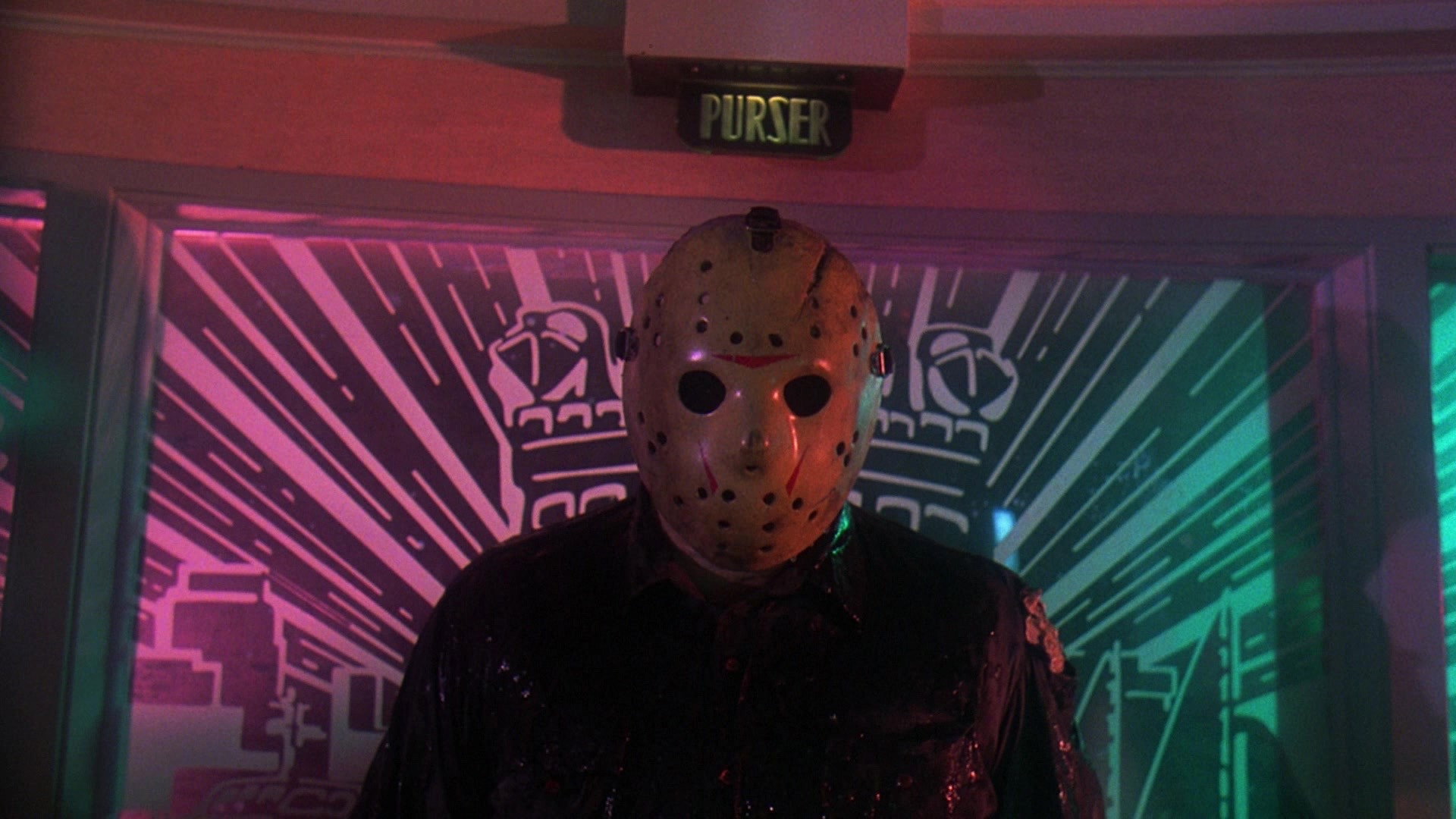
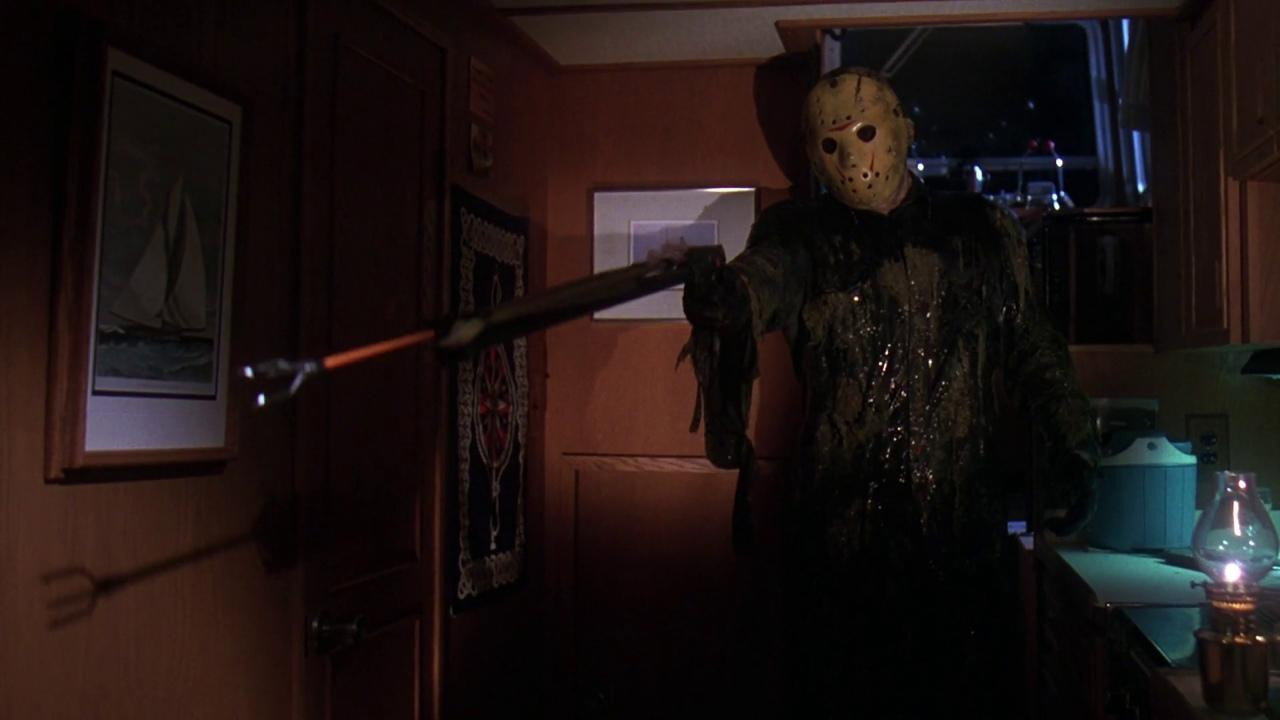
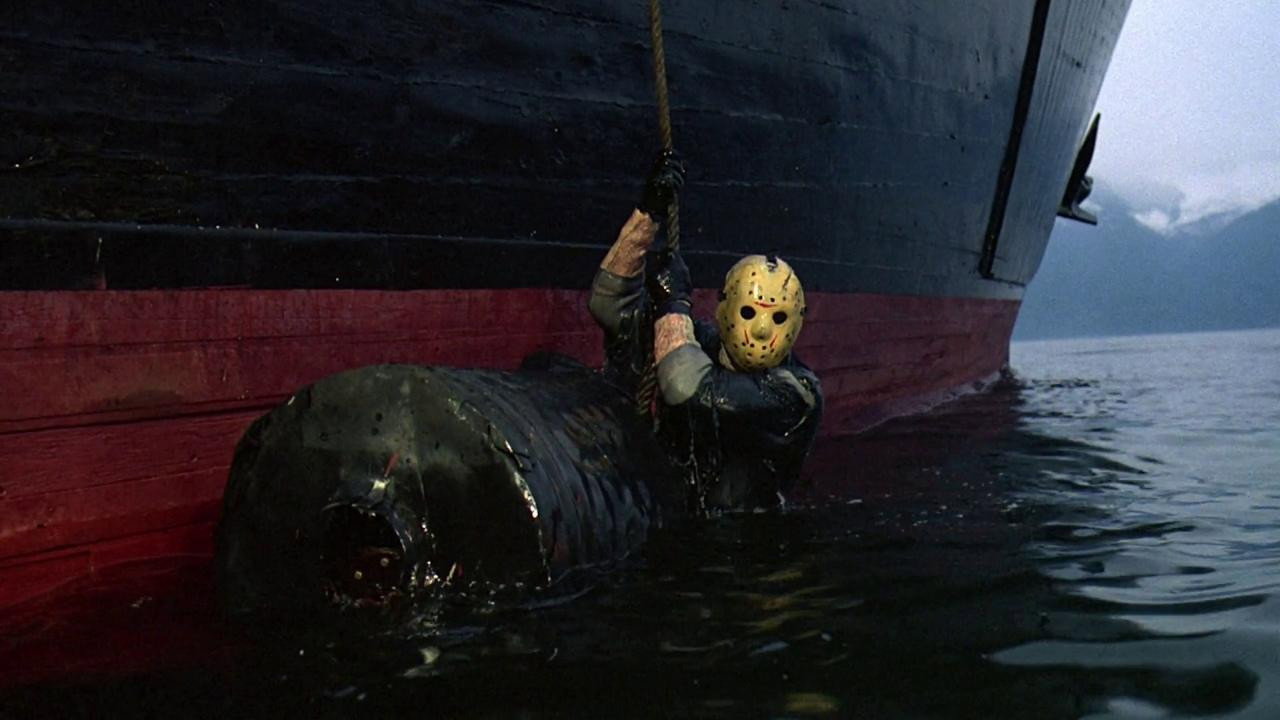
The Horror Costume Index says the hockey mask was pulled from a mold of a leftover Part VI mask in thick clear thermoform plastic, which gives it a bloated look. It was painted silver on the inside and front, grimed with yellow and green-black washes, and given the usual red chevron on the forehead plus two upside-down chevrons on the cheeks that no other mask has.
Three masks were made: a hero mask owned by collector Mario Kirner, a stunt mask that went unsold on eBay, and a melted mask for the sewer finale. Nobody is sure where the melted mask is now. The Horror Costume Index guesses Rob Hedden has it.
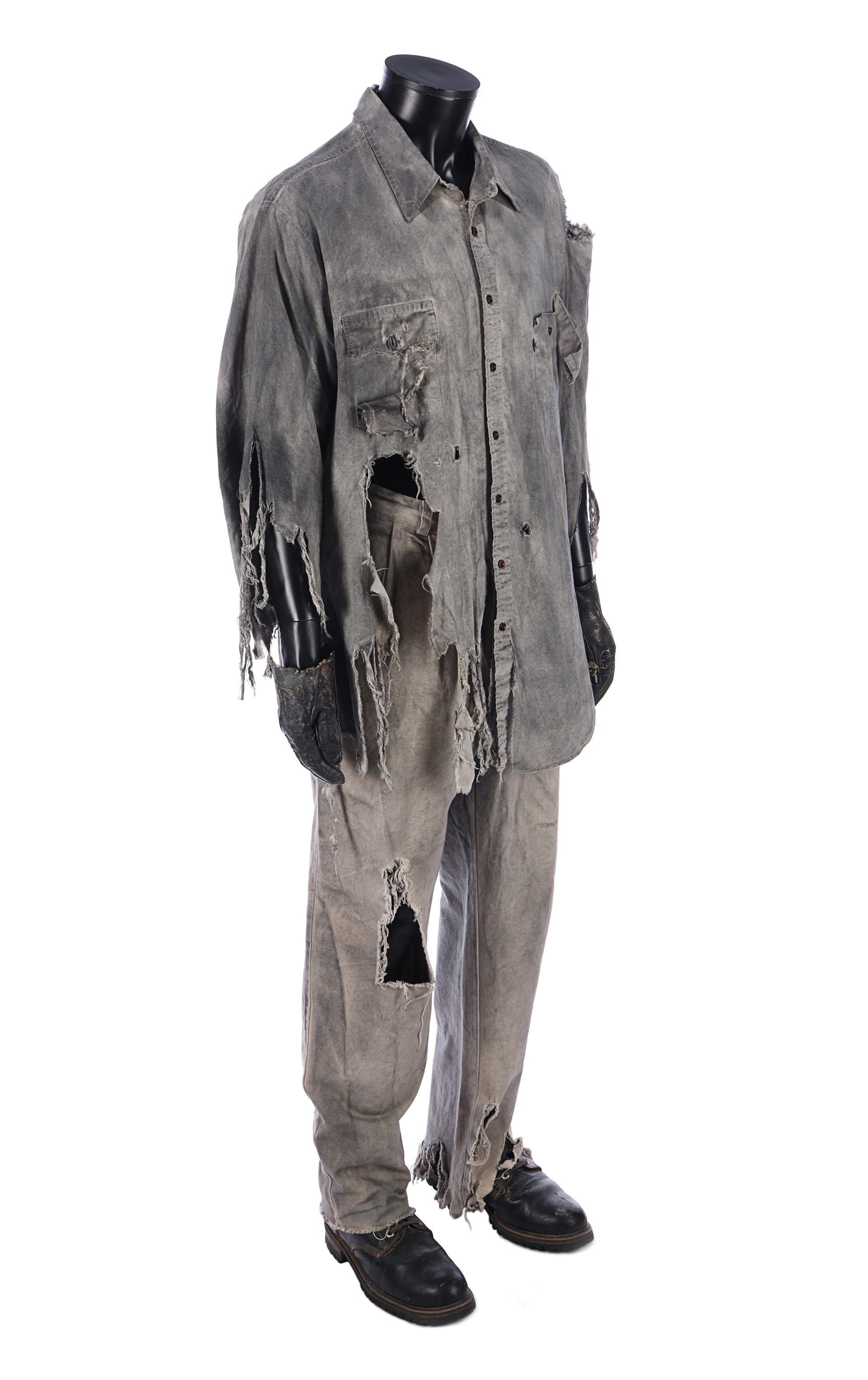
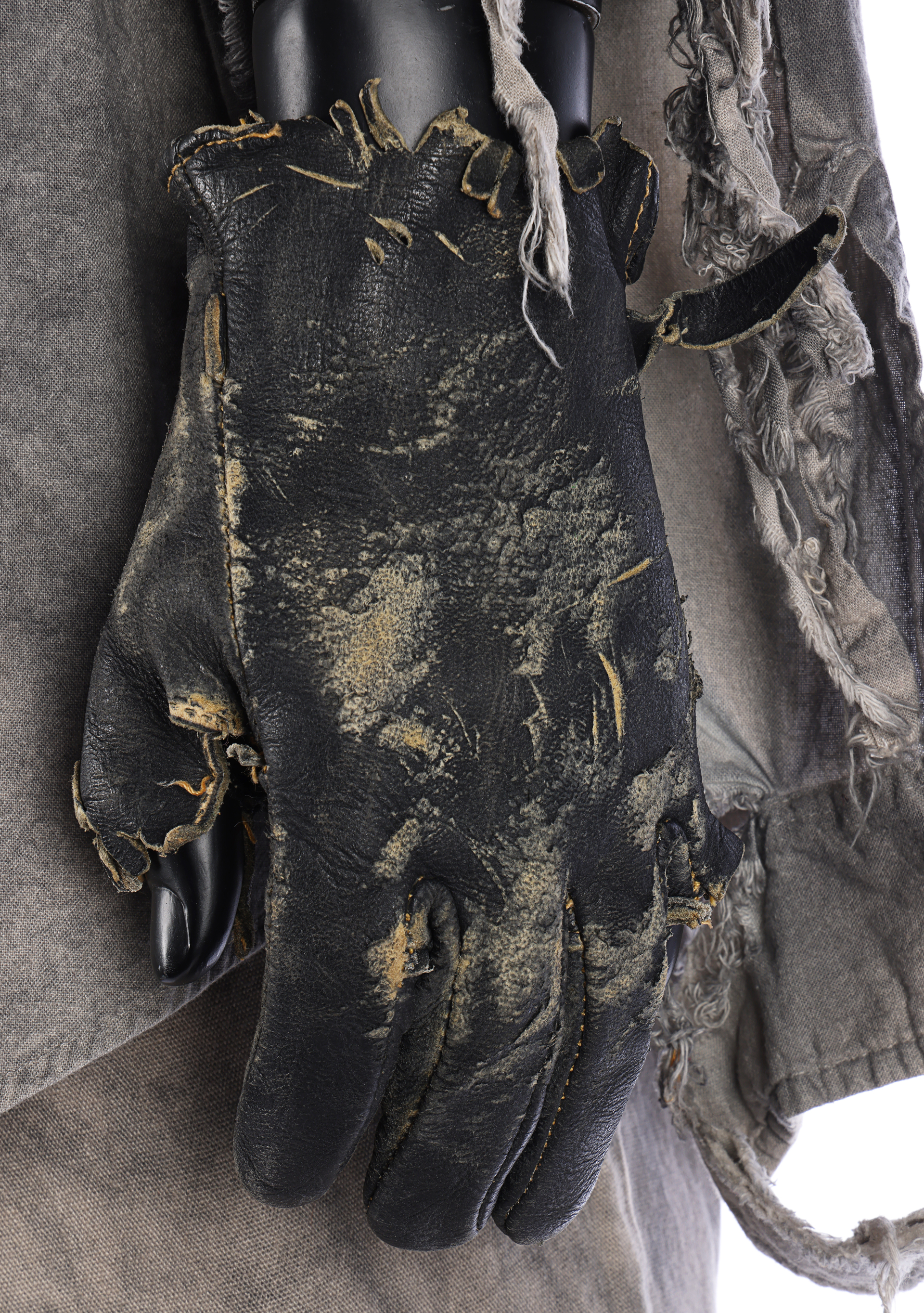
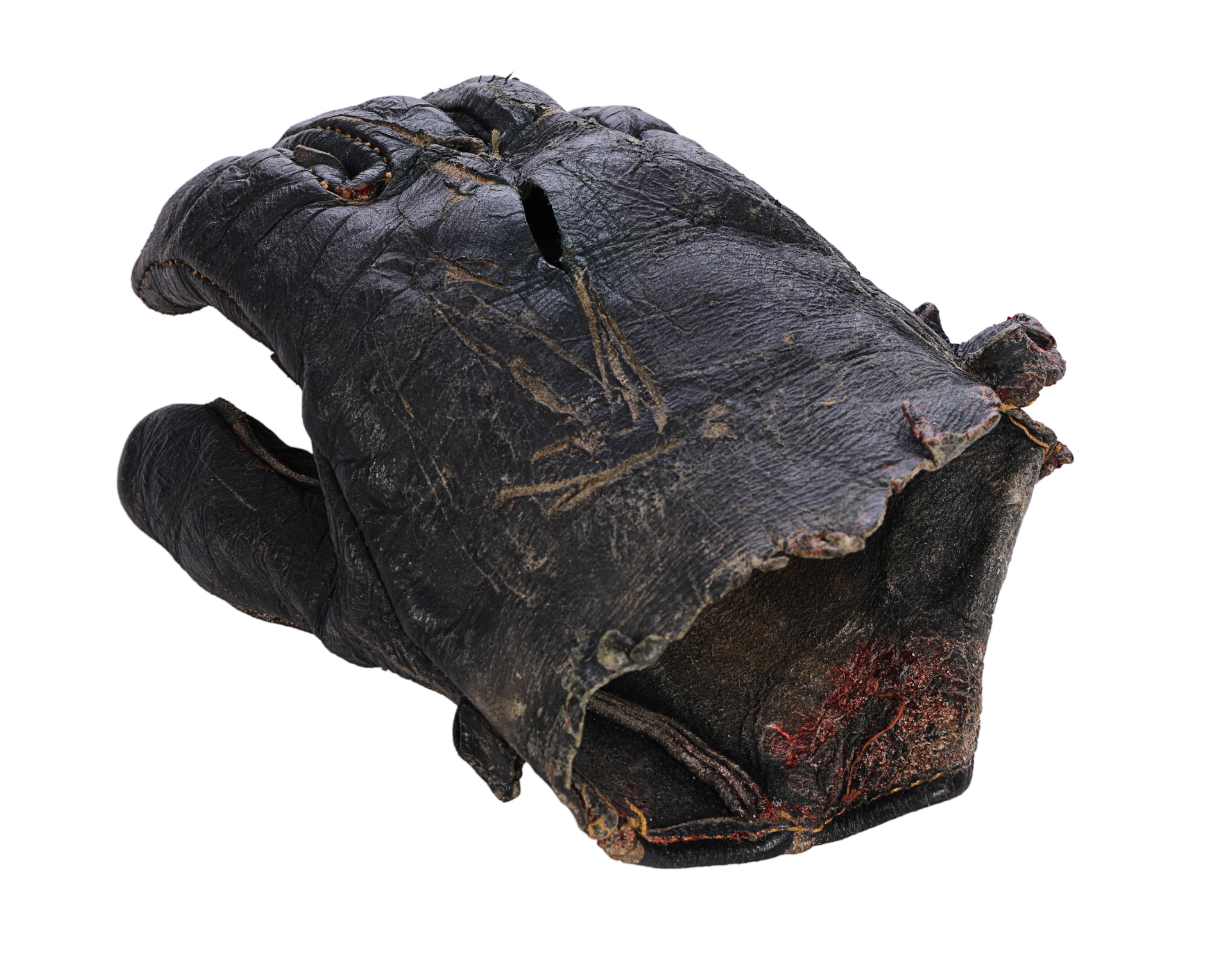
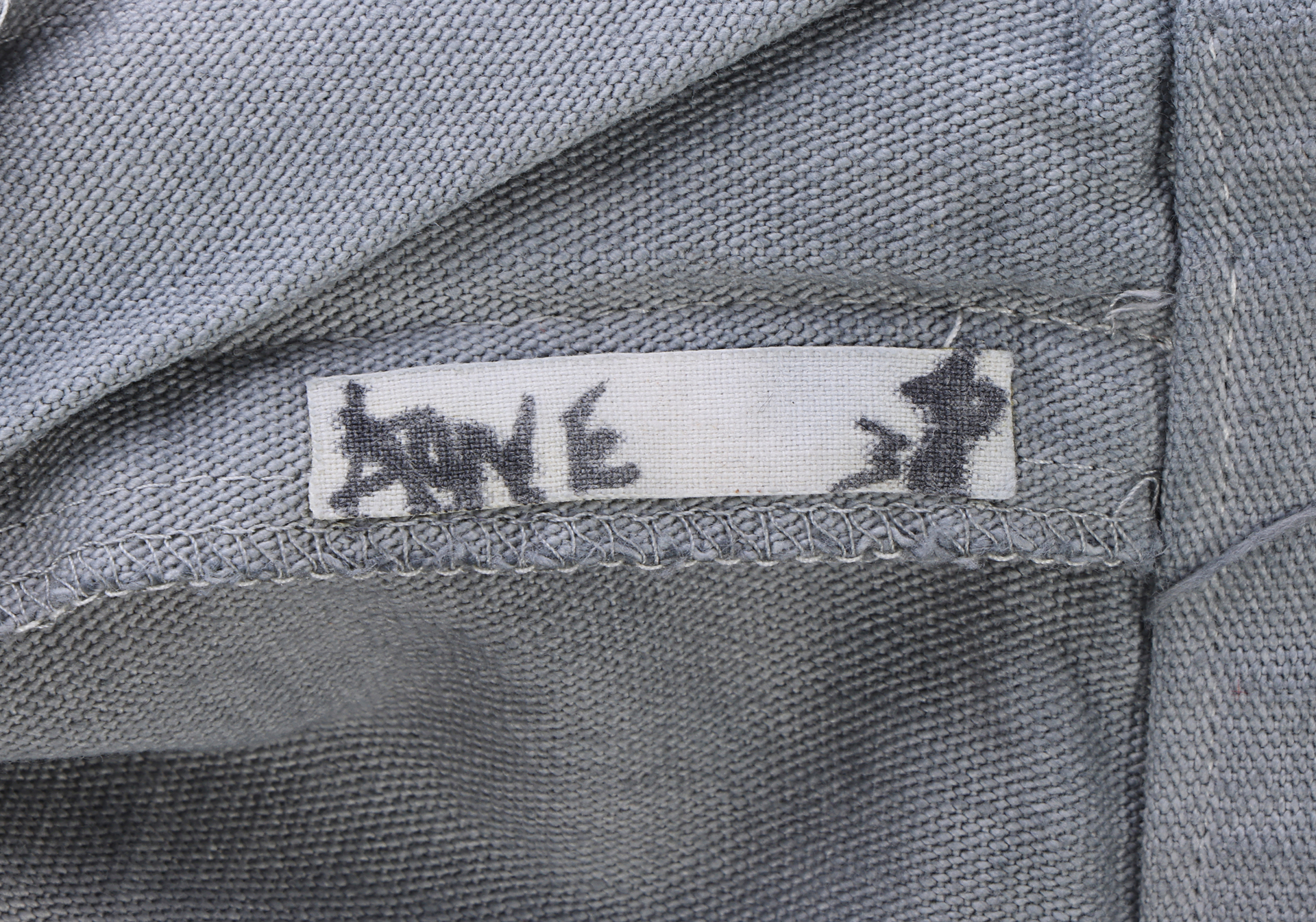
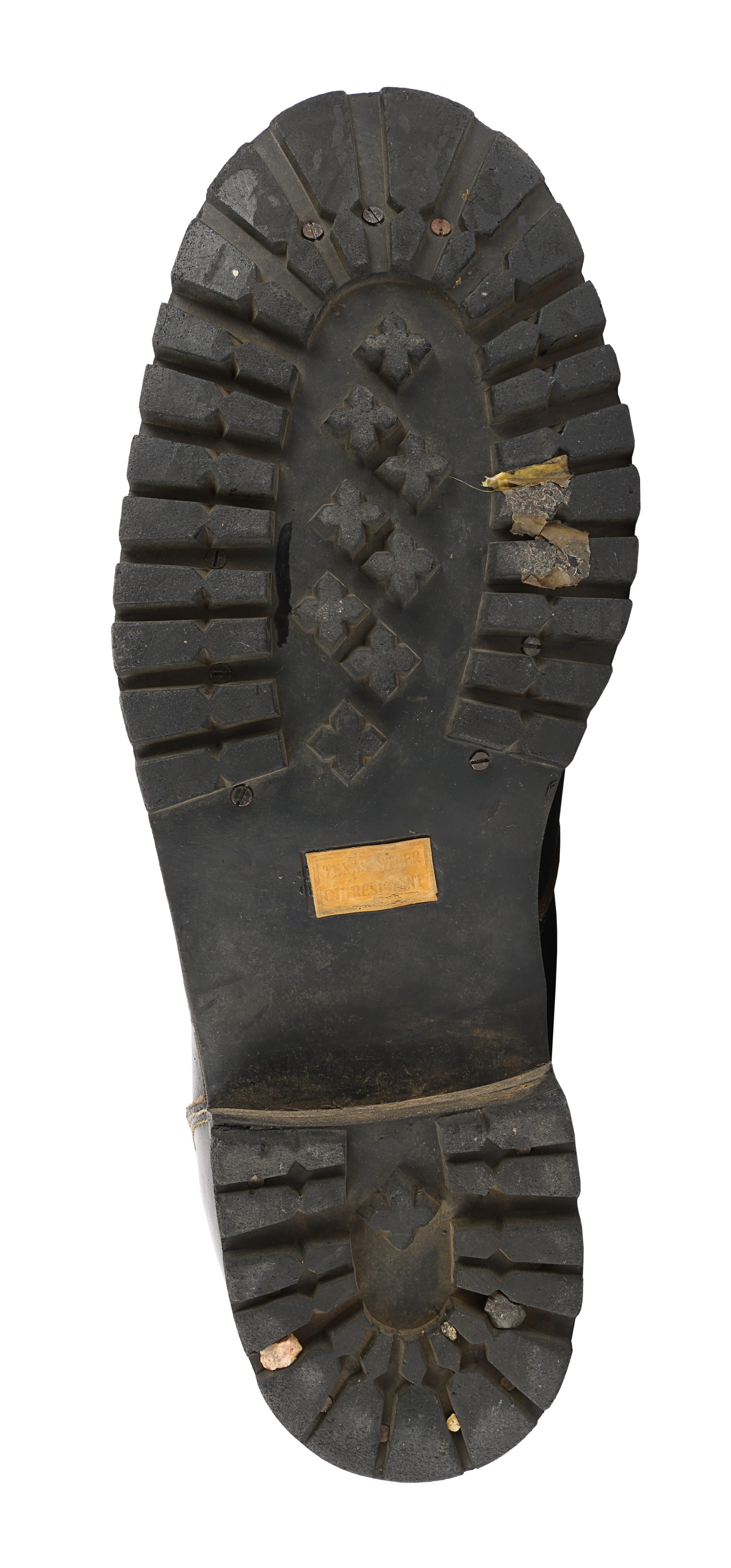
Jason wears a light grey Levi's chambray western shirt, light grey Levi's chambray pants, weathered black leather gloves and black Texas Steer logger boots.
His main blade is a 24-inch Imacasa machete. He also uses a fiberglass pole spear with a three-prong trident tip.
The Part VIII hockey mask was molded from a surviving Part VI-derived form and vacuum-formed in thick clear plastic, producing the film's broader mask shape. Three principal variants are documented: hero, stunt and chemically melted masks.
Jason's wardrobe uses matching light-grey Levi's chambray shirt and trousers, black leather gloves and black Texas Steer logger boots. His weapon props range from an Imacasa/Collins-style machete and fiberglass trident spear to deliberately opportunistic one-off objects such as the guitar and broken glass.
1989 · screen-used mask
1989 · archived screenplay
Fred Mollin composed and performed the score. He had worked with Harry Manfredini on The New Blood, and this was the first film in the series without Manfredini credited on the music. The end credits still say the original Jason sound effects were created by Manfredini. Christopher Kennedy was music supervisor and editor. The AFI Catalog credits Brian Nevin with recording the music at Zoomar Studios and Jeff Wolpert with mixing it at Inception Sound Studios, both in Toronto.
La-La Land Records notes that Mollin wrote the score without the ki-ki-ki, ma-ma-ma motif. That sound was added in the final mix, so many of its uses are missing from the album.
"The Darkest Side of the Night" by Metropolis (written by Fred Mollin and Stan Meissner, sung by Peter Fredette) plays over the opening and closing credits. Hedden asked for something that sounded like Robert Plant. It was not officially released until the 1999 album The Power of the Night.
"Broken Dream" (Mollin and Meissner, vocals by Terri Crawford) is the song J.J. jams along to on her guitar. "J.J.'s Blues" is a Meissner instrumental. Meissner once told a fan that no full versions of the two songs were ever recorded. Fans later noticed a longer instrumental of the track in the club scene of "Dark Knight," the 1992 first episode of Forever Knight.
Other songs credited by the AFI Catalog: "Living in the City" (Meissner), "Say This to Me" (Ric Johnston, performed by Neo a4), "Tamara's Bio Project" (Rob Hedden), "Stalker's Rocker" (Steve Linn), "Strike" (Bob Hayman and John Powell, performed by The Koo) and the theme from "New York, New York" (John Kander and Fred Ebb).
September 27, 2005: BSX Records released a limited edition CD of Mollin's scores for Part VII and Part VIII.
March 2021: La-La Land Records released a limited edition of 2,000 copies, 19 tracks running 67:05. It was produced by Dan Goldwasser and Fred Mollin, mastered by James Nelson, with liner notes by Brian Satterwhite. Fifteen tracks are score. The four bonus tracks are "Broken Dream," "Livin' in the City," "J.J.'s Blues" and an instrumental of "The Darkest Side of the Night."
Blu-ray
NECA · figure
NECA · game figure
Jason Universe partner shop · figure
Jason Universe partner shop · game accessory
Jason Universe partner shop · keychain
BoxLunch · apparel
Paramount Movies Digital