Cast
Dana Kimmell
Chris Higgins
Paul Kratka
Rick Bombay
Tracie Savage
Debbie Klein
Jeffrey Rogers
Andy Beltrami
Catherine Parks
Vera Sanchez
Larry Zerner
Shelly Finkelstein
the film calls him only Shelly; Finkelstein comes from fan sources
David Katims
Chuck Garth
Rachel Howard
Chili Jachson
Richard Brooker
Jason Voorhees
Nick Savage
Ali
Gloria Charles
Fox
Kevin O'Brien
Loco
Charlie Messenger
State Trooper #1
Terry Ballard
State Trooper #2
also art director and technical advisor
Terence McCorry
State Trooper #3
also Steve Miner's assistant
Anne Gaybis
Cashier
Cheri Maugans
Edna Hockett
Gianni Standaart
Newswoman
Steve Susskind
Harold Hockett
Perla Walter
Mrs. Sanchez
David Wiley
Abel
Steve Miner
Newscaster
the film's director
Betsy Palmer
Pamela Voorhees
special appearance; archive footage
Amy Steel
Ginny Field
special appearance; archive footage
John Furey
Paul Holt
archive footage from Part 2
Steve Daskewisz
Jason Voorhees (Part 2 footage)
archive footage from Part 2
Marilyn Poucher
Pamela Voorhees' corpse in the dream
uncredited; also second assistant director
Crew
Steve Miner
Director
Martin Kitrosser
Screenplay
Carol Watson
Screenplay
Petru Popescu
Uncredited script rewrite
Victor Miller, Ron Kurz
Characters
Frank Mancuso Jr.
Producer
Tony Bishop
Co-Producer
Peter Schindler
Associate Producer
Lisa Barsamian
Executive Producer
Gerald Feil
Director of Photography
Eric Van Haren Noman
Camera Operator
Steve Slocomb
First Assistant Camera
Mako Koiwai
Second Assistant Camera
Mitch Bogdanowicz
3-D Camera Technician
George Michael Brown
Louma Crane Technician
Tim Evans
Key Gaffer
J.B. Richner
Best Boy Electric
Gary Stark
Lamp Operator
Steve Rez III
Key Grip
Brian Smith
Best Boy Grip
Chico Anzures
Dolly Grip
Laurel Moore
Still Photographer
Robb Wilson King
Art Director
Dee Suddleson
Set Decorator
Bonnie Ballard
Property Master
Mike May
Assistant Property Master
George Hively
Editor
Larry Morrison
Assistant Editor
Holly Shadduck
Negative Cutter
Sandi Love
Costume Supervisor
Gala Autumn
Assistant Costume Designer
Harry Manfredini
Composer; title theme co-writer
Michael Zager
Title theme co-writer and co-producer
Ed Newmark
Title theme co-producer
Jack Tillar
Music Editor
Nieman Tillar Associates
Music Post-Production
Bill Nelson
Production Mixer
Earl Sampson, David Kelson
Boom Operators
Clive Smith
Sound Effects Editor
William L. McCaughey, Terry Porter, Kevin F. Cleary
Re-recording Mixers
Martin Jay Sadoff
3-D Supervisor
Martin Becker
Special Effects
Terry Ballard
Technical Advisor
Celestial Mechanix, Inc.
Main Titles
Howard A. Anderson Company
Opticals
Make-Up Effects Labs: Douglas J. White, Allan A. Apone, Frank Carrisosa
Special Visual Makeup Effects
Kenny Myers, Lou Lazzara, Larry Carr
Assistant Makeup
Cheri Minns
Makeup
Shannon Ely
Hairstylist
Bill Lytle, Dave Emann
Casting
Kathleen Newport
Script Supervisor
Terry Collis
Production Manager
Richard Davis
First Assistant Director
Marilyn Poucher
Second Assistant Director
Janet Lee Smith
Production Coordinator
Francine Mozurkevich
Production Accountant
Jim Lannen
Transportation Coordinator
John Sherrod
Stunt Coordinator
Pamela Bebermeyer, Mike Deluna, Tom Elliott, Marguerite Happy, Jimmy Medearis, Steve Vandeman
Stunts
Movielab
Color
Production
Early story ideas continued Ginny from Part 2. One had her locked up in a psychiatric hospital where Jason finds her and kills the staff and patients. Another had her learning self-defense and going back to college, finding Paul's corpse in her dorm and going after Jason with Ted Bowen. Amy Steel said the producers really wanted her but only had an outline, and between her agents and other work she did not come back.
Ron Kurz was offered the script and turned it down. The husband-and-wife team of Martin Kitrosser, script supervisor on the first two films, and Carol Watson wrote the first draft. Paramount brought in Petru Popescu to make it more sinister. His changes shaped the final film, but he got no credit. The script called for Jason to cover his face with a mask to replace the sack.
Popescu later said the cast was picked for looks, not talent, and did not match his idea of the characters. Miner cast Dana Kimmell after hearing about her work in the slasher Sweet Sixteen, which she made with Bo Hopkins and Susan Strasberg. Tracie Savage, a former child actor, got the Debbie role through her agent. Casting directors spotted Larry Zerner walking down a street and offered him Shelly. British stuntman Richard Brooker was cast as Jason.
Martin Jay Sadoff, who knew producer Frank Mancuso Jr., pitched shooting in 3-D. Georgetown Productions, which made the first two films, agreed with Paramount in January 1982 to shoot it in 3-D, though Georgetown got no screen credit. It was Paramount's first 3-D film since Jivaro in 1954. Paramount leased two 3-Depix cameras from Marks Polarized Corporation while executive Al Lo Presti spent about a year researching a projection lens system Paramount could own. The 3-D technology cost about $15 million to develop.
Sadoff said Miner and Mancuso cared more about the tight schedule than the 3-D, and Paramount warned it would not release the film if the effects looked stupid. Forbes reported that Gale Weaver of Sirius II Corp. visited the set after hearing Mancuso worry that bad projection lenses would block a wide release. In about two weeks, Weaver built a prototype lens that fit almost any projector, and Paramount paid Sirius II $1 million to make them.
Marks Polarized sued Paramount for $25 million, claiming the studio was monopolizing 3-D exhibition gear and giving discounts to theaters that leased Paramount's lenses. Paramount agreed to the on-screen credit Filmed utilizing the Marks 3-Depix Converter, but the court would not force it to change equipment. In 1985 Stereovision International filed its own restraint-of-trade suit, and Paramount won in 1986.
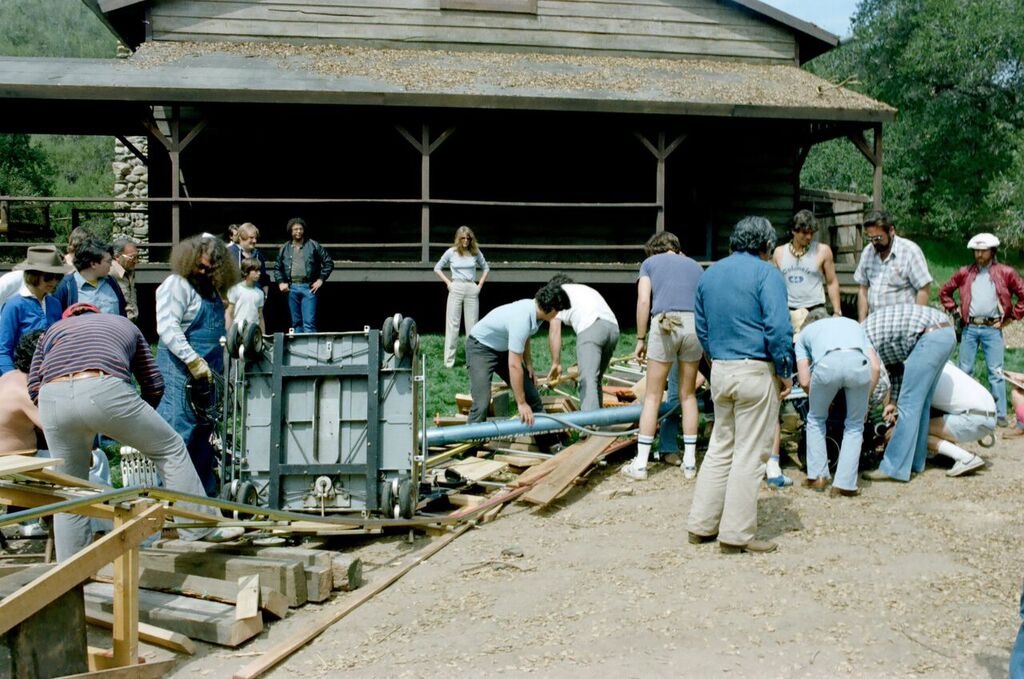
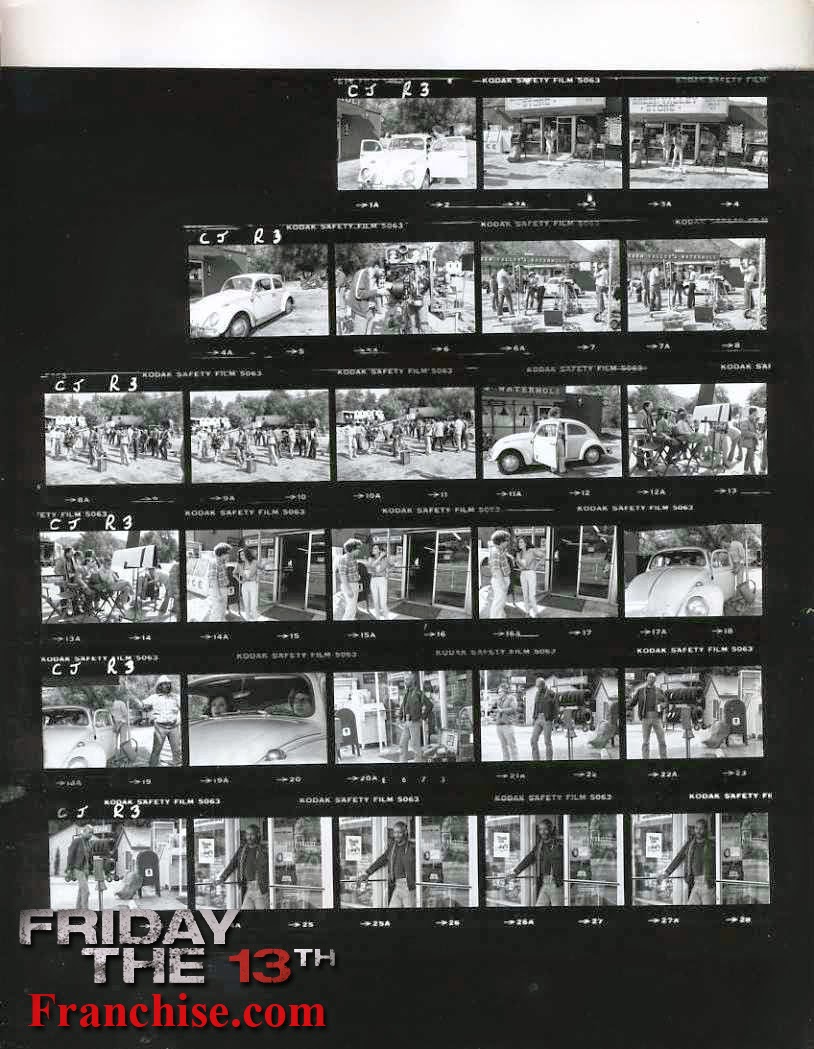
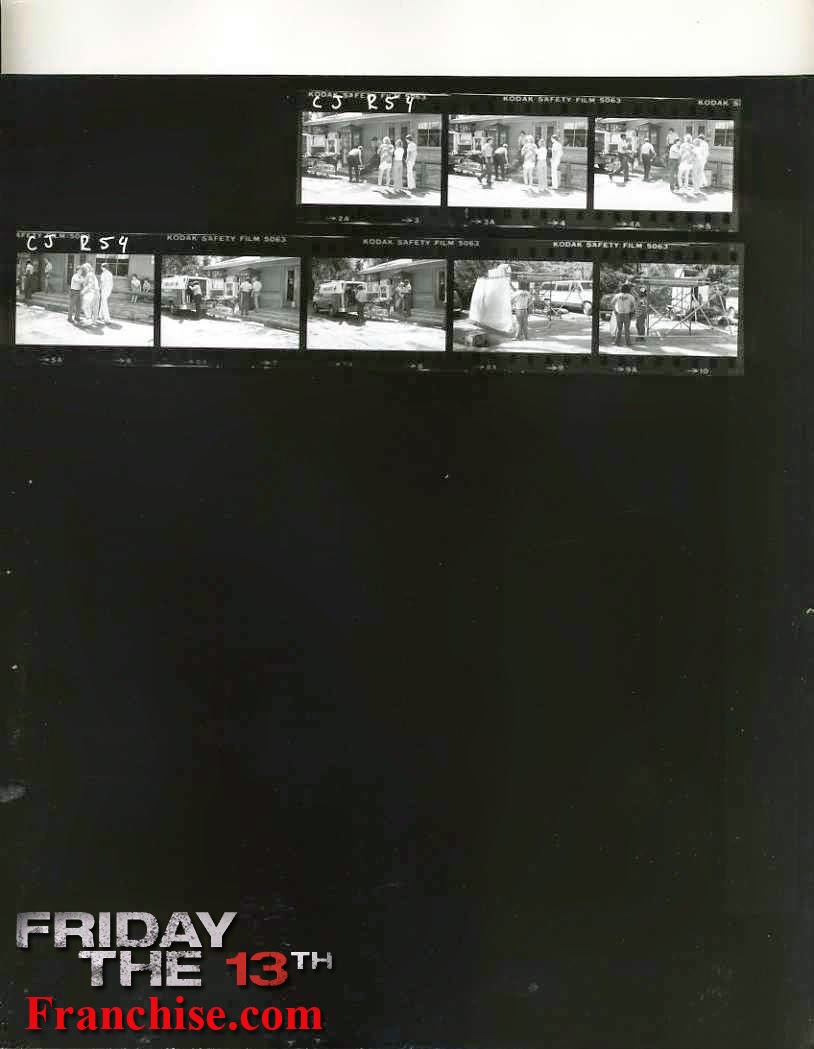
Filming ran from March to May 1982 at the Valuzet Movie Ranch in Saugus, California, making this the first film in the series shot away from the East Coast. The house, barn and lake were built for the film. The house stood until it burned down in 2006. The grocery store scenes were shot at a small market in Green Valley, California.
The new 3-D lenses made setups slow, sometimes hours per shot, with many takes to get the effects right. Larry Zerner recalled that performances mostly did not matter. After ten takes of throwing a wallet at the lens, the direction got a lot ruder. Tracie Savage said the only priority was making the 3-D work.
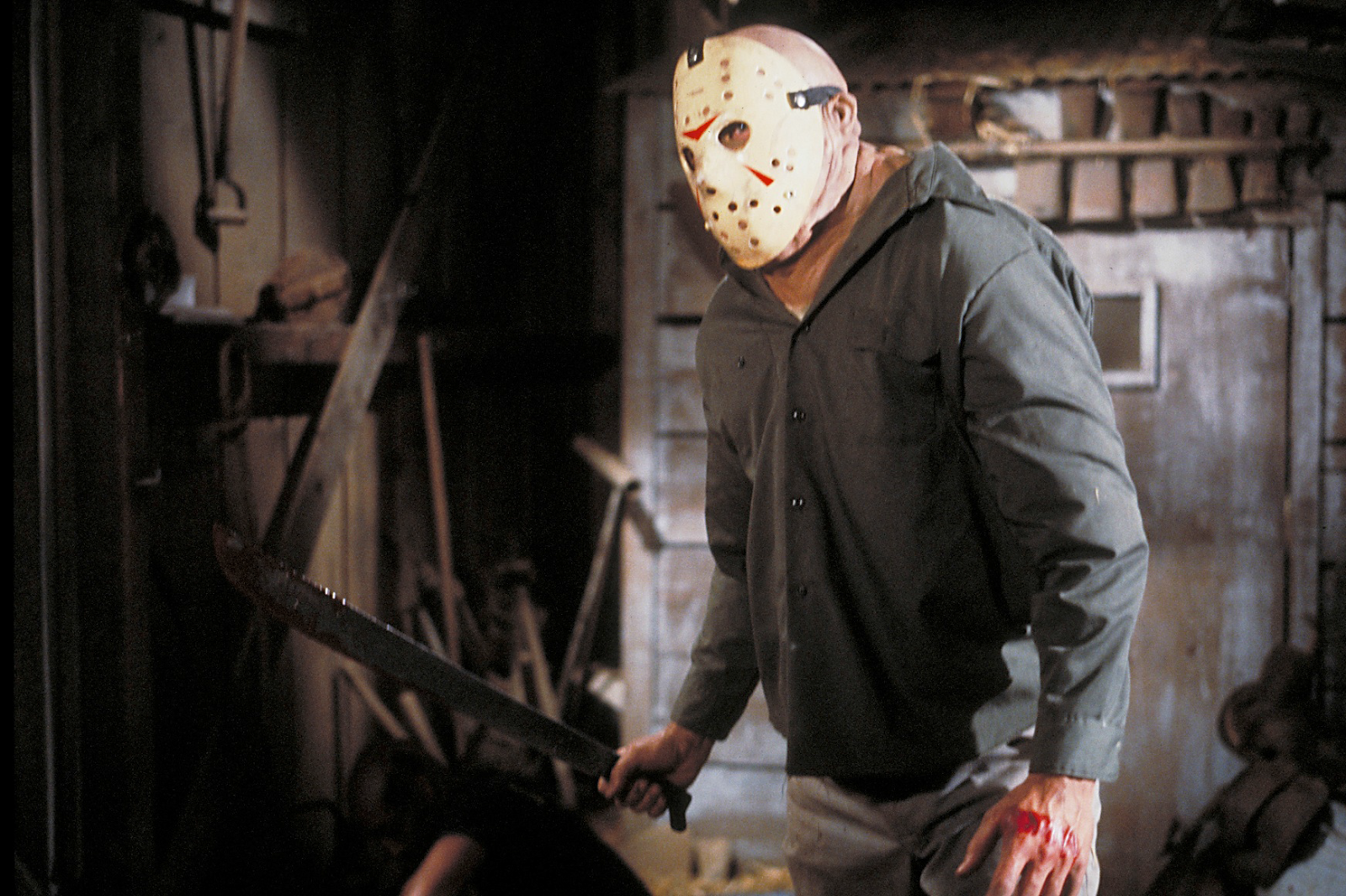
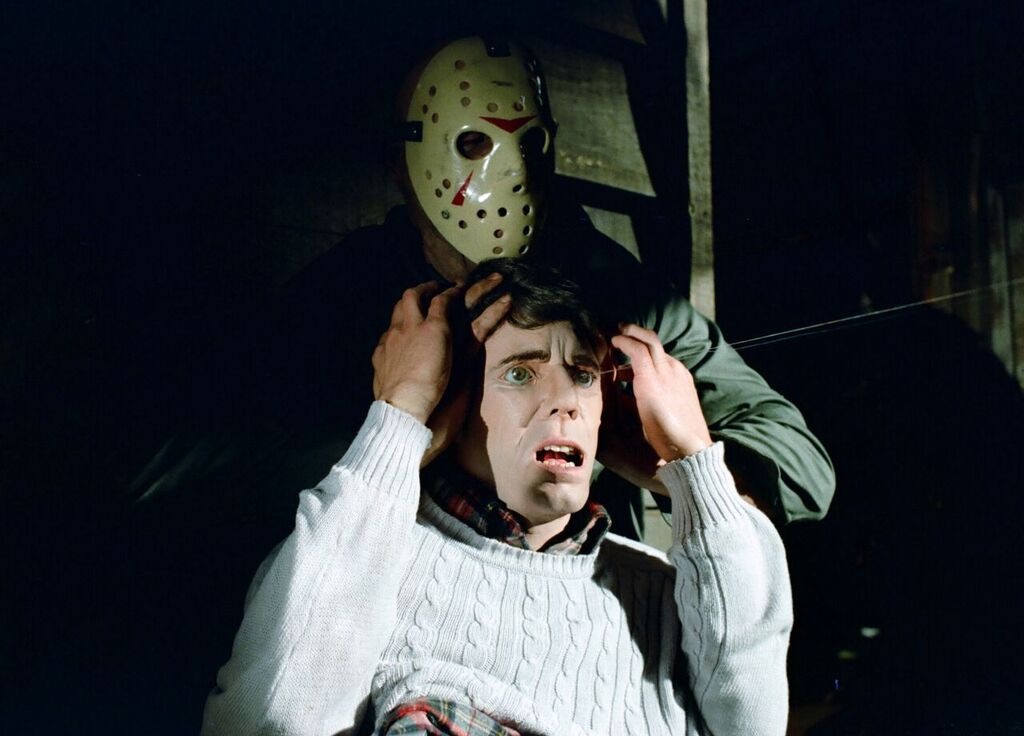
The hockey mask came from a lighting check. Sadoff, a hockey fan, handed Miner a Detroit Red Wings goaltender mask. Miner loved it but it was too small, so makeup effects director Doug White enlarged it using a VacuForm process and made a new mold. Art director Terry Ballard added the red triangles, punched new holes and changed the markings so it no longer matched the original.
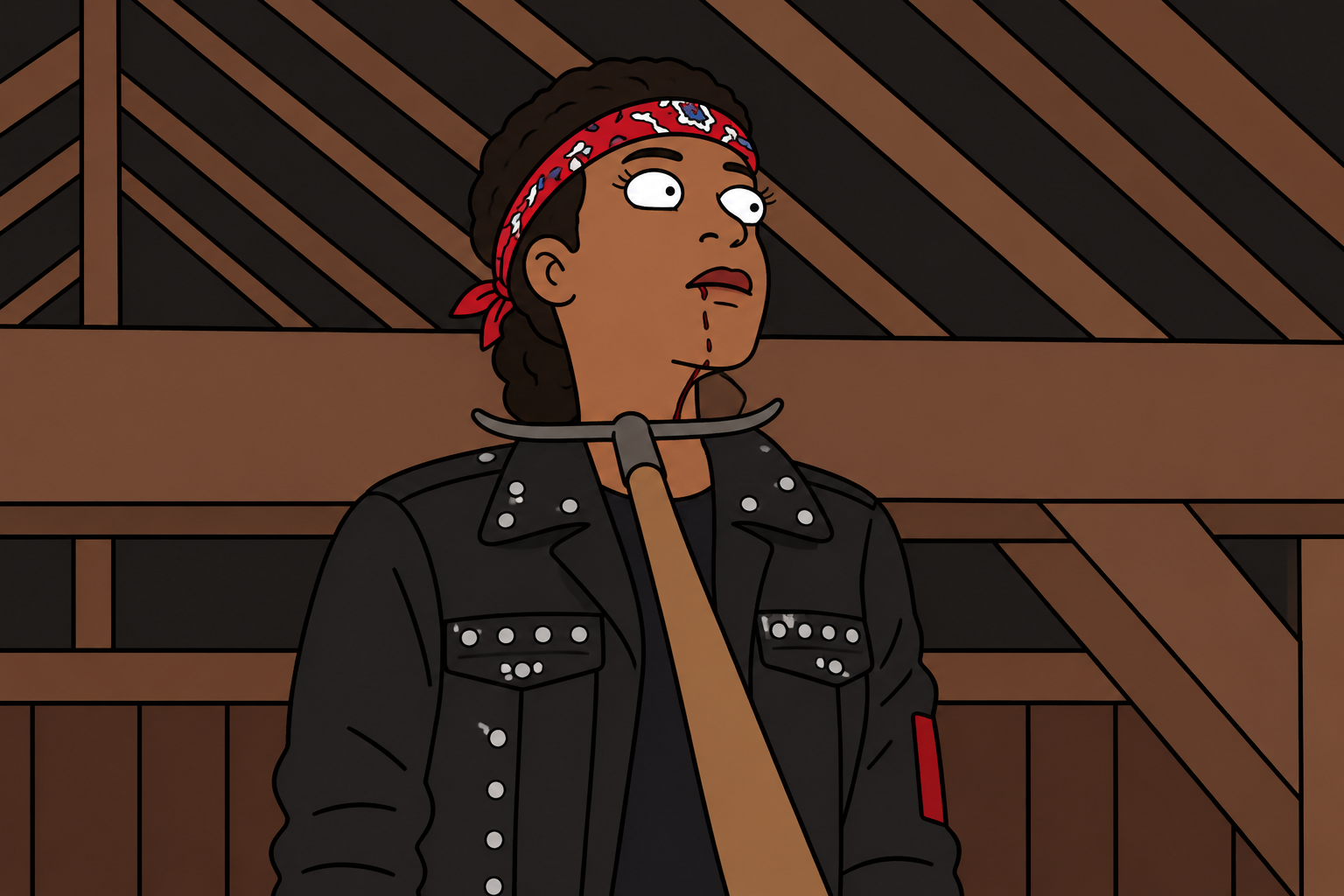
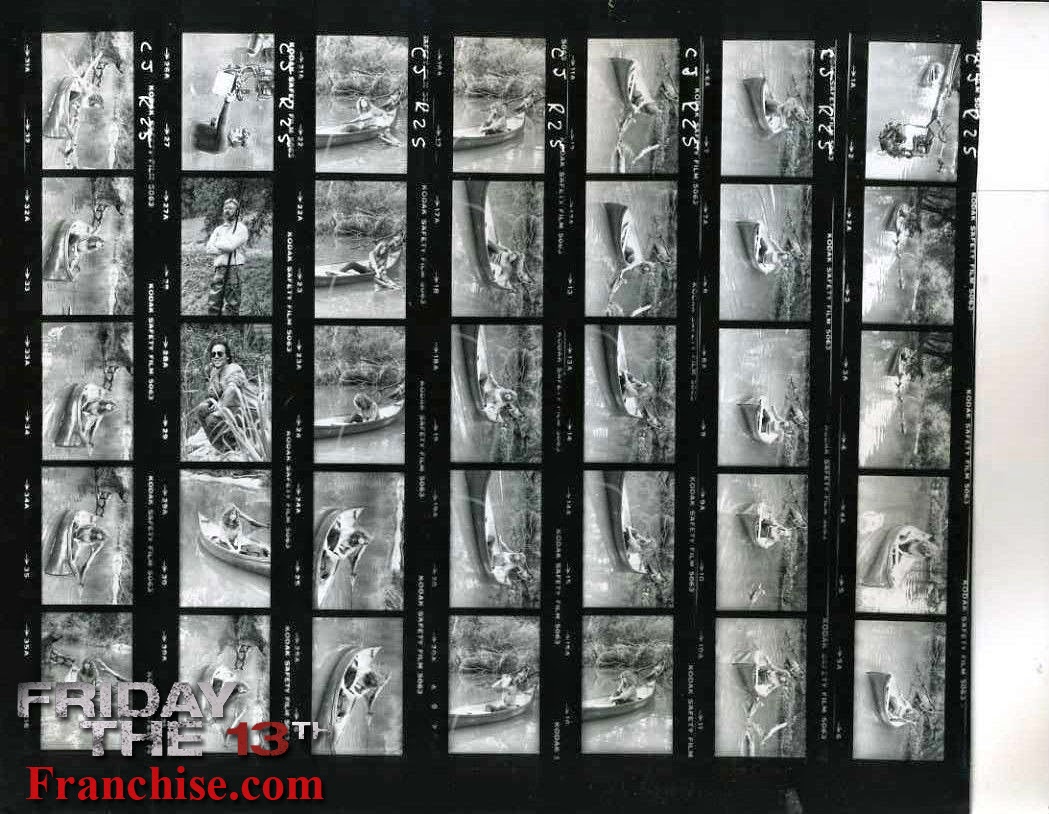
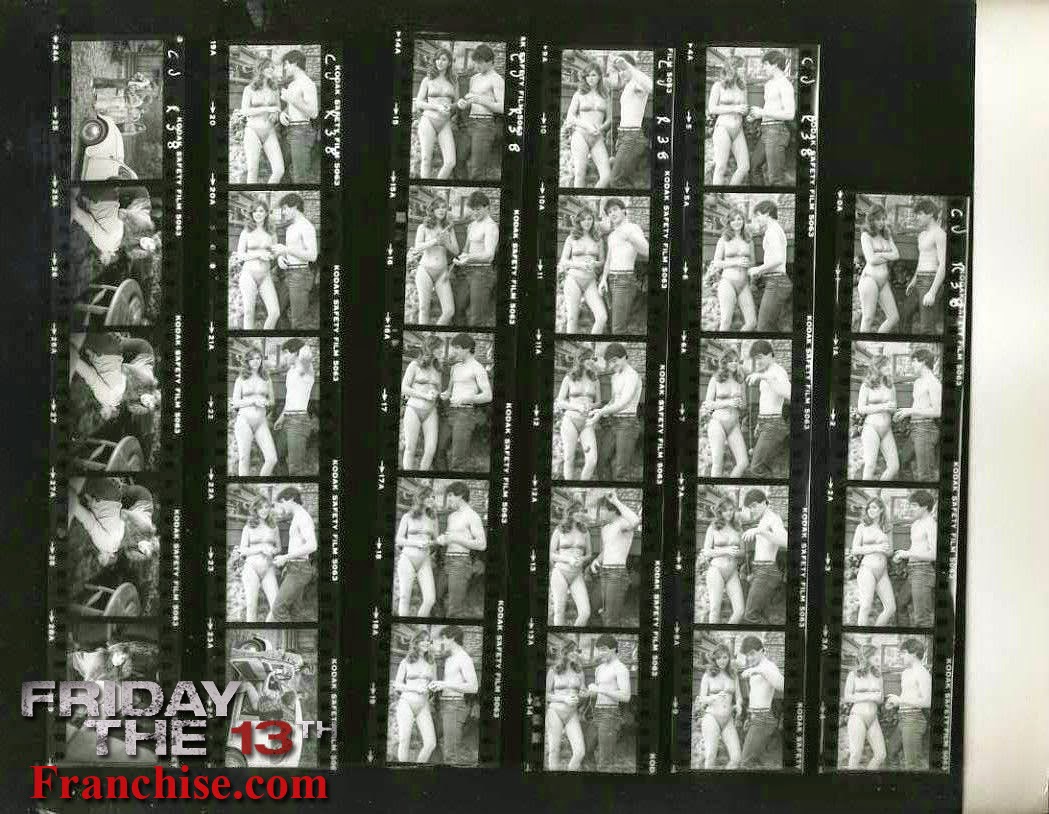
A filmed alternate ending had Chris run into Jason outside the house and get beheaded. Behind-the-scenes photos supplied by Billy Kirkus show slates, rehearsals and effects prep for it.
Photographs supplied by Billy Kirkus document the filmed alternate ending in which Chris encounters Jason outside the cabin and is decapitated; the archive includes slates, rehearsals and practical-effect preparation.
Filming locations
- Valuzet Movie Ranch, Saugus, California: Higgins Haven: the house, barn, lake and dock, all built for the film
- Small market in Green Valley, California: Convenience store where Shelly and Vera meet the bikers
- The film was shot at Valuzet Movie Ranch in Saugus, California from March through May 1982, making it the first series entry primarily shot away from the East Coast.
- The house, barn and lake were custom-built for the production at Valuzet; the grocery-store material was filmed at a small market in Green Valley, California.
Effects and makeup
Make-Up Effects Labs, run by Douglas J. White, Allan A. Apone and Frank Carrisosa, designed the effects. Kills were staged toward the camera for 3-D, such as Vera's spear and Rick's eye flying at the audience. Janet Maslin also noted yo-yos, popcorn and snakes coming out of the screen.
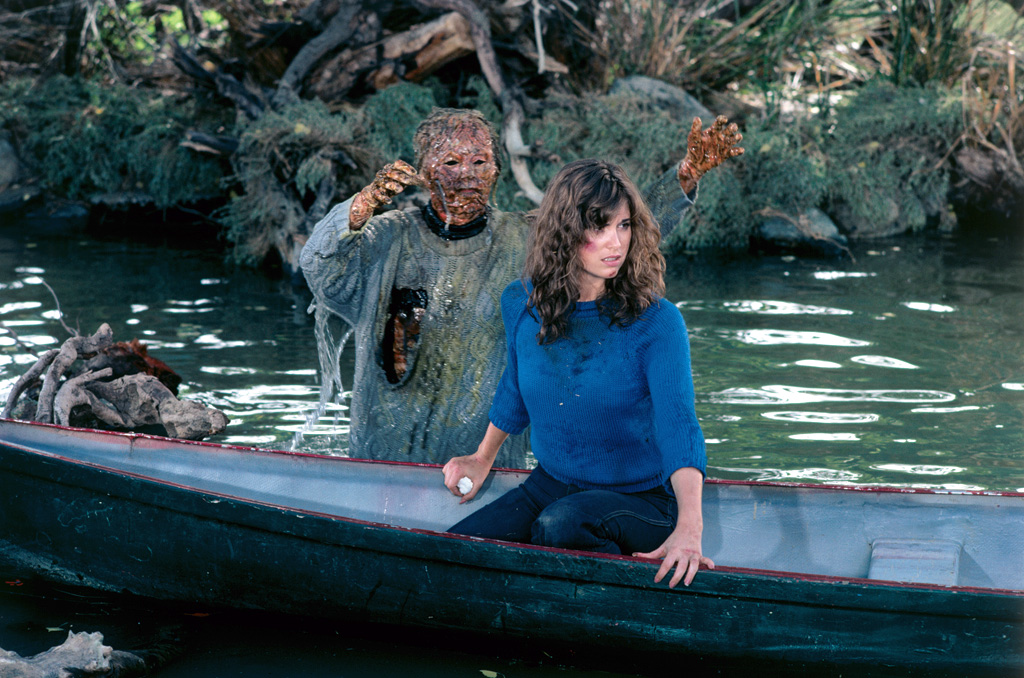
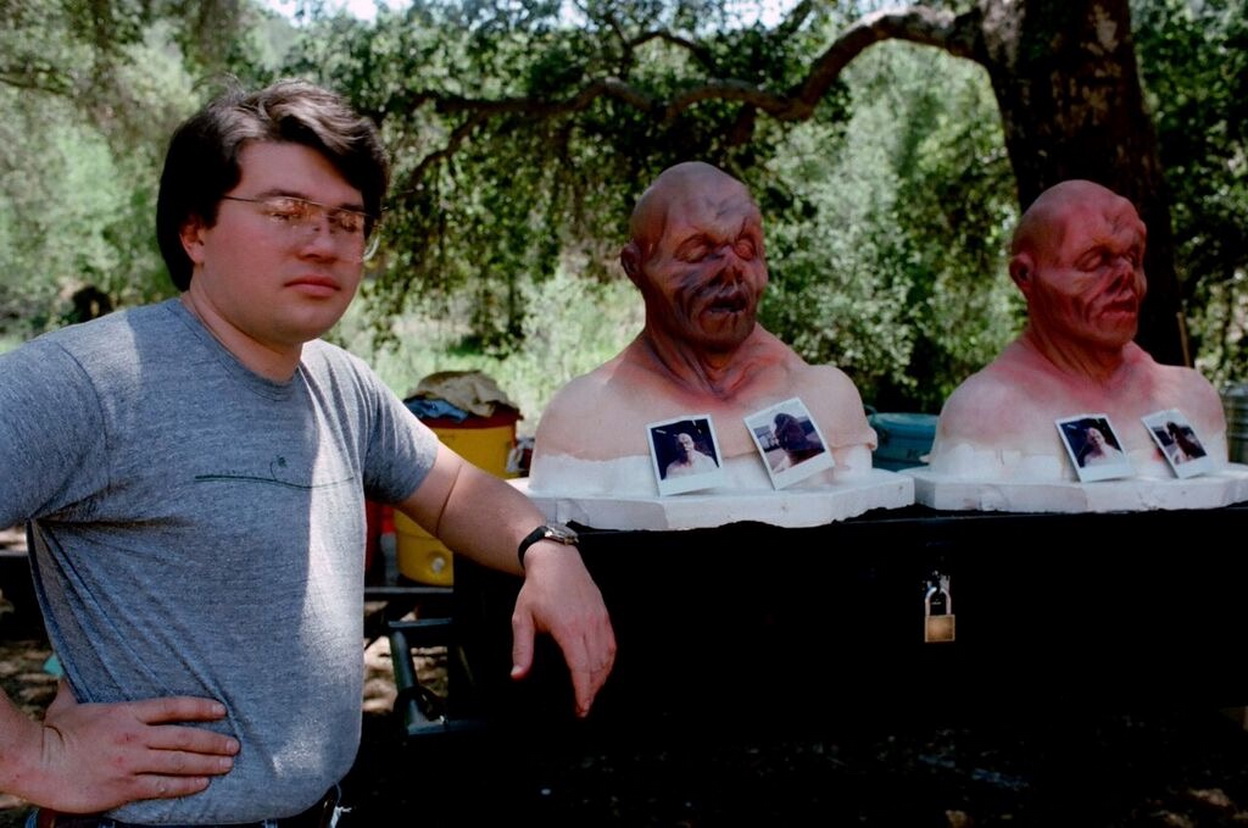
Richard Brooker wore two Jason makeups. For shots with the hockey mask off, a full makeup of about 11 separate appliances took around six hours to apply. For shots with the mask on, a simple one-piece slip-on head covered his head but left his face open. Both were modeled on Savini's young Jason from the first film, not Carl Fullerton's bearded Part 2 look.
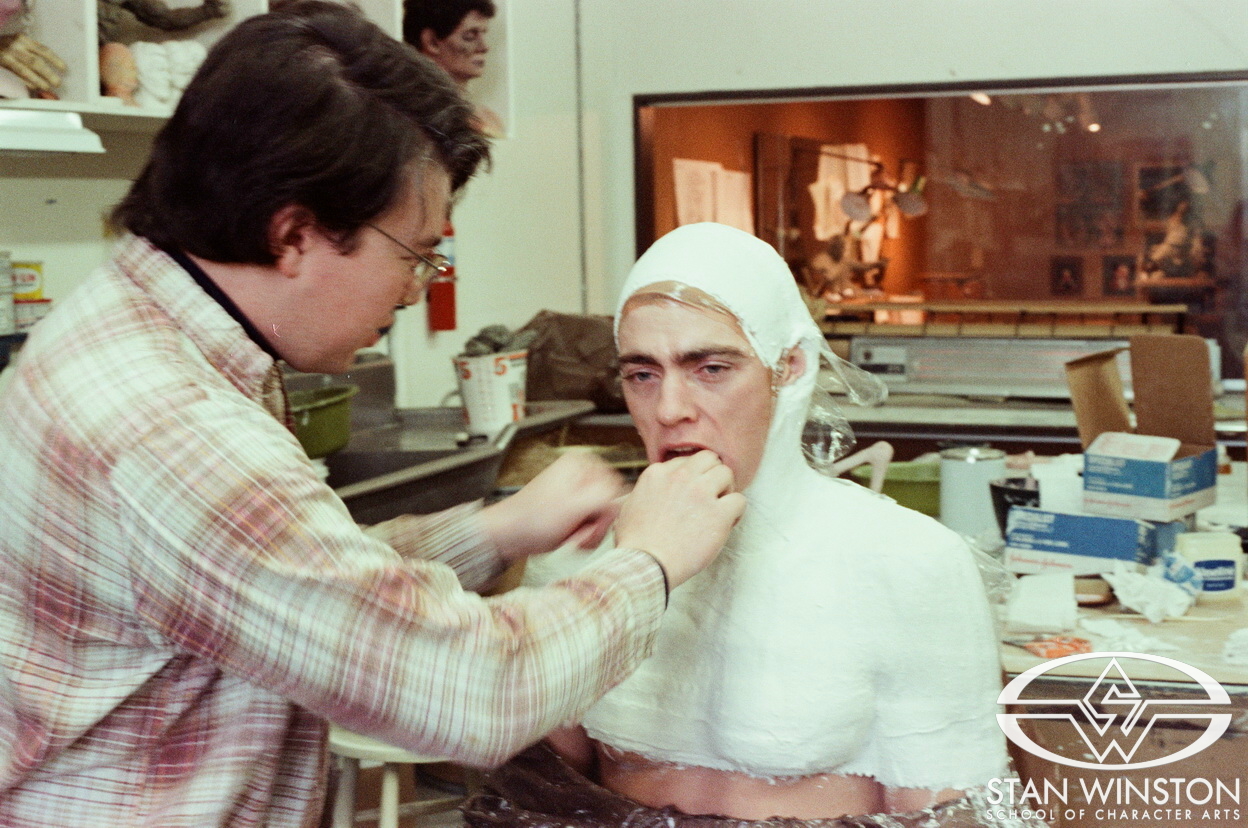
Surviving photos of Brooker's makeup sessions show his lifecast, a dental piece, and early Jason head designs that were changed before the final look.
Larry Zerner's makeup session photos show the blood tube running under his throat appliance for Shelly's death reveal.
Richard Schickel of Time singled out Rick's eyeball popping out and seeming to sail over the audience's heads.
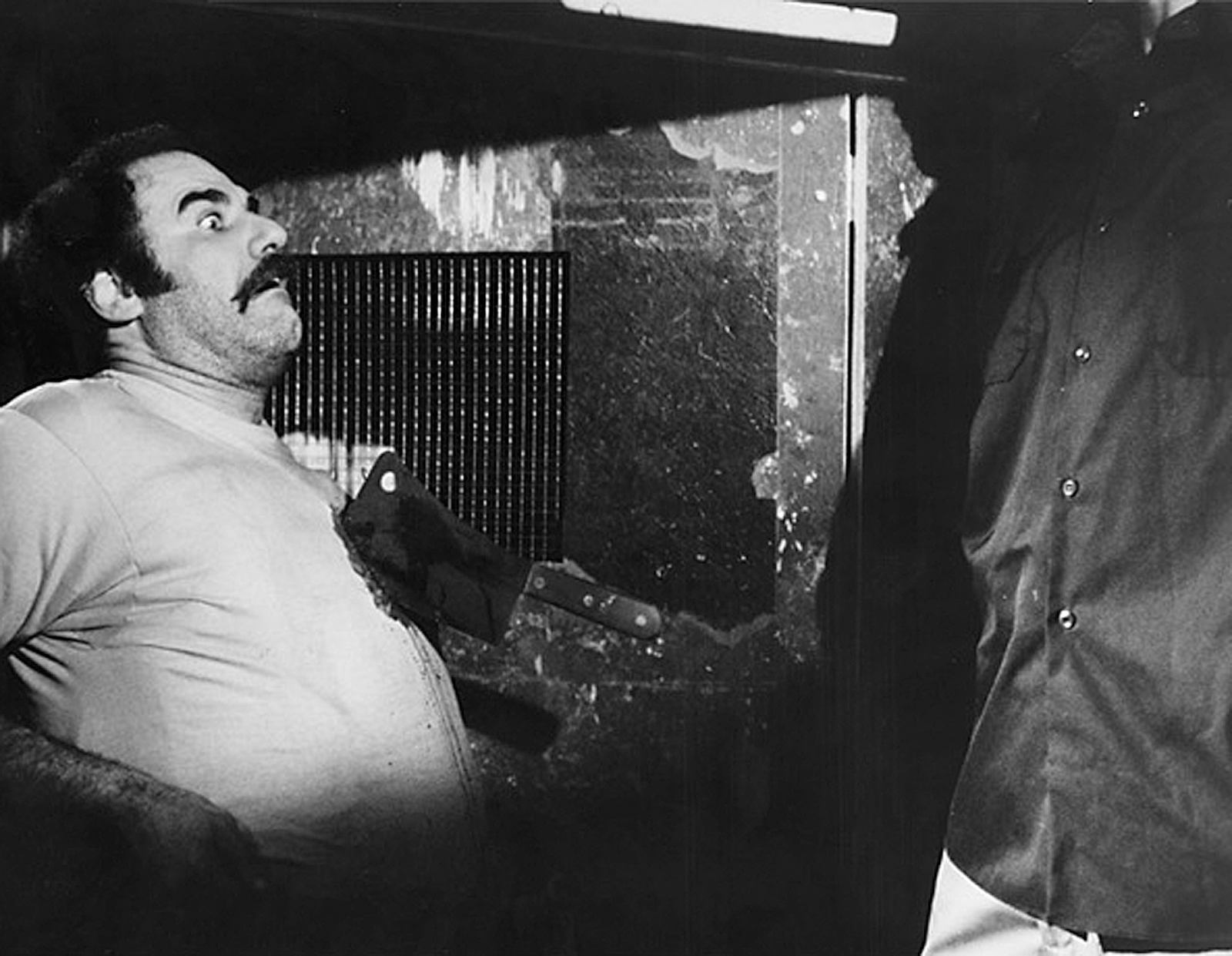
Carol Clover counted fourteen murder sequences, and the film has been called one of the most violent in the series. Longer cuts of several kills were trimmed for the rating, including more blood from Edna's mouth, Vera's spear entering her eye on screen, Andy's leg and stomach being cut, blood spray on Debbie, and the poker entering Chili's stomach.
Richard Brooker’s unmasked Jason used a multi-piece prosthetic system of roughly eleven appliances that could take about six hours to apply; a simpler slip-on head mask was used beneath the hockey mask.
The production’s 3-D photography required extended setups and repeated takes designed around objects, weapons and bodies projecting toward the camera.
The surviving makeup photographs document Richard Brooker’s lifecasting, dental appliance and Stan Winston’s original Jason head designs before the final screen appearance was revised.
Props and costumes
The hockey mask started as a Detroit Red Wings goaltender mask from Martin Jay Sadoff, then Doug White enlarged it from a new VacuForm mold, and Terry Ballard painted on the red triangles and changed the holes. This is the mask's first appearance in the series.
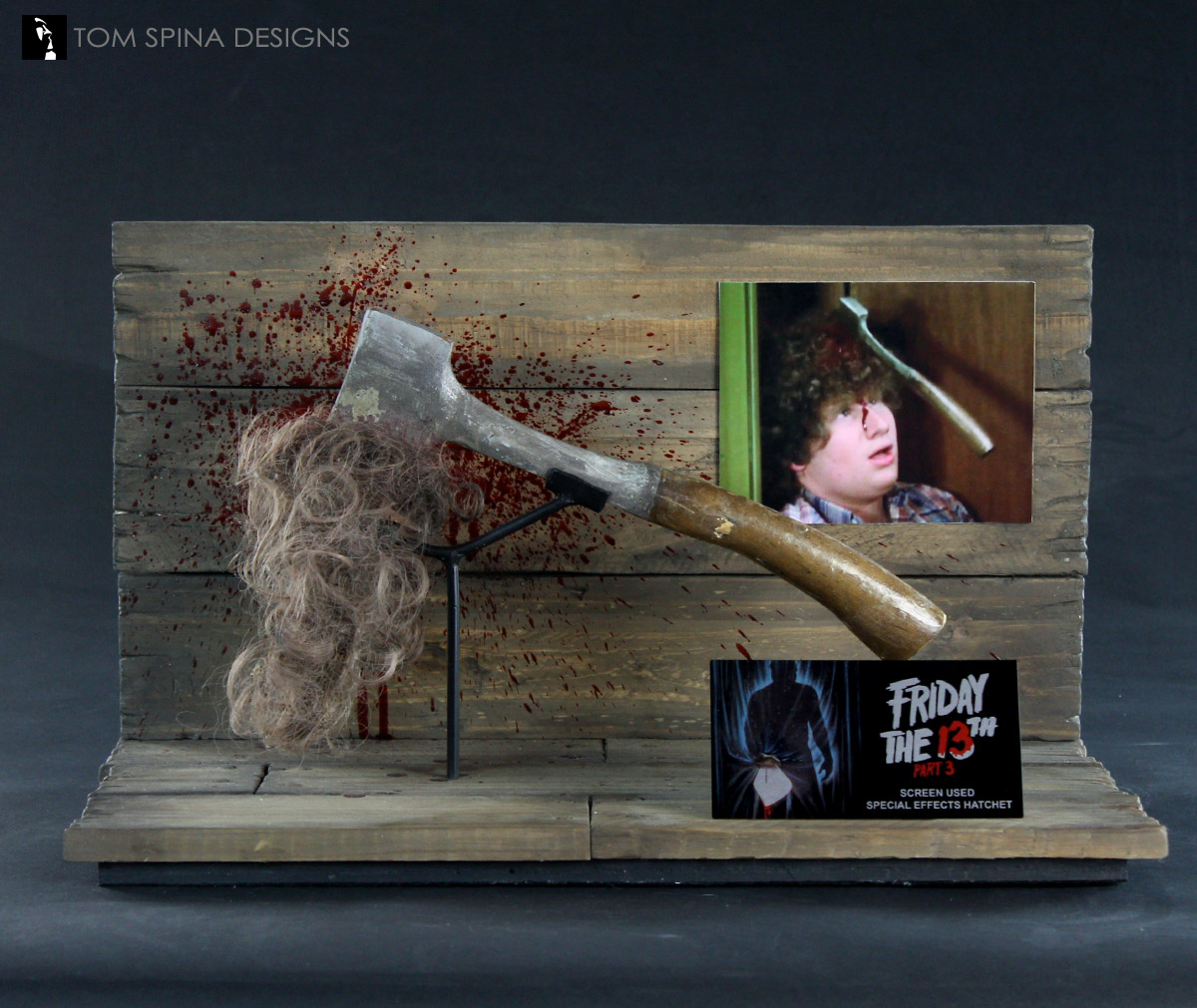
Shelly's fake axe for his prank was mounted on a headband hidden by his hair. Tom Spina Designs documented the original prop and built a display case for it.
After killing Shelly, Jason takes his hockey mask and his speargun.
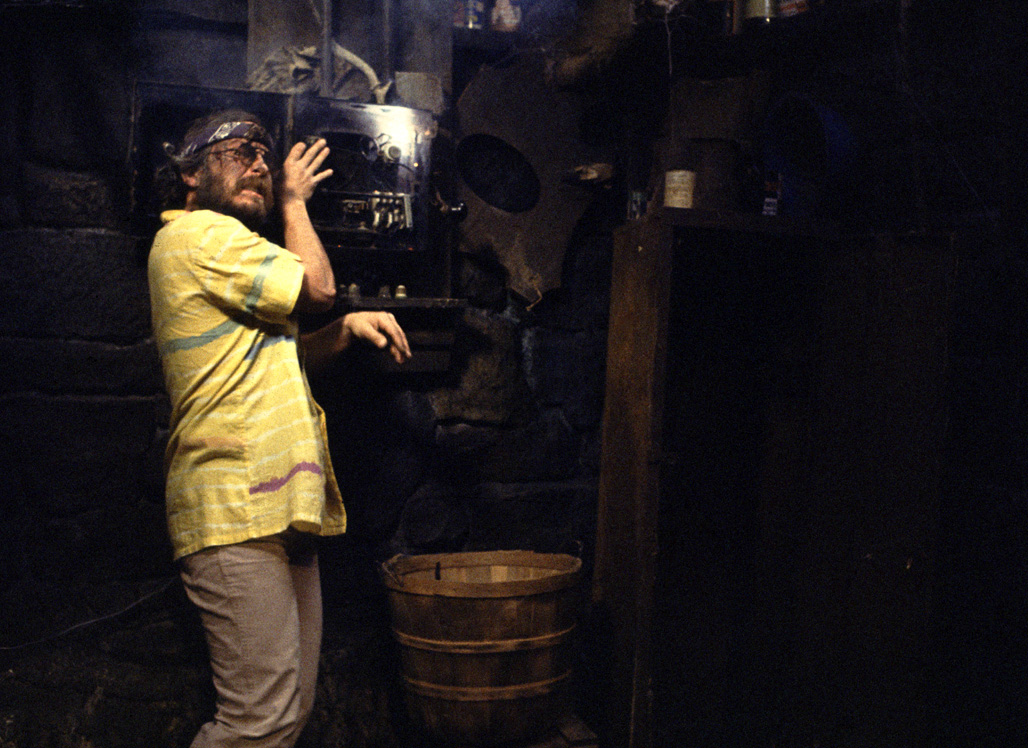
Chuck's striped shirt worn by David Katims has been screen-matched and sold through Propstore with a certificate of authenticity.
The Harvard Film Archive holds 26 stills, a pressbook, two text documents, two mini posters and three lobby cards for the film in the Lothar and Eva Just Film Stills Collection.
Jason’s signature hockey mask originated when 3-D supervisor Martin Sadoff supplied a Detroit Red Wings goaltender mask for a lighting test. Makeup-effects director Doug White enlarged it with VacuForm and made a new mold; art director Terry Ballard added the red triangles and altered the holes/markings.
Shelly’s prank axe was mounted to a wearable headband concealed by hair. Tom Spina Designs documented the original prop before and after mounting it in a custom display.
Production artifacts
1982 · screen-matched costume
- Description
- Propstore screen-matched the David Katims costume and records actor provenance plus a Propstore COA.
Scripts and documents
1982 · archived screenplay
- Note
- Friday the 13th Legacy provides a film-specific script download.