Friday the 13th press kit
1980 · studio press kit
- Studio
- Paramount
- Contents
- cover letter; cast/crew booklet; 9 publicity stills

Friday the 13th
1980

They were warned... They are doomed... And on Friday the 13th, nothing will save them.
The film opens in 1958 at Camp Crystal Lake. Two counselors, Barry and Claudette, sneak away from the others for a late-night meeting in a supply shed. Someone the audience never sees walks in on them and kills them both.
The story jumps ahead to the present day, Friday, June 13. Annie, a cheerful young counselor and cook, is on her way to Camp Crystal Lake, which owner Steve Christy is reopening for the summer. Crazy Ralph, the local doomsayer, keeps telling anyone who will listen that the camp has a death curse. A truck driver named Enos gives Annie part of the ride and warns her about the camp's troubled past, which started when a boy drowned in the lake in 1957 and got worse when two counselors were murdered the next year. He drops her at a crossroads, and she accepts a lift from an unseen driver in a Jeep. The driver speeds past the camp entrance. Annie gets scared, jumps from the moving Jeep and runs into the woods, where the driver catches her and cuts her throat.
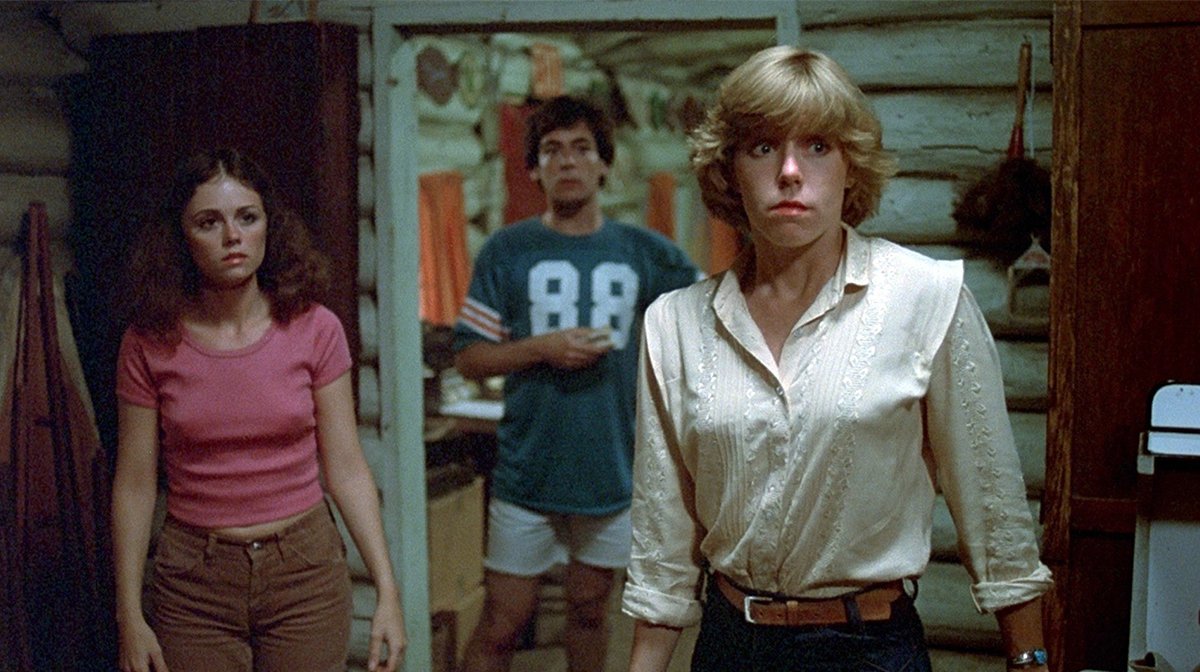
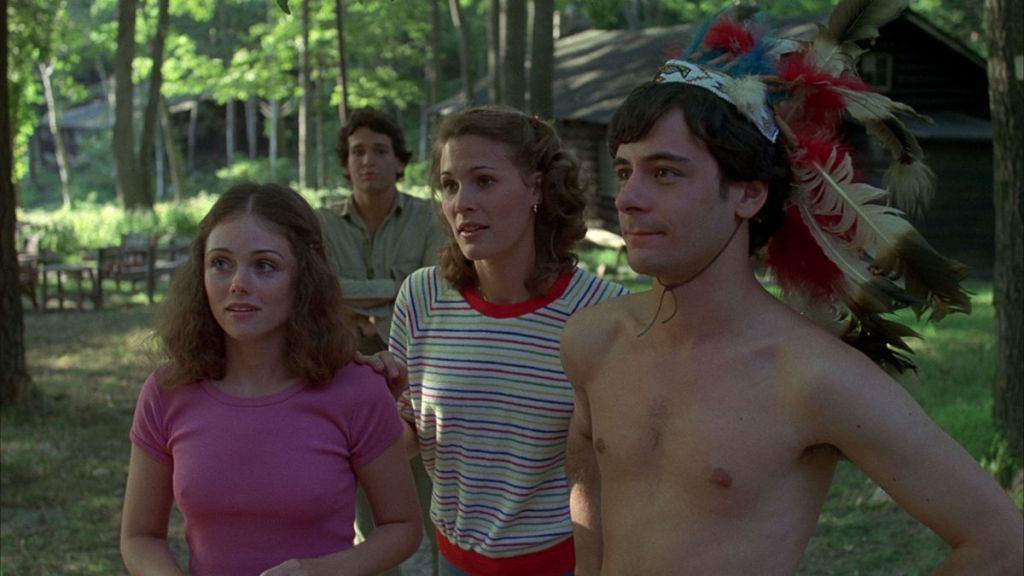
At the camp, the other counselors are already fixing up the cabins: Alice, Bill, Brenda, Marcie, Jack and Ned. Steve works alongside them. Bill kills a snake in Alice's cabin by chopping it up with a machete. As a thunderstorm moves in, Steve drives into town for supplies.
Once night falls, the killings start. Ned sees someone walk into a cabin, follows, and has his throat slit. Jack and Marcie have sex in the bottom bunk, not knowing Ned's body is hidden in the bunk above them. Marcie leaves for the bathroom. The killer, hiding under the bed, drives an arrow up through the mattress and through Jack's throat, then follows Marcie into the bathroom and buries an axe in her face. Alice, Bill and Brenda play strip Monopoly until Brenda goes back to her own cabin. A little boy's voice calling for help draws her outside toward the archery range. The floodlights snap on and she is attacked offscreen.
Alice thinks she heard Brenda scream. She and Bill go looking and find a bloody axe in Brenda's bed. The phone is dead and the last vehicle will not run. At the camp entrance, Steve recognizes the unseen killer walking up to him and is stabbed. The power goes out. Bill goes to check the generator and does not come back. Alice finds him in the generator shed, pinned to the door with arrows. She runs back to the main cabin and barricades herself in, and Brenda's body is hurled through a window.
A middle-aged woman arrives who says she is Mrs. Voorhees, an old friend of the Christys. At first she seems kind. Then she talks about the boy who drowned in 1957. He was her son Jason, and today is his birthday. She blames the counselors, who were having sex instead of watching him. She pulls a knife, and Alice understands she is the killer. As she stalks Alice, Mrs. Voorhees talks to herself in Jason's voice: kill her, mommy.
A long chase and several fights follow across the camp. Along the way Alice finds the bodies of Annie and Steve. The two women finally struggle on the lakeshore, and Alice cuts off Mrs. Voorhees' head with the machete. Worn out, Alice pushes a canoe out onto the lake and falls asleep in it.
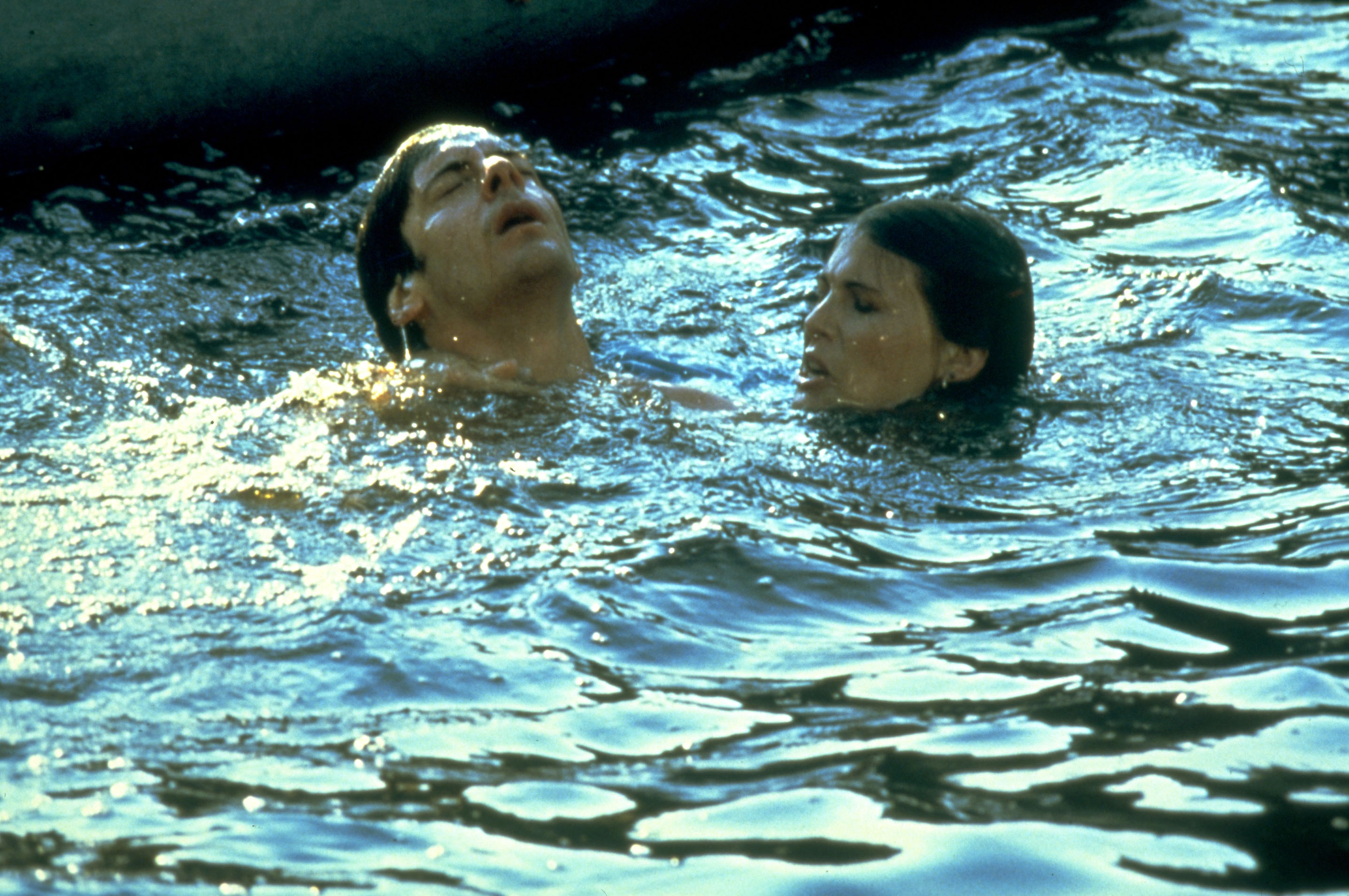
At dawn police cars arrive. Just as Alice wakes, the rotting body of young Jason bursts out of the water and drags her under. She wakes up in a hospital bed with a police sergeant and medical staff around her. The sergeant says they found no sign of any boy in the lake. Alice answers that he is still out there.
Paramount, Warner Bros. and United Artists got into a bidding war for the finished film. Frank Mancuso Sr. of Paramount said they knew they had a hit the minute they saw it. Paramount paid $1.5 million for United States and Canadian rights and Warner Bros. took international. It was the first independent slasher picked up by a major studio. According to People, Paramount president Michael Eisner bought it for its creative killings.
Paramount spent about $500,000 on ads, then another $500,000 once it started making money, as part of a $4 million campaign aimed at teenagers. Alex Ebel painted the one-sheet of teenagers under the silhouette of a figure holding a knife. Before release, Variety predicted it had nothing going for it but its title.
The film opened May 9, 1980, and widened to 1,127 theaters. It made $5,816,321 its first weekend and $39,754,601 in the United States and Canada, about 14.8 million tickets. Another roughly $20 million came from overseas, for $59.8 million worldwide. It was the 18th highest-grossing film of 1980. Of Paramount's seventeen releases that year, only Airplane! returned more profit. The Los Angeles Times reported in June 1980 that only The Empire Strikes Back was doing better that summer.
Most critics hated it. Linda Gross of the Los Angeles Times called it silly and boring but liked the score, the photography and the natural performances. Variety and The Hollywood Reporter both slammed it as cheap exploitation. Michael Blowen of The Boston Globe called it nauseating. Many reviewers said it was a poor copy of Halloween.
Gene Siskel led the attack. He called Cunningham one of the most despicable people in the movie business, gave away the ending in his review, and printed the address of Gulf+Western chairman Charles Bluhdorn and Betsy Palmer's home city so readers could complain. Siskel and Roger Ebert spent a whole episode of their TV show going after the film and other slashers. Leonard Maltin first gave it a BOMB, later bumped it to a star and a half.
Reviews have softened over time. Rotten Tomatoes lists 70 percent positive from 67 critics as of May 2026, while Metacritic has 22 out of 100 from 11 critics. Complex ranked it the ninth best slasher ever in 2017, Entertainment Weekly put it fourth of 21 in 2024, Paste ranked it 24th of 50, and Vulture named it one of the most influential slashers. Scholars such as Carol Clover point to the reveal of a middle-aged woman as the killer as one of horror's biggest gender twists.
Awards: nominated for Worst Picture and Worst Supporting Actress (Palmer) at the first Golden Raspberry Awards in 1981; nominated for the Grand Prize at the 1981 Avoriaz Fantastic Film Festival; nominated for AFI's 100 Years... 100 Thrills in 2001; nominated for Best DVD Extras at the 2005 Satellite Awards for the From Crystal Lake to Manhattan set; and nominated for Best DVD/Blu-ray Collection at the 2014 Saturn Awards for The Complete Collection.
Revival screenings include July 13, 2007, in the Blairstown theater seen in the film (crowds forced an extra show), a 35th anniversary show at the Griffith Park Zoo on March 13, 2015, Crystal Lake Tours at Camp No-Be-Bo-Sco in April 2018 with Adrienne King, and a one-day nationwide 45th anniversary reissue on June 13, 2025. Box Office Mojo also tracks small re-release grosses in 2022, 2023, 2024 and 2025.
1980 · studio press kit
1979 · trade advertisement
1979 · TV-spot concept
1980 · 8.5 x 11 in · pressbook
1980 · lobby sheet
1980 · approx. 30 x 13 in · daybill poster
1980 · 11 x 14 in · lobby-card set
Theatrical / early home video
2009 · DVD / Blu-ray / later collections
Mrs. Pamela Voorhees
Alice Hardy
Marcie Stanler
Annie Phillips
Jack Burrell
Bill Brown
Brenda Jones
Ned Rubenstein
Steve Christy
billed as a special appearance
Enos, the truck driver
billed as a special appearance; credited as The Truck Driver
Sgt. Tierney
Officer Dorf
Crazy Ralph
Barry
Claudette
Trudy
Sandy
Operator
Doctor
Jason Voorhees (young)
Double for Mrs. Voorhees in the Annie chase
uncredited; also Tom Savini's makeup assistant
Boy in 1958 camping circle
uncredited; Sean S. Cunningham's son
Knife killer
uncredited; also did stunts
Director
Producer
Writer
Uncredited script contributions during filming
Executive Producer
Associate Producer and Unit Production Manager
Director of Photography
Camera Operator
First Assistant Camera
Second Assistant Camera
Second Assistant Camera
Second Unit Camera
Second Unit Assistant Camera
Gaffer
Second Unit Gaffer
Best Boy
Second Electrician
Second Unit Electrician
Key Grip
Grip
Still Photographer
Production Designer
Assistant to Production Designer
Set Decorator and Property Mistress
Assistant Property
Film Editor
Associate Editor
Assistant Editor
Costume Designer
Wardrobe Mistress
Wardrobe Assistant
Composer
Sound Mixer
Boom Operator
Sound Re-Recording
Sound Effects
Special Makeup Effects and Stunts
Makeup Assistant
Makeup and Betsy Palmer's Hairstyle
Hairstyles
Atmospheric Effects
Titles
Opticals
Casting (TNI Casting)
Casting (TNI Casting)
Script Supervisor
Assistant Director
Second Assistant Director
Production Office Coordinator
Transportation Captain
Location Auditor
Production Assistants
Theatrical poster artist
Storyboards
Sean S. Cunningham had worked with Wes Craven on The Last House on the Left (1972). After seeing how well John Carpenter's Halloween (1978) did, he wanted a movie that played like a roller coaster ride and made people jump out of their seats. Victor Miller, a writer living near him in Stratford, Connecticut, wrote the script. Its working title was A Long Night at Camp Blood.
Cunningham came up with the title Friday the 13th and took out an advertisement in Variety using it before the script was finished, partly to find out fast whether anyone else owned the title. A New York ad agency built his logo idea of block letters bursting through glass. Distributor George Mansour later said an earlier film called Friday the 13th: The Orphan existed and someone threatened to sue, but the problem was settled.
Miller finished the screenplay in mid-1979. He liked the idea of a killer who turned out to be somebody's mother acting out of love for her child. His final draft ended with Alice simply floating on the lake. Tom Savini, who had just seen Carrie (1976), suggested adding the jump scare of young Jason coming out of the water. Miller later said he never liked Jason becoming the killer in the sequels, since in his mind Jason was a victim.
Casting was handled in New York by Julie Hughes and Barry Moss. Cunningham wanted likable, believable counselors who worked cheap. Kevin Bacon, Laurie Bartram, Peter Brouwer and Adrienne King all had soap opera credits. The producers had thought about Sally Field for Alice but could not afford a name. Bacon, Mark Nelson and Jeannine Taylor already knew each other from stage work. It was Nelson's first feature film.
Estelle Parsons was the first choice for Mrs. Voorhees and passed. Shelley Winters and Dorothy Malone also turned it down, and Louise Lasser was considered. Betsy Palmer took the part because she needed money for a new car, even though she thought the script was junk. She was paid $1,000 a day for ten days. Palmer built her own backstory: Pamela got pregnant as a teenager in the 1940s, was disowned, raised Jason alone, and turned puritanical and psychotic after he drowned. Ari Lehman had lost out on Cunningham's Manny's Orphans and pushed hard to play Jason.
Filming began in early September 1979 in and around Hardwick, Blairstown and Hope in Warren County, New Jersey. A production report lists September 4, 1979, as the first official day, while other sources, including AFI, say September 10. The camp scenes were shot at Camp No-Be-Bo-Sco, a working Boy Scout camp in Hardwick. Cunningham, Miller and Ron Kurz kept rewriting during the shoot, but only Miller got screen credit.
It got bitterly cold as the shoot went on. The opening murder of Barry and Claudette was meant to happen by the lake, but surprise snow forced it indoors into a barn. Robbi Morgan shot all her scenes in one day. Reshoots and extra photography ran as late as November 1979. The budget did not allow many exterior lights, so a lot of the night scenes are very dark, and there were no stunt doubles for King or Palmer in their fight.
During rehearsal for the fight, Palmer followed stage habits and actually slapped King, who broke down crying. Cunningham had to explain that in movies you miss. A real snake was killed on camera for the cabin scene. King later said its owner stood off to the side crying.
Tom Savini's practical makeup effects are a core production-history category for this film.
Camp No-Be-Bo-Sco in Hardwick Township, New Jersey, served as the primary Camp Crystal Lake filming location.
Tom Savini recalled preparing Robbi Morgan’s throat appliance in a makeshift studio at the scout camp and returning her to the location within half an hour as daylight was fading.
1979 · filming locations
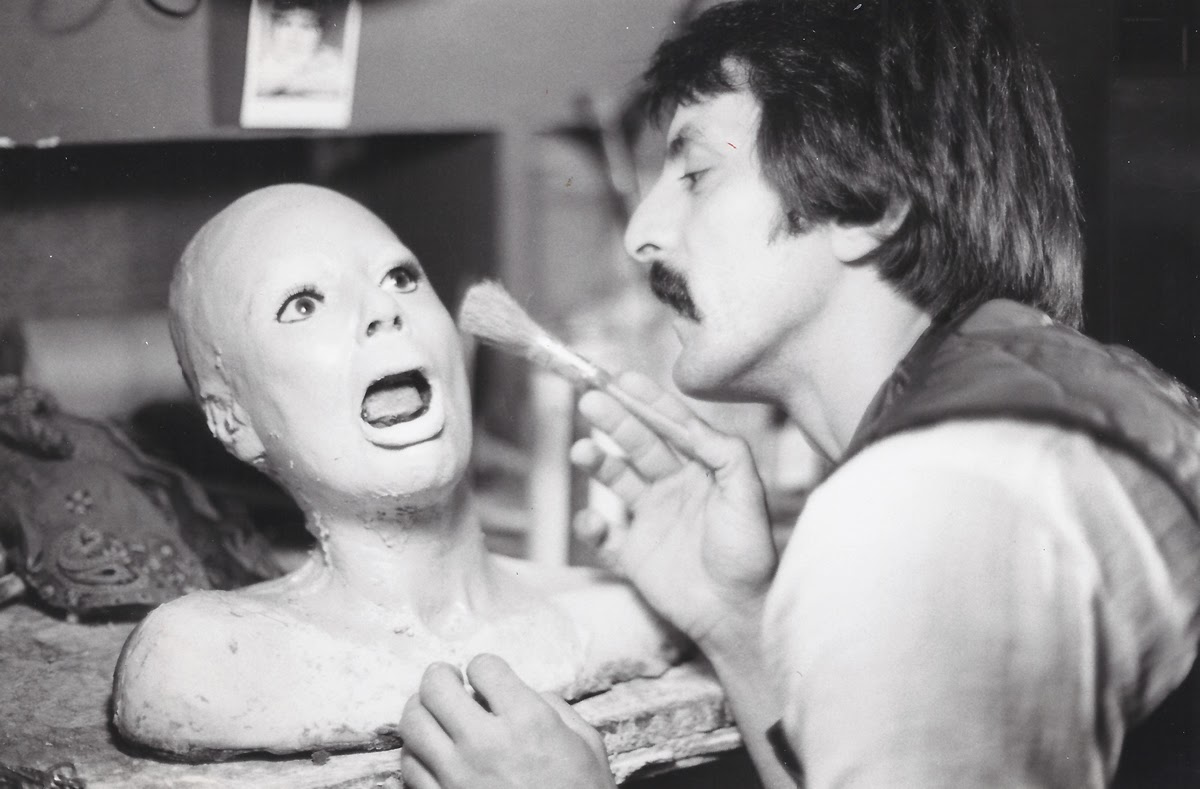
Tom Savini got the job on the strength of his work on George A. Romero's Dawn of the Dead (1978). His assistant was Taso Stavrakis. The big gags were Jack's arrow through the throat, Marcie's axe to the face, Bill's arrow-covered body and Mrs. Voorhees' beheading.
For Jack's death, Kevin Bacon knelt under the bed with his head pushed up through the mattress into a fake neck and chest. Savini pushed the arrow up through the prosthetic from below while a bag and pump fed blood through it. The pump failed during the take, so Stavrakis blew into the tube by mouth to keep the blood going. Bacon has recalled that there was only one prosthetic, so they had one shot at it.
Savini wanted to show the axe biting into Marcie's face, but the blade kept sliding off the mold. The crew switched to a cutaway of her with the axe already buried in her face. He used a real axe for impacts on the set around her and swapped in the effect axe for the face.
Bill's death is not shown. Savini and Stavrakis rigged fake arrows onto Harry Crosby and harnessed him to the door, a picture the script compared to Saint Sebastian. One arrow was stuck over his closed eye to look like it went through the socket. Chemicals in the fake blood left Crosby temporarily blind in that eye.
Mrs. Voorhees' beheading used a prosthetic head molded from Betsy Palmer. The insert shot was filmed without Palmer or King on set.
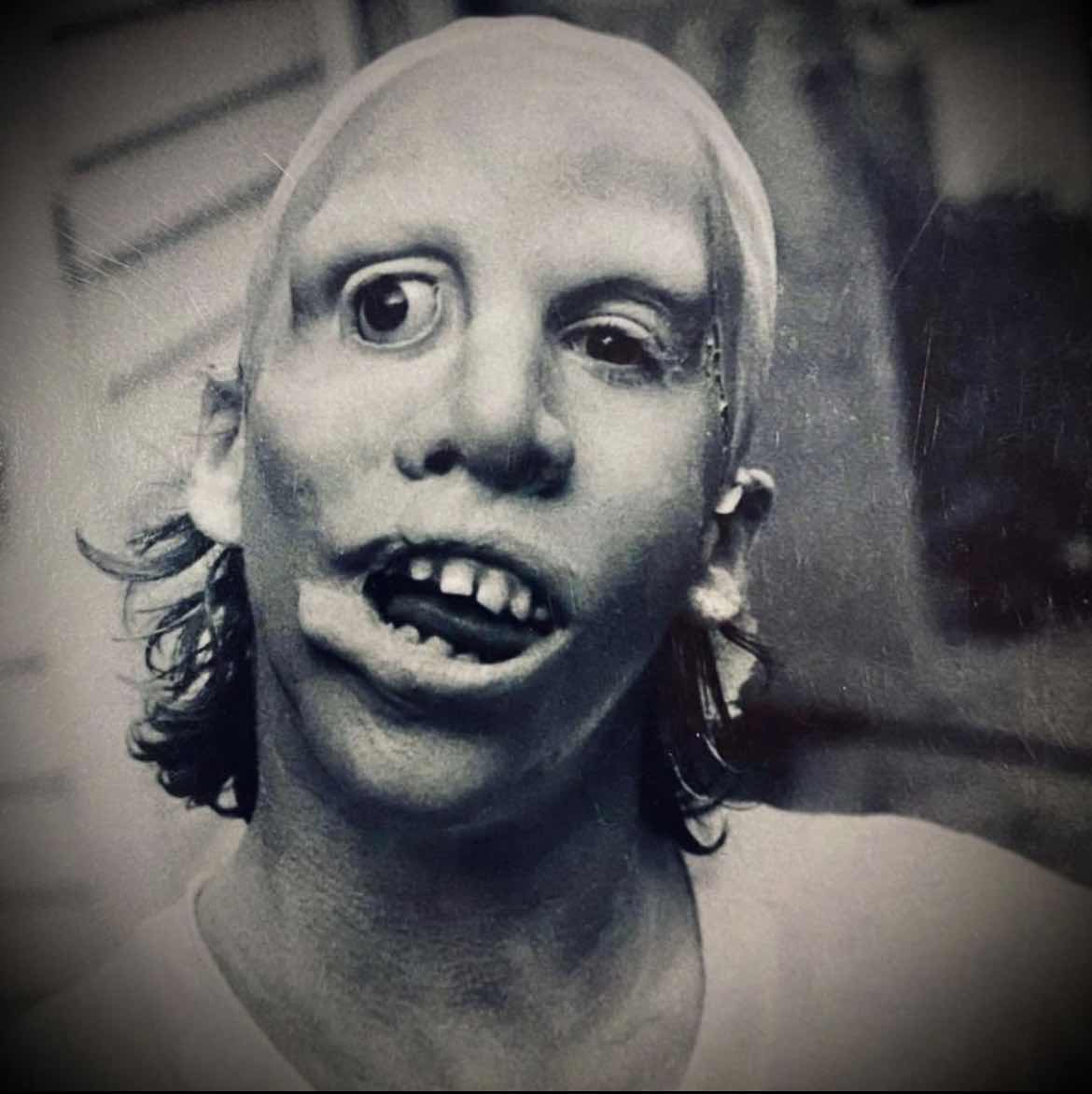
For young Jason's makeup, Savini took a lifecast of Ari Lehman. Lehman recalled Savini played the Doors album Strange Days to keep him still for the half hour while the alginate set.
Tom Savini's practical makeup-effects work is cataloged at kill level, including appliance, blood and mechanical-effect techniques where verifiable.
Tom Savini's practical-effects work included Jack's arrow-through-the-throat gag, Marcie's axe wound and Mrs. Voorhees' decapitation; the Jack effect used a false torso/neck, an arrow mechanism and pumped stage blood.
For Jack’s arrow-through-the-neck effect, Kevin Bacon knelt beneath the bed with his head resting against a prosthetic neck. Bacon recalled that the blood-pump hose failed and a crew member supplied air by blowing through it; only one prosthetic was available.
Ari Lehman recalled that Tom Savini played the Doors’ Strange Days album to help him remain still while the alginate lifecast set for the young-Jason makeup.
Mrs. Voorhees wore a cream cable-knit sweater in the finale. Shot-by-shot comparisons by the Horror Costume Index show at least two closely matched sweaters were used, with small differences in the cable and diamond-knit spacing between the version seen in the motive speech and beheading and the second one.
Script details gave Pamela a class ring, which Palmer used as the starting point for her backstory.
Most of the weapons are ordinary camp gear: a hunting knife, an axe, archery arrows and a machete. NECA's Pamela figure adds a broken oar and a bow to that list. The series did not have a signature killer look yet.
Doug Brode's hand-drawn and printed storyboards from the production survive and were offered through Propstore.
Pamela Voorhees' finale wardrobe used at least two closely related cream cable-knit sweaters. Shot-by-shot comparison shows the two versions alternate during the final confrontation, with the version used for the motive speech/beheading effect differing subtly in cable and diamond-knit spacing from the second sweater.
The film's most important character-prop system is deliberately mundane: camp tools, kitchen implements, archery equipment and outdoor gear are staged as ordinary Camp Crystal Lake objects before becoming murder weapons, establishing the series' practical-prop vocabulary before Jason ever acquires a signature mask.
1980 · surviving production artwork/document
Harry Manfredini wrote the score. He decided music would play only when the killer was actually present, so scenes like the near miss at the archery range have no music at all. He often cut the music out just before a scare so the audience would relax first.
Since Mrs. Voorhees is offscreen until the end, Manfredini gave the killer a musical signature in the way John Williams did for the shark in Jaws. The strings also nod to Bernard Herrmann's Psycho score.
The famous 'ki ki ki, ma ma ma' sound came from the line 'Kill her, mommy.' Inspired by a Krzysztof Penderecki choral piece, Manfredini whispered the syllables harshly into a microphone and ran them through an echo machine. Most people hear it as 'cha cha cha,' which he has joked about. Cunningham wanted a real chorus but the budget would not cover one.
Manfredini wrote the score in about two weeks and recorded it in a friend's basement. Music historian Randall D. Larson called it an atonal piece for strings, brass, keyboard and voice.
1982: Gramavision Records LP of selected cues from the first three films.
January 13, 2012: La-La Land Records limited 6-CD box set of Manfredini's scores for the first six films. It sold out in under 24 hours.
2021: La-La Land Records expanded Ultimate Cut edition, remastered from the original master tapes (thought lost when the 2012 set was made) with unused cues.
Waxwork Records deluxe vinyl of the complete score with liner notes from the director and composer, an art print and new package art.
Blu-ray
2020 · 2 Blu-ray
4K UHD
2026-11-13 · 4K UHD + Blu-ray
1981 · VHS / Betamax / LaserDisc / CED
1988 · VHS
1994 · VHS
1999 · DVD
2002 · VHS
2009 · DVD / Blu-ray
2013 · Blu-ray box set
2020 · Blu-ray SteelBook
2020 · Blu-ray box set
1987 · film novelization
2007 · Comic series
2007 · Comic limited series
NECA · licensed character collectible
NECA · action figure
Paramount Movies